
Mind, Melody, and Mantra: How Translation and Chanting Unite to Transform Buddhist Practice
Why did Buddha teach that the Dharma should be taught to students each in their own language? Why, then, in other teachings were we instructed to chant mantras only in the original language? And why do some teachers suggest chanting to music and rhythm and others request we recite quietly? We’ll answer these questions and more in our special feature Mind, Melody and Mantra.
Video:
TRANSCRIPT
Why did Buddha teach that the Dharma should be taught to students each in their own language? Why, then, in other teachings were we instructed to chant mantras only in the original language? And why do some teachers suggest chanting to music and rhythm and others request we recite quietly? We’ll answer these questions and more in our special feature Mind, Melody and Mantra.
Twenty Five Centuries Ago, Buddha admonished his monks “I allow you, O monks, to learn the Buddha’s word each in his own dialect.” (Cullavagga (V.33.1) of the Pāli Vinaya Piṭaka) In the original Pali: “Anujānāmi, bhikkhave, sakāya niruttiyā buddhavacanaṃ pariyāpuṇituṃ”
This quote is from the Vinaya Pitaka but the context is vital. He was basically admonishing his followers not to fall into the trap of elitism. Two of his monks came to Buddha, distressed that disciples from diverse regions, castes, and backgrounds were reciting the teachings in their colloquial mother tongues. They felt it diminished the teachings and felt sure Buddha would agree. They suggested the Dharma be taught and practiced in sacred Vedic meter or chandas, standardizing the sounds, protecting the syllables. This would have the effect of elevating the teachings into a “for members only” exclusive liturgical dialect.
They were somewhat shocked when Buddha replied the opposite, asking them to teach and learn the Dharma “each in their own dialect.”
Fast forward 2500 years, to a humble but revered teacher, Kyabje Garchen Rinpoche. In his modern Buddhist teachings he similarly taught in a modern context.
He wrote that struggling to learn Dharma and Sadhana pratices in Tibetan or Sanskrit was of limited value “Because it is devoid of meaning.”
Rinpoche didn’t mean it had no value. Preserving teachings and lineage is crucial. But comprehension is indispensable. In his book commentary on Vajrakilaya, Rinpoche wrote this:
“If one reads a sadhana in transliterated Tibetan, it is like being fed a meal of grain alone. Of course, it is food. But what sort of sensation and nutrition does it give? If one practices using the meaning translation in prose, the meal becomes a bit more flavourful. But when the practice presents the meaning in verse and employs melodies, musical instruments, and so forth, it is like mixing grains with vegetables, oils, and seasonings prepared in different ways so that the meal becomes truly delicious and nourishing.”

In other words, a meal that will always be remembered.
Which brings us to the great enigma: If everything should be translated so we understand it, why do Teachers and the Dharma texts instruct us to never chant our mantras as translations? Why do we chant OṂ MAṆI PADME HŪṂ or the Vajra Guru Mantra in their ancient transmitted Sanskrit, rather than in our own language?
We titled this feature Mind, Melody and Mantra to emphasize the three apparently contradictory points. These three directly point to three well known teaching methods of the Buddha.
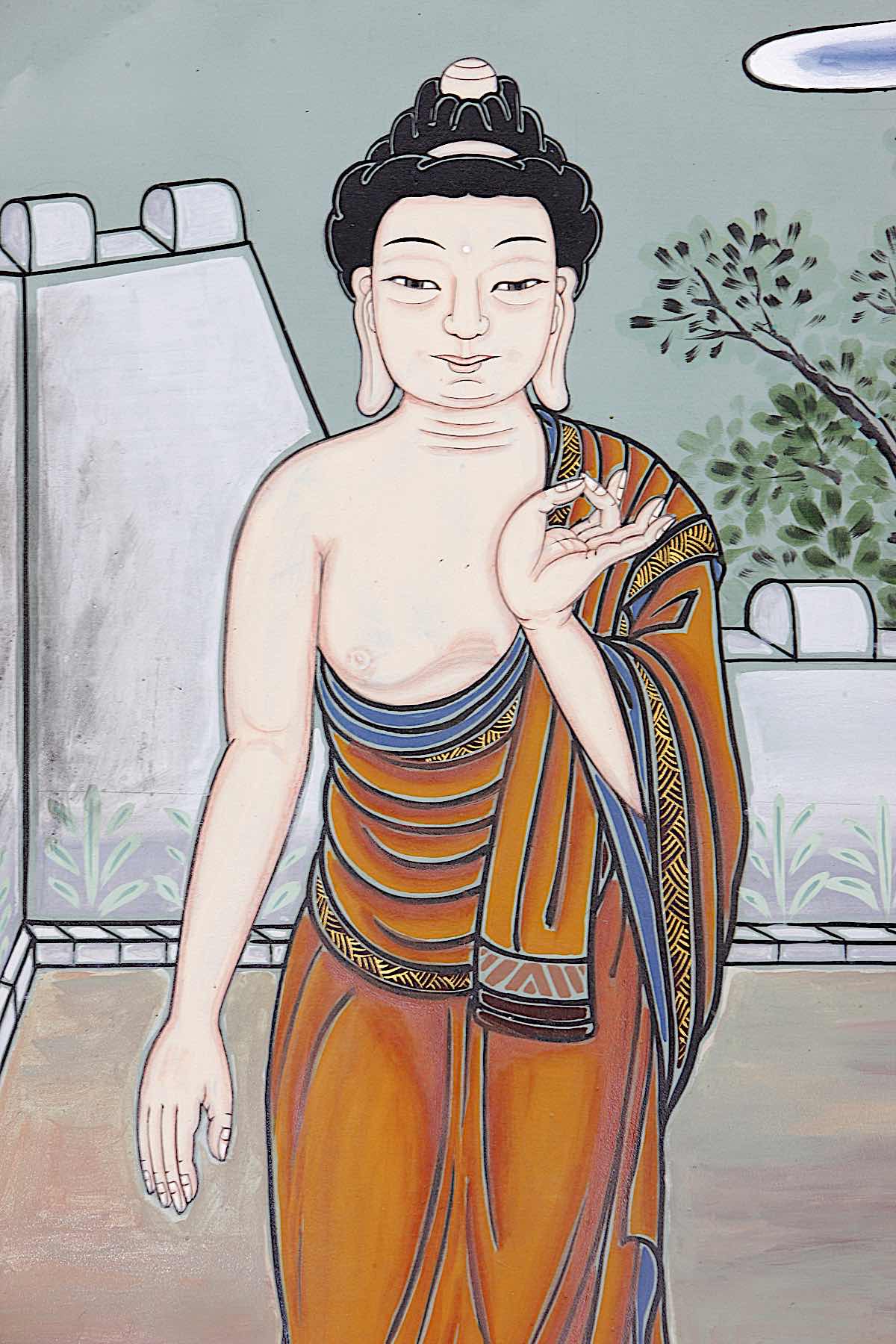
First, we translate the teachings so that we understand with our minds. This is called Analytical Meditation or Vipaśyanā and Discriminating Awareness.
Second, we ideally chant with repetition, rhythm and chanting or to engage our hearts and unify our attention. This is a method within the broader topic of Stabilizing Meditation or Śamatha and Calming Concentration.

Finally, we recite mantras in their original language to cut through ordinary conceptuality — Mantra, the method of sacred sound.

Analytical or Vipaśyanā Meditation Requires Comprehension
Put another way, we can say Vipaśyanā — helps us understand with the mind; Śamatha — helps us settle and unify through chant and rhythm; and Mantra — the method of sacred syllables, helps us cut through ordinary conceptuality.
Analytical Meditations and Stabilizing Meditation are fairly clear. We need to understand the teachings to benefit from them. We sit in meditation and analyze a topic in our minds. We read the sutras in our own language, make notes, listen to our teachers in our own language, and try to analyze and comprehend. This is Analytical Meditation, Vipaśyanā. Discriminating Awareness.

Śamatha or stabilizing calm-abiding meditation
Śamatha or stabilizing calm-abiding meditation also seems clear. It’s a broad category that includes, breathing, sitting, scanning, and guided meditation. Here, as described by Kyabje Garchen Rinpoche, we broadly include chanting and rhythmic recitation as the focus of stabilizing meditation. In formal practice, where we are reciting long practices, it helps us concentrate if we use melody and rhythmic chanting. It also elevates our meditation by engaging the mind more fully.
Both the effort to recite and translate and the use of rhythm and music in our practices are also merit practices. By this we mean our voices and our practices are offerings to the Three Jewels. When we make music or chant we offer sound and music.

In the Treatise on “The Perfection of wisdom” it it written: “The bodhisattvas make use of beautiful music to soften people’s hearts. With their hearts softened, people’s minds are more receptive, and thus easier to educate and transform through the teachings. For this reason, music has been established as one type of ceremonial offering to be made to the Buddha.”
So far, it all makes sense.
Mantra is Untranslated
But now suddenly, what is mantra, and — this untranslated sacred resonance? Why, suddenly do we say, Mantras should not be chanted in our own language? Isn’t that a contradiction?
In Analytical Meditation we need cognition and translation. in Stabilizing meditation we need rhythm and pattern, such as a music or beat. Why, suddenly, though do we contradict the message of clarity and analysis with a mysterious instruction to chant mantras in the original language?
According to the teachings, the preserved, transmitted syllables of mantras bypass conceptual debate entirely, cutting through ordinary discursive habits at the subtle energetic level. And, they reinforce the perception of “sacredness” — a concept called Sacred Resonance.
- For more on Mantra and Sacred Resonance see>>
Transmission: by Sutra or by Teacher
So, we see Buddha in Sutras either teaching or approving of a teaching which is in our language. Then, at a certain point in some Sutras, there is transmission of a Dharani or a Mantra.
In the early scholarly translations, before the concepts were well understood, this word mantra was often translated as “spell” as in a magic spell. This is a dated and poor translation that doesn’t capture the real contextual meaning. While mantra often does have an aspect of affirmation and wish-requests, their purpose is elevating our mind beyond purely analytical and concentration. If the syllables are translated for chanting, they become simply a sentence. When they are chanted as their original vowels, we simply mindfully tune in to the sound and vibration.
In other words:
- Mind or Analytical methods are about understanding.
- Music and Rhythm is about elevating through Concentration.
- Mantra is about Ultimate Wisdom.
If we’re not translating the mantra for our chanting, how can it be equated to wisdom?
This is not the wisdom of intellect. Nor the wisdom of concentration. This is the wisdom of Śūnyatā, or Emptiness or Oneness, or Unity. This Oneness or Emptiness is what unites us all. It connects us to our Buddha Natures. It taps into what we already have, hidden behind layers of concept and conditioning — our essential Buddha Natures.
Mantra is, the essence of perfection. Certainly, the syllables can be translated, and your teacher may very well translate them, since it is important to know what you are chanting. However, our teachers transmit the mantras with a multi-layered teaching, not just a one-line translation.

Om Mani Padme Hum Example
For instance, we can know that oṃ maṇi padme hūṃ has been translated as The jewel in the Lotus. While this phrase does add literal context, if you know what is meant by jewel and lotus, it doesn’t really convey the deeper symbolism and meaning.
Imagine how flat it seems to chant “Hail to the Jewel in the Lotus” rather than the sacred sounds of oṃ maṇi padme hūṃ, oṃ maṇi padme hūṃ, oṃ maṇi padme hūṃ. The sounds and repetition help us to mindfully focus our minds on the true essence of the mantra.
We have our lineage teachers to take us beyond literal translations from Google Translate. When the teacher expands that teaching, He or She will explain each of the six syllables. This will be a lengthy teaching, not a 2 minute description. When we don’t have access to a teacher, we still have commentaries from teachers of the lineages through the centuries to draw on.
Deeper Meanings
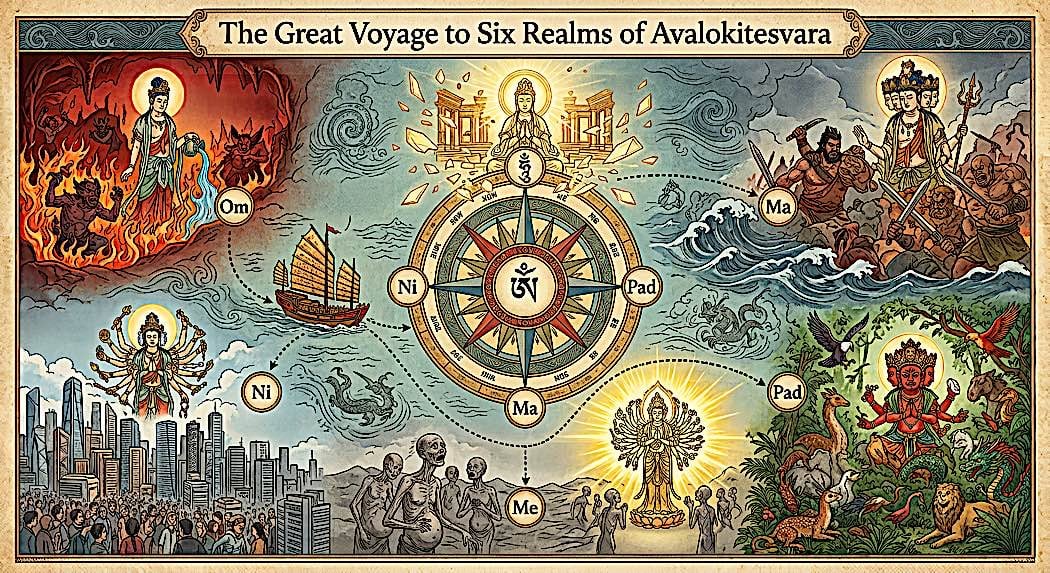
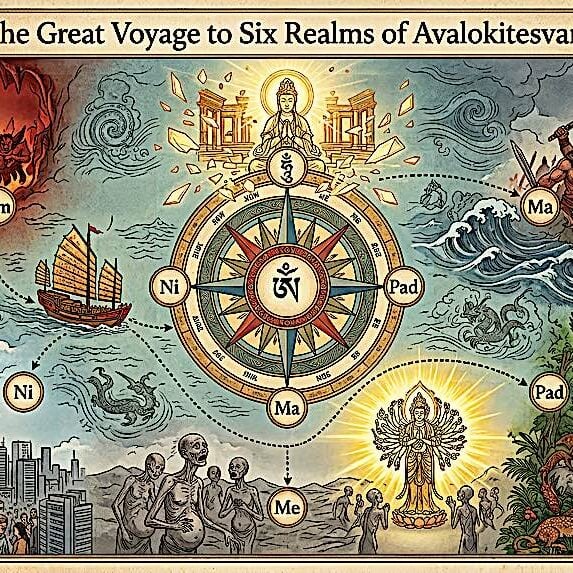
In the case of our oṃ maṇi padme hūṃ, we might learn for example that each syllable protects or closes a sense gateway. We might learn that each syllable extinguishes the suffering of one the six realms, and together they rescue beings in all six realms. We may learn the many facets of the word “mani” that go far beyond simply saying “jewel.” We could spend an hour just trying to unpack the concept of “lotus.”
When you try to unpack a mantra, you discover that you are no longer chanting syllables. An entire essay or book wouldn’t be enough to fully describe the six-syllable mantra in depth.
Then, we discover, suddenly, our teacher is describing the mantra in terms of “Emptiness” and Śūnyatā. Form is Emptiness. Emptiness is Form. And now we’ve moved from Mantra and sonic resonance into Wisdom.
All from six sacred syllables.
It’s not just because they sound exotic and holy. They are root sounds from the mother language, yes, and that gives us a sense of connection. They link us back across time. Although we need to understand the teachings in our own language, we can connect back to Buddha’s own transmitted voice and sounds by chanting mantras in their original language as our final seal on our understanding of the teachings. Or, the beginning of understanding.
Chanting mantras bridges time, and transcends culture and helps us see past the illusions of time and false appearances.
By incorporating all three — chanting our main practice in our own language for clarity and comprehension, with a little chant and rhythm to relax our minds, and sealing our practice with Sanskrit Mantras or Pali Parittas — we complete our practice in the most perfect way possible.
Finally, there’s an added layer. If you listen to monks or your teacher, or your Sangha, or to 3Gems Band chanting ancient Pali Sutta, or Sanskrit Mantras, you feel uplifted.
Music makes the meal more palatable as Garchen Rinpoche explained. When you incorporate all three of Mind, Music and Mantra into your practice, you have a full and satisfying three course meal that nourishes our Buddha Nature.
We dedicate the merit of this presentation to the benefit of all beings.
📚 BUDDHIST EDUCATIONAL VIDEO
Practical, well-cited teaching content with references. 1,700+ in-depth written features at https://buddhaweekly.com
🎵 BUDDHIST MUSIC
The BuddhaWeekly Band and @3GemsBand offer music as educational skillful means. Chanting in Pali, Sanskrit, and lineage languages is a learning and practice opportunity—chant along and learn as transmitted.
☸️ TRADITION
Buddha Weekly is lineage-neutral, with volunteers from diverse traditions. Individual features may focus on one lineage or teacher, but our goal is to showcase diverse traditions. About us: https://buddhaweekly.com/buddha-weekly/
📅 DHARMA CALENDAR
Our multi-traditional calendar of important Buddhist dates: https://buddhaweekly.com/dharma-calendar/
🙏 SUPPORT OUR MISSION
Buddha Weekly’s Spread the Dharma mission is non-profit, supported by volunteer professionals. To help this outreach in multiple languages: https://buddhaweekly.com/support or https://patreon.com/BuddhaWeekly
🎬 HOW WE MAKE OUR VIDEOS
Human volunteers write, edit, and research all features. Meet the team: https://buddhaweekly.com/volunteer-team/
Our volunteer art director uses Final Cut Pro, Audition, and Photoshop. Our music producer uses Audition. We use original and stock media, plus tightly directed generative art when original isn’t available, for both video and thumbnails.
⚠️ DISCLAIMER
Errors and Omissions Excepted—despite editorial rigor, mistakes can happen. Please report any errors and we’ll correct them: https://buddhaweekly.com/contact-us/
📚Features are informational only. For health or lifestyle issues, always consult qualified health or spiritual advisors.
More articles by this author

You Are Never Alone; You were Never Impure: The Meaning of the Śuddha Mantra. Power of Chants: Overview
Śuddha – Purity Mantra: Also known as the Śunyata mantra, and the “Universal Love” mantra, all Buddhist practices begin with it

Search
Latest Features



Please support the "Spread the Dharma" mission as one of our heroic Dharma Supporting Members, or with a one-time donation.
Please Help Support the “Spread the Dharma” Mission!
Be a part of the noble mission as a supporting member or a patron, or a volunteer contributor of content.
The power of Dharma to help sentient beings, in part, lies in ensuring access to Buddha’s precious Dharma — the mission of Buddha Weekly. We can’t do it without you!
A non-profit association since 2007, Buddha Weekly published many feature articles, videos, and, podcasts. Please consider supporting the mission to preserve and “Spread the Dharma." Your support as either a patron or a supporting member helps defray the high costs of producing quality Dharma content. Thank you! Learn more here, or become one of our super karma heroes on Patreon.
Lee Kane
Author | Buddha Weekly
Lee Kane is the editor of Buddha Weekly, since 2007. His main focuses as a writer are mindfulness techniques, meditation, Dharma and Sutra commentaries, Buddhist practices, international perspectives and traditions, Vajrayana, Mahayana, Zen. He also covers various events.
Lee also contributes as a writer to various other online magazines and blogs.