

29th Lunar: Dharma Protector Day – Removing Obstacles Day (Black Tea Day)
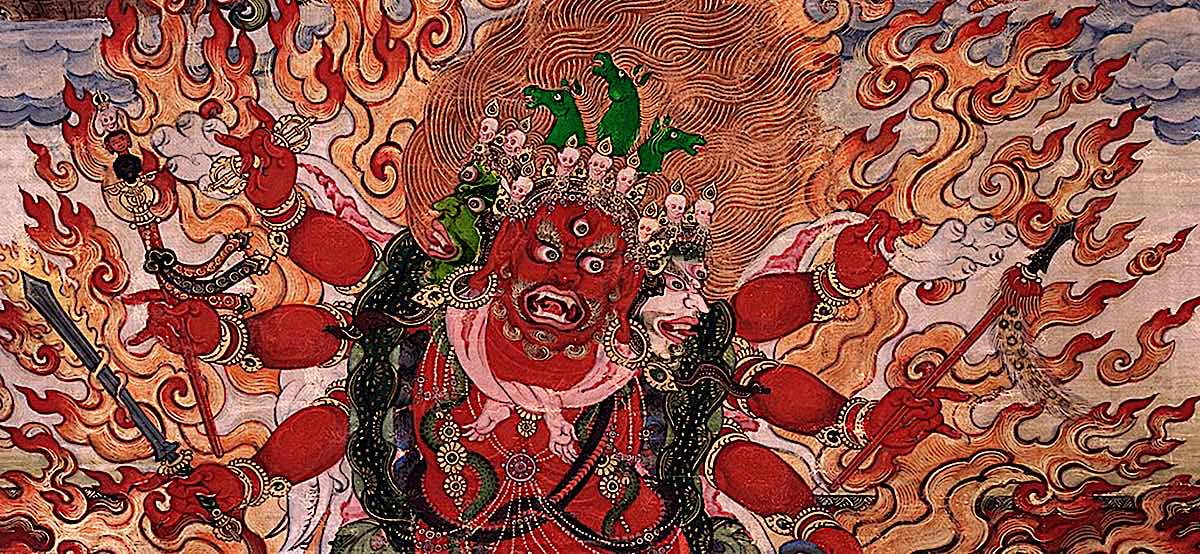
🌟🔥🔥🔥 The 29th Lunar: Dharma Protector Day (Black Tea Day) 🌟🔥🔥🔥 This sacred day is your powerful opportunity to: Purify and REMOVE obstacles with protector mantras on the 29th Lunar (the day just before the new moon and a new month) ABOUT PROTECTOR DAY>>
Quick Facts on Dharma Protector Day
- Dharma Protector Day is an auspicious occasion observed on the 29th day of the lunar month, considered the day before the New Moon Usually we make tea offerings and perform protector Pujas.
- This day is dedicated to the honoring of Dharmapalas or Dharma Protectors, spiritual entities who create favorable conditions for spiritual growth by eliminating obstacles
- Within Vajrayana Buddhism, Dharmapalas such as Mahakala, Palden Lhamo, and Vaisravana are honored for their assistance and commitment to safeguarding Dharma (Source: Lama Yeshe).
- Observing Dharma Protector Day is thought to strengthen the connection between practitioners and the Dharmapalas, thereby facilitating one’s spiritual journey
Practice Resources
Several practice videos below are embedded for quick reference as a toolkit for Dharmapala Days.
About Lunar Practice Dates (Feature on Buddha Weekly)>>
What’s Your Cup of Tea?
The 29th Day is traditional for honoring the Protective Enlightened and Worldly guardians, since it is the end of one lunar month to remove our obstacles and negative karma before the beginning of a new, more hopeful month. Annually, in Tibetan tradition, we often perform more elaborate end of year ceremonies, Pujas or Duchens to clear obstacles going into the new year. The monthlly day on the 29th is often called “Protector Day” or “Black Tea Day” since we traditionally make offerings of very strong black tea often poured over grains to symbolize auspiciousness. Strong tea symbolizes strong activity, grains symbolize auspiciousness, and allowing the tea to flow and overflow symbolizes bountiful blessings.

NOTE on PRACTICE: Practice according to your lineage. If you a offering to protectors that you have not received empowerments from — if that is permitted in your lineage — visualize them IN FRONT OF YOU. You do not self generate. In this way, you are making an offering, or PUJA.
If you have empowerment, practice according to your teacher’s instructions.

ABOUT DHARMAPALAS
A full feature on Dharma Protectors and Dharmapala Days (Dharmapala) is here>>
Although the Three Jewels – Buddha, Dharma and Sangha — is always our main protection and our Buddhist Refuge, Dharma Protectors are our powerful guardians, sworn to uphold Dharma — and Dharma Practitioners.

For some of us, they are also our Yidams and Enlightened aspect of Buddha, for example, Vajrakilaya, Hayagriva or Yamantaka. But many practitoners also honor and make offerings to the many beings who swore to uphold the Dharma who may be more worldly, such as the very powerful and beautiful Four Heavenly Kings. We don’t take refuge in them, but they help us because they have sworn before Buddha to protect us. And, usually, we think of these as “burly friends and protectors”.
“There are both male and female protectors). Protectors are very extensive. They can be dharma protectors or worldly protectors. Your teacher is a dharma protector. A worldly protector can be someone who protects your country. There are protectors of your family and your beliefs. There are your personal protectors. There are guardian protectors who give you guidance.” —Phakchok Rinpoche [1]
If a Enlightened Protector is also your Refuge Yidam, such as Vajrakilaya or Hayagriva, you might do special tea offerings on this day, in addition to your daily practices and their normal full moon and moon days.
WRATHFUL ASPECTS
Not all protects look “wrathful” or “fierce” or “powerful” but most tend to be visualized in their wrathful form. This is a “pyschological” reinforcement of the “strong protector” archetype. In other words, if you’re looking for a protection, you normally look for strong protection. For a feature on wrathful deities, where we compare them (metaphorically) to “first responders” see:
Enlightened Protectors
As Phakchok Rinpoche explained above, our protectors are extensive, and they include our main refuge, our Yidam or Buddha. Often, the Enlightened Buddhas take on a wrathful aspect to symbolize protection, such as:
🔥🔥🔥 🔥🔥 Vajrakilaya, wrathful heruka form of Vajrasattva. For Vajrakilaya refuge, puja with mantras, @3gemsband sings a beautiful practice here:
🔥🔥🔥 🔥🔥 Hayagriva, wrathful heruka form of Amitabha Buddha is here as a Dharani and mantra chant:
🔥🔥🔥 Palden Lhamo, who is a wratful Protector aspect of Tara, Mantra from @3GemsBand:
🔥VIDEO about the symbolism of Palden Lhamo:
🔥🔥🔥 Powerful and courageous Black Mahakala, the fiercest emanation of Avalokiteshvara, is here as a Mantra:
🔥🔥🔥 Vajrapani Bodhisattva, the “hand of the Buddha” who is “Buddha’s protector”:
⚡ ⚡ ⚡ Practices Specific to Protector Days
✅ Chant the 8-Minute Four Heavenly Kings Puja to honor Four Protectors of the Four Buddhist Virtues and the Four Direction. Practice, audio-for chant-along and text here:
Who are the Eight Dharmapalas or Dharma Protectors?
These are the eight best known Dharmapalas, in alphabetical order:
- Begtse Chen — A warrior Enlightened protector of the Buddhist teachings. He is usually a Wisdom Protector, not a Yidam. Source: Himalayan Art
- Mahakala — Known as the ‘Great Black One’, associated with courage and protection. He is an Enlightened Protector and emanates from various Buddhas depending on the specific tantra or lineage, but we rarely self-generate or take him as a Yidam. Learn more about Mahakala in our full feature “Three Men in Black and the Miracles of Mahakala”>>
- Ekajati, Ugra Tara or Blue or Black Tara — She has different appearances but famously is depicted with one eye and one tooth, associated with spiritual transformation. She is fully Enlightened, as an emanation of Tara. Source: Himalayan Art
- Kalarupa, Yamadamaraja, or Yama — associated with wisdom and righteousness, and usually considered Enlightened but NOT a Yidam or personal practice. Source: Himalayan Art
- Palden Lhamo — The only female Dharmapala, revered as a fierce and Enlightened powerful protector, and also the protector of both Tibet and the Dalai Lama. Like Mahakala, she is Enlightened but not a personal Yidam. To learn more about Palden Lhamo, see our full feature>
- Tshangs pa — Known as the White Brahma, regarded as a worldly protector of monasteries and the Buddhist teachings. Source: Himalayan Art
- Vaisravana — Also known as Kubera, the Guardian of the Northern Direction. Although there is a tendency in many traditions to think of him as Wisdom Protector, he is usually considered Worldly, but very important. Learn More about Vaisravana in our feature>>
- Yamantaka or Vajrabhairava — Yamantaka is the “slayer of death” or “slayer of Yama” and is a fully Enlightened Protector as well as a Yidam (Highest Yoga Tantra generally, with permission only), associated with overcoming death and fear. To learn more about Yamantaka Vajrabhairava see our feature>>
More articles by this author
Search
Latest Features

Please support the "Spread the Dharma" mission as one of our heroic Dharma Supporting Members, or with a one-time donation.
Please Help Support the “Spread the Dharma” Mission!
Be a part of the noble mission as a supporting member or a patron, or a volunteer contributor of content.
The power of Dharma to help sentient beings, in part, lies in ensuring access to Buddha’s precious Dharma — the mission of Buddha Weekly. We can’t do it without you!
A non-profit association since 2007, Buddha Weekly published many feature articles, videos, and, podcasts. Please consider supporting the mission to preserve and “Spread the Dharma." Your support as either a patron or a supporting member helps defray the high costs of producing quality Dharma content. Thank you! Learn more here, or become one of our super karma heroes on Patreon.
Lee Kane
Author | Buddha Weekly
Lee Kane is the editor of Buddha Weekly, since 2007. His main focuses as a writer are mindfulness techniques, meditation, Dharma and Sutra commentaries, Buddhist practices, international perspectives and traditions, Vajrayana, Mahayana, Zen. He also covers various events.
Lee also contributes as a writer to various other online magazines and blogs.