

Descending Light: Celebrating Lhabab Duchen 2026 — The Day of Ten Million Multiplied Merits: Buddha’s Descent From Heaven
A Special Buddha Weekly Feature for Sunday, November 1, 2026
“Lhabab Duchen is a profound time to feel deep gratitude to the Buddha for what he did, and to the whole lineage of teachers down to our own teachers, who preserved these precious teachings so that we could come into contact with them.” Venerable Thubten Chodron, Buddhism: One Teacher, Many Traditions
On Sunday, November 1, 2026 — marking the 22nd day of the ninth Tibetan lunar month — Buddhists around the globe gather to celebrate Lhabab Duchen (lha babs dus chen), the sacred festival commemorating Gautama Buddha’s historic descent from the celestial heaven of Trayastrimsa back to the human world.
A Recommended Practice by Lama Zopa with Merit Multiplied — Recitation of this short Sutra:
As one of the four major annual holy days in the Tibetan Buddhist calendar, Lhabab Duchen honors one of the Eight Great Deeds of Shakyamuni Buddha. According to canonical tradition, any positive or negative karmic action performed on this sacred day is multiplied ten million times — and according to Vinaya texts such as the Treasure of Quotations and Logic, karmic seeds can expand up to one hundred million times.
Whether you light a single candle at your home altar, keep the eight Mahayana precepts for twenty-four hours, recite the Heart Sutra or Sutra of the Three Jewels, or offer support to the Sangha, Lhabab Duchen offers an extraordinary gateway to purify past karma, generate vast spiritual merit, and re-anchor your heart in universal compassion.
The Sacred Story: Repaying Motherly Kindness Across Realms
The origin of Lhabab Duchen touches upon one of the most tender and inspiring episodes in the life of the Enlightened One.
When Prince Siddhartha was born in Lumbini, his mother, Queen Mahamaya, passed away just seven days after giving birth. Through her accumulated merit, she took rebirth in Trayastrimsa (the Heaven of the Thirty-Three), a celestial realm ruled by Indra.

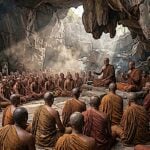
At age forty-five, following his seventh rainy season retreat, Shakyamuni Buddha ascended to Trayastrimsa to teach the Dharma to his mother, repaying her supreme kindness as the one who brought him into the world. For three full months, seated upon a gleaming white stone in a celestial grove, the Buddha delivered continuous teachings to Queen Mahamaya and a vast assembly of devas. Through these divine discourses, Queen Mahamaya attained arhatship — ultimate liberation from the cycle of suffering.
Recommended by Lama Zopa for Buddha Days: Reciting the Shakyamuni Buddha Sanskrit Mantra:
The Appeal of Mahamaudgalyayana and the Human Assembly
While the Buddha taught in the heavens, his human disciples in Jambudvipa (our human realm) missed their master deeply. As recorded in the Samyukta-Agama, the four assemblies of monks, nuns, laymen, and laywomen approached Venerable Mahamaudgalyayana, one of the Buddha’s principal disciples renowned for his spiritual powers:
“We humans do not possess the supernormal powers to ascend to the Heaven of the Thirty-Three to pay our respects to the Blessed One. Out of compassion for the four assemblies, we beg the Blessed One to return to Jambudvipa.”
Mahamaudgalyayana ascended to the god realm and conveyed the heartfelt appeal of the human assembly. The Buddha agreed, promising to descend back to earth after seven days.
Recommended by Lama Zopa for Buddha Days for extra merit:
The Tripartite Staircase at Samkashya
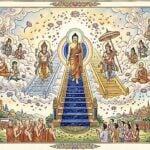
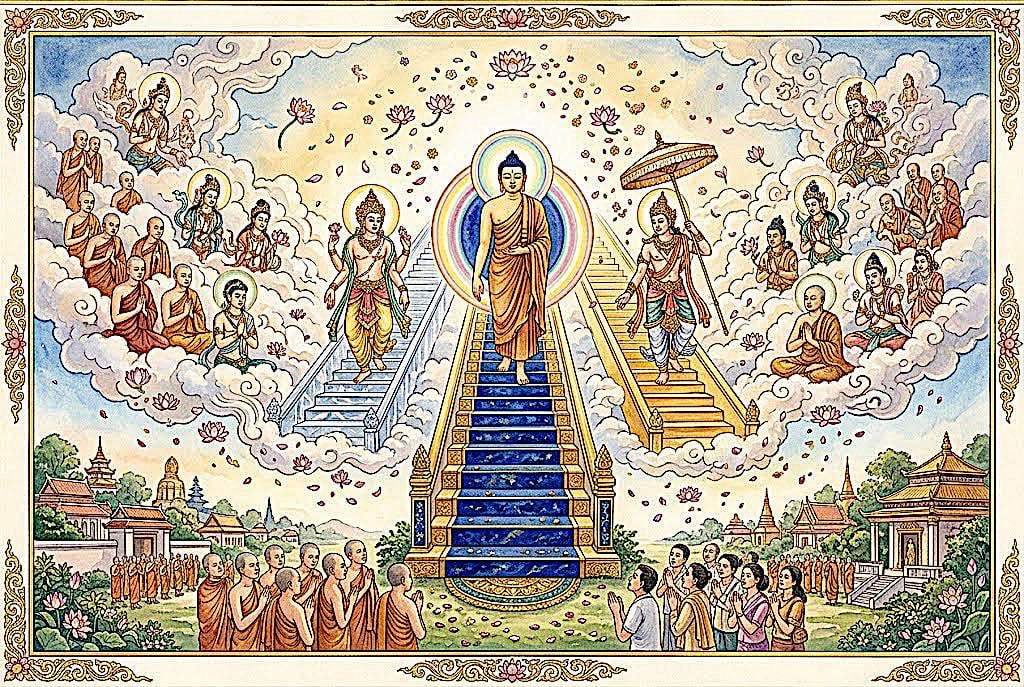
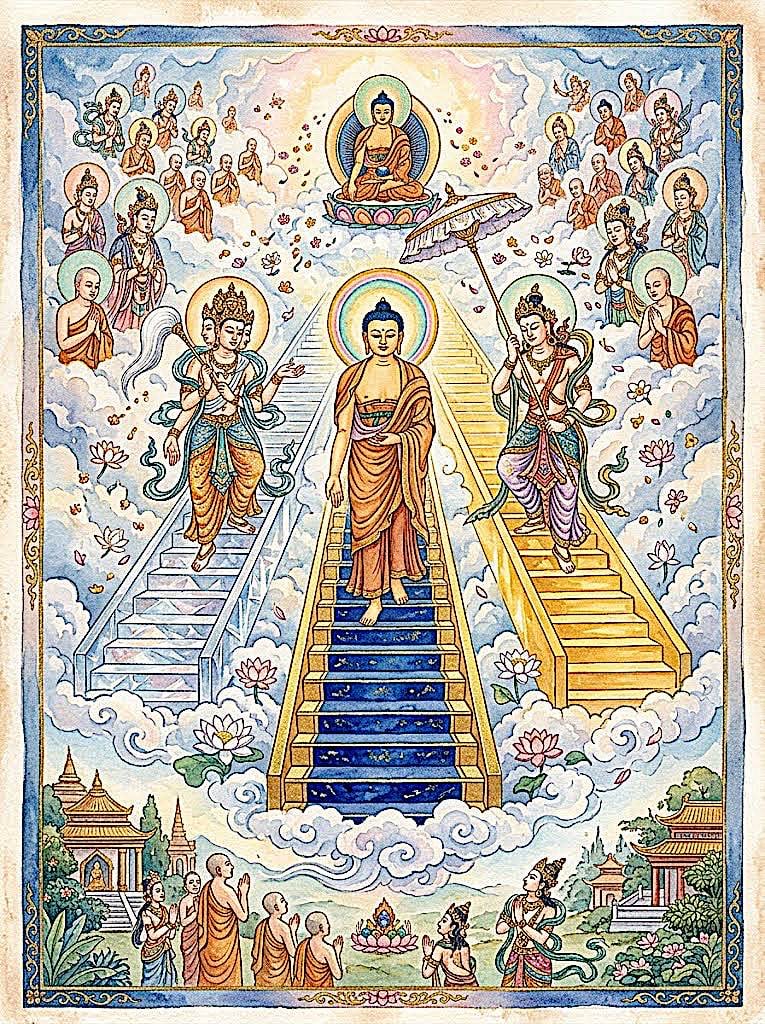
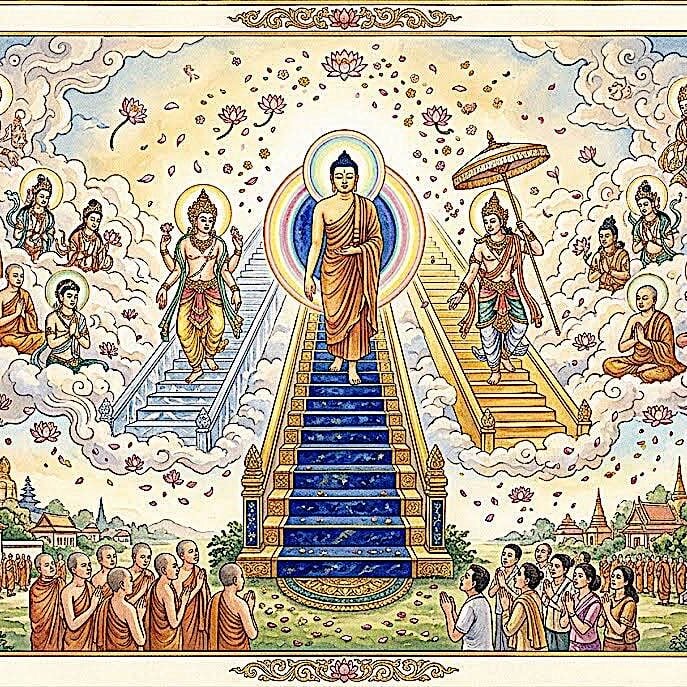
Seven days later, under a luminous full moon, a miraculous spectacle unfolded. The divine architect Vishwakarma — directed by Indra and Brahma — manifested a magnificent triple staircase extending from the heavens down to the city of Samkashya (Sankassa, in modern Uttar Pradesh, India).
- The Central Ladder (Lapis Lazuli): The Buddha descended down the middle staircase, radiant with golden light.
- The Right Ladder (Gold/White): Lord Brahma descended holding a white yak-tail fan, honoring the Buddha’s supreme wisdom.
- The Left Ladder (Crystal/Jeweled): Lord Indra descended holding a precious parasol, shielding the Enlightened One.
As flowers rained down from the skies, King Prasenajit of Kosala, along with monks, nuns, royalty, and devas, welcomed the Buddha back to earth at the foot of an Udumbara tree. Today, Samkashya remains celebrated as one of the Eight Great Pilgrimage Sites in Buddhism.
Recommended by Lama Zopa Rinpoche:
Karmic Acceleration: Why Merit is Multiplied 10,000,000-Fold
In Buddhist philosophy, major Dharma dates associated with pivotal moments in Shakyamuni Buddha’s life act as powerful spiritual amplifiers. On Lhabab Duchen, the collective spiritual energy of millions of practitioners worldwide, combined with the sacred blessing of the Buddha’s return, creates a uniquely fertile environment for spiritual practice.
|
Aspect of Practice |
Everyday Practice |
Lhabab Duchen Practice |
|
Karmic Impact |
Standard karmic imprint |
Multiplied 10,000,000× (up to 100,000,000×) |
|
Primary Focus |
Daily mindfulness & routine virtue |
Intensive purification, generosity, and vow-taking |
|
Community Synergy |
Individual practice |
Worldwide global Sangha practice & dedication |
|
Recommended Vows |
Standard 5 Lay Precepts |
24-Hour 8 Mahayana Precepts (Sojong) |
Because karmic consequences are magnified so significantly on this day, practitioners take special care to guard their speech, mind, and actions against negative karma while enthusiastically engaging in virtuous acts.
How to Celebrate: Eight Practices Recommended by Lama Zopa Rinpoche
To help practitioners maximize the spiritual potential of Lhabab Duchen, the late revered master Lama Zopa Rinpoche outlined Eight Essential Virtuous Practices. Incorporating even one or two of these activities into your day on Sunday, November 1, 2026, generates immense spiritual merit.
Celebrate in your own way, with a candle, or meditation, or Sutra recitation or mantras. What do we celebrate. The teachings, the teacher and the sangha who continue the teachings. We celebrate the great life of the Enlightened Buddha:
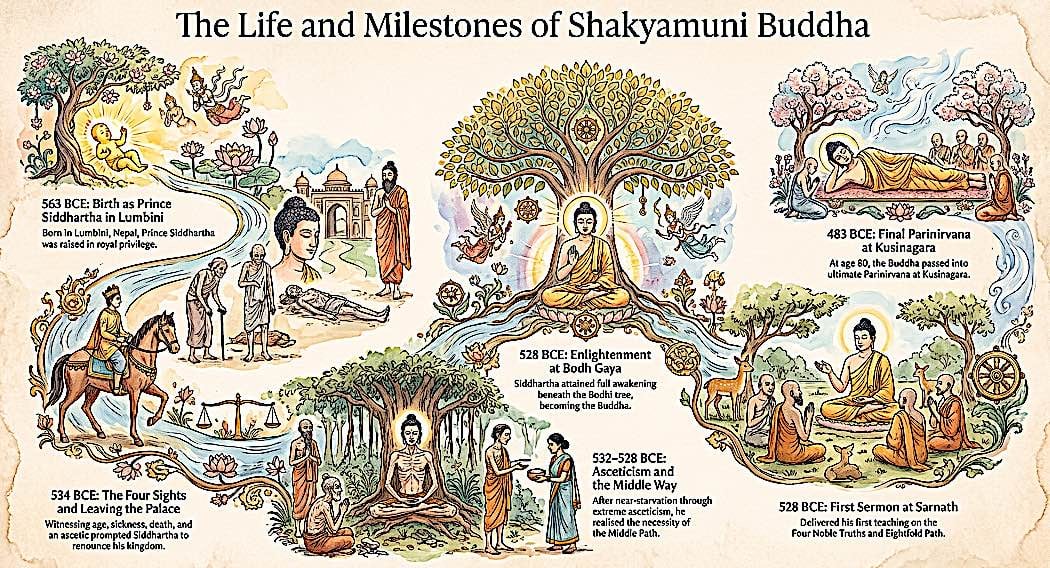
1. Reciting Sacred Sutras
Reciting foundational Buddhist texts carries immense purification power. Recommended sutras include:
- The Heart Sutra (Prajnaparamita): The supreme essence of emptiness and wisdom.
- The Diamond Cutter Sutra (Vajracchedika): Cutting through illusions of self and reality.
- The Sutra of Golden Light: Bringing peace, protection, and prosperity to all beings.
- The Three Jewels Sutra (Triratna Sutta): Honor and refuge in Buddha, Dharma, and Sangha.
2. Making Offerings to the Sangha and Dharma
Support ordained monks and nuns, Buddhist monasteries, lay teachers, and Dharma publishing initiatives. Supporting the preservation and translation of sacred texts ensures that the Buddha’s words remain accessible to future generations.
3. Cultivating Bodhichitta and Reciting The King of Prayers
Bodhichitta — the altruistic aspiration to achieve full Awakening for the sake of all sentient beings — is the heart of the Mahayana path. Reciting The King of Prayers (Samantabhadra’s Aspiration) aligns your mind with the infinite vows of the Bodhisattvas.
4. Practicing Charitable Giving (Dana)
Generosity on Lhabab Duchen extends beyond financial support. Offer food to the hungry, assist those in distress, or simply offer kind words, patient listening, and emotional comfort to family, colleagues, and strangers.
5. Taking Precepts (The 8 Mahayana Precepts)
Many lay practitioners choose to adopt the Eight Mahayana Precepts for twenty-four hours (from dawn on Sunday, Nov 1 to dawn on Monday, Nov 2). These include abstaining from killing, stealing, sexual activity, lying, intoxicants, taking food after midday, high or luxurious beds, and sensory entertainment/adornments. Living as a monastic for twenty-four hours generates boundless purity.
6. Making Sensory and Altar Offerings
Adorn your home altar with clean water bowl offerings, fresh flowers, incense, tormas, or butter lamps (and candles). Offering light symbolizes dispersing the darkness of ignorance with the light of wisdom.
7. Engaging in the Paramita of Wisdom
Dedicating time to study Dharma books, listen to teachings from qualified masters, copy sutra verses by hand, or engage in quiet analytical meditation deepens your understanding of emptiness and dependent arising.
8. Prostrations and Taking Refuge
Perform full or half prostrations while reciting the Refuge prayer (Namo Buddhaya, Namo Dharmaya, Namo Sanghaya). Physical prostrations subdue pride, purify bodily negative karma, and express reverence for the Enlightened Ones.

Practical Checklist for Celebrating at Home on November 1, 2026
You do not need to be in a monastery to celebrate Lhabab Duchen meaningfully. Here is a simple, step-by-step checklist to guide your home celebration on Sunday, November 1, 2026:
- [ ] Morning Refuge & Precepts: Wake up early, wash, clean your altar space, and formally take refuge in the Three Jewels. Consider taking the 8 Mahayana precepts for the day.
- [ ] Light Offering: Light a candle or butter lamp on your altar, visualizing its flame illuminating all realms of existence.
- [ ] Chanting & Sutra Recitation: Recite the Heart Sutra, the Shakyamuni Buddha Muni Mantra (Om Muni Muni Maha Munaye Soha), or the Suddha Purity Mantra.
- [ ] Mindful Generosity: Make an online donation to a Dharma charity, Sangha fund, or local humanitarian relief cause.
- [ ] Mindful Speech and Conduct: Practice strict non-harming (Ahimsa) in your speech and digital communications throughout the day.
- [ ] Stupa or Nature Walk: If possible, visit a local stupa or temple to circumambulate clockwise while chanting mantras. If no stupa is nearby, walk mindfully in nature, sending loving-kindness to all living beings.
- [ ] Evening Dedication of Merit: Close your day by formally dedicating all accumulated merit to the long life of spiritual teachers, the relief of suffering worldwide, and the swift enlightenment of all sentient beings.
Dedication: Lighting the World with Dharma
Lhabab Duchen reminds us that no matter how dark or turbulent the world may appear, the light of wisdom and compassion continues to descend into human lives whenever we open our hearts to the Dharma.

As we celebrate this joyous occasion on Sunday, November 1, 2026, let us remember Queen Mahamaya, the devas, and the great lineage of masters who preserved these precious teachings across twenty-six centuries. May any merit created by reading, sharing, and practicing these teachings be dedicated to peace, harmony, and liberation for all beings in every realm.
May all beings be free from suffering and the causes of suffering. May all beings enjoy happiness and the causes of happiness.
Buddha Weekly is a volunteer-run non-profit initiative dedicated to “Spreading the Dharma” at no cost to readers worldwide. Please consider supporting our mission through prayer, practice, or patron membership.
More articles by this author
Descending Light: Celebrating Lhabab Duchen 2026 — The Day of Ten Million Multiplied Merits: Buddha’s Descent From Heaven
You Are Never Alone; You were Never Impure: The Meaning of the Śuddha Mantra. Power of Chants: Overview
Śuddha – Purity Mantra: Also known as the Śunyata mantra, and the “Universal Love” mantra, all Buddhist practices begin with it
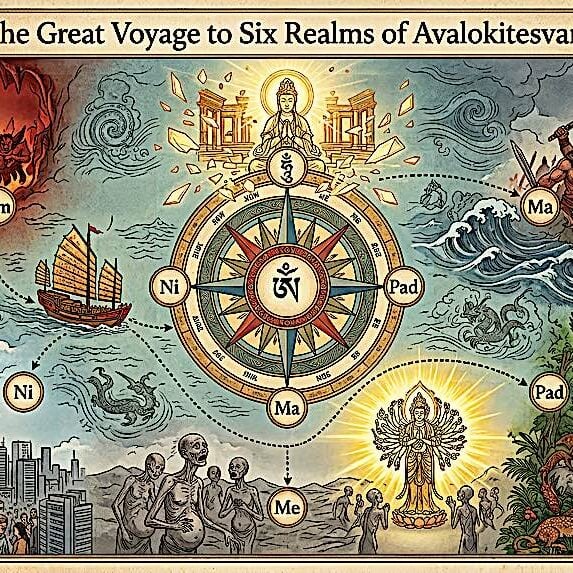
6 Avalokitesvara Heroes Overcoming 6 Poisons with 6 Syllables: Om Ma Ni Pad Me Hum: Enlightened Odyssey
Search
Latest Features


Please support the "Spread the Dharma" mission as one of our heroic Dharma Supporting Members, or with a one-time donation.
Please Help Support the “Spread the Dharma” Mission!
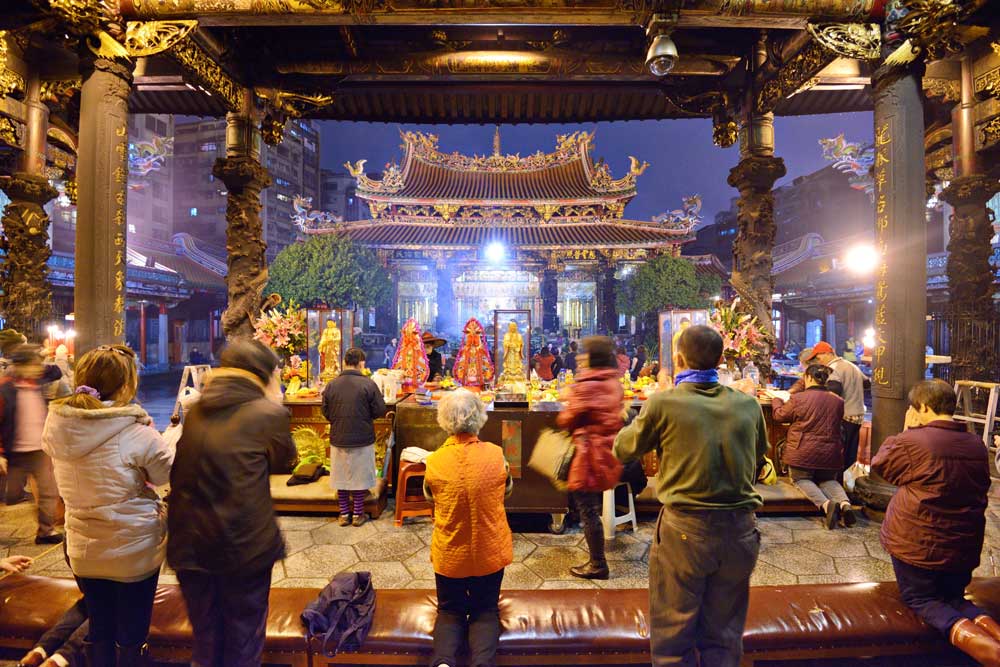
Be a part of the noble mission as a supporting member or a patron, or a volunteer contributor of content.
The power of Dharma to help sentient beings, in part, lies in ensuring access to Buddha’s precious Dharma — the mission of Buddha Weekly. We can’t do it without you!
A non-profit association since 2007, Buddha Weekly published many feature articles, videos, and, podcasts. Please consider supporting the mission to preserve and “Spread the Dharma." Your support as either a patron or a supporting member helps defray the high costs of producing quality Dharma content. Thank you! Learn more here, or become one of our super karma heroes on Patreon.
Lee Kane
Author | Buddha Weekly
Lee Kane is the editor of Buddha Weekly, since 2007. His main focuses as a writer are mindfulness techniques, meditation, Dharma and Sutra commentaries, Buddhist practices, international perspectives and traditions, Vajrayana, Mahayana, Zen. He also covers various events.
Lee also contributes as a writer to various other online magazines and blogs.