

Medicine Buddha Victory Mantra (Chinese Gufeng style) with Refuge, Offering, Mantras and Dedication
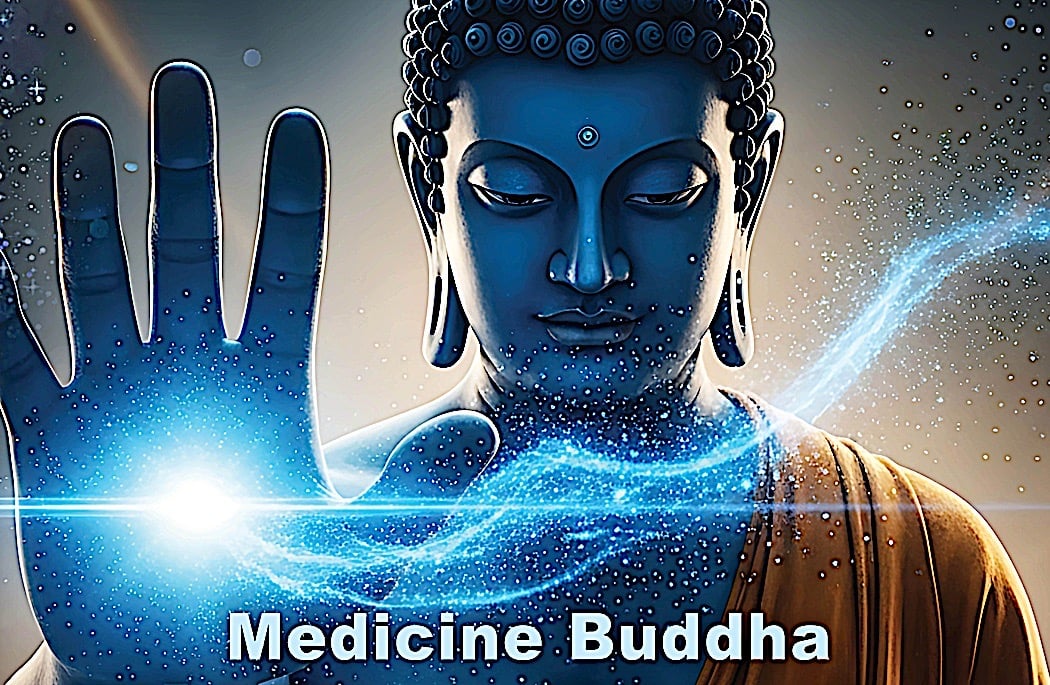
Medicine Buddha Victory Mantra is the go-to for healing, rejuvinating life-force and chi, and protection of body. For this reason, you’ll hear the mantra chanted gently in long, relaxing tracks, including on Buddha Weekly’s channel. For some, though, healing requires motivation, energizing, inspiration and a powerful and potent mix of sounds and visualization. Especially for those with agressive health conditions, a more energetic and powerful chanting of the mantra can be helpful. NOTE: Mantras are NOT a replacement for proper medical advice and healthcare.
Here, @3GemsBand sings the mantra in Chinese with Gufeng style, an ancient style with energy to inspire energetic and inspirational healing. Visualization should also be energetic. Half close your eyes and see Medicine Buddha sending strong blue Lapis Lazuli healing light into your body, filling your entire body and healing.
Here, 3 Gems Band sings as a complete practice with Refuge and prostrations to the Buddha, Dharma and Sangha, Offering, Mantras and Dedication. This is a full practice. (In future will be released as a meditational video. For now, play audio only below (lyrics with translations and commentary follow.
SONG TITLE on Streaming: Medicine Buddha Victory Mantra Chinese Gufeng
Available on Streaming, Spotify, Apple, Youtube and many others “Medicine Buddha Victory Mantra Chinese Gufeng” from 3Gems Band.
MEDICINE BUDDHA VICTORY MANTRA: Medicine Buddha Victory Mantra is a powerful and potent healing mantra. Often chanted softly and meditatively, 3GemsBand here inspirationally sings in a victorious Chinese Gufeng style to reflect the power of this victorious mantra to overcome even the worst of disease, condition and poison or obstacle in life— for those with FAITH, devotion and Bodhichitta intention. Medicine Buddha’s 12 Vows are to help all beings with protection, healing, compassion, wisdom, and even, when needed “wrathful” healing energy.
THIS IS A FULL PRACTICE, with Refuge in the Three Jewels, offerings, mantras, and final dedication.
LYRICS with PINYIN AND TRANSLATION
Lyrics with Pinyin for sing-along and English translation in each section of this practice.
Intention Settings and Incense Lit
PROSE TRANSLATION: The incense is newly lit; the Dharma realm is permeated with its fragrance; all Buddhas and Bodhisattvas in their assemblies hear it from afar; auspicious clouds gather everywhere; sincere intentions are abundant; all Buddhas manifest their complete forms; Namo Xiangyun Gai Bodhisattva Mahasattva.
炉香乍爇(Lú xiāng zhà ruò)
法界蒙熏(Fǎ jiè méng xūn)
诸佛海会悉遥闻(Zhū fó hǎi huì xī yáo wén)
随处结祥云(Suí chù jié xiáng yún)
诚意方殷(Chéng yì fāng yīn)
诸佛现全身(Zhū fó xiàn quán shēn)
南无香云盖菩萨摩诃萨(Nā mó xiāng yún gài pú sà mó hē sà)
南无香云盖菩萨摩诃萨(Nā mó xiāng yún gài pú sà mó hē sà)
南无香云盖菩萨摩诃萨(Nā mó xiāng yún gài pú sà mó hē sà)
[皈依与安住 · 三宝]Taking Refuge and Abiding in the Three Jewels
Refuge and Prostrations
南无佛陀耶 (Nā mó fó tuó yē)
南无达摩耶 (Nā mó dá mó yē)
南无僧伽耶 (Nā mó sēng qié yē)
TRANSLATION
Namo Buddhaya.
Namo Dharmaya.
Namo Sanghaya.
Dedicating the Offering
以我功德力 (Yǐ wǒ gōng dé lì) 如来加持力 (rú lái jiā chí lì)及以法界力 (Jí yǐ fǎ jiè lì)普供养而住 (pǔ gòng yǎng ér zhù)
以我功德力 (Yǐ wǒ gōng dé lì) 如来加持力 (rú lái jiā chí lì)及以法界力 (Jí yǐ fǎ jiè lì)普供养而住 (pǔ gòng yǎng ér zhù)
TRANSLATION: By the power of my merit, the power of the Tathagata’s blessing, and the power of the Dharma realm, I universally make offerings and dwell here.
[发心:菩提心愿]Motivation: Bodhicitta (the aspiration for enlightenment)
应生无垢浊心 (Yīng shēng wú gòu zhuó xīn)
无怒害心 (wú nù hài xīn)
于一切有情起利益安乐 (Yú yī qiè yǒu qíng qǐ lì yì ān lè)
慈悲喜舍、平等之心 (Cí bēi xǐ shě, píng děng zhī xīn)
TRANSLATION: One should cultivate a pure and undefiled mind, free from anger and harm, and generate benefit and happiness for all sentient beings. One should also cultivate loving-kindness, compassion, joy, equanimity, and impartiality.
[核心:药师咒]Core: Medicine Buddha Mantra (7 times)
(Pinyin in brackets followed by Sanskrit (for reference) (MORE DETAIL ON MANTRA AND TRANSLATION OF MANTRA BELOW)
南無薄伽伐帝 (nā mó bó qié fá dì) Namo Bhagavate
鞞殺社 (pí shā shè) Bhaiṣajya
窶嚕薜琉璃 (jù lū bì liú lí) Guru Vaiḍūrya
鉢喇婆 (bō lá pó) Prabhā
喝囉闍也 (hē là shé yě) Rājāya
怛他揭多耶 (dá tuō jiē duō yē) Tathāgatāya
阿囉喝帝 (ā là hē dì) Arhate
三藐三勃陀耶 (sān miǎo sān bó tuó yē) Samyak-saṃbuddhāya
怛姪他 (dá zhí tuō) Tadyathā
唵 (ān) Oṃ
鞞殺逝 (pí shā shì) Bhaiṣajye
[结尾:功德回向]Conclusion: Dedication of Merit
愿此殊胜功德 Yuàn cǐ shū shèng gōng dé,
回向法界有情 huí xiàng fǎ jiè yǒu qíng,
净除一切罪障 Jìng chú yī qiè zuì zhàng,
共成无上菩提 gòng chéng wú shàng pú tí.
愿此殊胜功德 Yuàn cǐ shū shèng gōng dé,
回向法界有情 huí xiàng fǎ jiè yǒu qíng,
净除一切罪障 Jìng chú yī qiè zuì zhàng,
共成无上菩提 gòng chéng wú shàng pú tí.
TRANSLATION
May this supreme merit be dedicated to all sentient beings in the Dharma realm, purifying all sins and obstacles, and together leading them to unsurpassed enlightenment.
Commentary and Sanskrit
Medicine Buddha Dharani (Bhaiṣajya-guru Vaiḍūrya-prabhā-rāja)
Chinese Transliteration with Sanskrit & English Commentary
1. 南無薄伽伐帝 (nā mó bó qié fá dì)
- Sanskrit: Namo Bhagavate
- English Commentary: “Homage to the Blessed One, the World-Honored One.” This is the classic opening salutation in Buddhist mantras, expressing reverence, devotion, and refuge in the Buddha.
2. 鞞殺社 (pí shā shè)
- Sanskrit: Bhaiṣajya
- English Commentary: “Medicine” or “Healing.” This directly points to the primary quality of this Buddha—the master of healing physical illness, mental afflictions, and the ultimate sickness of samsara (cyclic existence).
3. 窶嚕薜琉璃 (jù lū bì liú lí)
- Sanskrit: Guru Vaiḍūrya
- English Commentary: “Master of Lapis Lazuli” (or “Guru of Beryl Light”). Vaiḍūrya is a radiant, deep blue precious stone, often translated as lapis lazuli. It symbolizes the Buddha’s radiant, pure, and clear light body, which dispels the darkness of ignorance and disease. “Guru” means weighty teacher.
4. 鉢喇婆 (bō lá pó)
- Sanskrit: Prabhā
- English Commentary: “Splendor,” “Radiance,” or “Light.” It amplifies the meaning of Vaiḍūrya, indicating the emanation of healing, luminous light from that jewel-like Buddha.
5. 喝囉闍也 (hē là shé yě)
- Sanskrit: Rājāya
- English Commentary: “To the King.” Thus, the full title emerges: “Homage to the Blessed One, the King of Master Healers, the Radiant Lapis Lazuli Light.”
6. 怛他揭多耶 (dá tuō jiē duō yē)
- Sanskrit: Tathāgatāya
- English Commentary: “To the Thus-Come One (Tathāgata).” This is one of the ten primary epithets of a Buddha, meaning one who has come (āgata) into the world as all Buddhas have (tathā), or one who has thus (tathā) gone (gata) to Suchness (ultimate reality).
7. 阿囉喝帝 (ā là hē dì)
- Sanskrit: Arhate
- English Commentary: “To the Worthy One (Arhat).” Another epithet, meaning one who has destroyed the inner foes (kleśas: greed, hatred, delusion) and is worthy of offerings and reverence.
8. 三藐三勃陀耶 (sān miǎo sān bó tuó yē)
- Sanskrit: Samyak-saṃbuddhāya
- English Commentary: “To the Fully and Perfectly Enlightened One.” The supreme epithet, meaning one who has awakened (buddha) completely (samyak) and independently (saṃ-).
- Summary of lines 1-8: These lines form a majestic, respectful invocation of the Medicine Buddha’s full name and titles: “Homage to the Blessed One, the King of the Master Healers of Lapis Lazuli Radiance, the Thus-Come One, the Worthy One, the Perfectly Enlightened One.”
9. 怛姪他 (dá zhí tuō)
- Sanskrit: Tadyathā
- English Commentary: “It is thus,” or “In this manner.” A classic mantra phrase meaning “What follows is the essence,” signaling the core dharani (power-packed formula) is about to be spoken.
10. 唵 (ān / oṃ)
- Sanskrit: Oṃ
- English Commentary: The primordial, cosmic syllable. It represents the essence of all reality, the body, speech, and mind of all Buddhas, and the uncreated Dharmakaya. It purifies negativity and sanctifies the mantra.
11. 鞞殺逝 (pí shā shì)
- Sanskrit: Bhaiṣajye
- English Commentary: A vocative form of “O Healer!” or “O Medicine!” A direct, fervent call to the healing power itself.
12. 鞞殺逝 (pí shā shì)
- Sanskrit: Bhaiṣajye
- English Commentary: “O Healer!” Repeated for emphasis, intensity, and to solidify the connection.
13. 鞞殺社 (pí shā shè)
- Sanskrit: Bhaiṣajya
- English Commentary: “Medicine!” Shifting back to the noun, it grounds the call in the substance of healing.
14. 三沒揭帝 (sān mó jiē dì)
- Sanskrit: Samudgate
- English Commentary: “Hail!” “Praise!” or “May it arise!” It is an exclamation of praise and a powerful wish for the healing energy to surge forth, to be fully present and effective.
15. 莎訶 (suō hē)
- Sanskrit: Svāhā
- English Commentary: A potent sealing syllable meaning “So be it!” or “Established!” It is like stamping the entire mantra with absolute certainty, locking its benevolent power into place and dedicating its merit for the benefit of all beings.
More articles by this author
VIDEO EMERGENCY MANTRA TIMEOUT! Danger & Fear: Emergency Protection Time Out! Instant Safety with Green Tara

Video: Under Attack? Instantly Banish Black Magic, External Obstacles & Curses | Black Tara Protection Mantra

Search
Latest Features


Please support the "Spread the Dharma" mission as one of our heroic Dharma Supporting Members, or with a one-time donation.
Please Help Support the “Spread the Dharma” Mission!
Be a part of the noble mission as a supporting member or a patron, or a volunteer contributor of content.
The power of Dharma to help sentient beings, in part, lies in ensuring access to Buddha’s precious Dharma — the mission of Buddha Weekly. We can’t do it without you!
A non-profit association since 2007, Buddha Weekly published many feature articles, videos, and, podcasts. Please consider supporting the mission to preserve and “Spread the Dharma." Your support as either a patron or a supporting member helps defray the high costs of producing quality Dharma content. Thank you! Learn more here, or become one of our super karma heroes on Patreon.
Lee Kane
Author | Buddha Weekly
Lee Kane is the editor of Buddha Weekly, since 2007. His main focuses as a writer are mindfulness techniques, meditation, Dharma and Sutra commentaries, Buddhist practices, international perspectives and traditions, Vajrayana, Mahayana, Zen. He also covers various events.
Lee also contributes as a writer to various other online magazines and blogs.