





Buddhist Dharma Dates: clearing the confusion on the 3 plus 1 calendars: Lunisolar, Lunar and Solar and — Which do You Celebrate
Sacred lunar days – and the Confusion Over Lunar Calendars
The Core Distinction: Three Systems (plus), Not One
Dharma practice can be challenging enough with daily life, so we try to rely for special days on Dharma Calendars. It does cause some confusion, however due to the three plus one ways that calendars are calculated today.
The most misleading aspect of calendar calculations — and as always in Buddhism, the problem lies in the label. Specifically, “lunar calendar” label is misleading. The major traditions use lunisolar systems (Chinese/Mahayana and Tibetan), while Japan uses a solar reckoning for key observances. A pure lunar calendar is not the operative model for any of the major Buddhist traditions in question.

The Tibetan Lunisolar Calendar (with “Skip” and “Double” Days)
The Tibetan calendar (Kālacakra-based) is also lunisolar (although it’s often called “pure lunar” to differentiate it from Chinese lunar calendar), but its day-counting method is unique. A lunar day (tithi) is defined as the time for the moon-sun elongation to increase by 12 degrees, and these days vary in length from roughly 21.5 to 25.7 hours . Because a calendar day is a fixed 24 hours (dawn to dawn in Tibetan reckoning), the mapping between lunar days and calendar days is imperfect.
This produces two phenomena you mentioned:
- Skipped days (chad): When a lunar day is completely contained within one calendar day, that date number is omitted from the calendar.
- Doubled days (lhag): When a lunar day completely contains a calendar day, the date number is repeated; the first occurrence is marked as a “leap” or extra day .
This is why Tibetan observance dates can diverge from Chinese ones by a day or more, even when the underlying lunar month is the same. The 15th day of the first Tibetan month (Chötrul Düchen, the Day of Miracles) is determined by this Tibetan reckoning, not the Chinese one.
Mahayana: The Mahayana Lunisolar Calendar
The traditional “Chinese” calendar adopted broadly in most Mahayana traditions is lunisolar: months begin on the new moon, but leap months are inserted roughly seven times in a 19-year cycle to keep the calendar aligned with the solar year. This is why Chinese New Year falls on a different Gregorian date each year, but always between late January and late February.
The 15th day of the first month—the first full moon—is the Lantern Festival, which in Chinese Buddhist contexts is also observed as a significant day (often associated with Nirvana Day in some Mahayana traditions) .

Special Buddha Days
The most important days of the Buddhist calendars — which are variously celebrated depending on the tradition) are always the Buddha Days:
- Nirvana Day (and Lantern Festival)
- Magha Puja Day or Sangha Day
- Buddha’s Day of Miracles
- Vesak Buddha Day
- Tibetan Vesak or Lord Buddha’s Birth, Enlightenment and Paranirvana Day (Tibetan)
- Asala Dharma Day (Theravadan)
- Lord Buddha’s Descent from God Realm Day (Tibetan)
In Tibetan Buddhism:
- The Fifteen Days of Miracles (Days 1–15 of Month 1; Day 15 is called Chotrul Duchen): Guru Shakyamuni Buddha shows miraculous powers in order to subdue six tirthikas, or non-Buddhist teachers, who lacked faith in him, and to inspire more faith in his followers.
- Saka Dawa Duchen (Day 15 of Month 4): Guru Shakyamuni Buddha’s birth, enlightenment, and parinirvana. On this day, karmic results are multiplied by 300 million times as it commemorates Shakyamuni Buddha’s three major life events.
- Chokhor Duchen (Day 4 of Month 6): Guru Shakyamuni Buddha’s first teaching.
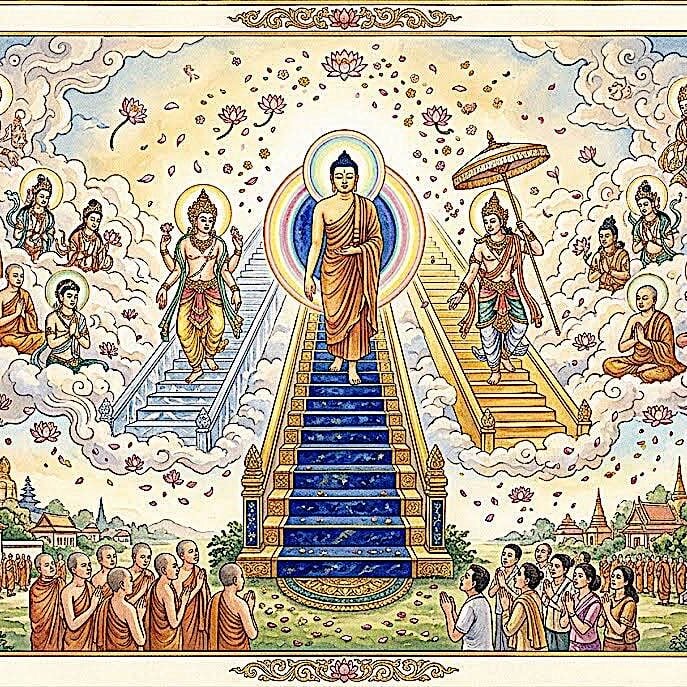
- Lhabab Duchen (Day 22 of Month 9): Guru Shakyamuni Buddha’s return to Earth from the God Realm of the Thirty-Three after teaching Dharma for several months to the gods there, including his mother, Mayadevi, who had died a week after Buddha’s birth and been reborn there.
Relative Dates for 2026 and 2027
The dates below illustrate the divergence clearly. Note that even between Theravada and Vajrayana, the dates differ because their lunisolar calculations are not identical.
2026
| Tradition | Observance | 2026 Date (Solar) |
|---|---|---|
| Theravada | Vesak (Buddha Day) | Dates vary by country: April 30 (Myanmar), May 1 (Cambodia, India, Laos), May 30 (Sri Lanka), May 31 (Thailand, Indonesia, Malaysia, Singapore) |
| Vajrayana | Saga Dawa Duchen | Falls on the full moon of the 4th Tibetan month; typically May–June. (Search results did not return a confirmed 2026 date for Saga Dawa specifically.) |
| Mahayana | Buddha’s Birthday | May 24 (8th day of 4th Chinese lunar month, approximate; Japan: April 8 fixed) |
2027
| Tradition | Observance | 2027 Date (Solar) |
|---|---|---|
| Theravada | Vesak (Buddha Day) | May 20 (widely cited for Theravada countries) |
| Vajrayana | Saga Dawa Duchen | Full moon of 4th Tibetan month; typically May–June. (No confirmed 2027 date in search results.) |
| Mahayana | Buddha’s Birthday | May 13 (8th day of 4th Chinese lunar month, approximate; Japan: April 8 fixed) |

Eclipse Days
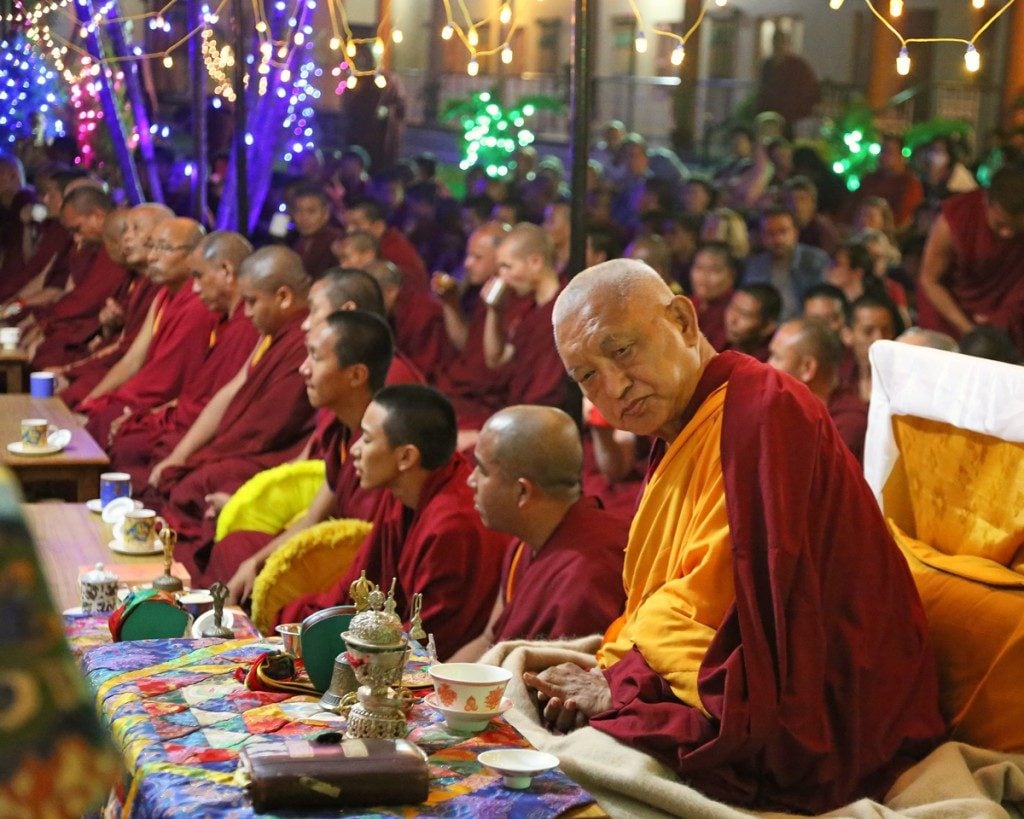
In Tibetan Buddhism, days of lunar and solar eclipse are especially good for practice, and all merit from these activities is magnified.
Monthly Lunar Practices
Especially in Tibetan Buddhism, New Moon, Full Moon and 10th and 25th of the Lunar month are all important. For those with Highest Yoga Tantra commitments, the lunar 10th and 25th Tsog (Tsok) are commitments. The Tsog on the 10th is dedicated to the Dakas and the 25th to the Dakinis. The 10th is also monthly Guru Rinpoche Day.
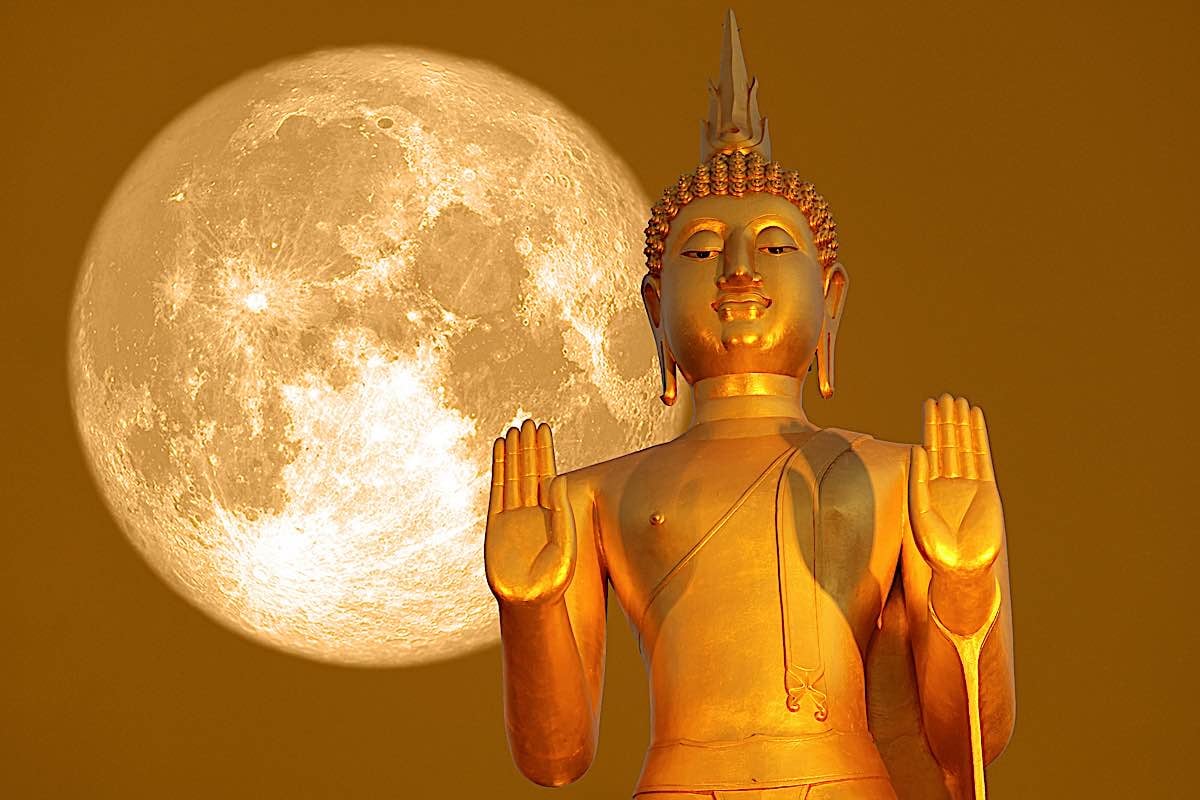
The practices on the full moon are especially meritorious, and usually include Medicine Buddha Pujas and other auspicious activities. Full moon is on the 15th of any lunar month.
The Eighth of the lunar month is also auspicious for all pujas and is especially sacred to Tara — often called Tara Day. Medicine Buddha Pujas are also common on this day.

More articles by this author

Taking Refuge in the Three Jewels: The Complete Companion Guide to Awakening, Vows, and Daily Renewal with video
Descending Light: Celebrating Lhabab Duchen 2026 — The Day of Ten Million Multiplied Merits: Buddha’s Descent From Heaven

Buddhist Dharma Dates: clearing the confusion on the 3 plus 1 calendars: Lunisolar, Lunar and Solar and — Which do You Celebrate

Śuddha – Purity Mantra: Also known as the Śunyata mantra, and the “Universal Love” mantra, all Buddhist practices begin with it
Search
Latest Features





Please support the "Spread the Dharma" mission as one of our heroic Dharma Supporting Members, or with a one-time donation.
Please Help Support the “Spread the Dharma” Mission!
Be a part of the noble mission as a supporting member or a patron, or a volunteer contributor of content.
The power of Dharma to help sentient beings, in part, lies in ensuring access to Buddha’s precious Dharma — the mission of Buddha Weekly. We can’t do it without you!
A non-profit association since 2007, Buddha Weekly published many feature articles, videos, and, podcasts. Please consider supporting the mission to preserve and “Spread the Dharma." Your support as either a patron or a supporting member helps defray the high costs of producing quality Dharma content. Thank you! Learn more here, or become one of our super karma heroes on Patreon.
Lee Kane
Author | Buddha Weekly
Lee Kane is the editor of Buddha Weekly, since 2007. His main focuses as a writer are mindfulness techniques, meditation, Dharma and Sutra commentaries, Buddhist practices, international perspectives and traditions, Vajrayana, Mahayana, Zen. He also covers various events.
Lee also contributes as a writer to various other online magazines and blogs.