
Guardians of the Word: How the First Buddhist Council Committed the Buddha’s Teachings to Sacred Text
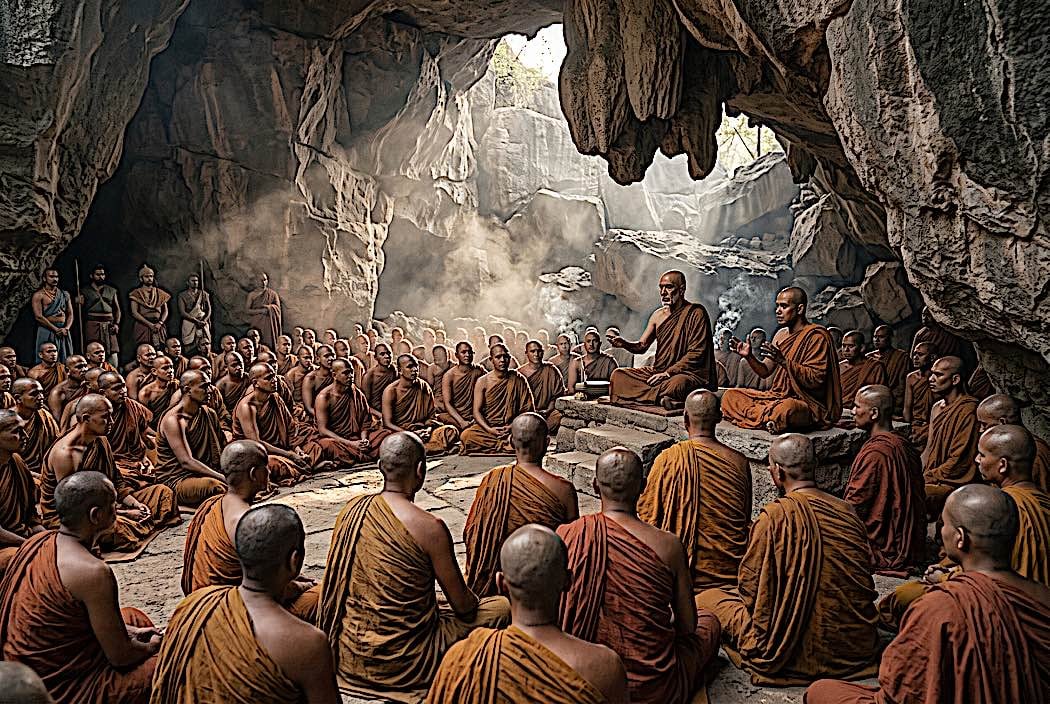
More than 2500 years have passed since the time of Gautama Buddha. The teachings of Buddha had to be passed on to the future generation. A very effective method was adopted by the then King of Magadha. This played a vital role in the growth and evolution of the Dhamma as we know it today. This article is going to be the first one in the ongoing article series on Buddhist Council.
By By Niketan Shegokar, Bio bottom of feature
First Buddhist Council: Its Origin and Significance
The First Buddhist Council was a landmark event in the history of Buddhism, held shortly after the Mahaparinirvana of Gautama Buddha around 483 BCE. It marked the beginning of the systematic preservation of Buddha’s teachings, ensuring their transmission in an organized and authentic form.
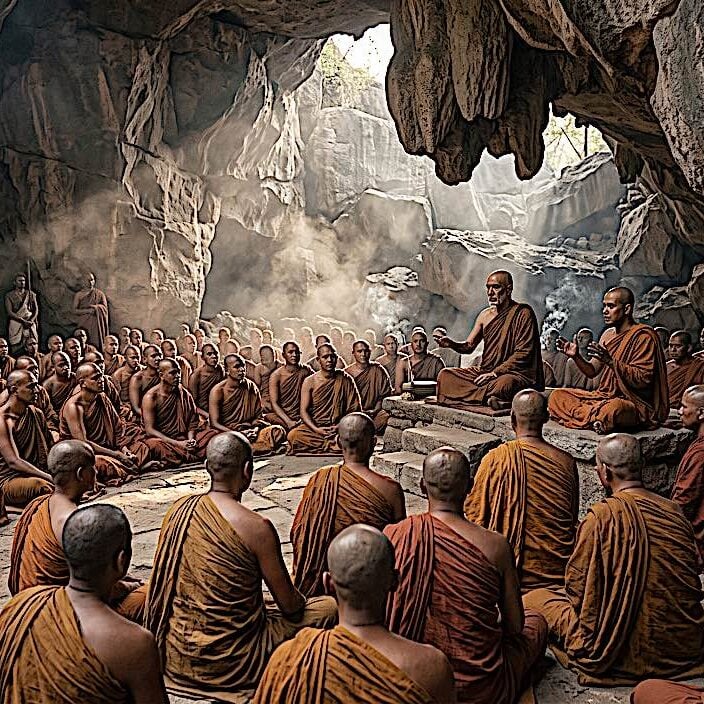
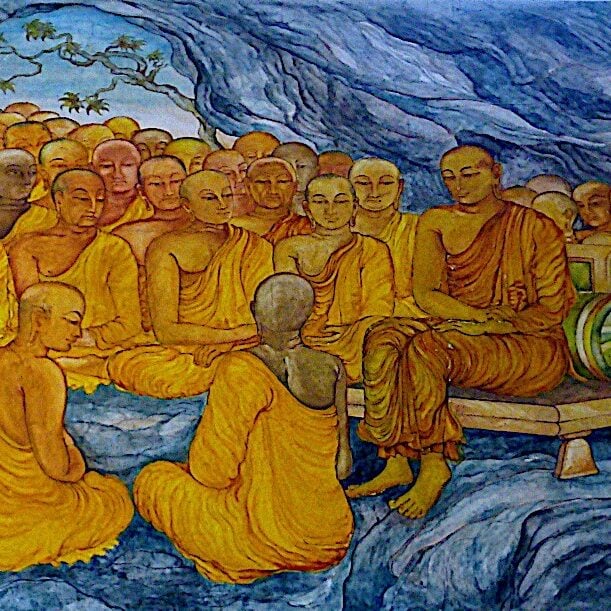
The first Buddhist Council was organised by the second king of the Haryanka dynasty, King Ajatshatru who was the son of King Bimbisara of Magadha. It is believed to be held at Saptaparni Caves (near Rajgir) and it was held after approximately 3 months of Buddha’s Mahaparinirvana as noted by many scholars.
Before the Ink: the Mission to Record the Suttas
The main objective was to preserve the teachings (Dhamma) and monastic rules (Vinay), prevent distortion or misinterpretation and maintain unity within the Sangha (monastic community). This is comparable to many modern efforts of standardizing professional medical guidelines to avoid variation in practice. This is highly commendable as the time of discussion was more than 25 centuries ago.
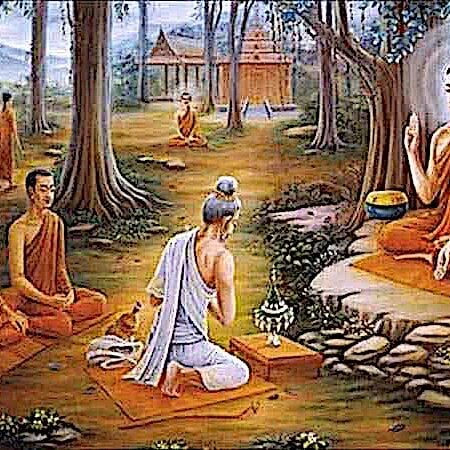
Many of the Buddhist Scholars of the time and Buddha’s direct students were involved in the council like Mahakasyapa, Ananda and Upali. Bhante Mahakasyapa was the chairman of the council and the senior-most disciple of Buddha. He took the leadership after Buddha’s death. Bhante Ananda was the personal attendant of the Blessed one and was known for his exceptional memory. He recited Buddha’s discourses. A very famous line, “Thus have I heard…” (Evam me sutam) is still used in Buddhist texts today. Bhante Upali was an expert in monastic discipline and recited Vinaya Pitaka.
From Oral Recitation to Compilation of Sutta
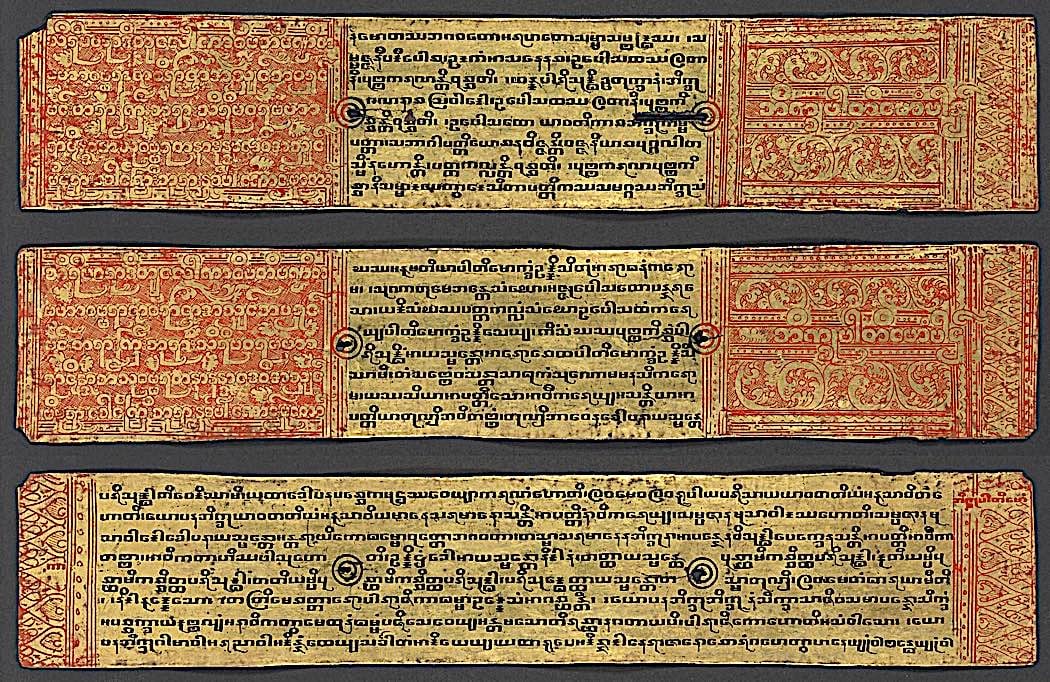
The council involved oral recitation and compilation of great Buddhist founding literature namely Sutta Pitaka and Vinaya Pitaka. The former being the holder of all the teachings of Buddhism and was recited by Bhante Ananda while the latter was the progenitor of discipline in Buddhism and was recited by Bhante Upali. Sutta Pitaka contains Buddha’s sermons and dialogues while Vinaya Pitaka contains rules for monks and nuns. The most important thing is at this stage, the teachings were not written and were preserved through oral tradition (Shruti system) which was traditionally the original form of passing education in ancient India. The direct benefits that were obtained from this council were standardization of the Dhamma (teachings) and Vinaya (rules), formation of the early Tripitaka structure (Sutta, Vinaya and Abhidhamma Pitakas) and strengthening of the Sangha unity.
Passage of Knowledge: Key Significance
As discussed earlier, the Shruti system was the most important system of passage of knowledge. The council reflects early methods of memory-based learning and structured knowledge transmission which is comparable to modern evidence-based medicine guidelines and academic peer-review systems. Also, the council gives us a very peculiar psychological and social insight. It shows the importance of collective decision-making and prevents cognitive bias and misinformation, the modern parallel to which are global committees.
However, a key consideration while studying the history of ancient India, particularly Buddhism, is that it is largely based on oral tradition, which may introduce bias and some accounts differ among Buddhist schools. However, it is widely accepted in Theravāda tradition.
Foundations of Preservation
The First Buddhist Council laid the foundation for the preservation of Buddhist philosophy, ensuring that the teachings of Gautama Buddha remained intact across generations. It represents one of the earliest examples of systematic knowledge organization, with striking parallels to modern academic practices.
References
- Walshe, M. (Trans.). (1995). The long discourses of the Buddha: A translation of the Dīgha Nikāya. Wisdom PublicationsHo
- Horner, I. B. (Trans.). (1951). The Book of the Discipline (Vinaya Piṭaka), Vol. 4: Cullavagga. Pali Text SocietHa
- Harvey, P. (2017). An introduction to Buddhism: Teachings, history and practices (2nd ed.). Cambridge University PresGo
- Gombrich, R. (2002). Theravāda Buddhism: A social history from ancient Benares to modern Colombo. Routledge.
- Gwynne, P. (2017). World religions in practice: A comparative introduction (2nd ed.). Wiley-Blackwell.
- Geiger, W. (Trans.). (1912/2003). The Mahāvaṃsa: The great chronicle of Sri Lanka. Asian Educational ServiceOl
- Oldenberg, H. (Trans.). (1879/1997). The Dīpavaṃsa: An ancient Buddhist historical record. Asian Educational Services.Buddhaghosa. (5th century/1999). Samantapāsādikā (Commentary on the Vinaya Piṭaka). Pali Text Society.
More articles by this author


Search
Latest Features




Please support the "Spread the Dharma" mission as one of our heroic Dharma Supporting Members, or with a one-time donation.
Please Help Support the “Spread the Dharma” Mission!
Be a part of the noble mission as a supporting member or a patron, or a volunteer contributor of content.
The power of Dharma to help sentient beings, in part, lies in ensuring access to Buddha’s precious Dharma — the mission of Buddha Weekly. We can’t do it without you!
A non-profit association since 2007, Buddha Weekly published many feature articles, videos, and, podcasts. Please consider supporting the mission to preserve and “Spread the Dharma." Your support as either a patron or a supporting member helps defray the high costs of producing quality Dharma content. Thank you! Learn more here, or become one of our super karma heroes on Patreon.
Niketan Shegokar
Author | Buddha Weekly
Niketan at time of writing, is a final year MBBS student and a history enthusiast. He has an interest in research and writing, especially over the last 3 years.