


BuddhaCast 1: Demystifying Mother Tara – 21 Taras Stepping into the Messiness of Our World to Help Us: A Podcast
 The Dynamic Action Hero of Buddhism – An Exploration of Mother Tara
A BUDDHA CAST – A Podcast with Josephine Nolan and Dave Lang
The mission of these podcasts is to make Buddha Weekly’s in-depth features accessible and to demystify Buddhism from different traditions. Josephine practices Vajrayana Buddhism while Dave brings perspectives from the Chan/Zen Mahayana tradition.
“Our mission today is to demystify Mother Tara, a figure who is universally adored in Mahayana Buddhism. We want to uncover why she isn’t just a serene object of meditation, but rather a dynamic action hero…”
…A mother who fights the demons of our ego, not with violence, but with the fearless paradigm-shifting power of sympathetic joy and laughter. A Buddha who refracts her energy into 21 color-coded forms, acting as the perfect key for the unique lock of your specific suffering…”
Contents of Podcast
- Opening contrast – The serene Buddha vs. the dynamic Mother Tara
- Introducing the Karma Mother – Tara as the embodiment of enlightened activity
- The first responder metaphor – Universal compassion that knows no boundaries
- The laughter that defeats demons – The story of Mara and the power of fearless joy
- Why laughter works – The Buddhist philosophy of emptiness and illusion
- The 21 Taras – The spectrum of specialized forms
- Breaking down the colors – Green, White, Yellow, Red, and Wrathful Taras
- The key and the lock – Gelek Rinpoche’s explanation of individualized manifestation
- From worldly to ultimate – Introducing Chittamani Tara and Highest Yoga Tantra
- The safety protocol – Why empowerment is required for advanced practice
- Tara in the real world – The caravan story and the man who complained
- The turquoise pure land – Yerlod Kurpa and Delog Dewadroma’s vision
- Accessibility for all – The mantra and the phone call metaphor
- Final reflection – Bringing it all together
- The earth itself – Tara as Mother Earth and the closing thought
- Sources: At the end of the transcript are all the sources referred to in this podcast by Eric and Josephine.
Audio Podcast:
The Serene Buddha vs. The Dynamic Mother Tara
Dave Lang: 00:00
So close your eyes for just a second and uh just picture a Buddha.
Josephine Nolan: 00:03
Okay.
Dave Lang: 00:04
For most of us, there’s a really specific image that immediately comes to mind, right? Like you picture a figure sitting perfectly still.
Josephine Nolan: 00:13
Right, cross-legged on a lotus.
Dave Lang: 00:14
Exactly. Eyes half closed in this state of deep, undisturbed meditation. It’s I mean, it’s this image of ultimate serenity.
Josephine Nolan: 00:22
Like a perfectly calm, mirror-like pond.
Dave Lang: 00:24
Yeah, exactly that. And it’s a beautiful visual, but uh it is also completely static. It feels entirely removed from the exhausting, you know, chaos of the daily world you and I live in. Oh, totally. But then you look at traditional depictions of Mother Tara, and suddenly that image of static, quiet peace is just completely shattered.
Josephine Nolan: 00:46
Yeah, because she is not just sitting there.
Dave Lang: 00:47
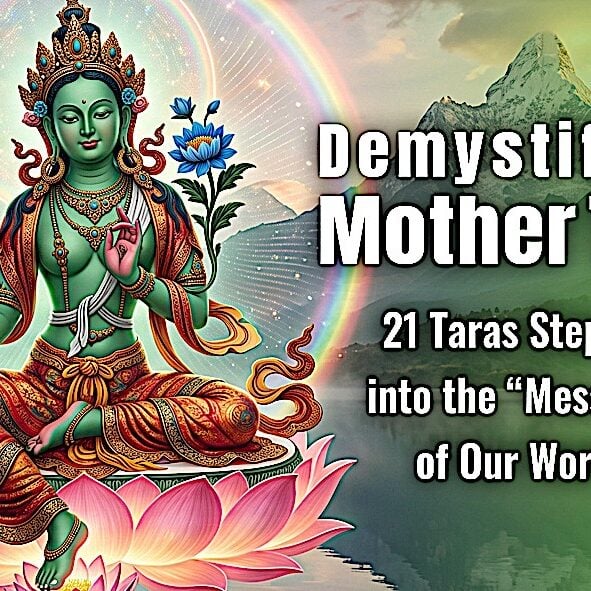
No. One of her legs is folded in meditation, sure, but her right leg is outstretched, her foot is resting on a lower lotus petal, angled as if she is like literally about to leap up.
Josephine Nolan: 00:58
It is a completely different energetic signature. She’s positioned to step right out of the painting and into the messiness of our reality. When you look at her, you aren’t looking at withdrawal from the world. You are looking at imminent intervention.
Dave Lang: 01:13
Imminent intervention. Uh, I love that. And that dynamic energy is exactly what we’re exploring in today’s deep dives.
Josephine Nolan: 01:19
We really are.
Dave Lang: 01:20
Because we have a stack of incredibly rich sources today. Yeah. We’re looking at teachings from revered Tibetan masters. Yeah. Uh, like His Holiness Sakya Trichen, Gelek Rinpoche, and Bokar Rinpoche, right alongside traditional sutras and historical accounts.
Josephine Nolan: 01:35
It’s a lot of profound material.
Dave Lang: 01:36
It is. And our mission today is to demystify Mother Tara, a figure who is universally adored in Mahayana Buddhism. We want to uncover why she isn’t just a serene object of meditation, but rather a dynamic action hero of the Buddhist pantheon.
Josephine Nolan: 01:52
And crucially, how her principles of wisdom, compassion, and activity apply directly to your own daily life.
Dave Lang: 01:58
Okay, let’s unpack this because I mean, calling a Buddha an action hero feels like a bit of an oxymoron.
Josephine Nolan: 02:04
It really does.
Dave Lang: 02:04
Yeah, we’re taught that enlightenment is all about letting go, right? Not rushing into the fray.
Josephine Nolan: 02:09
It does seem counterintuitive if you only view Buddhism through the lens of quiet detachment. But to understand Tara, we have to look at how Vajrayana Buddhism, which is the esoteric tradition of Tibet, how it actually structures reality.
Dave Lang: 02:23
Okay. Lay it on me.
Josephine Nolan: 02:24
So in this framework, Tara is known as the karma mother.
Dave Lang: 02:28
The karma mother.
Josephine Nolan: 02:29
Right. Now, when we hear the word karma in the West, we usually think of like a cosmic point system.
Dave Lang: 02:35
Yeah, or like fate. What goes around comes around.
Josephine Nolan: 02:38
Exactly. But karma literally translates to activity. It just means action. So she represents the actual manifested activity of all the Buddhas.
Dave Lang: 02:47
Oh wow. So she is the doing, not just the being.
Josephine Nolan: 02:50
Yes. To get to the mechanics of it, Vajrayana tradition uses gendered symbolism to map out the enlightened mind.
Dave Lang: 02:56
Okay.
Josephine Nolan: 02:56
A male Buddha typically represents compassion. They refer to this as skillful means, which is basically the method of helping others.
Dave Lang: 03:04
Got it. And the female Buddha.
Josephine Nolan: 03:05
A female Buddha represents wisdom, specifically the profound realization of emptiness or the ultimate nature of reality. Right. And Tara is the ultimate practical fusion of both of those things. Because think about it. Wisdom without compassion is inert.
Dave Lang: 03:20
It just sits there.
Josephine Nolan: 03:21
Right. And compassion without wisdom is misguided.
Dave Lang: 03:24
Oh, that makes so much sense.
Josephine Nolan: 03:25
Yeah. So Tara takes that profound, empty wisdom, she marries it to active compassion, and she functions as a dynamic force right here in our mundane suffering world.
Dave Lang: 03:36
It kind of makes me think of her as a spiritual first responder.
Josephine Nolan: 03:39
Yeah, yeah, that’s a great way to put it.
Dave Lang: 03:41
Yeah, like she isn’t observing our problems from a serene vantage point in the clouds. She’s the one in the ambulance. You know? She’s on the front lines of human suffering, just ready to jump in the moment you call for help.
Josephine Nolan: 03:52
What’s fascinating here is how universally that ambulance is dispatched.
Dave Lang: 03:56
What do we mean?
Josephine Nolan: 03:57
Well, according to his holiness Sakya Trichen, you don’t even have to be a Buddhist to receive Tara’s help.
Dave Lang: 04:04
Really?
Josephine Nolan: 04:04
Yeah. He explains that her compassion is so boundless that she sees all sentient beings, and that means every single one of us, regardless of belief or background or even species, she sees us as her only child.
Dave Lang: 04:18
Her only child? Wow. That is an incredibly intense degree of focus.
Josephine Nolan: 04:24
It is. Think about the fierce, unconditional, hyper-focused, protective love a mother has for an only child.
Dave Lang: 04:31
Yeah, every instinct is geared toward their welfare.
Josephine Nolan: 04:34
Right. She is ready to do absolutely anything to keep them safe. And Tara extends that exact same concentrated, motherly love to you without any discrimination whatsoever.
Dave Lang: 04:43
Which is a beautiful thought. Really, it is. But uh it begs a major logistical question for me.
Josephine Nolan: 04:49
Okay, what’s that?
Dave Lang: 04:50
If she’s this ultimate first responder, right? Rushing into the burning buildings of our lives, how does she actually fight off the negativity? I mean, if I’m an action hero, I’m bringing a weapon.
Josephine Nolan: 05:01
Naturally.
Dave Lang: 05:01
But looking through our sources today, her method of fighting isn’t exactly what you would expect.
Josephine Nolan: 05:05
Not at all. She doesn’t carry a sword, she doesn’t wield thunderbolts.
Dave Lang: 05:08
So what does she do?
Josephine Nolan: 05:09
There’s this profound story recounted by the great teacher Bokar Rinpoche that perfectly illustrates the actual mechanism of her power.
Dave Lang: 05:17
Okay, let’s hear it.
Josephine Nolan: 05:18
It takes us back to the night before Shakyamuni Buddha reached awakening. He was sitting under the Bodhi tree on the verge of enlightenment when he was just assailed by these hordes of demons known as the Maras.
Dave Lang: 05:31
Right, the Maras. And in Buddhist psychology, these Maras aren’t necessarily like little guys with pitchforks.
Josephine Nolan: 05:37
Exactly. They represent our deepest fears, our illusions, and the internal poisons that basically block realization.
Dave Lang: 05:44
So it’s the ultimate battle between light and dark.
Josephine Nolan: 05:47
Yes. And if Tara is the action hero of the Buddhas, you would expect her to show up with a cosmic army to defend him.
Dave Lang: 05:53
A hundred percent.
Josephine Nolan: 05:54
But she doesn’t. Tara appeared before this terrifying demonic horde, and she didn’t strike them down with violence.
Dave Lang: 06:00
Then what did she do?
Josephine Nolan: 06:02
According to the text, she simply let out eight great laughters.
Dave Lang: 06:05
Wait. She laughed.
Josephine Nolan: 06:07
She laughed. And the sheer power of this laughter caused the demons to fall to the ground, completely stripped of their power to do harm.
Dave Lang: 06:14
Okay, I have to push back on this.
Josephine Nolan: 06:15
I figured you might.
Dave Lang: 06:16
Because on a practical level, it sounds a bit absurd. I mean, think about it. If you were facing a massive life crisis, overwhelming fear, a health scare, or, I don’t know, financial ruin, and someone just starts laughing.
Josephine Nolan: 06:30
You’d probably be furious.
Dave Lang: 06:32
I would be absolutely livid. Laughter seems like a bizarre weapon against literal paralyzing fear. Why on earth would laughing defeat evil?
Josephine Nolan: 06:40
Because we have to understand what that laughter actually is on an energetic level.
Dave Lang: 06:44
Okay, explain that to me.
Josephine Nolan: 06:45
In this framework, those demons represent the eight great fears and the internal poisons that generate our suffering. We’re talking about things like envy, anger, pride, and ignorance.
Dave Lang: 06:56
Right, the internal stuff.
Josephine Nolan: 06:57
Yeah. And Tara’s laughter represents mudita, which translates to fearless, sympathetic joy.
Dave Lang: 07:03
Fearless joy, but how does joy dismantle a threat?
Josephine Nolan: 07:06
It comes down to how reality is constructed in Buddhist philosophy. When we fight our fears with anger or panic or resistance, we are actually validating them. Oh I are saying to the fear, you are real, you are solid, and you have power over me. By fighting the demons on their terms, you literally feed them energy. Wow. Okay. So Tara’s laughter completely shifts the paradigm. She isn’t mocking the demons. Her laughter is the sound of supreme wisdom, realizing that the demons have no inherent reality in the first place.
Dave Lang: 07:37
Oh wow. Okay. It’s like it’s like waking up from a terrifying nightmare where there’s a monster in your room.
Josephine Nolan: 07:42
Yeah.
Dave Lang: 07:43
And you turn on the light and you realize it’s just like a coat hanging on a chair.
Josephine Nolan: 07:47
Exactly.
Dave Lang: 07:48
You don’t attack the coat with a baseball bat. Yeah. You laugh with relief because the threat was never real to begin with.
Josephine Nolan: 07:54
That is a perfect analogy. She overcomes the poison of envy and the terror of the demons by radiating this frequency of joy and wisdom that the demons simply cannot exist within.
Dave Lang: 08:06
That’s wild.
Josephine Nolan: 08:07
Right. In the face of absolute fearless joy, negativity just cannot hold its shape. The illusion shatters.
Dave Lang: 08:13
That completely reframes the idea of a spiritual battle. She doesn’t defeat the enemy, she renders the enemy irrelevant.
Josephine Nolan: 08:19
Exactly.
Dave Lang: 08:20
But I mean, human fears and daily problems are incredibly diverse.
Josephine Nolan: 08:23
Oh, absolutely.
Dave Lang: 08:24
Like a moment of realization under a Bodhi tree is one thing. But dealing with a chronic illness or a really toxic workplace is another. A single laugh doesn’t seem like it would cover the sheer variety of human misery.
Josephine Nolan: 08:38
And the tradition recognizes that completely. Because our suffering is so multifaceted, her response cannot be one size fits all.
Dave Lang: 08:46
It has to adapt.
Josephine Nolan: 08:47
Right. She has to adapt to the specific nature of your crisis.
Dave Lang: 08:50
Here’s where it gets really interesting. Yeah. Because the sources dive into this concept called the 21 Taras. And it just blew my mind that it isn’t just one monolithic figure.
Josephine Nolan: 09:00
No, it’s a whole spectrum.
Dave Lang: 09:01
Right. She fractures or emanates into a multitude of specific forms to address incredibly specific human problems.
Josephine Nolan: 09:08
The 21 Taras represent a highly specialized matrix of compassionate activity. And you know, it is worth noting that different traditional lineages visualize them in slightly different ways.
Dave Lang: 09:18
Depending on what was needed at the time.
Josephine Nolan: 09:20
Exactly, based on the needs of the practitioners in different eras. For instance, in the lineage passed down by the 11th century master Atisha, you visualize the 21 Taras all holding colored vases or bumpas filled with specific healing nectars.
Dave Lang: 09:36
Got it. Vases with nectar.
Josephine Nolan: 09:37
But if you look at the Nyingma Terma lineage.
Dave Lang: 09:40
Wait, Ny Nyingma Terma, what does that mean again?
Josephine Nolan: 09:43
Oh, that relies on hidden treasure teachings that were discovered by mystics over centuries.
Dave Lang: 09:48
Ah, right, the hidden treasures.
Josephine Nolan: 09:49
Yeah. So in that system, the visual changes. They hold lotuses, and resting on top of those lotuses are unique implements, like an endless knot or a vajra, to symbolize very specific actions.
Dave Lang: 10:01
Okay, so the implements change, but the core mechanism remains the same. I kept trying to conceptualize this while reading, and it honestly feels like passing pure white light through a prism.
Josephine Nolan: 10:12
Yes, that’s it exactly.
Dave Lang: 10:13
The underlying source is the exact same enlightened energy, but it refracts into 21 specific wavelengths or colors, so it can perfectly match the frequency of whatever trauma you’re facing.
Josephine Nolan: 10:24
The prism metaphor is highly accurate. Each color in the 21 Taras corresponds to a very specific psychological and karmic intervention.
Dave Lang: 10:32
Let’s break down those wavelengths because this is so cool.
Josephine Nolan: 10:34
Let’s do it.
Dave Lang: 10:35
So Green Tara is the all-rounder.
Josephine Nolan: 10:37
Right. She embodies all activities, which is why she is the primary figure people turn to for immediate help.
Dave Lang: 10:44
But then the spectrum splits. You have white Tara, whose specific energy is for pacifying. Like if you are dealing with a severe illness or a totally chaotic mind, visualizing white energy physically and psychologically calms the nervous system and removes negative karma.
Josephine Nolan: 11:02
Exactly. And then you have yellow Tara, whose frequency is all about accumulating and enriching. Enriching, right. She is called upon to overcome poverty, to increase life force, and basically bring auspiciousness into your environment.
Dave Lang: 11:15
Nice. And then there’s red Tara, whose activity is magnetizing.
Josephine Nolan: 11:19
Right. She influences the environment and sentient beings positively. She pulls what is helpful into your orbit.
Dave Lang: 11:25
Which leaves the intense ones, the black or dark blue taras.
Josephine Nolan: 11:29
Oh yes, the wrathful forms.
Dave Lang: 11:30
These are the ones you call when pacifying and enriching just aren’t going to cut it, right?
Josephine Nolan: 11:34
Exactly. They are fierce, energetic expressions designed to destroy massive internal blockages, crush external obstacles, and just burn up debilitating fears.
Dave Lang: 11:45
It is an incredibly comprehensive system.
Josephine Nolan: 11:47
It really is.
Dave Lang: 11:47
But you know, this raises an important question.
Josephine Nolan: 11:49
This raises an important question indeed. From a logical standpoint, how can one single entity be a peaceful white healer offering nectar and a terrifying black destroyer wielding fire simultaneously?
Dave Lang: 12:03
Yeah. Like is she just one person changing outfits depending on the prayer, or are these entirely different entities?
Josephine Nolan: 12:08
The late revered teacher, Gelek Rimpoche, offered a brilliant explanation for the mechanism behind this.
Dave Lang: 12:14
What did he say?
Josephine Nolan: 12:15
He taught that fundamentally we are the creators of our own reality. As he put it, each and every one of us created our own world.
Dave Lang: 12:22
Our own subjective experience.
Josephine Nolan: 12:23
Exactly. We carry our highly individualized karmic worlds into the collective space. And because your mind, your specific traumas, and your worldview are entirely unique to you, Tara manifests in the exact form suitable to the unique world you have constructed.
Dave Lang: 12:39
Okay, so if the world I’ve built right now is consumed by the chaos of a health crisis, the frequency of Tara that can actually step into my reality is White Tara, the healer.
Josephine Nolan: 12:49
Right.
Dave Lang: 12:49
But if my world is under attack by malicious forces, or I’m just paralyzed by deep internal self-sabotage, the only frequency that can penetrate that specific reality is the wrathful black Tara.
Josephine Nolan: 13:02
You’ve got it. She is ultimately one unified source of enlightened activity, the mother of all Buddhas. But she acts like a key. The metal of the key is all the same, but the shape adapts perfectly to the specific lock of your individual suffering.
Dave Lang: 13:17
That makes profound psychological sense. It does. But up to this point, we’ve been talking almost exclusively about worldly problems, you know?
Josephine Nolan: 13:24
True. Illness, poverty, immediate fear.
Dave Lang: 13:27
Right. The 21 Taras seem designed to help us basically survive the day-to-day. But what happens when a practitioner isn’t just looking for help paying the bills or fighting off a cold, but is actually seeking ultimate spiritual transformation.
Josephine Nolan: 13:40
Right, because simply getting through the day isn’t the final goal of Buddhism.
Dave Lang: 13:44
Complete enlightenment is.
Josephine Nolan: 13:45
That is a crucial distinction. When a practitioner is ready to move beyond just seeking worldly comfort and wants to actively dismantle their ego to achieve full enlightenment, well, the accessible worldly forms of Tara are no longer enough.
Dave Lang: 14:00
So what happens then?
Josephine Nolan: 14:02
This demands a massive shift in the practice. And this brings us to her most esoteric manifestation, which is Chittamani Tara.
Dave Lang: 14:09
The mind jewel Tara.
Josephine Nolan: 14:11
Exactly. This form belongs to what is known as highest yoga tantra.
Dave Lang: 14:15
Which sounds intense.
Josephine Nolan: 14:17
It is. In the Gelug lineage of Tibetan Buddhism, highest yoga tantra is the absolute zenith of practice. And unlike the 21 Taras, where anyone can just call out for help, this is highly restrictive. It requires strict instruction, years of foundational practice, and direct empowerment from a qualified lineage teacher. You cannot just casually decide one day to practice Chittamani Tara.
Dave Lang: 14:38
Which feels like a contradiction, doesn’t it?
Josephine Nolan: 14:40
How so?
Dave Lang: 14:41
Well, we just established that she is the universally accessible mother who sees everyone as her only child. Why would her ultimate form suddenly be locked behind strict rules and empowerments?
Josephine Nolan: 14:51
Because of the inherent danger of the mechanism involved. Yeah. The basic practices of Tara are about receiving blessings from an external source. But highest yoga tantra is about realizing that you are the source.
Dave Lang: 15:04
Oh, wow.
Josephine Nolan: 15:05
The sources trace this specific practice back to the 19th century yogi, Takpu Dorje Chang. He received it as a direct revelation from Tara.
Dave Lang: 15:14
Oh, so she taught it to him directly.
Josephine Nolan: 15:16
Yes. Gelek Rimpoche described the transmission beautifully, saying she taught it directly, like a mother teaching her own son.
Dave Lang: 15:22
That’s amazing. Does she look different in this form?
Josephine Nolan: 15:24
Visually, she looks incredibly similar to Green Tara with the outstretched right leg, but there is a very subtle visual cue that’s different.
Dave Lang: 15:33
Right. The standard green Tara usually holds one blue night lotus called an uptala flower blooming over her left shoulder.
Josephine Nolan: 15:40
Exactly. But Chittamani Tara holds two fully blooming blue uptala flowers, one over each shoulder.
Dave Lang: 15:47
And that tiny shift means everything.
Josephine Nolan: 15:49
It really does. That subtle visual distinction signals a vastly different internal technology. If we connect this to the bigger picture, the Chitamani Tara practice doesn’t involve asking a deity in the sky to fix your life.
Dave Lang: 16:04
Right.
Josephine Nolan: 16:04
It involves deep, highly complex meditations on your own subtle energy body. You systematically rewire your internal circuitry by visualizing a profound mandala-like, a geometric universe of Taras literally residing inside your own physical form.
Dave Lang: 16:21
That is intense.
Josephine Nolan: 16:22
It is. You dissolve your ordinary sense of self and generate yourself as the deity. And if you attempt to dismantle the ego at that level without a guide, you risk severe psychological destabilization.
Dave Lang: 16:33
So the restriction isn’t about elitism.
Josephine Nolan: 16:35
Not at all.
Dave Lang: 16:36
It’s a safety protocol. It proves that Tara basically scales with the practitioner.
Josephine Nolan: 16:40
Yes, perfectly said.
Dave Lang: 16:41
Like if you are drowning, she throws you a life preserver in the form of a simple mantra. But if you want to learn how to swim across the entire ocean of existence yourself, she provides a rigorously structured, highly advanced training program.
Josephine Nolan: 16:52
She scales from a comforting mother to a complex, demanding guide for complete enlightenment.
Dave Lang: 16:59
That is an incredible spectrum of activity. But I want to bring it back from the intense, esoteric world of internal mandalas to the immediate reality of life, you know.
Josephine Nolan: 17:09
Grounded a bit.
Dave Lang: 17:10
Exactly. If you aren’t an advanced yogi sitting in a cave, how does Tara’s presence actually manifest in the real world when you call on her? Because the sources contain some fascinating historical accounts of this.
Josephine Nolan: 17:22
They do, and they’re remarkably grounded. Bokar Rinpoche shared a very tangible account from 1958.
Dave Lang: 17:28
Okay.
Josephine Nolan: 17:28
He was part of a caravan traveling through a highly dangerous remote region of Tibet. They were carrying crucial supplies, but the trail was notoriously stalked by violent bandits.
Dave Lang: 17:39
So definitely no internal demons of pride or ignorance this time. We’re talking literal men with weapons aiming to do harm.
Josephine Nolan: 17:46
A very physical, immediate threat.
Dave Lang: 17:48
And what did they do?
Josephine Nolan: 17:49
Their response was entirely spiritual. The entire caravan prayed constantly to Tara, specifically chanting the praises of the 21 Taras as they moved through this perilous landscape. And against all odds, they navigated the entire journey safely, never once encountering the bandits. For Bokar Rinpoche, this wasn’t a stroke of good luck. It was the direct, protective, physical activity of Tara altering their circumstances.
Dave Lang: 18:16
That reminds me of this poignant Tibetan folktale we found in the research. It just perfectly captures her ever-present nature.
Josephine Nolan: 18:22
Oh, the man who complained.
Dave Lang: 18:24
Yes. There’s this story of a man who felt totally abandoned by the universe. He was suffering deeply, and he actually complained to Tara out loud, accusing her of leaving him when he needed her most.
Josephine Nolan: 18:36
And her reply to him in the story is honestly one of the most profound statements in all of our source material.
Dave Lang: 18:42
Tell them what she said.
Josephine Nolan: 18:43
She simply said, How could I ever leave who I am?
Dave Lang: 18:45
How could I ever leave who I am? That gives me chills. Right. Because at the absolute deepest level, she isn’t a distant goddess swooping in from the clouds. She is the inherent indestructible potential for compassionate action that already exists within our own Buddha Nature.
Josephine Nolan: 18:59
We are made of the same stuff.
Dave Lang: 19:01
Exactly. And that profound interconnectedness really culminates in the concept of her ultimate destination, her pure land. Yes.
Josephine Nolan: 19:12
Yurlod Turpa.
Dave Lang: 19:12
The Turquoise Pureland.
Josephine Nolan: 19:14
In Buddhist cosmology, highly realized beings can manifest pure realms. These are environments that are completely free from the karmic suffering of our world, and they’re designed entirely to facilitate spiritual awakening.
Dave Lang: 19:27
And Tara’s realm is described as this breathtaking natural paradise.
Josephine Nolan: 19:31
It is.
Dave Lang: 19:31
We actually have a visceral description of it from a famous female Tibetan mystic named Delog Dewadroma, who actually visited this pure land in a visionary state.
Josephine Nolan: 19:41
Oh, her account is amazing.
Dave Lang: 19:43
It is. And what I found so fascinating is that she didn’t describe like opulent golden palaces or jewel-encrusted thrones in the sky. No. She described a natural haven, a place of cooling rays and blooming lotuses, providing soothing shelter. I mean, it sounds like the ultimate sanctuary for an exhausted, overstimulated mind.
Josephine Nolan: 20:02
It’s the ultimate environmental expression of her pacifying, nurturing nature. It is a place where the landscape itself heals the trauma of existence, allowing the mind to just finally rest and realize its true nature.
Dave Lang: 20:16
So, what does this all mean? If you’re listening to this deep dive right now, maybe you’re sitting in traffic or you’re overwhelmed by a crisis at work or dealing with family drama. How do you actually tap into this turquoise Pure Land energy without flying to Tibet to find a master?
Josephine Nolan: 20:31
Well, that’s the million-dollar question.
Dave Lang: 20:33
Right. Because we just talked about highest yoga tantra requiring strict empowerments. Do you need a special initiation just to get through a really bad Tuesday?
Josephine Nolan: 20:41
Not at all. That is the true beauty of the Karma Mother. The lineage masters are entirely clear on this point. You need absolutely no special permission, initiations, or empowerments to call on her for daily help.
Dave Lang: 20:53
None.
Josephine Nolan: 20:54
None. You don’t even have to identify as a Buddhist. You just have to reach out.
Dave Lang: 20:57
So the Life Preserver really is available to everyone.
Josephine Nolan: 21:01
Simply calling her name with sincerity is enough. Or you can use her very famous 10-syllable mantra, which is chanted by millions of people across the globe every single day.
Dave Lang: 21:12
Om Tare Tuttare Ture Soha (Svaha in Sanskrit)
Josephine Nolan: 21:13
Om Tare Tuttare Ture Soha. Just reciting those syllables is said to immediately invoke her motherly, protective, active energy.
Dave Lang: 21:21
That’s so accessible.
Josephine Nolan: 21:22
It is. You don’t need to visualize complex mandalas for this to work. It’s literally like picking up the phone and dialing that first responder. She is always on the line and she always answers the frequency of that call.
Dave Lang: 21:33
It has been such an incredible journey unpacking these sources today.
Josephine Nolan: 21:37
It really has.
Dave Lang: 21:38
I mean, we started with the assumption of the serene, static Buddha, and we found Tara, the ultimate action hero. A mother who fights the demons of our ego, not with violence, but with the fearless, paradigm-shifting power of sympathetic joy and laughter. A being who refracts her energy into 21 color-coded forms, acting as the perfect key for the unique lock of your specific suffering. And yet, she’s a figure profound enough to serve as a rigorous guide through the most complex, esoteric, tantric practices ever devised. She truly is everything all at once.
Josephine Nolan: 22:12
She is the limitless scaling expression of enlightened activity. But before we finish, there is one final lingering thought drawn from our sources that we haven’t touched on yet.
Dave Lang: 22:22
Oh.
Josephine Nolan: 22:22
And it brings this entire concept quite literally down to earth.
Dave Lang: 22:26
Okay, I’m listening.
Speaker 1: 22:27
We’ve talked a lot about her celestial forms, you know, her colorful emanations and visionary journeys to her turquoise pure land. But in the ancient Buddhist texts, she has one more vital, often overlooked identity.
Dave Lang: 22:39
What is it?
Josephine Nolan: 22:40
She is simultaneously Mother Earth herself.
Dave Lang: 22:42
Wait, really?
Josephine Nolan: 22:43
Yeah. Under the name Vasudhara, the goddess of wealth and prosperity, she is identified as the very earth that we stand on. Think back to that story of Shakyamuni Buddha under the Bodhi tree. When he was challenged by the demons, right before he achieved full enlightenment, he famously reached down and touched the ground, calling the earth to witness his right to awaken.
Dave Lang: 23:02
Right, the earth witnessed mudra.
Josephine Nolan: 23:04
Exactly. And according to the texts, the earth that answer him, the earth that silently bore witness and supported his massive transformation. That was Tara.
Dave Lang: 23:12
Wow. That completely changes how you interact with the physical world.
Josephine Nolan: 23:16
It really does. So the next time you step outside, take a moment to look down. Consider that the solid ground beneath your feet, silently and tirelessly supporting your every single step, might just be another manifestation of Mother Tara’s boundless, compassionate activity.
Dave Lang: 23:32
What an incredibly grounding way to view the world around us. Thank you so much for joining us in this deep dive today. We highly encourage you to explore these amazing sources for yourself. Until next time, keep exploring.
SOURCES CITED or DISCUSSED in the PODCAST
- 21 Mother Taras: Atisha Lineage & Mantras
- The 21 Taras in the Narjuna, Atisha and Nyingma Lineages
- Decoding the 21 Tara Activity Mantras
- Tara Teaching from His Holiness the Sakya Trichen: Interview Q&A
- The Tara Principle: Wisdom, Compassion and Activity
- Unlimited Tara: Pandita Candrakirti’s 8 Forms & the 21, 108, 1008 Forms
-
🌟 Aspects, Syllables & Symbolic Iconography
- Vasudhārā: Goddess of Wealth & Mother Earth Witness to Buddha’s Enlightenment
- Black Tara: Destroyer of Enemies and Evil, Protector from All Negativities
- Marichi: Goddess of Golden Light, Destroyer of Obstacles (21st Tara)
- Palden Lhamo: Terrifying Female Protector Aspect of Tara
- Overcoming the Poison of Envy (Irshya) with Tara’s Sympathetic Joy (Mudita)
- Tara’s Eight Great Laughters: Transforming the Eight Demons and Fears
-
🏔️ Sacred Pure Lands, Rescues & Advanced practices
- Limitless Tara, Beyond the Green: Wisdom Mother & Action Hero
- “Mind Jewel” Green Tara: Chittamani Tara Highest Yoga Tantra Practice
- Tara’s Splendid Turquoise Pure Land, Yurlod Kurpa
- Boundless Heroine Tara: Stories of Rescues & Sadhana by Marpa
- Tara the Saviour and Vajrayogini the Sarvabuddhadakini: How Are They One?
- Why is There Suffering in the World if the Universal Mother Kuan Yin Rescues Beings?
- Video Documentary Feature: Tara — Swift Heroine, Mother, Saviour, Friend
More articles by this author

Search
Latest Features



Please support the "Spread the Dharma" mission as one of our heroic Dharma Supporting Members, or with a one-time donation.
Please Help Support the “Spread the Dharma” Mission!
Be a part of the noble mission as a supporting member or a patron, or a volunteer contributor of content.
The power of Dharma to help sentient beings, in part, lies in ensuring access to Buddha’s precious Dharma — the mission of Buddha Weekly. We can’t do it without you!
A non-profit association since 2007, Buddha Weekly published many feature articles, videos, and, podcasts. Please consider supporting the mission to preserve and “Spread the Dharma." Your support as either a patron or a supporting member helps defray the high costs of producing quality Dharma content. Thank you! Learn more here, or become one of our super karma heroes on Patreon.
Josephine Nolan
Author | Buddha Weekly
Josephine Nolan is an editor and contributing feature writer for several online publications, including EDI Weekly and Buddha Weekly.