

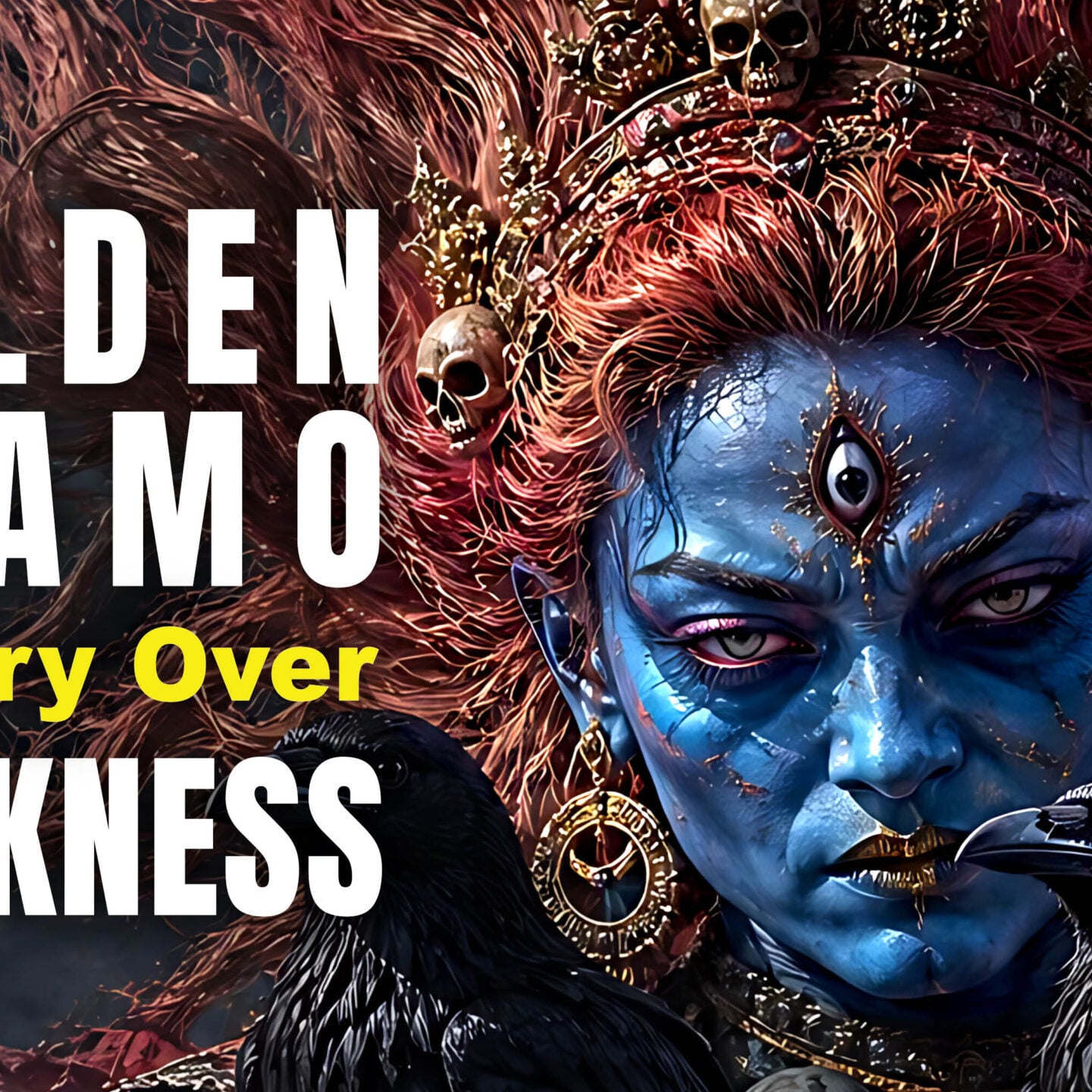
Why Do We See Dramatic and Gruesome Imagery in Sacred Buddhist Imagery? Palden Lhamo “Case Study”: the Symbolism of Wrath
Palden Lhamo — Riding the Ocean of Suffering to Save Beings
In Buddhism, why is a wrathful Enlightened goddess riding a mule across an ocean of blood considered a sacred image? Why do we often see apparently gruesome scenes in Buddhist imagery? And why are Tangkas, statues, images, and videos an important part of Buddha Dharma meditations? What do they convey that simple words cannot?
In this short video we explore the secret language of Buddhist art, a language that speaks not just to our eyes, but to our ears, our minds, and even our hearts.
While most spiritual traditions rely on words, Vajrayana Buddhism teaches through all six senses. A meditation isn’t just a thought; it is a full engagement of sight, sound, smell, taste, touch, and mind.
This is why tangkas, statues, and even music videos are so vital. They are not mere decorations. They are gateways.
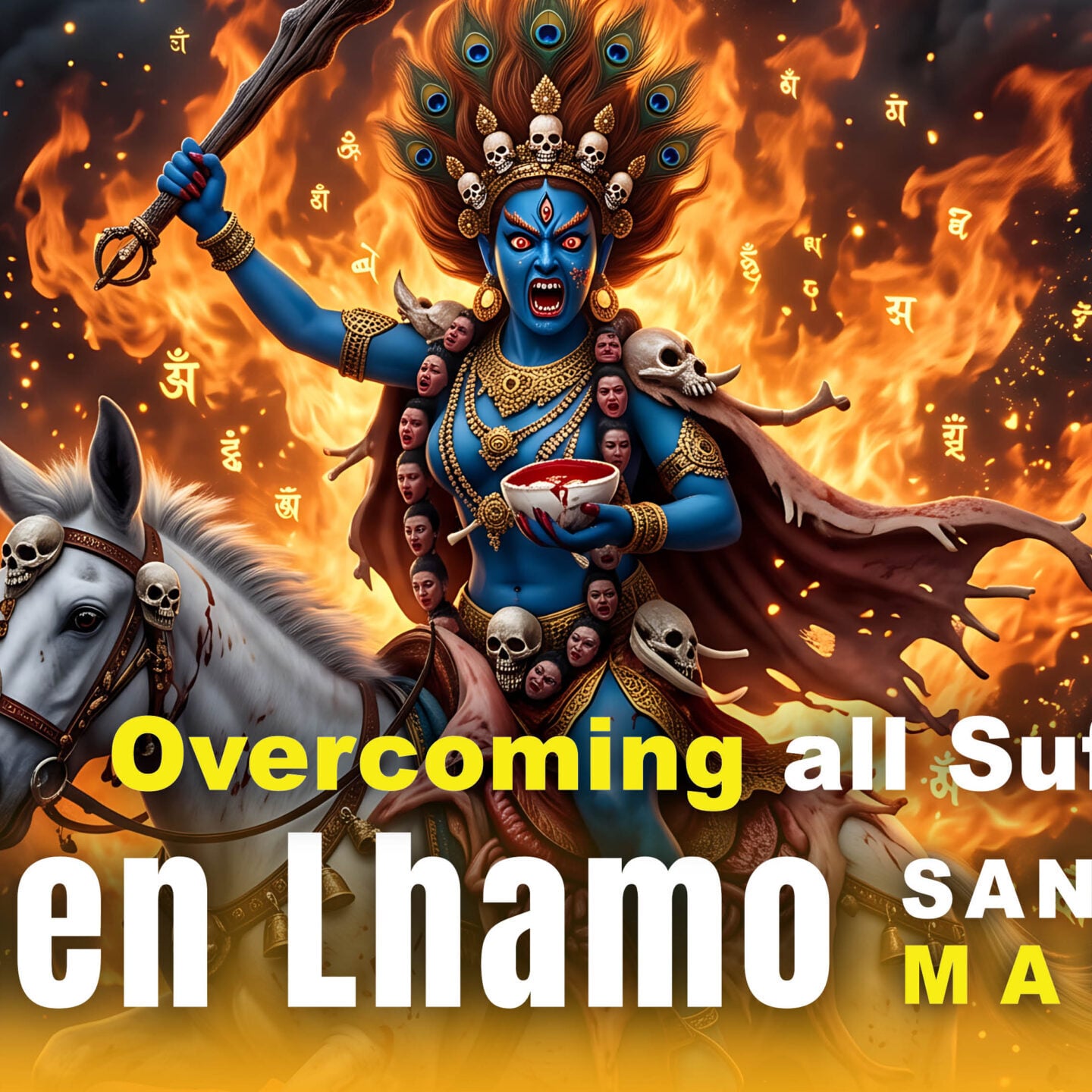
Today, we are using the dramatic new music video from 3Gems Band as our gateway. Their performance of the Sanskrit mantra of Palden Lhamo plunges us directly into a meditation on the “Ocean of Blood.” The first thing you might notice if you look at a tangka of Palden Lhamo’s fiercest aspect, is the ocean of blood.
But why this gruesome imagery?
Let’s strip away the shock value. In the sutras, this is called the “Ocean of Suffering.” In words, it is a metaphor for Samsara. But in a tangka—or in this video—it becomes a visceral reality.
In the Palden Lhamo video titled Palden Lhamo Sri Devi Sanskrit Mantra: Riding the Ocean of Suffering to Save All Beings we actually “enter” this tangkha, taking a journey with Palden Lhamo herself. We see the surging tides. We hear the relentless clop of her mule’s hooves. We almost feel the wild wind and smell the sea and blood. We are immersed. The mind is fully engaged.
And there, in the middle of this nightmare, is Palden Lhamo, our majestic, powerful, but wrathful heroic goddess.
She is wrathful—not because she is angry, but because her power is unmistakable. She is tireless. Her dark skin is the night sky; her cloak is the starry cosmos. As we hear in the mantra, kha-kṛṣṇa-vastrā—”She whose garment is the black starry sky.”
She, the fierce protective mother, is patrolling the chaos to save us, never tiring. This is expressed in the mantra sung by the 3Gems Band in Sanskrit:
bhyo raksha mo
bhyo bhyo raksha mo
tṛuṁ bhyo
kha-kṛṣṇa-vastrā
raksha mo
avyāt tṛuṁ bhyo
rulu rulu
hūṁ bhyo hūṁ
This translates in English as:
“O Goddess, protect me. O Goddess, protect me. O Goddess, O Goddess, protect me.
Seed of power, O Goddess — She whose robe is the black starry sky — protect me, O Goddess.
May she never depart. O Goddess.
Ha ha ha! Hūṁ — O Goddess — Hūṁ!”
In Tibetan, the mantra is the same but pronounced differently:
Jho Rakmo Jho Rakmo Tun Jho Kalarak Chenmo Rakkmo Adja Tadja Tun Jho rulu rulu hung Jho Hung
As you watch the exciting Palden Lhamo music video, listening to the mantra, notice each detail of the scene. Every detail is a teaching. We’ll call out some of them here:
The Glorious Goddess carries a bag of diseases. In the video, we see her dramatically gathering plagues and anxieties, sealing them away. She is taking our suffering upon herself. In Tibetan this is called Tonglen — taking on the suffering of others.
She holds a skull cup of blood and other inner body organs. This is terrifying to the ego, but to the enlightened mind, it is a potent symbol of transformation. The blood represents our attachments and aversions—the very things we find “repulsive.” She shows us that wisdom is born from understanding the illusory nature of our suffering, and the transformation of this experience into compassionate method.
Her crown of peacock feathers reminds us that she is a form of Mahamayuri. Just as the peacock eats poison without harm, Palden Lhamo consumes our afflictions and turns them into fuel for her compassion.
And see those Mo dice at her waist? They aren’t just for fortune-telling. They are a reminder of karma. They show us that our suffering is often the result of our own actions… but they also offer a remedy. They tell us how to purify the past.
Perhaps the most remarkable detail is the eye blinking in the mule’s flank. The all-seeing eye of compassion. It is the witness of every being’s suffering, reminding us that we are never alone in this struggle.
And then, there is her laughter. The mantra contains the fierce cry, Rulu Rulu. It is the laugh of space itself. She laughs not from mockery, but from a place of supreme wisdom. She knows the dangers of Samsara are illusions. She laughs at fear itself.
But the message is not just about fighting darkness. It is about victory.
As the 3Gems Band video reaches its climax, we see the world transform. Palden Lhamo rides relentlessly until the scene breaks.
The tormented valley turns green. The storm clears. The ruined stone arch becomes a gateway to peace.
We exit the tangka. We return to the quiet shrine room. But we are changed.
Because the journey wasn’t just a story. It was a sensory transmission. We used the gateway of our eyes and ears to receive a profound truth: Samsara’s ocean is suffering in our sense perceptions, but the compassionate power of the Goddess to transform suffering into compassionate method is our protection from harm.
Don’t miss the 3 Gems Band music video with their performance of the Palden Lhamo Sanskrit Mantra linked below to experience this meditation for yourself. Please consider supporting our Spread the Dharma Mission at BuddhaWeekly.com/support. Thank you. May all beings benefit.
Addendum to the Symbolism: the Disease Bag
As explained in the video, the disease bag represents the “collection” of our suffering, diseases and obstacles. Palden Lhamo collects these and takes the suffering on herself in a form of Tonglen, symbolized by drawing them into her giant bag of diseases.
On the bag, the artist interpreted the image with the decoration of text. The main script on the bag is Tibetan script for Om Mani Padme Hum In the Tibetan script, “Om Mani Padme Hum” is written as ཨོཾ་མ་ཎི་པདྨེ་. Om Mani Padme Hum are the six syllables that relieve suffering in the six realms of suffering. Through Palden Lhamo’s compassion, she has sworn always to be born into Samsara as a protector of those who suffer.
The other decorative ancient runes are generic for decoration on themes of wealth, health, etc: Laguz – Emotions/ the flow of Samsara or life Raido – Journey — as in Palden Lhamo’s tireless journey Fehu – wealth – the merit that we accumulate through her practice Ansuz – Communication Uruz – Strength – Palden Lhamo’s vast strength. Tiwaz – Victory and Justice themes
More articles by this author
HEALING VIDEO: Black Manjushri “most powerful healing” (Ven. Zasep Rinpoche) 1 Hour chanting Mantra in Sanskrit
Why Do We See Dramatic and Gruesome Imagery in Sacred Buddhist Imagery? Palden Lhamo “Case Study”: the Symbolism of Wrath

SPECIAL MUSIC VIDEO: 2 Hours Mantra PROTECTION: VAJRAPANI VAJRA ARMOUR, Hrishikesh Sonar & Buddha Weekly Band
Search
Latest Features
Please support the "Spread the Dharma" mission as one of our heroic Dharma Supporting Members, or with a one-time donation.
Please Help Support the “Spread the Dharma” Mission!
Be a part of the noble mission as a supporting member or a patron, or a volunteer contributor of content.
The power of Dharma to help sentient beings, in part, lies in ensuring access to Buddha’s precious Dharma — the mission of Buddha Weekly. We can’t do it without you!
A non-profit association since 2007, Buddha Weekly published many feature articles, videos, and, podcasts. Please consider supporting the mission to preserve and “Spread the Dharma." Your support as either a patron or a supporting member helps defray the high costs of producing quality Dharma content. Thank you! Learn more here, or become one of our super karma heroes on Patreon.
Lee Kane
Author | Buddha Weekly
Lee Kane is the editor of Buddha Weekly, since 2007. His main focuses as a writer are mindfulness techniques, meditation, Dharma and Sutra commentaries, Buddhist practices, international perspectives and traditions, Vajrayana, Mahayana, Zen. He also covers various events.
Lee also contributes as a writer to various other online magazines and blogs.