



8 Guru Rinpoche Manifestations and Mantras Tibetan & Sanskrit | Padmasambhava’s 10th Day Practices
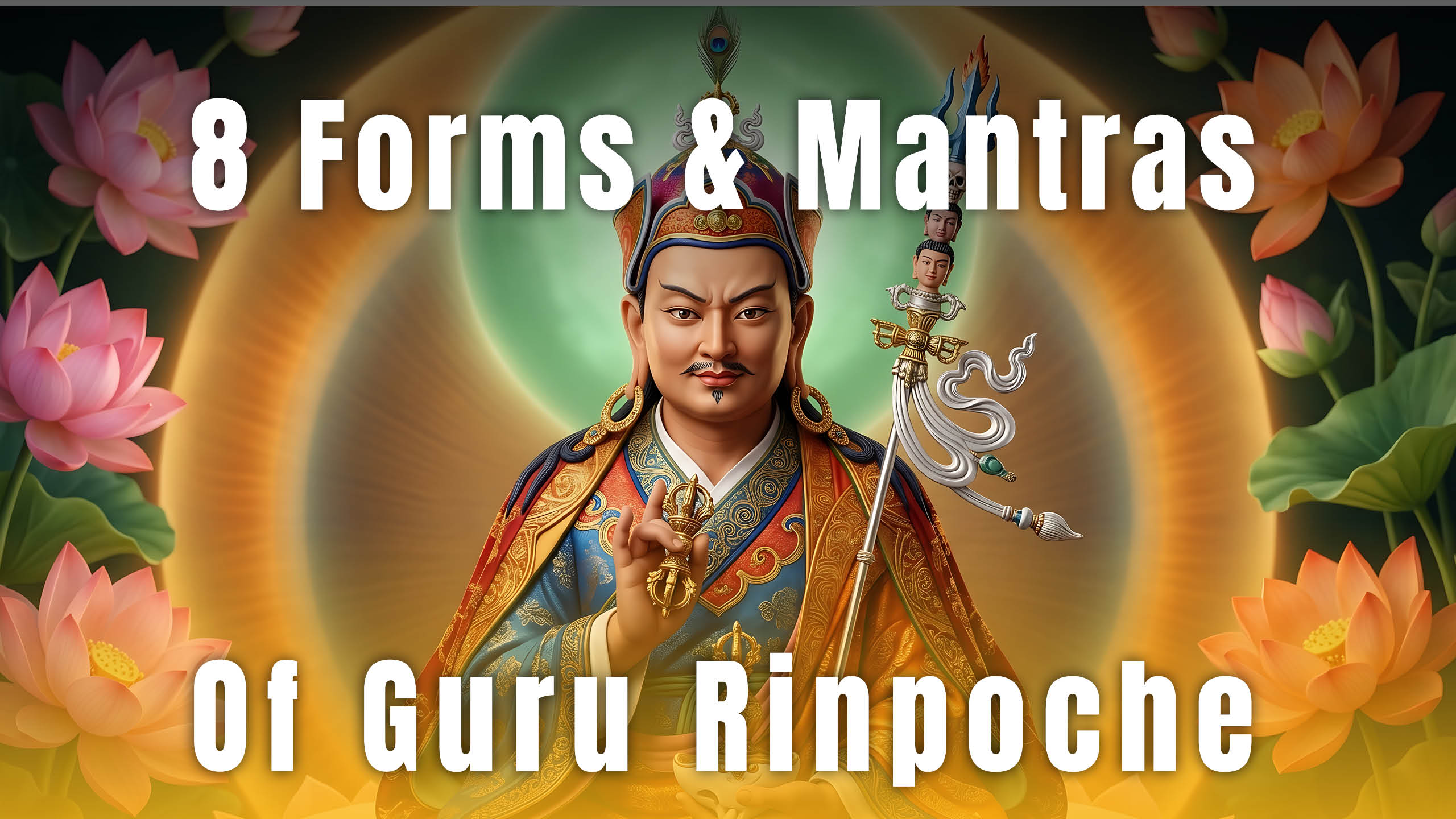
Welcome to Buddha Weekly’s special practitioner’s guide to the Eight Manifestations of Guru Rinpoche, also known as Padmasambhava, with dates for practice, and mantras in both Sanskrit and Tibetan.
Guru Rinpoche is known as the second historical Buddha, a fully enlightened Guru who brought Vajrayana Buddhism to the land of Snows. To express the miracle of his profound wisdom, he exhibited eight extraordinary manifestations. He seamlessly shifted between peaceful, regal, and wrathful forms to subdue negativity and guide practitioners, each according to their own abilities, karma and comprehension.
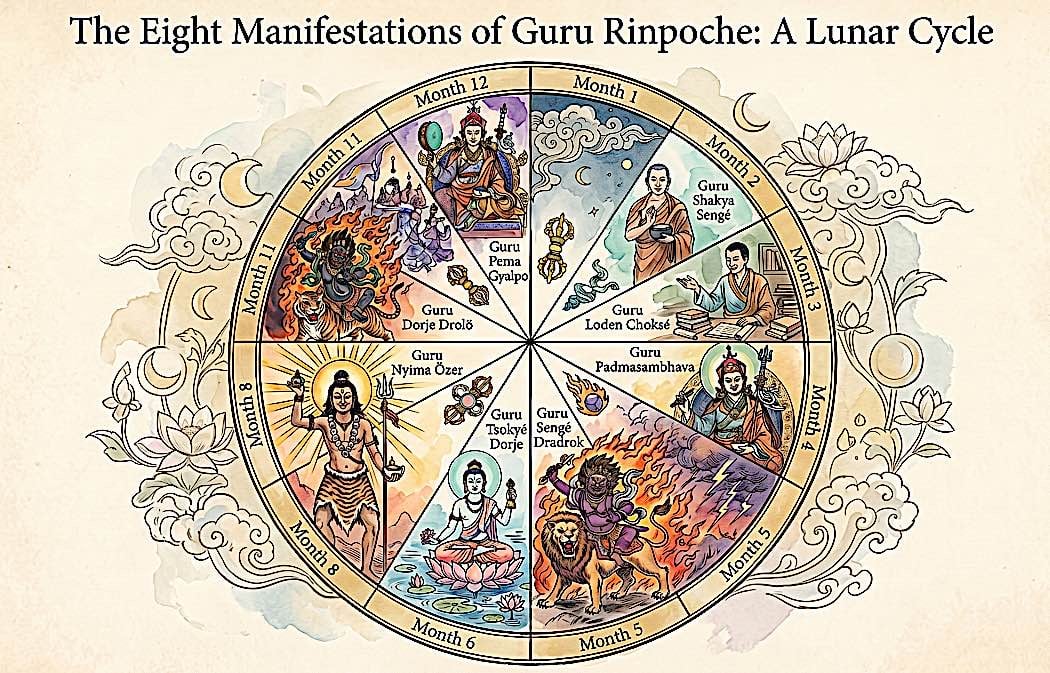
For Vajrayana practitioners, we celebrate the glorious Guru Rinpoche on the 10th day of the Tibetan lunar month, celebrating with Tsog or Ganachakra offerings. This is the most Holy Day, dedicated entirely to Guru Rinpoche, but did you know that each of the 8 manifestations has an anniversary, also celebrated on the 10th? To help you track these specific 10th-day practices, you can use the Buddha Weekly Dharma Calendar online.
Video Introduction:
🎥 *18-minute documentary | Buddhist practice guide*
📿 A sacred practitioner’s guide to the Eight Manifestations of Padmasambhava — including lunar dates, Tibetan & Sanskrit mantras, and the enlightened activities of each form.
In this 18-minute documentary, we honor Guru Rinpoche as the Second Buddha who brought Vajrayana to the Land of Snows. From the lotus-born Guru Tsokyé Dorje to the wrathful liberator Guru Dorje Drolö, each manifestation appears on a specific 10th lunar day (Tsog) to pacify, increase, magnetize, or destroy obstacles.
✨ What you’ll learn in this feature
- The root mantra (Om Ah Hung Benza Guru Pema Siddhi Hung) and its Sanskrit equivalent
- 8 primary manifestations with their lunar month dates, colors, attributes, and iconography
- Tibetan & Sanskrit phonetics for each form’s mantra
- How to align your 10th-day practice with the Buddha Weekly Dharma Calendar
⏱️ TIMESTAMPS:
0:00 – Introduction to Guru Rinpoche
01:23 – Guru Rinpoche Day: on all 10th Lunar Days
02:12 – Root Mantra (Tibetan & Sanskrit)
02:36 – First lunar month: Guru Rinpoche
03:43 – 2nd Month: Guru Shakya Sengé
05:25 – Also 2nd Month: Guru Loden Choksé
Guru Tsokyé Dorje (Lake-Born Vajra)
06:33 – 3rd Lunar Month: Guru Chime Pema Jungne
07:41 – 4th Lunar Month: Guru Padmavajra (Padmasambhava)
09:09 – 5th Lunar Month: Guru Sengé Dradrok
10:03 – 6th Lunar Month: Guru Tsokye Dorje
11:10 – 7th Lunar Month: Guru Nyima Özer
12:19 – 11th Lunar Month: Guru Dorje Drolö
13:30 – 12th Lunar Month: Guru Pema Gyalpo (Lotus King)
14:25 – Other lunar Dates and Forms
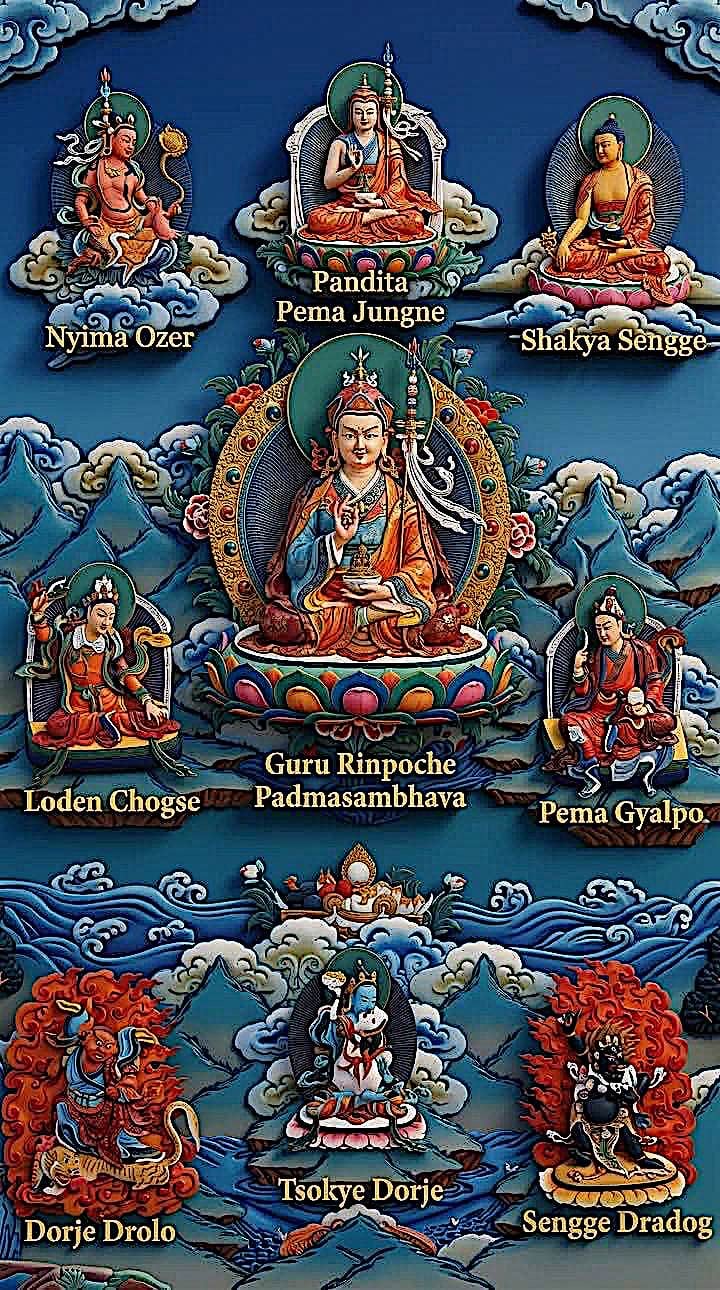
Main Root Mantra of Guru Rinpoche
Before we dive into the specific forms and their months, let’s introduce the root mantra. This single mantra can be chanted to invoke all or any of his manifestations.
In Tibetan, the mantra is:
Om Ah Hung Benza Guru Pema Siddhi Hung
In Sanskrit this is:
Om Āh Hūṃ Vajra Guru Padma Siddhi Hūṃ
Explore our other many videos on glorious Guru Rinpoche for more detailed explanations of the mantra and practices.
Here, we’ll explore the eight primary manifestations, including the symbolism, special dates, and both the Tibetan and Sanskrit phonetics of the mantras. We’ll present these in the order they appear in the calendar by lunar months. The first month is generally for Guru Rinpoche, on the 10th of the lunar.
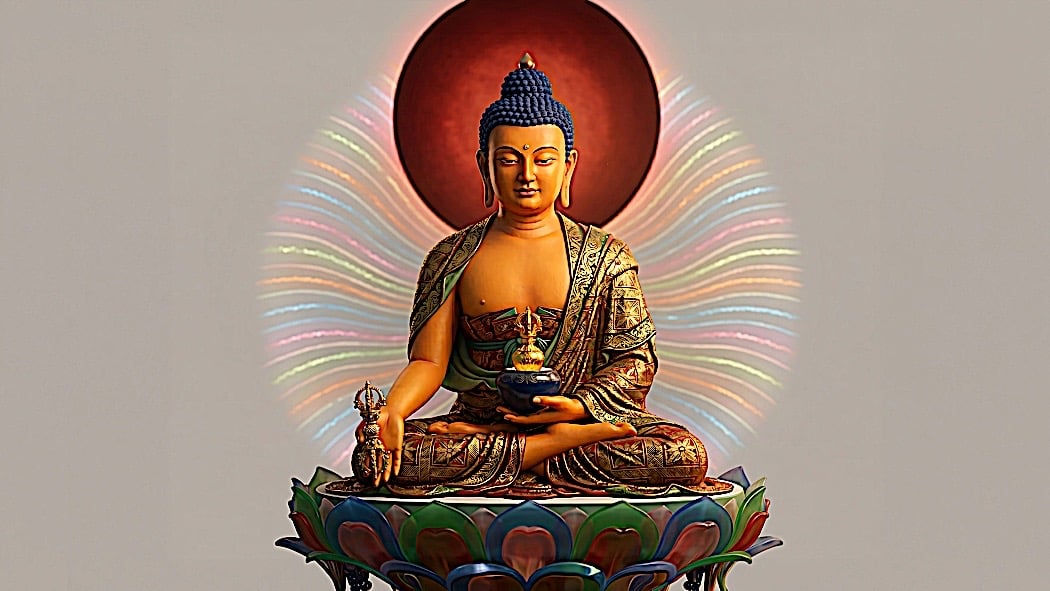
2nd Lunar Month, 10th Day: Shakya Sengé
On the 10th day of the second lunar month is the anniversary of two of Guru Rinpoche’s manifestations. The first of these is Shakya Sengé. He is the Wise Seeker of the Sublime.
He is known as the Lion of the Shakyas, honored on the 10th day of the 2nd lunar month. His Tibetan name is Guru Shakya Sengé, and his Sanskrit name is Guru Śākya Siṃha.
This peaceful form manifests as an ordained Buddhist monk. The lion in his name refers to his “lion dharma voice” the roar of the powerful Dharma speech. He has golden skin, wears red monk’s robes, and holds a begging bowl in his left hand and a five-pointed vajra in his right.
The Tibetan mantra is:
Om Muni Muni Maha Muni Shakyamuniye Svaha Guru Shakya Senge Hung
The Sanskrit is:
Om Muni Muni Mahā Muni Śākyamuniye Svāhā Guru Śākya Siṃha Hūṃ
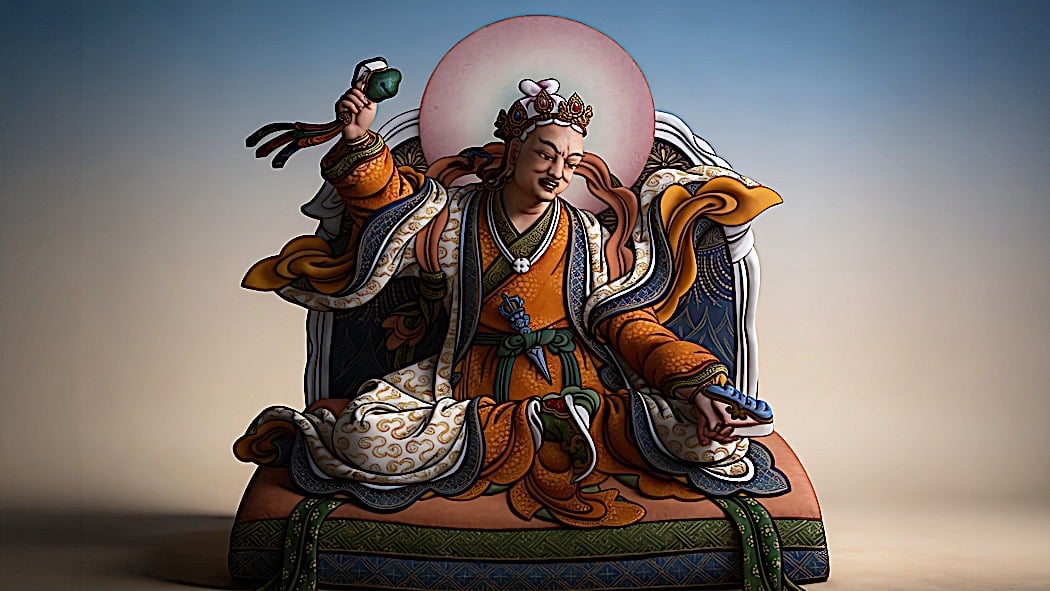
Also 2nd Lunar Month: Guru Loden Choksé
In the same month, the second lunar month, we honor Guru Loden Choksé. In Sanskrit he is known as Guru Mati Vareṇya.
He represents the mastery of all teachings and supreme knowledge. He has a peaceful white complexion, appears as great teacher, and often holds a damaru drum in his right hand and a lotus bowl in his left.
The Tibetan mantra is:
Om Ah Hung Benza Guru Pema Loden Choksé Hung
The Sanskrit is:
Om Āh Hūṃ Vajra Guru Padma Mati Vareṇya Hūṃ
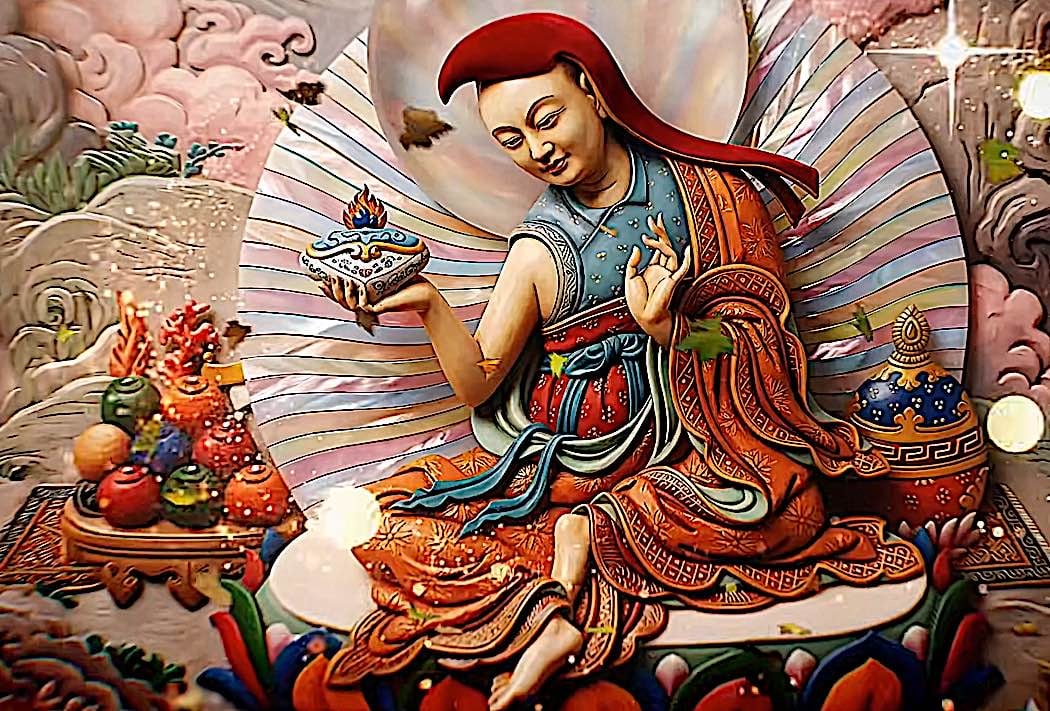
3rd Lunar Month Guru Chime Pema Jungne
Next by date, in the10th day of the third lunar month we honor Guru Chime Pema Jungne. This is a main form of Guru Rinpoche, but he appears with a Pandita hat, often seated but with one foot thrust out, symbolizing he’s ready to leap to our aid. As a main aspect of Guru Rinpoche, his mantra is generally the root mantra.
His Tibetan mantra is the root mantra:
Om Ah Hung Benza Guru Pema Siddhi Hung
And the Sanskrit is:
Om Āh Hūṃ Vajra Guru Padma Siddhi Hūṃ
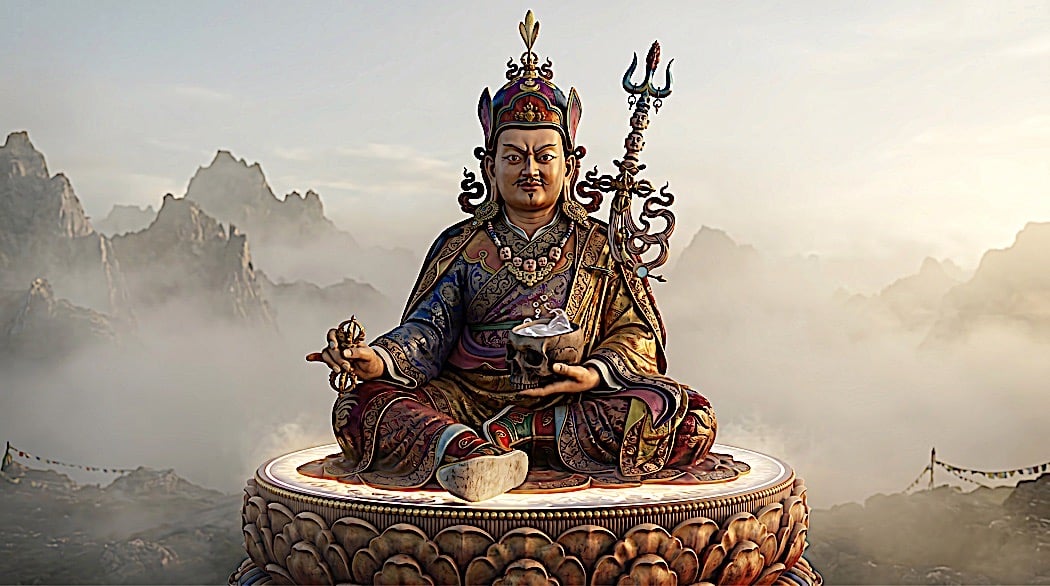
4th Lunar Month: Padmavajra Padmasambhava
His best-known and iconic form, known and loved by all, is his Padmasambhava form, not usually counted as one of the eight, but rather as the central Guru Rinpoche. He is honored on the 10th day of the fourth lunar month as Padmavajra, and again on the 10th day of any lunar month for the general monthly Tsog. His name is Guru Padmasambhava in both Tibetan and Sanskrit.
This is the iconic and historic form who firmly established tantric Buddhism in Tibet. He sits on a lotus, wearing his famous Nepalese lotus hat, holding a vajra in his right hand, a skull-bowl with a longevity vase in his left, and a khatvanga trident resting on his shoulder.
His Tibetan mantra is the root mantra:
Om Ah Hung Benza Guru Pema Siddhi Hung
And the Sanskrit is:
Om Āh Hūṃ Vajra Guru Padma Siddhi Hūṃ
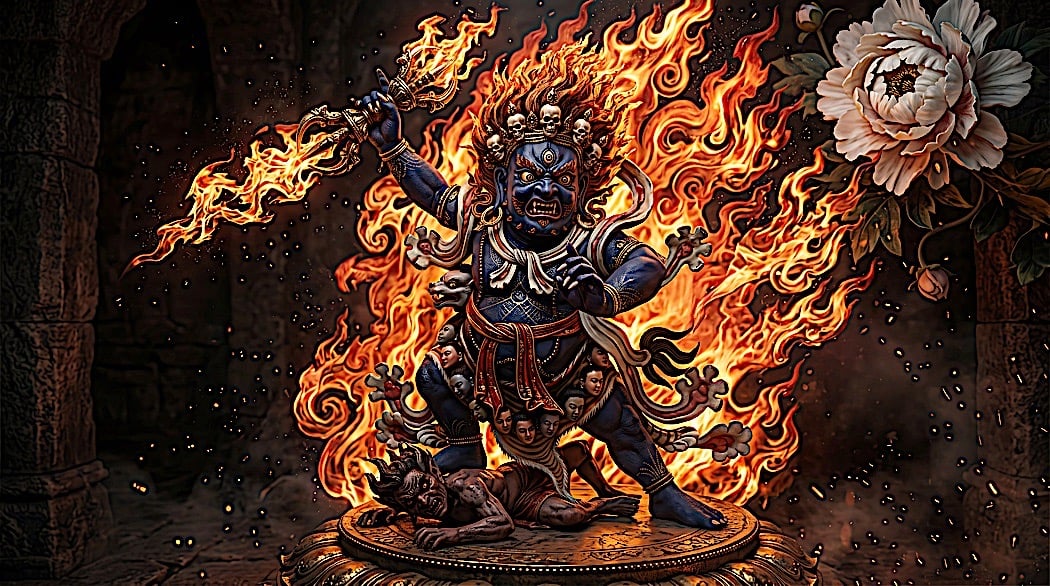
5th Lunar Month: Guru Sengé Dradrok
On the 10th day of the fifth lunar month we honor the fiercely protective Guru Sengé Dradrok, and in Sanskrit, Guru Siṃhanāda.
This highly wrathful form defends the Dharma from negative forces. He is dark blue, surrounded by wisdom flames, and sometimes stands atop a demon. He wears a crown of skulls and raises a vajra to the sky.
The Tibetan mantra is:
Om Ah Hung Benza Guru Senge Dradrok Hung
The Sanskrit is:
Om Āh Hūṃ Vajra Guru Siṃhanāda Hūṃ
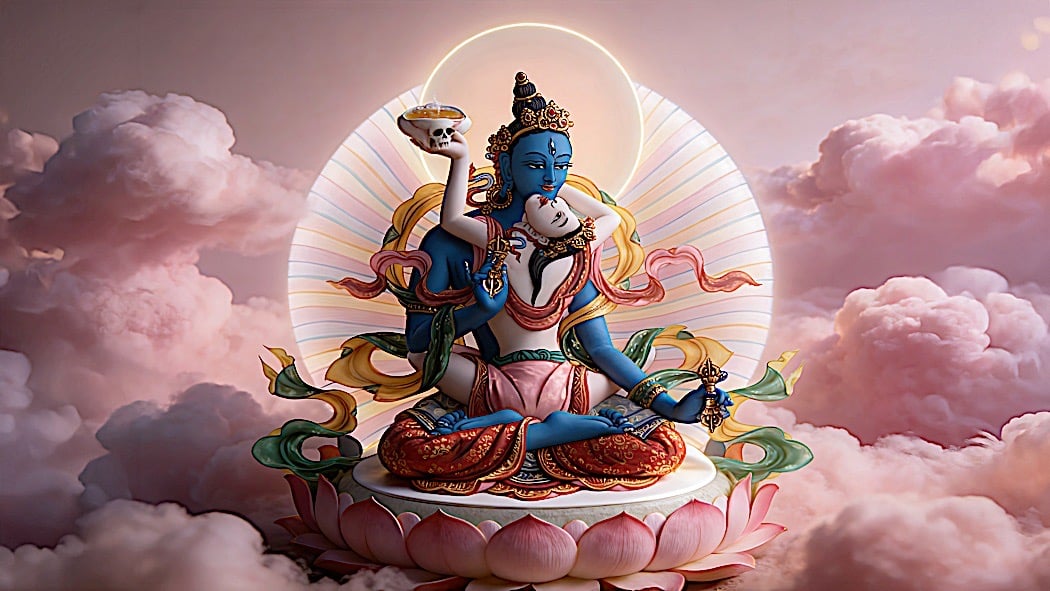
6th Lunar Month: Guru Tsokyé Dorje
On the 10th day of the sixth lunar month we honor Guru Tsokyé Dorje, known in Sanskrit as Guru Saroja Vajra.
He is often depicted with a dark blue complexion, three eyes, and embracing the wisdom dakini Yeshe Tsogyal.
The Tibetan mantra is:
Om Ah Hung Benza Guru Pema Tötreng Tsal Tsokyé Dorje Hung
The Sanskrit version is:
Om Āh Hūṃ Vajra Guru Padma Muṇḍa Mālā Vikrānta Saroja Vajra Hūṃ
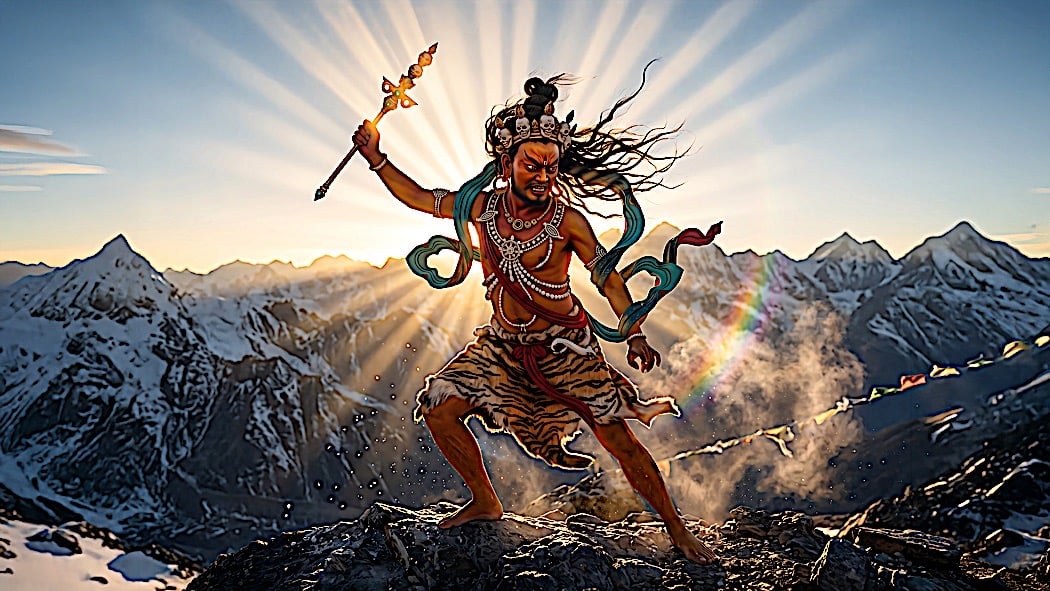
8th Lunar Month Guru Nyima Özer
On the 10th day of the 8th lunar month we honor Guru Nyima Özer, and in Sanskrit, Guru Sūrya Raśmi.
This is a dynamic, semi-wrathful form who dispels the darkness of ignorance. He is portrayed as a wandering yogi with a golden-red complexion, wearing a tiger-skin skirt. He often holds a khatvanga trident and his aura is like the sun.
The Tibetan mantra is:
Om Ah Hung Benza Guru Pema Nyima Özer Hung
The Sanskrit is:
Om Āh Hūṃ Vajra Guru Padma Sūrya Raśmi Hūṃ
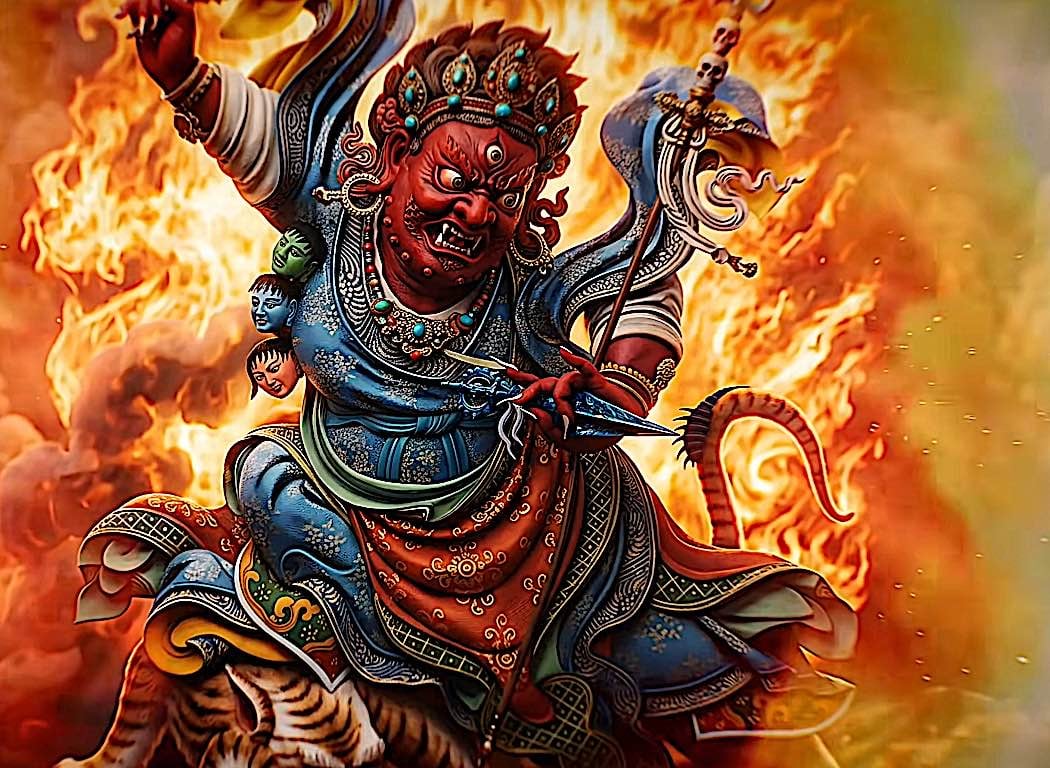
11th Lunar Month: Guru Dorje Drolö
On the 10th day of the eleventh lunar month we honor the Wild Wrathful Vajra. In Tibetan, he is Guru Dorje Drolö, and in Sanskrit, Guru Vajra Vikrīḍita.
This is the intense, wrathful subduer of negative energies who conceals terma treasures for future generations. He is dark red and dances dynamically on the back of a pregnant tigress, holding a vajra aloft and a purba dagger thrust downward.
The Tibetan mantra is:
Om Ah Hung Benza Guru Pema Dorje Drölo Hung
The Sanskrit is:
Om Āh Hūṃ Vajra Guru Padma Vajra Vikrīḍita Hūṃ
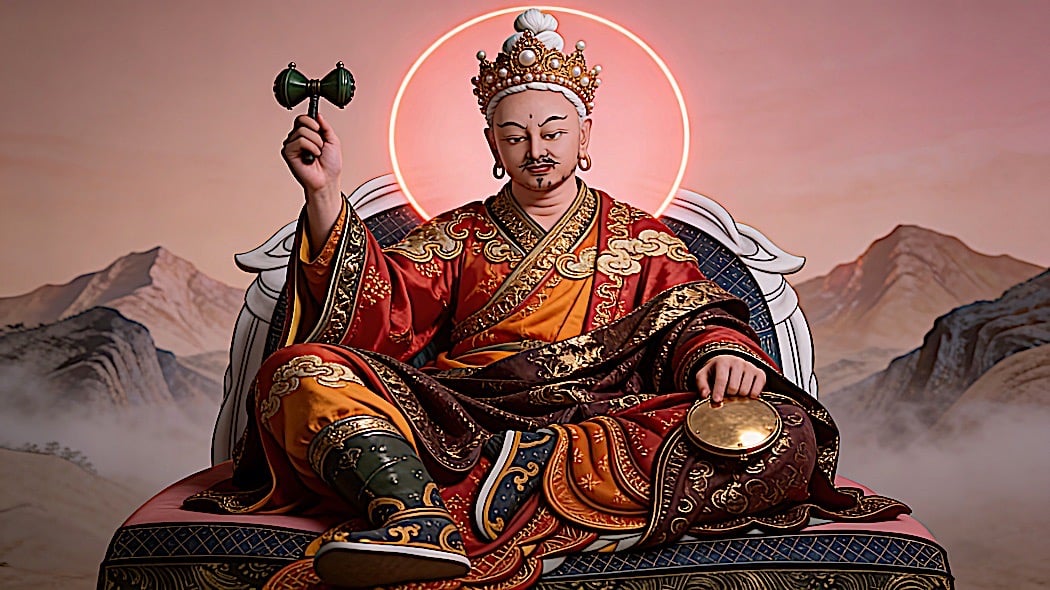
12th Lunar Month Guru Pema Gyalpo
Finally, on the 10th of the 12th lunar month, we honor the Lotus King. In Tibetan, he is Guru Pema Gyalpo, and in Sanskrit, Guru Padma Rāja.
He is the embodiment of royal power, guiding beings with magnetic charm and compassion. With a reddish-pink complexion, he sits in a royal posture holding a damaru drum and a mirror.
The Tibetan mantra is:
Om Ah Hung Benza Guru Pema Gyalpo Hung
The Sanskrit is:
Om Āh Hūṃ Vajra Guru Padma Rāja Hūṃ
These are the primary and best known of the manifestations of Guru Rinpoche. There are others, such as Guru Shantarakshita in the first lunar month. In the 7th month we honor the soaring Garuda manifestation Guru Khading Tsal.
Other Notable Dates
The 10th of the 10th lunar month is the special Anniversary of the main aspect of Guru Rinpoche. This honors the day Guru Padmasambhava arrived in Central Tibet and subdued the hostile demons of the land.
So, how do we bring this into our own practice? While the “Primary 8” are the main iconographic forms we just covered, the full 12-month calendar also honors specific deeds of Guru Rinpoche.
By consulting the Dharma Calendar over at buddhaweekly.com, you can easily see which of his miraculous deeds or manifestations aligns with the upcoming 10th lunar day.
Whether you are doing a full monthly sadhana, or simply taking a few moments to chant the Root Mantra, the goal is the same. We invoke Guru Rinpoche’s enlightened activities to pacify our obstacles, destroy our ego-clinging, and increase our boundless compassion. We dedicate the merit of these practices to the benefit of all beings.
Thank you for joining us today on Buddha Weekly. We hope this guide helps deepen your 10th-day practices.
May your practice be auspicious. If you found this video helpful, please like, subscribe, and spread the Dharma!
2 thoughts on “8 Guru Rinpoche Manifestations and Mantras Tibetan & Sanskrit | Padmasambhava’s 10th Day Practices”
Leave a Comment
More articles by this author
6 Avalokitesvara Heroes Overcoming 6 Poisons with 6 Syllables: Om Ma Ni Pad Me Hum: Enlightened Odyssey
HEALING VIDEO: Black Manjushri “most powerful healing” (Ven. Zasep Rinpoche) 1 Hour chanting Mantra in Sanskrit

Search
Latest Features

Please support the "Spread the Dharma" mission as one of our heroic Dharma Supporting Members, or with a one-time donation.
Please Help Support the “Spread the Dharma” Mission!
Be a part of the noble mission as a supporting member or a patron, or a volunteer contributor of content.
The power of Dharma to help sentient beings, in part, lies in ensuring access to Buddha’s precious Dharma — the mission of Buddha Weekly. We can’t do it without you!
A non-profit association since 2007, Buddha Weekly published many feature articles, videos, and, podcasts. Please consider supporting the mission to preserve and “Spread the Dharma." Your support as either a patron or a supporting member helps defray the high costs of producing quality Dharma content. Thank you! Learn more here, or become one of our super karma heroes on Patreon.
Lee Kane
Author | Buddha Weekly
Lee Kane is the editor of Buddha Weekly, since 2007. His main focuses as a writer are mindfulness techniques, meditation, Dharma and Sutra commentaries, Buddhist practices, international perspectives and traditions, Vajrayana, Mahayana, Zen. He also covers various events.
Lee also contributes as a writer to various other online magazines and blogs.
Greetings!! May the Dharma be spred throughout the World!
I accessed to the dharma-calendar page, but I’m not clear enough about the legend-colors used for each commemoration category. May I ask for more information to clear up this?
Thank you very much and account on my prayers for the benefit of all mother-beings
Greetings and thank you for your question. It’s a very good point. I don’t think we have a page dedicated to explaining colors. When our volunteers set it up, I think they tried to mainly wrap around the Buddha Families, so Reds for Padma or Lotus family of Amitabha and Avalokiteshvara, Blue for Vajra family of Akshobhya and so on. There are too many, but basically think color scheme: Red for Padma (and related), Green for Karma (Tara and family), Blue for Vajra and Medicine and Purification, Yellow for Auspiciousness practices, White for Teachings and wisdom events.But over time, more were added. We’ll add a page to help with that, thank you.
In more detail:
Blue = Vajra or Akshobya family, Medicine Buddha, Vajrapani and so on.
Lightest Blue: Medicine Buddha
Red = Padma family: Amitabha days, Avalokiteshvara days, Guru Rinpoche (the brightest red is his monthly Tsog day, 10th lunar ) (Lotus born lord), Hayagriva
Darker Red is Dakini Days (which is also Tsog) on the 25th lunar — and darkest red was Lunar New Year
Green is Karma family – Tara, Amoghasiddhi, Karma dakini
Gold or Yellow is Ratna family – Ratnasambhava, Yellow Tara
Bright Purple is Eclipses
Light Blue is 3rd Quarter Waning Moon: Supreme Reflection Day
Tara Day light green
DARK Blue is monthly Upavasatha (New Moon) which is “renewal day. (associated with confession and purification: Vajrasattva, Vajrakilaya, Vajrapani)
Bright yellow is “teaching events”
Purple is for Buddha Days – 15 days of Miracles, enlightenment, birth, paranirvana of Buddha, and other “annual” Buddha Days.
White is for Japanese tradition days
Ksitigarbha is light yellow (he is Earth Store Bodhisattva and Ratna family, but a special yellow)
Losar is white
Silver is Lunar Days: full moon, new moon, quarters
Bronze-Gold is Mahayana Special Days
Black is Protector Puja Days (29th lunar)
Thank you, and happy Practice Days!