
The Discourse that Set the Dharma Wheel Rolling: Three Key Principles Taught by Buddha in Forty Life-Inspiring Verses
Buddha taught three key principles of the Buddha Dharma path, summarized elegantly in “The Discourse that Set the Dharma-Wheel Rolling” as forty life-inspiring verses. [Dhammacakkappavattana Sutta. The full text as verses in English translation are below. This concise version excludes some of the lengthier narrative commentaries.]
This sutra sets out the fundamental principles of Buddhism, starting with three foundational concepts: the Four Noble Truths, the Noble Eightfold Path, and the “Middle Way” Path — all designed to free us from the conditioning that traps us in Samsara. The discourse then explains how to attain “cessation of suffering,” diving deeply into key meditational concepts, such as Impermanence, Dependent Arising, and Emptiness.
Special feature by Donald Mena
(Biography on bottom deck.)
The “Four Noble Truths”
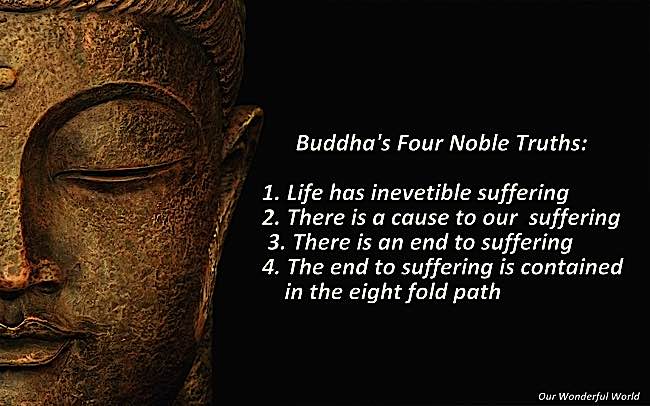
The first key teaching from the Discourse is The Four Noble Truths. The first truth is that there is suffering, and all living beings suffer in one way or another. The second truth: the cause of suffering is desire, attachment, dissatisfaction. The third truth is that suffering can end and nirvana can be reached. The fourth truth: the Noble Eightfold path leads to the end of suffering. [For more on the Four Noble Truths and the Eightfold Path, see our previous feature on Buddha Weekly>>]
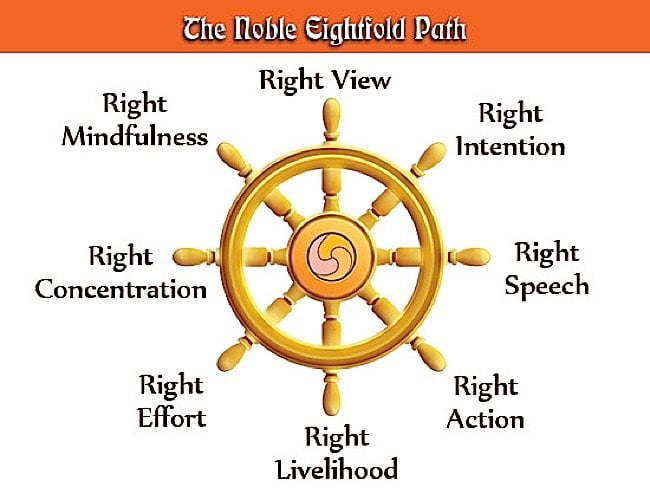
The Noble Eightfold Path
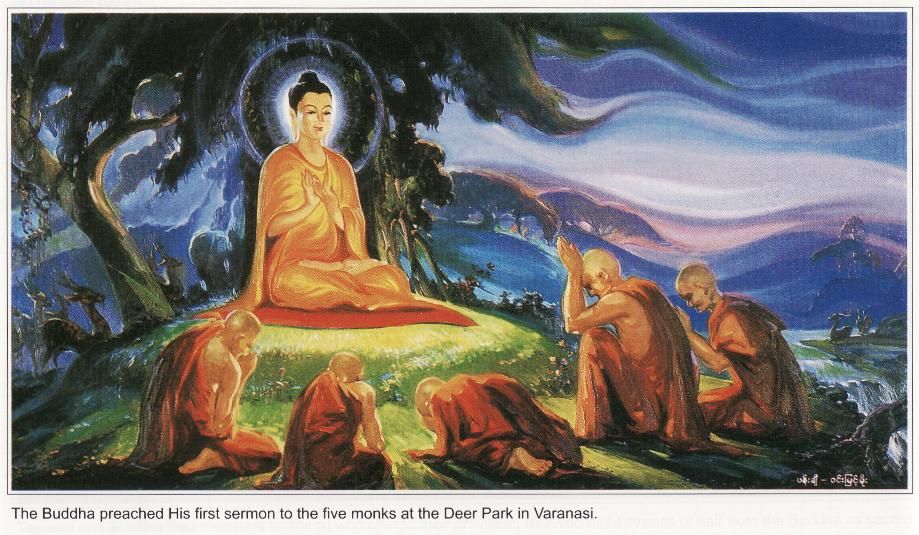
The second key teaching follows from the first, the Noble Eightfold Path. [For another feature on the Eightfold Path see this feature in Tricycle: the Noble Eightfold Path.] These are the eight “precepts” that anyone who wants to be free from suffering should follow.
There are eight principles:
- right understanding
- right thought
- right speech
- right action
- right livelihood
- right effort
- right mindfulness
- right concentration.
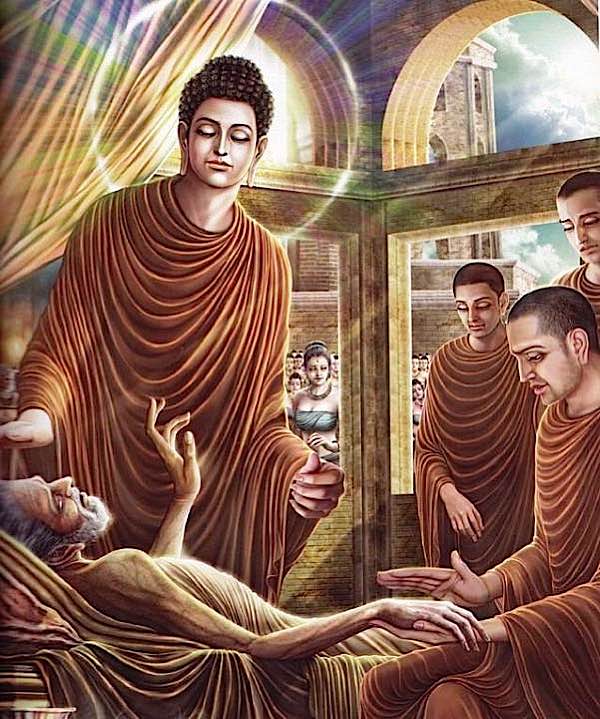
The discourse focuses on recommendations for a harmonious life. Buddhism is not a dogmatic religion (and rather not a religion, but philosophical teaching or self-help method) and, therefore, unlike belief-focused religions, does not contain “commandments.” Buddha gave recommendations for a harmonious life.
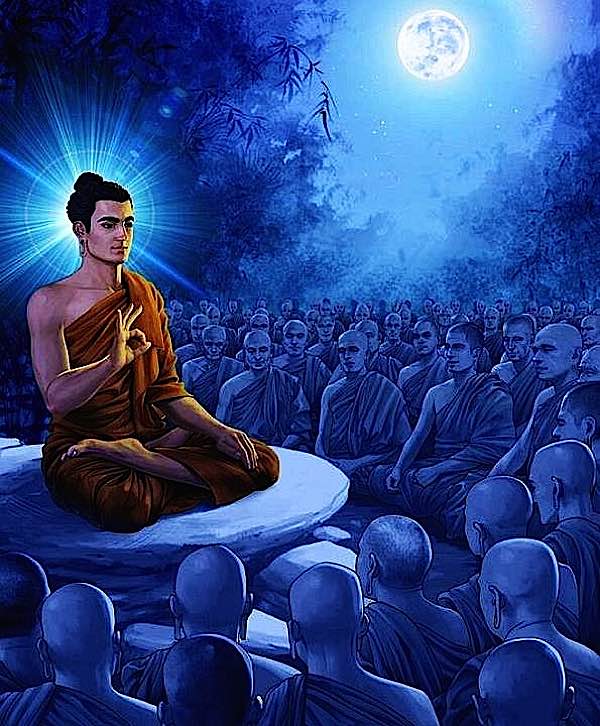
There are five important recommendations for people: to refrain from violence, lying, stealing, adultery, and the use of intoxicating substances. All 8 “precepts”, in one way or another, contain a reference to these recommendations, and the last two stages (the right mindfulness and concentration) already contain direct recommendations for working with your mind, that is, methods for meditation.
The Middle Path
Buddha taught the importance of the Middle Path. In this discourse, the third key concept is this Middle Way. Prince Siddhartha, after leaving his father’s palace, became an ascetic and underwent various methods of restriction and renunciation.
He tested every method of renunciation, including extreme austerities, such as prolonged abstinence from water and food. As a result of severe austerities, he almost died. The girl Sujata, found him, Emaciated Buddha, on the bank of the river, fed him. Out of this experience, he realized that extreme asceticism leads only to the death of the body.
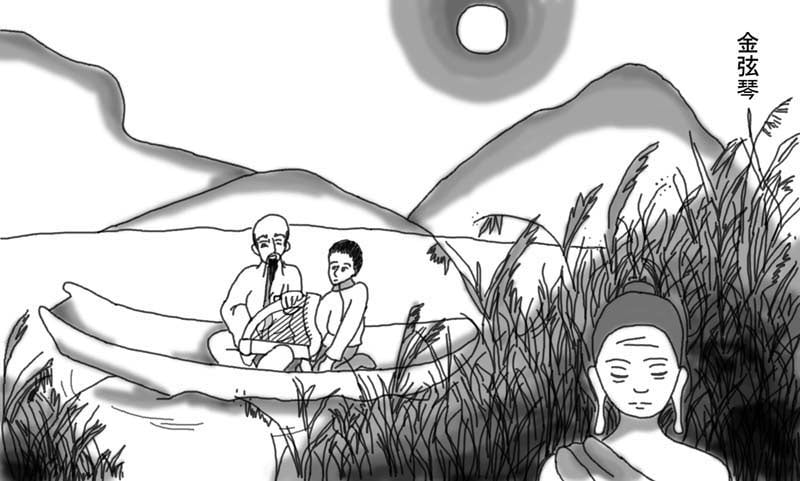
At that time, Siddhartha noticed a boat floating along the river, and overheard a music teacher telling his student how to tune instruments. He explained that you cannot tighten the string too much, otherwise it will break, but you cannot leave it too loose, otherwise the instrument will not make sound.
In a flash of insight, Siddhartha realized that it is necessary to move in the Middle way — not too tight, not too loose — equally moving away from luxury and extreme asceticism.
Karma — the “Law” of Cause and Effect
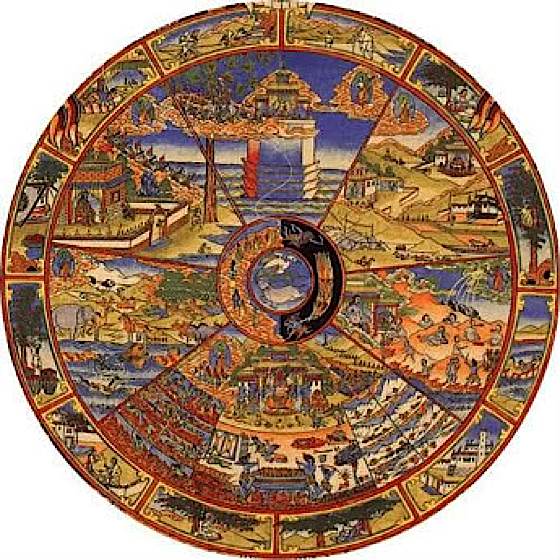
One of the main truths upheld in Buddhism, is cause and effect, or, as it is more often called, the law of karma [For a Buddha Weekly feature on Karma, see>>]. The Buddha taught his disciples about the law of karma in various Sutras, for example, in Anguttara Nikaya Sutra. Most sutras touch on cause and effect teachings, from Dependent Arising through to various results from Karma. [For a feature on Dependent Arising, see>>]
Everything that happens in our world is conditioned by the law of karma. The Five precepts for men and women are not some religious dogma that must be blindly followed. If you just think about these five principles, you can understand that they are given for a reason, notably to generate positive outcomes and karma, and avoid negative karma imprints.
Important Sutras (Suttas)
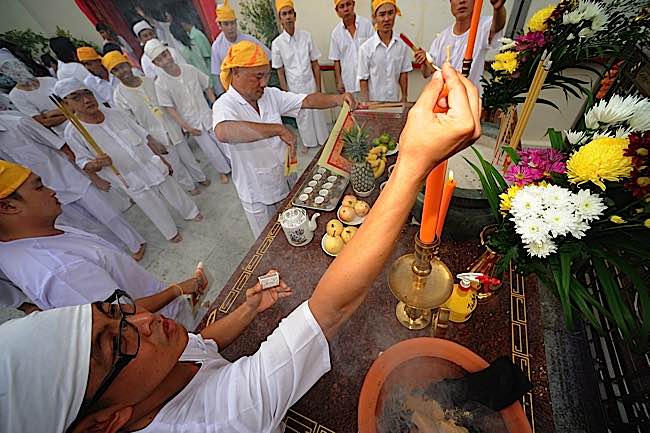
It is simply impossible to summarize the essence of the priceless and incomprehensible teachings of Buddha. It is said there are 80,000 texts and sutras. To understand Buddhism, it is essential to read the Buddhist sutras — priceless pieces of wisdom and knowledge. Some of the most informative (links with full text): “The Discourse that Set the Dharma-Wheel Rolling“,”The Wonderful Dharma Lotus Flower Sutra“, “The Heart Sutra“, “The Diamond Sutra“, “Lotus Sutra” and many others. It is also recommended to read Jataka Tales [For a Feature on the Jataka Tales, see>>]— lovely leassons and memories of Buddha from his previous lives. Reciting Sutras is also considered a meritorious practice. [For a feature on reciting sutras, see>>]
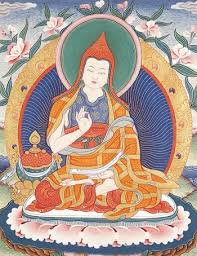
Also very informative, in terms of understanding the philosophy of Buddhism and the teachings of the Buddha, are texts from great sages and teachers, such as the text of the monk Shantideva, “The Path of the Bodhisattva”. This is a unique text. The author of the text combines very rare qualities — the teachings, the experience of a spiritual practitioner, and deep philosophical thoughts, which are presented in the most understandable and accessible language with successful comparisons and examples. To become familiar with the Teachings of the Buddha, no one text stands out, however there are many favourites of students, some philosophical, some practical.
It is important to note that the Buddha’s Teachings are time-tested. For 2,500 years, people around the world have been studying it and following the path that the Tathagata pointed out to us two and a half thousand years ago.
Forty Verses in the Discourse that Set the Dharma Wheel Rolling
In the full discourse, Buddha teaches an entire path to Enlightenment — much more than covered in our introductory feature.
The Discourse that Set the Dharma-Wheel Rolling
Then the Realised One, monks, in the first watch of the night agreed (to teach) by keeping silent, in the middle watch of the night he took delight in what was to be said, in the last watch of the night he addressed the auspicious group-of-five, (saying):
“There are these two extremes, monks, that one who has gone forth ought not to descend to, which is this: being joined and clinging to the pleasure in sense pleasures, which is low, vulgar, worldly, not very noble, not connected with the goal, not (helpful) for the spiritual life in the future, not leading to world-weariness, dispassion, cessation, deep knowledge, Complete Awakening, and Emancipation; and this, which is not the middle practice: devotion to self-mortification, which is painful, not connected with the goal, painful in this very life and in the future where it results in pain.
Not having approached either of these two extremes, monks, the Doctrine of the middle practice is being taught by the Realised One, which is this:
- right view
- right thought
- right speech
- right action
- right livelihood
- right endeavour
- right mindfulness
- right concentration.
The Four Noble Truths
There are these Four Noble Truths, monks. Which four? Suffering, the arising of suffering, the cessation of suffering, and the practice leading to the cessation of suffering.
Herein, what is suffering?
- birth is suffering
- also old age is suffering
- also sickness is suffering
- also death, being joined to what is not dear, being separated from what is dear, is suffering
- also not to obtain what one seeks for is suffering
- in brief, the five constituent parts (of mind and body) that provide fuel for attachment are suffering.
This is said to be suffering.
Herein, what is the arising of suffering?
It is that craving which leads to continuation in existence,
which is connected with enjoyment and passion.
This is said to be the arising of suffering.
Herein, what is the cessation of suffering?
It is the complete fading away and cessation without remainder of the birth of that craving, which greatly enjoys this and that, and is connected with enjoyment and passion.
This is [said to be] the cessation of suffering.
Herein, what is the practice leading to the cessation of suffering?
It is the noble eightfold path, which is this:
- right view
- right thought
- right speech
- right action
- right livelihood
- right endeavour
- right mindfulness
- right concentration.
This is said to be the noble truth of the practice leading to the cessation of suffering.
These, monks, are the four noble truths.
Realisation
‘This is suffering’, to me, monks, regarding these previously unheard-of things reflecting wisely and practising continuously, knowledge arose, vision arose, understanding arose, comprehension arose, intelligence arose, wisdom arose and light became manifest.
‘This is the arising of suffering’, to me, monks, regarding these previously unheard-of things reflecting wisely and practising continuously, knowledge arose, vision arose, understanding arose, comprehension arose, intelligence arose, wisdom arose and light became manifest.
‘This is the cessation of suffering’, to me, monks, regarding these previously unheard-of things reflecting wisely and practising continuously, knowledge arose, vision arose, understanding arose, comprehension arose, intelligence arose, wisdom arose and light became manifest.
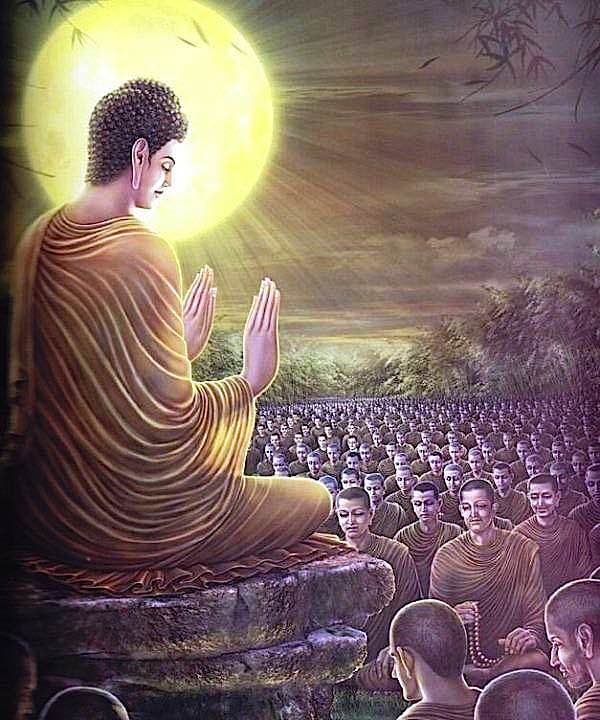
‘This is the practice leading to the cessation of suffering’, to me, monks, regarding these previously unheard-of things reflecting wisely and practising continuously, knowledge arose, vision arose, understanding arose, comprehension arose, intelligence arose, wisdom arose and light became manifest.
Now that to which “this is suffering” refers (i.e. suffering itself) ought to be fully known, to me, monks, regarding these previously unheard-of things reflecting wisely and practising continuously, knowledge arose, vision arose, understanding arose, comprehension arose, intelligence arose, wisdom arose and light became manifest.
Now that to which “this is the arising of suffering” refers (i.e. craving) ought to be given up, to me, monks, regarding these previously unheard-of things reflecting wisely and practising continuously, knowledge arose, vision arose, understanding arose, comprehension arose, intelligence arose, wisdom arose and light became manifest.
Now that to which “this is the noble truth of the cessation of suffering” refers (i.e. Emancipation) ought to be experienced, to me, monks, regarding these previously unheard-of things reflecting wisely and practising continuously, knowledge arose, vision arose, understanding arose, comprehension arose, intelligence arose, wisdom arose and light became manifest.
Now that to which “this is the noble truth of the practice leading to the end of suffering” refers (i.e. the practice itself) ought to be developed, to me, monks, regarding these previously unheard-of things reflecting wisely and practising continuously, knowledge arose, vision arose, understanding arose, comprehension arose, intelligence arose, wisdom arose and light became manifest.
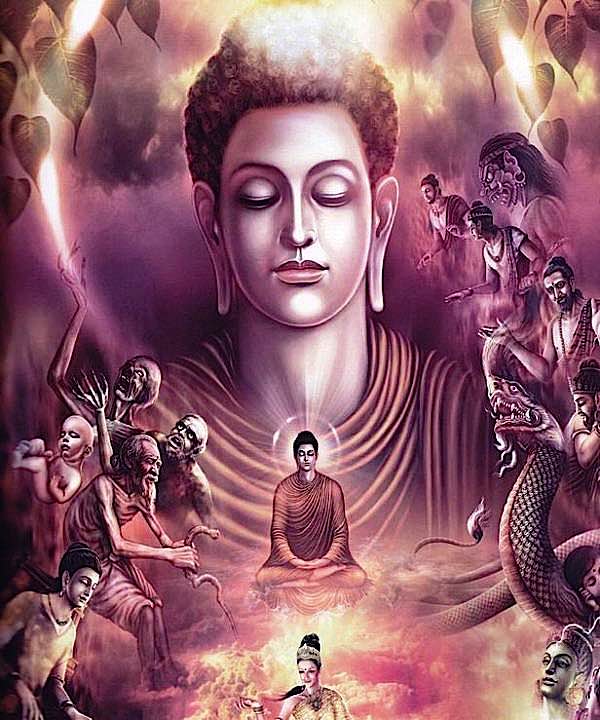
Now that to which “this is the noble truth of suffering” refers has been fully known, to me, monks, regarding these previously unheard-of things reflecting wisely and practising continuously, knowledge arose, vision arose, understanding arose, comprehension arose, intelligence arose, wisdom arose and light became manifest.
Now that to which “this is the noble truth of the arising of suffering” refers has been given up, to me, monks, regarding these previously unheard-of things reflecting wisely and practising continuously, knowledge arose, vision arose, understanding arose, comprehension arose, intelligence arose, wisdom arose and light became manifest.
Now that to which “this is the noble truth of the cessation of suffering” refers has been experienced, to me, monks, regarding these previously unheard-of things reflecting wisely and practising continuously, knowledge arose, vision arose, understanding arose, comprehension arose, intelligence arose, wisdom arose and light became manifest.
Now that to which “this is the noble truth of the practice leading to the end of suffering” refers has been developed, to me, monks, regarding these previously unheard-of things reflecting wisely and practising continuously, knowledge arose, vision arose, understanding arose, comprehension arose, intelligence arose, wisdom arose and light became manifest.
Declaring the Awakening
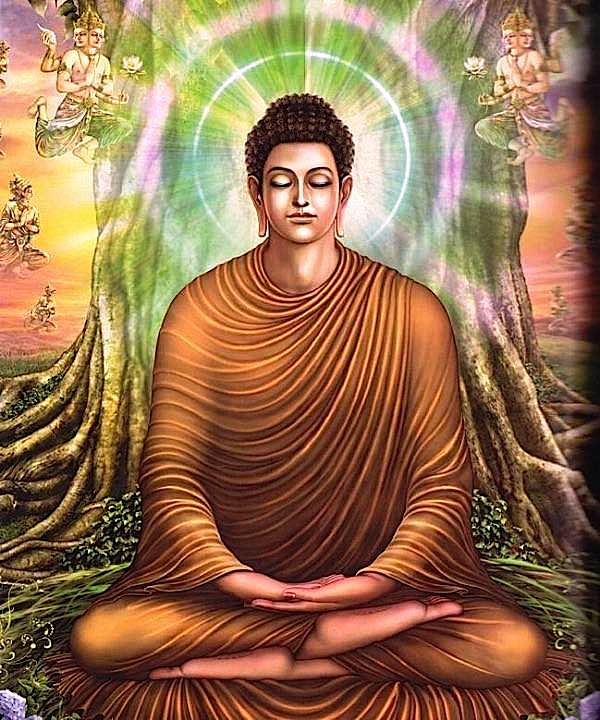
For as long as to me, monks, in regard to these four noble truths reflected upon wisely and turned like this, in three ways, twelvefold, knowledge and insight was (still) arising, for that long, monks, I did not declare that I was a Full and Perfect Sambuddha with unsurpassed complete awakening; but when knowledge and insight was no longer arising, and in regard to these four noble truths, monks, turned like this, in three ways, twelvefold, knowledge and insight had arisen (and I knew): sure is my liberation of mind, wisdom and liberation have been experienced, then I, monks, did declare that I was a Full and Perfect Sambuddha with unsurpassed complete awakening and knowledge and insight arose:
‘Destroyed is (re)birth for me,
accomplished is the spiritual life,
done is what ought to be done,
there is no more of this mundane state’ – this I know.
This is what was said in that place.
Verses on Setting Rolling the Dharma-Wheel
Having a voice resounding like Brahmā, like the song of a Kinnara,
Having ten-million 05 rays radiating (from his body),
Having cultivated truth continually for many millions of aeons,
The Self-made 07 Sage of the Śākyans addressed Kauṇḍinya:“The eye is impermanent, inconstant, and so is the ear, the nose,
The tongue, the body, the mind — (all) are suffering, non-self, empty.
Naturally quiescent like clumps of grass, inanimate,
There is neither Self here, nor a Person or a Soul.All things are produced with a condition and a cause,
Having put aside all extreme views, (it is) as clear as the sky:
There is no doer, nor is there one who experiences,
He sees no deed done, whether it be bad or good.The constituent parts 09 arise through conditions, and so there is suffering,
It is produced just as thirst is through the cutting off of water.
Seeing equanimity towards (conditioned) things through the Path,
It is completely destroyed, with the cessation of those things subject to decay.With the production of various thoughts that are not wise
Comes ignorance, 10 no one is a producer of it,
The cause for volitional (processes) is given, there is no maker of them,
Consciousness arises, made by conditions,With consciousness there is then an arising of name and form,
With name and form originate the six sense spheres,
Contact is said to fall upon the six sense spheres,
With contact the three feelings follow along,Whatever feelings there are, all are said to be joined with craving,
From craving is born a whole mass of suffering,
From attachment comes the whole round of existence,
Because of continuation of existence birth arises for him,With birth as foundation come the sufferings of old-age and sickness,
And many and various rebirths in the round of existence.
Thus from all these conditions there are worldly inhabitants,
There is no Self or Person encountered anywhere.Where there is no imagining or doubt that is said to be wisdom,
Whatever comes from wisdom, in that there is no ignorance at all.
In whatever place there is cessation of ignorance
There is a cessation of all decay and the factors of existence which are destroyed by decay.Thus conditionality has been understood by the Realised One,
Because of that the Self-made One declares himself (Awake).
I do not say that the constituent parts, the sense-spheres, or the elements are the Buddha,
Without an understanding of conditions no-one can become a Buddha here.There is no room here for those who have gone forth as sectarians,
When speaking of emptiness in connection with such things here,
(Only) those who are fully purified beings, who live (like) former Buddhas,
Who speak pleasantly, get to know the Nature (of things).”Thus the Dharma-Wheel (understood) in twelve ways was set rolling,
It was understood by Kauṇḍinya, and the three jewels came into existence.
The Buddha, the Dharma and the Saṅgha, these are the three jewels,
This cry passed from one to another as far as the Brahmā realm.The dust-free (Dharma) Wheel was set rolling by the Lord of the World,
And the three jewels, which are exceedingly rare, arose in the world.
Having first converted Kauṇḍinya, the five monks
And six hundred million gods were purified by the Vision-of-the-Dharma,And another eight hundred million gods from the Element of Form
Had their vision purified by the Dharma-Wheel being set rolling.
Eighty-four thousand human beings who had assembled
Also had their vision purified, and were freed from all bad destinations.At that moment in the ten directions 17 without end this cry (concerning) the Buddha
Went forth, resounding, sweet, pleasing, beautiful, it was heard in the firmament:
“The supreme Dharma-Wheel, has been set rolling by the One Possessing Ten-Powers,
By the Śākyan sage, by no other, after he had approached Ṛṣipatana, close to Vārāṇasī.”In the ten directions all of the hundred Buddhas 18 fell silent,
And the leading sages who attended on them all asked the Victorious Ones:
“Why have the Ones Possessing Ten-Powers after hearing this sound,
Interrupted their Dharma talk thus? What is the reason they have so quickly silenced their speech?”“Through a hundred previous existences Awakening was accomplished
With energy and strength, and many hundred-thousand Buddhas-to-be were left behind.
So through beneficial actions and purification the auspicious Awakening was attained,
The Wheel has been rolled three times, therefore we have become silent.”“After hearing these words, those billions of sages, after developing
The strength of friendliness, advanced towards the auspicious and highest Awakening, (Thinking): “We also will train under the Sage, engaged in giving rise to energy,
Quickly we will become supreme in the world, and will offer the Vision-of-the-Dharma (to others).”
More articles by this author


Search
Latest Features

Please support the "Spread the Dharma" mission as one of our heroic Dharma Supporting Members, or with a one-time donation.
Please Help Support the “Spread the Dharma” Mission!
Be a part of the noble mission as a supporting member or a patron, or a volunteer contributor of content.
The power of Dharma to help sentient beings, in part, lies in ensuring access to Buddha’s precious Dharma — the mission of Buddha Weekly. We can’t do it without you!
A non-profit association since 2007, Buddha Weekly published many feature articles, videos, and, podcasts. Please consider supporting the mission to preserve and “Spread the Dharma." Your support as either a patron or a supporting member helps defray the high costs of producing quality Dharma content. Thank you! Learn more here, or become one of our super karma heroes on Patreon.
Donald Mena
Author | Buddha Weekly
About the author: Donald Mena is a writer, psychologist, and meditation enthusiast.He studies ancient Buddhist texts and is a contributor to WritingAPaper, where you can get help with academic writing.