
Daily Recitation of the Heart Sutra in Sanskrit: a Heart Practice with countless benefits: purification, merit, wisdom, compassion, success
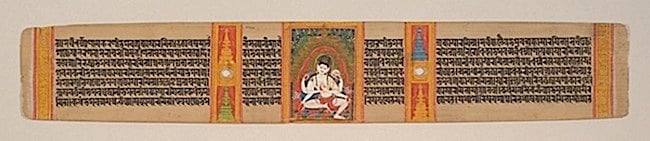
The Profound Benefits of Daily Recitation of the Heart Sutra
Cultivating a daily practice of reciting the Heart Sutra, one of the paramount teachings in the Mahayana canon, has been extolled by Buddhist teachers as a pathway filled with profound transformative benefits. As a faithful Mahayana Buddhist, one reason you might incorporate the Heart Sutra into your daily practice is its immense potential for fostering wisdom and compassion – qualities that lie at the heart of Buddhism (pun intended).
- Watch for our Buddha Weekly video with beautiful chanting of the Heart Sutra in Sanskrit, coming soon to our Youtube Channel @Buddhaweekly
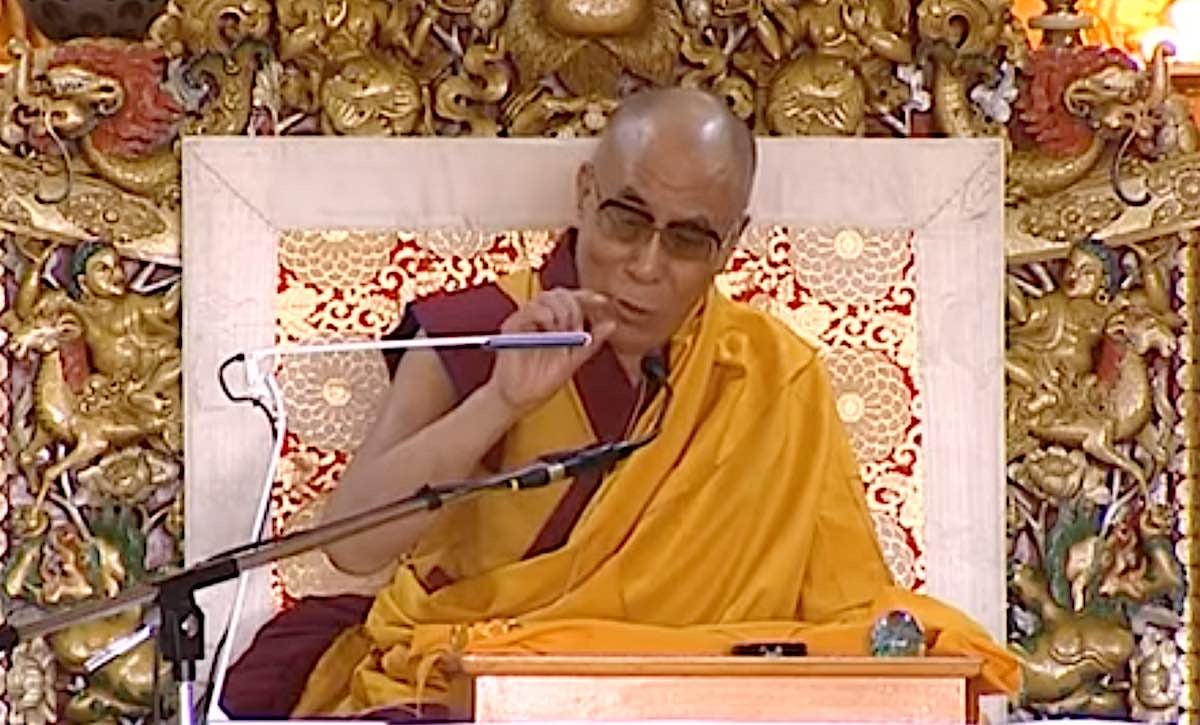
Chanting this sutra daily unfurls layers of insight, leading to a deeper understanding of “Shunyata” or Emptiness, which in turn cultivates a profound sense of “Oneness” with all beings. The Heart Sutra holds the essence of the Buddha’s teachings – the understanding of emptiness, which can steer us towards liberating ourselves and others from suffering. In the words of Venerable Thich Nhat Hanh, a renowned Buddhist monk, by practicing the Heart Sutra we “enter deeply into the Buddha’s teaching of emptiness and realize the interdependent nature of all beings” (PlumVillage.org source).
Chanting the Heart Sutra in Sanskrit:
Chanting in Sanskrit has Psycholinguistic Benefits
Not only is the recitation in Sanskrit a moment of deep deviceless meditation, but the melodic resonance of the Sanskrit language has been thought to have psycholinguistic benefits, synchronizing the endocrine system and awakening the dormant regions of the brain, therefore leading to improved health and well-being.
More important is context. English or other native-language translations suffer from poor single-word translations of concepts such as Shunyata. Chanting in Sanskrit ensures the full context and meaning is preserved.

Translations of Sanskrit Are Usually Imprecise
Translations of Sanskrit tend to be one-dimensional, and are missing many nuances of meaning. Many syllables in Sanskrit have complex, layered meanings. A commentary on the word Svaha can fill an entire chapter, for example.
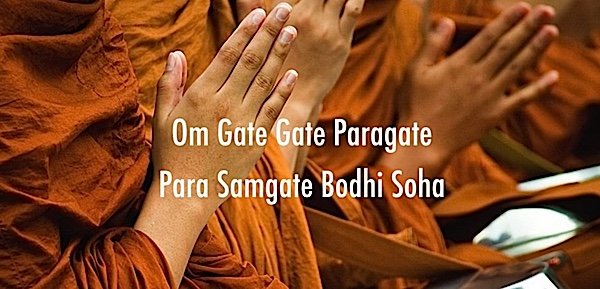
The Gate Mantra from the Heart Sutra chanted by the Amazing Yoko Dharma:
Sanskrit is also meditative, and transformative to our body, speech and mind. Chanting in English or your native language can make the recitation a “prayer” or aspiration (which is wonderful), while reciting in Sanskrit is deeply meditational, involving vibrations and sound, mind and even body at the vibrational level.
According to Dalai Lama, “Meditating on the profound wisdom of Emptiness as encapsulated by the Heart Sutra dissolves all mental obscurations […] also bringing profound peace and joy” (DalaiLama.com source).

Did you know?
- Reciting the Heart Sutra daily in Sanskrit is believed to purify negative karma and accumulate merit.
- Shunyata or “Emptiness” is NOT nothingness. Per Thich Nhat Hanh: Emptiness means empty of self — but in the fullness of everything else… it is because of emptiness everything is possible.” (Source)
- Emptiness is the best single-word translation of Shunyata, or Oneness. Voidness and Nothingness are INCORRECT translations (or incomplete). Even in psychology, there is a profound difference between feeling “nothing” and feeling “empty.” Emptiness can be filled. See our section below for discussion. (Source Professor Marty Cooper)
- The Heart Sutra is one of the most widely recited and studied sutras in Mahayana Buddhism.
- By reciting the Heart Sutra, practitioners aim to cultivate wisdom and insight into the true nature of reality.
- Reciting the Heart Sutra in Sanskrit is considered a powerful practice for the benefit of all sentient beings.
- The Heart Sutra is part of the Prajnaparamita (Perfection of Wisdom) literature, which is central to Mahayana Buddhism.

Merit Which purifies Negative Karmas and Obstacles
Recitation and publication or transcription is also a merit-generating activity, sending metta (loving kindness) and benefiting all sentient beings. Within the Mahayana tradition, such practices generate ‘Punya’ or merit, which aids in the attainment of Buddhahood for the benefit of all sentient beings. Transcription and Sanskrit recitation have similar benefits according to Sutra:
If even as many buddhas, blessed ones as there are grains of sand in forty-eight Ganges rivers are unable to express the mass of merit of the one writing it out, what need is there to mention that whoever writes it out or reflects on it or reads it will become a treasury of the Dharma?
–Sanghata Sutra
Although there is merit to any reading or recitation of the Heart Sutra, Sanskrit recitation or transcription is a transformative practice that enhances wisdom, engenders compassion, offers health benefits, and generates merit, with vast merit and benefits for sentient beings.
Embracing Oneness: The Heart Sutra’s Message
One reason to chant in Sanskrit is the incompleteness of translations of words such as “Shunyata.”
There is an important distinction between the concept and translation of Shunyata as “Emptiness” versus “Voidness” or “Nothingness.” Most modern teachers and commentaries use the word “Emptiness” when a one-word translation is required.
Shunyata: Like a Joker in a Deck of Cards?
Emptiness in the context of Shunyata is analogous to a Joker in a Deck of Cards. If you think about a deck of cards, individual cards are valued according to their labels — from ace through ten, and jack, queen, king. Based on the rules of the game, Aces or Kings may be the highest card, but the value is determined by the labels placed on them. This is a simple analogy for human life. We label our children with names when they are born, and concept labels such as male, female, human, smart, cute. Then, attached to our labels we aspire to more labels, such as a lawyer, doctor, and physicist. In our simple metaphor, these are the cards in our deck.
What card in the deck represents emptiness? The Joker. It’s the wild card. Like the concept of Shunyata in Buddhism, it’s “empty” of value but it’s potential is vast. In some card games, that wild card can win the game. It can be anything and everything. With a joker, the impossible is possible — such as having a five aces poker hand (the highest possible hand.)
Shunyata, or Emptiness, is not nothingness. It is empty of labels because it has unlimited potential, like the joker in a deck of cards.
Emptiness is a Better Translation than Voidness
The most famous line in the Heart Sutra can be empowering if translated as “Emptiness” but it can be Nihilistic and incorrect if translated as “Voidness. Many early translators did use the world “Voidness.” This is one reason Sanskrit recitation is better than reciting poor translations.
Compare, for example, this famous line from the Heart Sutra:
Form is Emptiness and Emptiness is itself form; Emptiness is not different from form, and form is not different from Emptiness; that which is form is Emtiness, and that which is Emptiness is form
TO
Form is voidness and voidness is itself form; voidness is not different from form, and form is not different from voidness; that which is form is voidness, and that which is voidness is form.
Why is this totally different? In physics, Greek philosophy, and psychology, Emptiness is positive and has potential, while voidness is toxic. In psychological terms, Professor Marty Cooper, writes:
“The Void is when our systems register absence as threatening, unsafe; Emptiness is when our systems register absence as safe, open space.”
Rather than “Voidness”, a better English translation might be “Zero-ness.” Zero does not mean nothing in mathematics, science, or architecture — it transcends all numbers. As Annette van der Hoek, PhD wrote[1]:
“The zero, a symbol we all use in daily life, is an unrivaled innovation. It has revolutionized the face of science and technology all over the world.”
Void, by definition, does not even include Zero. It is nihilistic. As Dr. Cooper continues:
“Void” here refers to “the presence of absence.” It is experienced as a closed, retracted, painful state, like touching into a pocket of acid. It is the equivalent of a abscess in the body. It’s not empty space. It’s full of toxins and dead material, but is trapped in a bubble. When we experience Void, we are experiencing a place in our psyche where what was, or should be, in that space has collapsed or been destroyed. It is without positive energy, uncreative, pulling in the way an acid eats at its surroundings.
“Emptiness,” in contrast, is the “presence of potential.” This state is experienced as open, creative, full of potential in the form of abundant energy. It is without forms, but is not a space of destroyed or pulverized forms (as with the Void). It invites us into it, is not (when we are fully recognizing and encountering it) threatening, is not toxic or unsafe. The archetypal open meadow on a sunny day in Spring, lying on our backs staring up, is the state of “Emptiness”: we are not threatened by the space, and can feel and tap into the vast energy and possibilities. It is a space in which the lack of “objects” is not experienced as horrid; we are drawn to this space, when we recognize it, because it is where life arises.
In other words, if you choose to recite in English, try to use a contextual, modern translation, rather than a dated, incorrect translation. Poor translations can change the intended message of the Buddha.
Of course, chanting in Sanskrit can be challenging, which is why we’ve produced our own chanted version in precise Sanskrit. The Sanskrit is:
prajñāpāramita-hṛdayam sūtra
oṃ namo bhagavatyai ārya prajñāpāramitāyai!
ārya-avalokiteśvaro bodhisattvo gambhīrāṃ prajñāpāramitā caryāṃ caramāṇo vyavalokayati sma:
panca-skandhās tāṃś ca svābhava śūnyān paśyati sma.
iha śāriputra: rūpaṃ śūnyatā śūnyataiva rūpaṃ; rūpān na pṛthak śūnyatā śunyatāyā na pṛthag rūpaṃ; yad rūpaṃ sā śūnyatā; ya śūnyatā tad rūpaṃ. evam eva vedanā saṃjñā saṃskāra vijñānaṃ.
iha śāriputra: sarva-dharmāḥ śūnyatā-lakṣaṇā, anutpannā aniruddhā, amalā avimalā, anūnā aparipūrṇāḥ.
tasmāc chāriputra śūnyatayāṃ na rūpaṃ na vedanā na saṃjñā na saṃskārāḥ na vijñānam. na cakṣuḥ-śrotra-ghrāna-jihvā-kāya-manāṃsi. na rūpa-śabda-gandha-rasa-spraṣṭavaya-dharmāh. Na cakṣūr-dhātur. yāvan na manovijñāna-dhātuḥ. na-avidyā na-avidyā-kṣayo. yāvan na jarā-maraṇam na jarā-maraṇa-kṣayo. na duhkha-samudaya-nirodha-margā. Na jñānam, na prāptir na-aprāptiḥ.
tasmāc chāriputra aprāptitvād bodhisattvasya prajñāpāramitām āśritya viharatyacittāvaraṇaḥ. cittāvaraṇa-nāstitvād atrastro viparyāsa-atikrānto niṣṭhā-nirvāṇa-prāptaḥ.
tryadhva-vyavasthitāḥ sarva-buddhāḥ prajñāpāramitām āśrityā-anuttarāṃ samyaksambodhim abhisambuddhāḥ.
tasmāj jñātavyam: prajñāpāramitā mahā-mantro mahā-vidyā mantro ‘nuttara-mantro samasama-mantraḥ, sarva duḥkha praśamanaḥ, satyam amithyatāt. prajñāpāramitāyām ukto mantraḥ.
tadyathā: gate gate pāragate pārasaṃgate bodhi svāhā.
iti prajñāpāramitā-hṛdayam samāptam.
English Translation: Thich Nhat Hanh
The Best English translation is almost certainly from the great Zen Master Thich Nhat Hanh (source Plum Village):
Avalokiteshvara
while practicing deeply with
the Insight that Brings Us to the Other Shore,
suddenly discovered that
all of the five Skandhas are equally empty,
and with this realisation
he overcame all Ill-being.

“Listen Sariputra,
this Body itself is Emptiness
and Emptiness itself is this Body.
This Body is not other than Emptiness
and Emptiness is not other than this Body.
The same is true of Feelings,
Perceptions, Mental Formations,
and Consciousness.

“Listen Sariputra,
all phenomena bear the mark of Emptiness;
their true nature is the nature of
no Birth no Death,
no Being no Non-being,
no Defilement no Purity,
no Increasing no Decreasing.

“That is why in Emptiness,
Body, Feelings, Perceptions,
Mental Formations and Consciousness
are not separate self entities.

The Eighteen Realms of Phenomena
which are the six Sense Organs,
the six Sense Objects,
and the six Consciousnesses
are also not separate self entities.

The Twelve Links of Interdependent Arising
and their Extinction
are also not separate self entities.
Ill-being, the Causes of Ill-being,
the End of Ill-being, the Path,
insight and attainment,
are also not separate self entities.

Whoever can see this
no longer needs anything to attain.

Bodhisattvas who practice
the Insight that Brings Us to the Other Shore
see no more obstacles in their mind,
and because there
are no more obstacles in their mind,
they can overcome all fear,
destroy all wrong perceptions
and realize Perfect Nirvana.

“All Buddhas in the past, present and future
by practicing
the Insight that Brings Us to the Other Shore
are all capable of attaining
Authentic and Perfect Enlightenment.

“Therefore Sariputra,
it should be known that
the Insight that Brings Us to the Other Shore
is a Great Mantra,
the most illuminating mantra,
the highest mantra,
a mantra beyond compare,
the True Wisdom that has the power
to put an end to all kinds of suffering.
Therefore let us proclaim
a mantra to praise
the Insight that Brings Us to the Other Shore.

Gate, Gate, Paragate, Parasamgate, Bodhi Svaha!
Gate, Gate, Paragate, Parasamgate, Bodhi Svaha!
Gate, Gate, Paragate, Parasamgate, Bodhi Svaha!”
Sanskrit Text (phonetics) of the Heart Sutra with Earlier Translation
Namah sarvajnaaya
Adoration to the Omniscient!
Aarya Avalokiteshvara-Bodhisattvo gambhiira ayaam prajna paaramita ayaam caryaam caramaano vyavalokayati sma: panca skandhaah; taamshca svabhaava-shuunyaan pashyati sma
When Holy Avalokiteshvara Bodhisattva performed the deep practice in the Perfection of Transcendent Wisdom, he contemplated that there were five aggregates but observed that they were Empty of essential nature.
Iha Shaariputra ruupam shuunyataa shuunyataiva ruupam, ruupaan na prithak shuunyataa, shuunyataayaa na prithag ruupam, yad ruupam saa shuunyataa, yaa shuunyataa tad ruupam
In this case, Shaariputra, form is Emptiness and Emptiness is itself form; Emptiness is not different from form, and form is not different from Emptiness; that which is form is Emptiness, and that which is Emptiness is form
Evem eva vedanaa-samjnaa-samskaara-vijnaanaani.
So it is for perception, conception, volition and consciousness.
Iha Shaariputra sarva-dharmaah shuunyataa-lakshanaa, anutpannaa, aniruddhaa, amalaa, na vimalaa, nonaa, na paripuurnaah.
In this case, Shaariputra, all things have the characteristics of Emtpiness; they neither arise nor perish; they are neither defiled nor pure, neither deficient nor complete.
Tasmaac Chaariputra shuunya ayaam na ruupam na vedanaa na samjnaa na samskaaraa na vijnaanaani.
Therefore, Shaariputra, within the Emptiness, there is no form, no perception, no conception, no volition, nor consciousness.
Na cakshuh-shrotra-ghraana-jihvaa-kaaya-manaamsi.
Neither is there eye, ear, nose, tongue, body or mind.
Na ruupa-shabda-gandha-rasa-sprashtavya-dharmaah
Neither is there form, sound, smell, taste, touch nor concepts
.
Na cakshurdhaatur yaavan na mano-vijnaana-dhaatuh.
Neither is there realm of sight, etc., until we come to the non-existence of realm of consciousness.
Na vidyaa, naavidyaa, na vidyaa-kshayo, naavidyaa-kshayo, yaavan na jaraa-maranam na jaraamarana-kshayo, na duhkha-samudaya-nirodha-maargaa, na jnaanam, na praaptir apraaptitvena
Neither is there wisdom, nor ignorance, nor extinction of wisdom, nor extinction of ignorance, etc., until we come to the non-existence of old age and death and the non-extinction of old age and death. Neither is there suffering, cause of suffering, extinction of suffering, nor the path leading to extinction of suffering. Neither is there wisdom nor acquisition because there is no grasping.
Bodhisattvasya prajna paaramita am aashritya viharaty acittaavaranah. Cittaavarana-naastitvaad atrasto, viparyaasaatikraanto nishtha-nirvaanah.
Depending on the bodhisattva’s Perfection of Transcendent Wisdom, one dwells without any mental hindrance. Because of the absence of mental hindrance, one is fearless; freed from delusory thoughts, one will reach Nirvana.
Tryadhva-vyavasthitaah sarvabuddhaah prajnaapaaramitaam aashrityaanuttaraam samyaksambodhim abhisambuddhaah.
All Buddhas dwelling in the three periods realize the highest, perfect enlightenment depending on the Perfection of Transcendent Wisdom.
Tasmaaj jnaatavyo prajnaapaaramitaa-mahaamantro mahaavidyaa-mantro ‘nuttara-mantro ‘samasama-mantrah, sarvadukha-prashamanah, satyam amithyatvaat, prajnaapaaramitaayaam ukto mantrah
For this reason, know that the Great Mantra of the Perfection of Transcendent Wisdom is the Great Wisdom Mantra, the Unsurpassed Mantra, and the Unequaled Mantra. It extinguishes all suffering, and is true and real because it is not false. It is the Mantra proclaimed in the Perfection of Transcendent Wisdom.
Tadyathaa gate gate paaragate paarasamgate bodhi svaaha
Namely, “Gone, gone, gone to the other shore;
Gone completely to the other shore.Svaha.”
Iti prajnaa paaramitaa-hridayam samaaptam.
Thus ends the Essence of the Transcendent Wisdom Sutra.
More articles by this author
8 Bodhisattva Heart Mantras: Wisdom, Compassion, Power, Activity and Merits of the Buddha – 3 Gems Band Gufeng Series
MUSIC VIDEO and PRACTICE: Śaraṇaṃ Gacchāmi Sanskrit Refuge and Offering Chanted Beautifully for Daily Practice
Tara’s 108 Namo Sanskrit Praises 8 Minute Daily Protection & Abundance Practice Sung by Hrishikesh Sonar and Buddha Weekly Band
Search
Latest Features
Please support the "Spread the Dharma" mission as one of our heroic Dharma Supporting Members, or with a one-time donation.
Please Help Support the “Spread the Dharma” Mission!
Be a part of the noble mission as a supporting member or a patron, or a volunteer contributor of content.
The power of Dharma to help sentient beings, in part, lies in ensuring access to Buddha’s precious Dharma — the mission of Buddha Weekly. We can’t do it without you!
A non-profit association since 2007, Buddha Weekly published many feature articles, videos, and, podcasts. Please consider supporting the mission to preserve and “Spread the Dharma." Your support as either a patron or a supporting member helps defray the high costs of producing quality Dharma content. Thank you! Learn more here, or become one of our super karma heroes on Patreon.
Lee Kane
Author | Buddha Weekly
Lee Kane is the editor of Buddha Weekly, since 2007. His main focuses as a writer are mindfulness techniques, meditation, Dharma and Sutra commentaries, Buddhist practices, international perspectives and traditions, Vajrayana, Mahayana, Zen. He also covers various events.
Lee also contributes as a writer to various other online magazines and blogs.