


Uposatha Observance Days Each Month are the Renewal Dedication Practice Days, Traditionally Practiced on the New, Full and Quarter moons each month
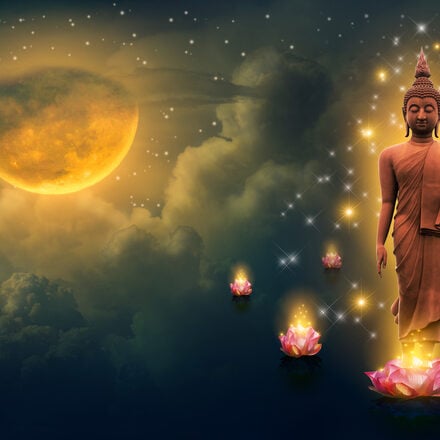
Amavasya New Moon this month is on September 11, and is one of the four key days of Uposatha Observance each month for Theravadan observance. Each month there are four Uposatta (In sanskrit Upavasatha) , or a Renewed Dedication Practice Days for monastics and lay practitioners alike. SEE OUR THERAVADAN PRACTICE DATES calendar for more events like this each month>>
Seven Buddhas Paritta especially is a powerful renewal and purifying chant, here beautifully performed by 3 GemsBand:
Uposatha Observance Days
The Lunar Observance Days – General Practices
Four days each month aligned with the moon’s phases: New Moon (Amavasya), Full Moon (Pannarasi), and the two Quarter Moons (Atthami). These are traditional Buddhist days for intensified practice, observed since the Buddha’s time
The Uposatha Monthly Dates for September 2026
Sep 4 — Quarter Moon (Atthami)
Sep 11 — New Moon (Amavasya)
Sep 19 — Quarter Moon (Atthami)
Sep 26 — Full Moon (Pannarasi)
All Paritta chants in Pali are strongly recommended on Uposatha Observance Days. Here is a beautiful playlist of Pali Parittas, wonderfully chanted (turn on subtitles to chant along) by the @3GemsBand:
Uposatha Observance Days
The Lunar Observance Days – General Practices
Four days each month aligned with the moon’s phases: New Moon (Amavasya), Full Moon (Pannarasi), and the two Quarter Moons (Atthami). These are traditional Buddhist days for intensified practice, observed since the Buddha’s time
The Uposatha Monthly Dates for September 2026
Sep 4 — Quarter Moon (Atthami)
Sep 11 — New Moon (Amavasya)
Sep 19 — Quarter Moon (Atthami)
Sep 26 — Full Moon (Pannarasi)
“Cleanse the Defiled Mind”
Uposatha means “observance” — a day to “cleanse the defiled mind.” For monastics, New and Full Moons are for reciting the monastic rules (Patimokkha). For laypeople, these days are an invitation to step more fully onto the path, renewing commitment to the Dhamma through heightened ethics, meditation, and reflection.
Recommended Practices
- Eight Precepts — for the day. Alternately, strictly observe the lay precepts, of which there are five.
- Observe a higher moral discipline: refrain from killing, stealing, sexual activity, false speech, intoxicants, eating after midday, entertainment and adornments, and luxurious beds. Wearing simple white clothing is a common symbol of this commitment.
- Visit a Monastery — Make offerings, listen to teachings, meditate with others, and join in chanting. In many traditions, laypeople stay overnight.
- Home Practice — Extend meditation sessions, chant protective suttas, study Dhamma texts, and practice generosity (dāna).

Suggested Suttas and Parittas
- Visakhuposatha Sutta (AN 8.43) — Direct teaching on the Uposatha with the Eight Precepts.
- Muluposatha Sutta (AN 3.70) — Explains different types of Uposatha observance and the Noble Disciple’s approach.
- Karaniya-metta Sutta (Sn 1.8) — Loving-kindness meditation; widely chanted for protection.
- Maha-mangala Sutta (Sn 2.4) — The highest blessings in life, from ethics to Nibbāna.
- Ratana Sutta (Sn 2.1) — Celebrates the Triple Gem (Buddha, Dhamma, Sangha) as the supreme refuge.
- Dhammacakkappavattana Sutta (SN 56.11) — The Buddha’s first discourse on the Four Noble Truths and Noble Eightfold Path.
Spirit of the Observance
The Uposatha is not about rigid rule-keeping. It is a regular rhythm of renewal — a chance to step back from ordinary routines, calm the mind, and taste, even briefly, the flavor of the holy life. Whether at a monastery or at home, the intention is to re-energize commitment to the Dhamma and to join millions of practitioners worldwide in shared observance.
Citations (Plain Text)
AN 8.43 — Visakhuposatha Sutta (Anguttara Nikaya)
AN 3.70 — Muluposatha Sutta (Anguttara Nikaya)
Sn 1.8 — Karaniya-metta Sutta (Sutta Nipata)
Sn 2.4 — Maha-mangala Sutta (Sutta Nipata)
Sn 2.1 — Ratana Sutta (Sutta Nipata)
SN 56.11 — Dhammacakkappavattana Sutta (Samyutta Nikaya)
- *Because Theravada traditions (Thai Maha Nikaya, Dhammayut, Sri Lankan) calculate lunisolar variations slightly differently, these dates reflect standard universal lunar phases
“Cleanse the Defiled Mind”
Uposatha means “observance” — a day to “cleanse the defiled mind.” For monastics, New and Full Moons are for reciting the monastic rules (Patimokkha). For laypeople, these days are an invitation to step more fully onto the path, renewing commitment to the Dhamma through heightened ethics, meditation, and reflection.
Recommended Practices
- Eight Precepts — for the day. Alternately, strictly observe the lay precepts, of which there are five.
- Observe a higher moral discipline: refrain from killing, stealing, sexual activity, false speech, intoxicants, eating after midday, entertainment and adornments, and luxurious beds. Wearing simple white clothing is a common symbol of this commitment.
- Visit a Monastery — Make offerings, listen to teachings, meditate with others, and join in chanting. In many traditions, laypeople stay overnight.
- Home Practice — Extend meditation sessions, chant protective suttas, study Dhamma texts, and practice generosity (dāna).
Suggested Suttas and Parittas
- Visakhuposatha Sutta (AN 8.43) — Direct teaching on the Uposatha with the Eight Precepts.
- Muluposatha Sutta (AN 3.70) — Explains different types of Uposatha observance and the Noble Disciple’s approach.
- Karaniya-metta Sutta (Sn 1.8) — Loving-kindness meditation; widely chanted for protection.
- Maha-mangala Sutta (Sn 2.4) — The highest blessings in life, from ethics to Nibbāna.
- Ratana Sutta (Sn 2.1) — Celebrates the Triple Gem (Buddha, Dhamma, Sangha) as the supreme refuge.
- Dhammacakkappavattana Sutta (SN 56.11) — The Buddha’s first discourse on the Four Noble Truths and Noble Eightfold Path.
Spirit of the Observance
The Uposatha is not about rigid rule-keeping. It is a regular rhythm of renewal — a chance to step back from ordinary routines, calm the mind, and taste, even briefly, the flavor of the holy life. Whether at a monastery or at home, the intention is to re-energize commitment to the Dhamma and to join millions of practitioners worldwide in shared observance.
Citations (Plain Text)
AN 8.43 — Visakhuposatha Sutta (Anguttara Nikaya)
AN 3.70 — Muluposatha Sutta (Anguttara Nikaya)
Sn 1.8 — Karaniya-metta Sutta (Sutta Nipata)
Sn 2.4 — Maha-mangala Sutta (Sutta Nipata)
Sn 2.1 — Ratana Sutta (Sutta Nipata)
SN 56.11 — Dhammacakkappavattana Sutta (Samyutta Nikaya)
- *Because Theravada traditions (Thai Maha Nikaya, Dhammayut, Sri Lankan) calculate lunisolar variations slightly differently, these dates reflect standard universal lunar phases
More articles by this author
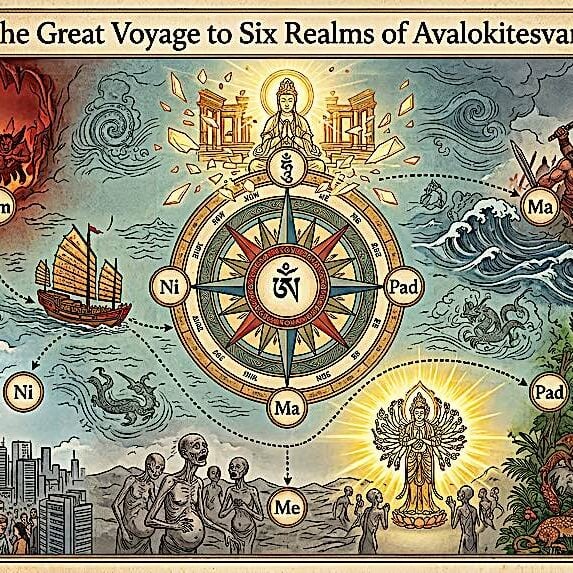
6 Avalokitesvara Heroes Overcoming 6 Poisons with 6 Syllables: Om Ma Ni Pad Me Hum: Enlightened Odyssey

“Grief Attack” Quick Fix – Four Anchors to Ground Grief with Amitabha Mantra and Pureland Dharani meditation and chanting
Uposatha Observance Days Each Month are the Renewal Dedication Practice Days, Traditionally Practiced on the New, Full and Quarter moons each month
Search
Latest Features

Please support the "Spread the Dharma" mission as one of our heroic Dharma Supporting Members, or with a one-time donation.
Please Help Support the “Spread the Dharma” Mission!
Be a part of the noble mission as a supporting member or a patron, or a volunteer contributor of content.
The power of Dharma to help sentient beings, in part, lies in ensuring access to Buddha’s precious Dharma — the mission of Buddha Weekly. We can’t do it without you!
A non-profit association since 2007, Buddha Weekly published many feature articles, videos, and, podcasts. Please consider supporting the mission to preserve and “Spread the Dharma." Your support as either a patron or a supporting member helps defray the high costs of producing quality Dharma content. Thank you! Learn more here, or become one of our super karma heroes on Patreon.
Lee Kane
Author | Buddha Weekly
Lee Kane is the editor of Buddha Weekly, since 2007. His main focuses as a writer are mindfulness techniques, meditation, Dharma and Sutra commentaries, Buddhist practices, international perspectives and traditions, Vajrayana, Mahayana, Zen. He also covers various events.
Lee also contributes as a writer to various other online magazines and blogs.