



Search Results: mindfulness

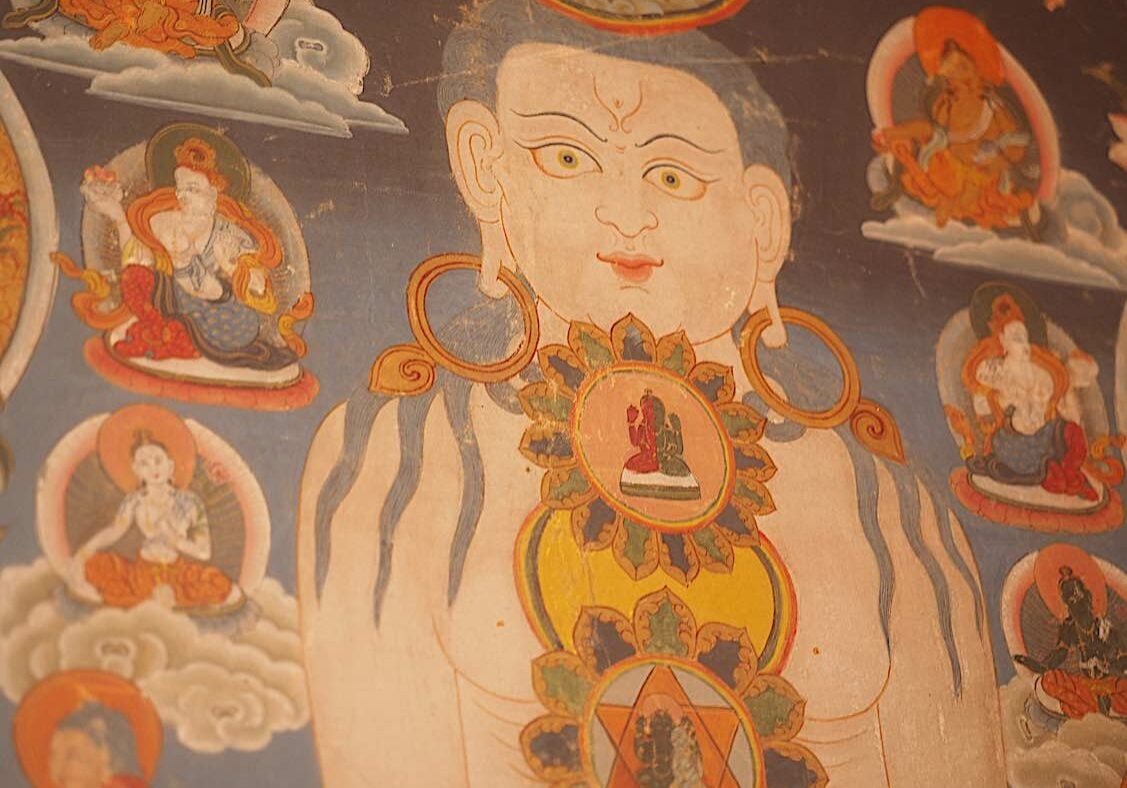
Much More-Than-Six-Words of Advice — Mindfulness of Body; Anger; and Healing Through Meditation (Mahamudra Teachings Session 2)

"Don't recall, don't imagine, don't think, don't examine, don't control, rest," Tilopa's six word's of advice to Naropa, could be said to be an important concept for understanding Mahamudra.[1] By Lee Kane Tilopa's famous "six words of advice" was clearly a theme emphasized consistently throughout Zasep Tulku Rinpoche's wonderful introductory Mahamudra teachings in...
Read More about Much More-Than-Six-Words of Advice — Mindfulness of Body; Anger; and Healing Through Meditation (Mahamudra Teachings Session 2)

The Meditator’s Guide to Dharma Journaling: Integrating Practice and Daily Life – Bridging “Knowing” and “Living the Dharma Path”

Three of the types of Journal Meditation in Buddhism.
The Meditator's Guide to Dharma Journaling: Integrating Practice and Daily Life - Bridging "Knowing" and "Living the Dharma Path" 1
Bridging the Gap Between Knowing and Living the Path -- Prajna to Karma and  Merit   You’ve sat on the cushion. You’ve tasted moments of clarity and peace. But what happens when that calm dissolves into the chaos of...
Read More about The Meditator’s Guide to Dharma Journaling: Integrating Practice and Daily Life – Bridging “Knowing” and “Living the Dharma Path”

Overcoming the Poison of Envy or Irshya with Tara and her joyous Mudita, or “Sympathetic Joy”! How can joyful Tara, and other methods, help us overcome the dangerous klesha of Envy?

Envy in the broader sense, or jealousy (irshya in Sanskrit) is among the most dangerous of the "poisons" in Buddhism. Why is Envy so dangerous? Why is overcoming jealousy a critical, urgent mission for Buddhists seeking realizations? It comes down to one core concept. To have love and compassion and sympathetic joy...
Read More about Overcoming the Poison of Envy or Irshya with Tara and her joyous Mudita, or “Sympathetic Joy”! How can joyful Tara, and other methods, help us overcome the dangerous klesha of Envy?

108 Namo Amituofo 南無阿彌陀佛 108 10 PROTECTIONS Buddhist Chanting #buddhistmusic #佛教誦經音樂

Namo Amituofo 108 Video Thumbnail
108 Namo Amituofo 南無阿彌陀佛 108 10 PROTECTIONS Buddhist Chanting #buddhistmusic #佛教誦經音樂 2
  108 Recitations of a Beautiful Chant of Namo Amitabha 南無阿彌陀佛 to bell and fish drum, with deep throat singing and beautiful 3Gems Band chorus. AVAILABLE FOR MUSIC STREAMING SONG TITLE: 108 Namo Amituoto 南無阿彌陀佛 from artist 3Gems. Video: https://www.youtube.com/watch?v=SySh4wzLUdg   The 10...
Read More about 108 Namo Amituofo 南無阿彌陀佛 108 10 PROTECTIONS Buddhist Chanting #buddhistmusic #佛教誦經音樂

50 Songs of Milarepa and the Grand Epic Story of Mila the Cotton Clad: Murder, Evil, Revenge, Redemption, Ordeals, Doing What’s Right

Milarepa
50 Songs of Milarepa and the Grand Epic Story of Mila the Cotton Clad: Murder, Evil, Revenge, Redemption, Ordeals, Doing What's Right 3
Milarepa's history is an epic story of grand scope — the essence and beauty of his story remain undiminished by time. With themes of evil and redemption, perseverance, and doing what’s right, Milarepa’s story grips both devout Buddhist and casual readers alike. Milarepa (Mi la ras pa...
Read More about 50 Songs of Milarepa and the Grand Epic Story of Mila the Cotton Clad: Murder, Evil, Revenge, Redemption, Ordeals, Doing What’s Right

How to Create a Home Meditation Altar

How to Create a Home Meditation Altar 4
A home altar on a side cabinet in the dining room with the Three Supremes, Tara, Ushnisha Vijaya and Vajrasattva in the center, lit with strip lights, incense in front, flanked by the eight auspicious symbols as offeirngs. On top of the main altar is a shelf raising...
Read More about How to Create a Home Meditation Altar

A Picture is NOT worth 1000 Words — the Buddha Dharma is a Tradition of Words — A Guide for Those Who Can’t Visualize (Aphantasia)

According to lineage teachings, when Buddha taught on Vulture's  Peak, his voice was heard by the crowd for miles, whether they could see him or not. This feat emphasizes the importance of Buddha's Words. Even if the crowd could not see him, it was enough to hear his Dharma Speech. He used...
Read More about A Picture is NOT worth 1000 Words — the Buddha Dharma is a Tradition of Words — A Guide for Those Who Can’t Visualize (Aphantasia)

The Forgotten Practice of Simple Devotion to the Three Jewels: Buddha Dharma and Sangha, or Teacher, Yidam and Dakini

Taking Refuge in the Three Jewels is a devotional practice. Devotion is a joyous practice.
The Forgotten Practice of Simple Devotion to the Three Jewels: Buddha Dharma and Sangha, or Teacher, Yidam and Dakini 5
Why is devotion considered the “essence of the path” in Buddhism? Why does every Buddhist practice, without exception begin with Taking Refuge in the Three Jewels, the objects of our devotion? Why do...
Read More about The Forgotten Practice of Simple Devotion to the Three Jewels: Buddha Dharma and Sangha, or Teacher, Yidam and Dakini

SUPPORTING MEMBER VIDEO: The Forgotten Practice of Simple Devotion to the Three Jewels: Buddha Dharma and Sangha

The Forgotten Practice of Devotion to the Three Jewels Video Thumbnail
SUPPORTING MEMBER VIDEO: The Forgotten Practice of Simple Devotion to the Three Jewels: Buddha Dharma and Sangha 6
Why is devotion considered the “essence of the path” in Buddhism? Why does every Buddhist practice, without exception begin with Taking Refuge in the Three Jewels, the objects of our devotion? Why do even the most senior...
Read More about SUPPORTING MEMBER VIDEO: The Forgotten Practice of Simple Devotion to the Three Jewels: Buddha Dharma and Sangha

A Bee’s View of Buddha Dharma: “caring for bees” is a noble karmic act of the Pāramitā (Perfection) of Metta (loving kindness)

From a "bee's point of view" conservation of the earth is clearly Buddha Dharma practice. Saving bees — and our earth — is a practice of the Paramita of Metta, or loving-kindness. The discipline needed, to accomplish conservation in our personal lives, is a positive karmic act of Sila, or moral conduct....
Read More about A Bee’s View of Buddha Dharma: “caring for bees” is a noble karmic act of the Pāramitā (Perfection) of Metta (loving kindness)
Translate »
Scroll to Top