
Nine Red Yidams of Amitabha’s Padma Family: Why Magnetizing Buddhas are called “Cloud of Blessings”

What are the powerful and magnetizing benefits of the Padma Family, and especially the nine red Deities of the Cloud of Blessings? Who are the Nine Enlightened Deities of Amitabha’s Lotus Family of Buddhas? Why is their practice so important and popular in Mahayana Buddhism? Why do many teachers say that magnetizing activity practice is the most beneficial in this degenerate age, and especially for people new to the Buddha Dharma?
We answer these questions, and present the practice in English, Tibetan, Chinese, Spanish, French (and other languages below) of the Great Cloud of Blessings (Wangdu), a mind terma of Jamgön Mipham Rinpoche. According to Jamgön Mipham Rinpoche the benefits are:
“Anyone who prays in this way will, without any doubt, accomplish all magnetizing activities exactly according to their wishes.”

Padma Family: Magnetizing and Charisma
The Buddhas of the Padma family are the most popular in Mahayana Buddhism, especially Amitabha and Avalokiteshvara. Many Mahayana Buddhists aspire to be reborn in the Western Pure Land of the Padma Family, known as Sukhavati. But, since all Buddha’s are ultimately of one nature, and we all have Buddha Nature, why then, are the Padma family Buddhas so appealing and widely practiced? In part it is because the Padma family represent Dharma and Dharma teachings or speech. The other reason is pure charisma. The entire Enlightened family are charming and enticing.

Why Practice Magnetizing and Charisma Power?
Khenpo Sodargye Rinpoche explains the other reasons:
“For people who are new to dharma practice, the practice of magnetizing would definitely be of benefit. In this degenerate age, people have difficulty truly absorbing the Dharma because they lack inner strength; their path in learning the Dharma is filled with obstacles. If you are one of these people, by practicing magnetizing you will develop inner strength, and be able to bring the Dharma into your mind more easily. Then, no matter what kind of obstacle you encounter, you will be capable of handling it.”
Many Buddhists are attracted to the charismatic emanations of Enlightenment of the Padma family: Serene Amitabha, Compassionate Avalokiteshvara, Powerful Hero Hayagriva, Blissful Vajravarahi and Chakrasamvara, Enchanting Kurukulla, Powerful Vajradharma, and the glorious Lotus King aspect of Padmasambhava. Together, these are the Great Cloud of Blessings of the Padma family, celebrated in the famous practice of the Wangdu.

Countless Emanations of Amitabha
These are all aspects of Amitabha, who emanates in countless forms to help us. In the commentary on the Wangdu by Khenpo Sodargye (available as a PDF here>>):
“These numbers are figurative. In reality, Buddhas and Bodhisattvas are innumerable. In the limitless Dharmadatu abide innumerable Buddhas and Bodhisattvas. The Amitabha Sutra states that there are countless Buddhas in each direction. “Nine” is only a symbolic number for the countless magnetizing deities.”
It seems natural and instinctive —our attraction to the magnetic personas of these great beings. In a word, they have charisma. Symbolizing that magnetizing power, they are red in colour representing the firey element of the western pure land. In Sanskrit, magnetizing activity is called saṃgraha, the power to draw in, magnetize, charm, comfort and protect. Just as fire and light, in ancient times, protected us from the wild and dangerous elements, fire is the symbol of power, compassion, warmth, life, the setting sun in the west, and the enchanting and powerful Lotus Family of the West.
Most Important of Practices
Kyabje Jigme Phuntsok Rinpoche explained why magnetizing and using the Wang Du prayer is the most important to successful practice:
“If you don’t have wealth, Wang Dü can bring you wealth; if you want position, Wang Dü can help you get position. Relying on this prayer, you can gain everything that your heart desires. If however, due to having no control over your mind, you are unable to give rise to bodhicitta, emptiness and other non-worldly accomplishments, reciting Wang Dü with diligence will allow you to gain these qualities with ease.”
All of these can be thought of, as emanations of the compassion of the red Padma family of Amitabha, and representative of Discriminating Wisdom. His family are the emanations of Dharma or Buddha’s Speech, and, it is through speech and teachings that Buddha “attracted” the Sangha to the Enlightening Path. Compassion is another aspect of the tantalizing power of the enchanting Padma Buddhas. One practice that concisely brings all the red, magnetizing Yidams together is the popular daily practice of the Wangdu.
Wangdu is a Precious Terma
The Wangdu prayer, which we present in six languages below, is a mind terma which arose in the wisdom mind of Jamgön Mipham Rinpoche. Wangdu is popular as a daily practice or prayer, as it engages the magnetizing activity the nine main Yidams of the Padma Family. It ends with the great devotion and request for Siddhis, or blessings:
In devotion we pray to you: inspire us with your blessings; Grant us attainments, ordinary and supreme, and so the siddhi of magnetizing, without obstruction, whatever we desire!
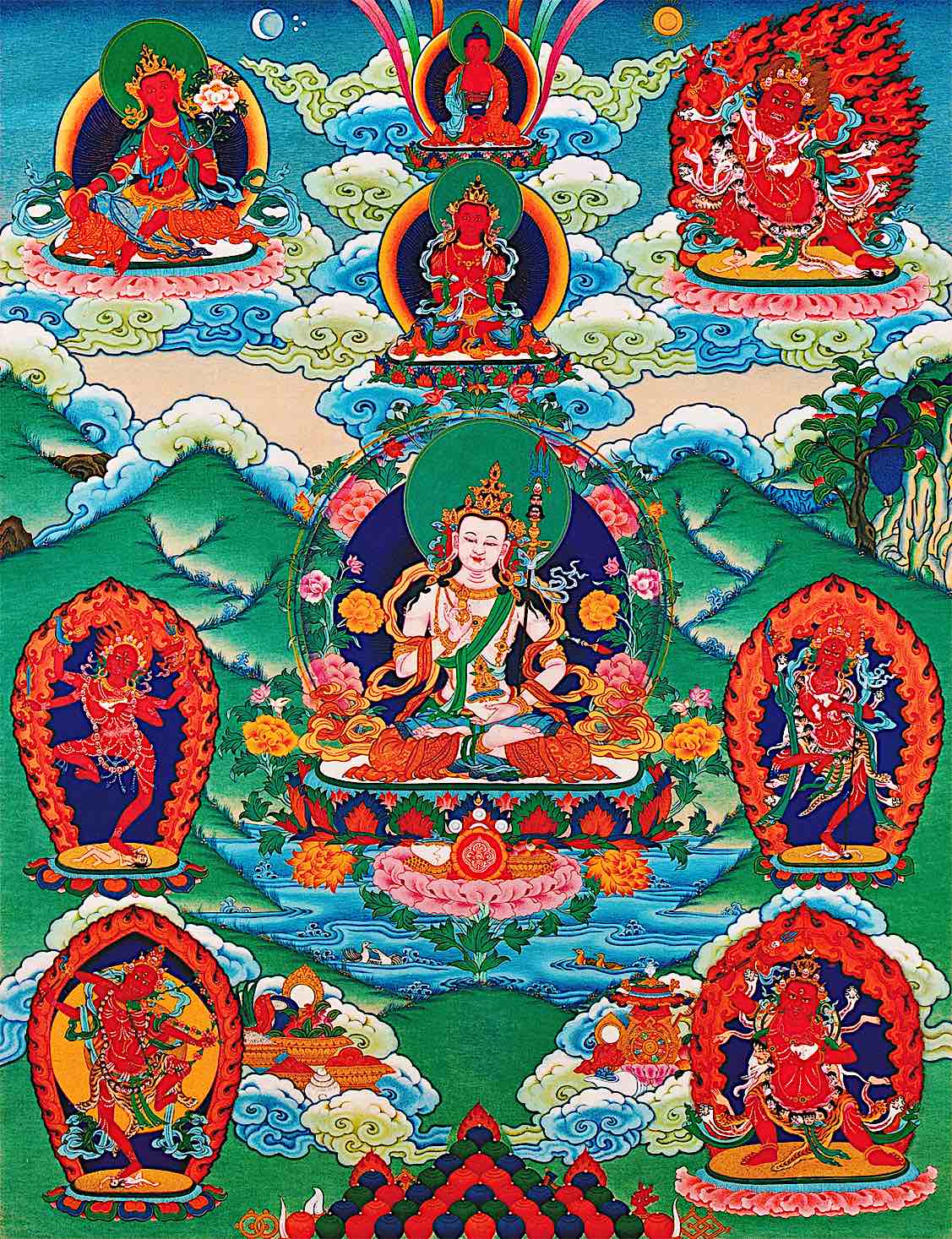
Who are these nine aspects of Lotus Compassion and Dharma Speech? As we chant this prayer we try to visualize the nine deities as a “cloud of blessings” or a merit field in front of us. Of course you can use a picture to aid your visualization. Eight of the deities are red in color, symbolizing magnetizing and power, while the central deity is white, as this is none other than Padmaraja, a human-form nirmanakaya of Guru Rinpoche.

The Nine Enlightened Deities of Magnetizing
We try to remember that all of these nine deities are aspects of Amitabha. The three bodies, or modes of being, of the Buddha are represented here: the dharmakaya, or body of essence, and the supreme state of absolute knowledge which is Amitabha. The sambhoga kaya forms, or bodies of enjoyment, such as Avalokiteshvara, are the forms that emanate in the Purelands, or our mindspace. Finally, there are the nirmana kaya forms, or bodies of transformation, which manifest in our own world to help us, such as Guru Rinpoche.

Three Kayas (Bodies)
Buddha Amitabha represents the dharmakaya, Avalokitesvara the sambhogakaya, and Guru Padmasambhava, here as the Lotus King Padmaraja, is the nirmanakaya. This is called the Trikaya in Buddhism — the three bodies of the Buddha. Venerable Khenchen Palden Sherab Rinpoche explains it this way:
“The first emanation is called Guru Padma Gyalpo or Padmaraja. Gyalpo means king. Guru Padma Gyalpo is the form in which Guru Padmasambhava originally appeared in our world. He is directly related to Buddha Amitabha, the Buddha of the western direction, as well as to Avalokiteshvara, the Buddha of compassion.
Buddha Amitabha represents the dharmakaya. Avalokiteshvara is the sambhogakaya. And Guru Padmasambhava is the nirmanakaya.”
Male and Female, Symbolizing Compassion and Wisdom
Also represented are both the male and female forms, which symbolizes compassion and wisdom. The male Buddha forms, including the wrathful forms, such as glorious Hayagriva, represent both method and compassion. The female Buddha forms, such as Vajra varahi and Kurukulla represent magnetizing wisdom. All of these would be considered Samboghakaya emanations of Amitabha.
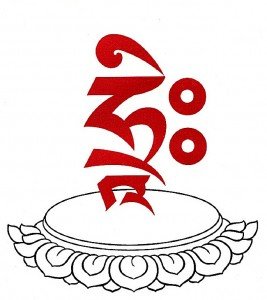
Seed Syllable HRIH represents all of the Nine Deities
The seed syllable of the Padma family is a red Hrih, common to all of the deities and most of their mantras and represents Dharma Speech and compassion. Since they are deities of the Dharma family, their mantras are an important practice for each, representing Dharma speech and wisdom, or discriminating wisdom. For example, Amitabha’s mantra is Om Amitabha Hrih.
For most of the deities of this cloud of blessings, we do have video mantra chanting presentations on our Youtube Channel youtube.com slash Buddha Weekly or at BuddhaWeekly.com. See links as we go through the deities.
The Nine Deities: 3 Kayas
The Three Bodies are Dharmakaya, Sambhogakaya and Nirmanakaya.
Dharmakayas: Essence Buddhas
The Dharmakaya are “formless” or “essence” Buddhas, primordial, inconcievable, as vast as every form of time, reality, space, and dimension. In the Padma Family, there are two:
- Amitabha is the main Buddha, who appears like Samantabhadra (the Primordial Buddha) except he is red.
- Vajradharma is the second Dharmakaya, a form of Amitabha who appears like Vajradhara (only red instead of blue). This is his “vajra body” form.
Sambhogakayas: Enjoyment Bodies in the Purelands
The Sambhogakayas are the male and female “Enjoyment” Buddhas, the Buddha forms who appear in the Purelands — which includes our own mindspace, which is also part of every Pureland. They are the “heavenly” forms, who manifest to help us, often taking different appearances according to need. For example Avalokiteshvara manifests wrathfully as Hayagriva for more “power-oriented” activities. The Sambhogakas are:
- Red Avalokiteshvara
- Heruka Hayagriva
- Guhyajnana or Vajrayogini Dakini
- Vajravarahi Dakini
- Kurukulle, who is Red Tara
- MahaDeva who is a emantion of Chakrasamvara as the “supreme bliss king of the world.”
Nirmanakaya: Manifested or Body of Transformation Buddhas
The Nirmanakaya of Amitabha and the Padma family is none other than great Padmaraja, the Lotus King manifestation of Guru Rinpoche or Padmasambhava.
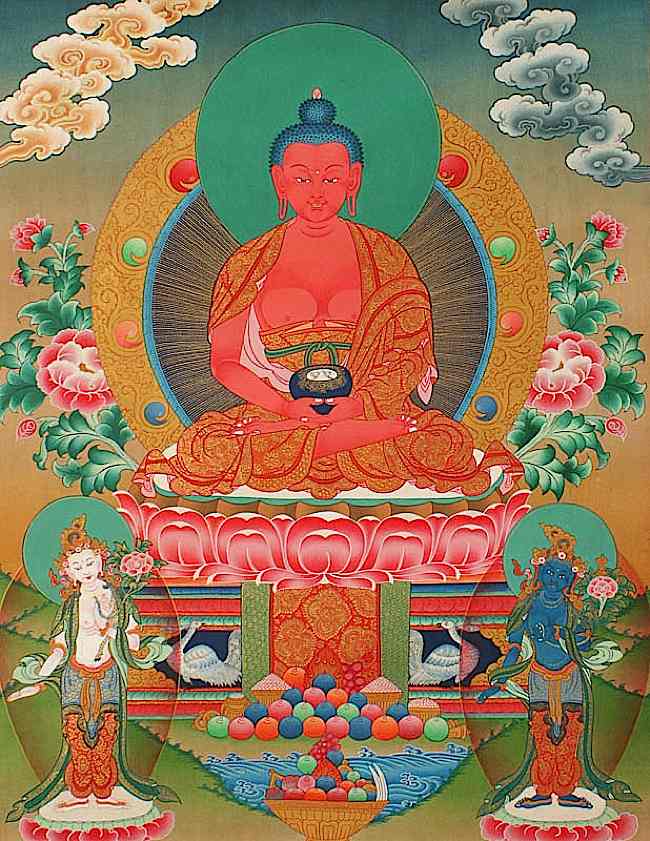
Amitabha Buddha, the Red Dharmakaya
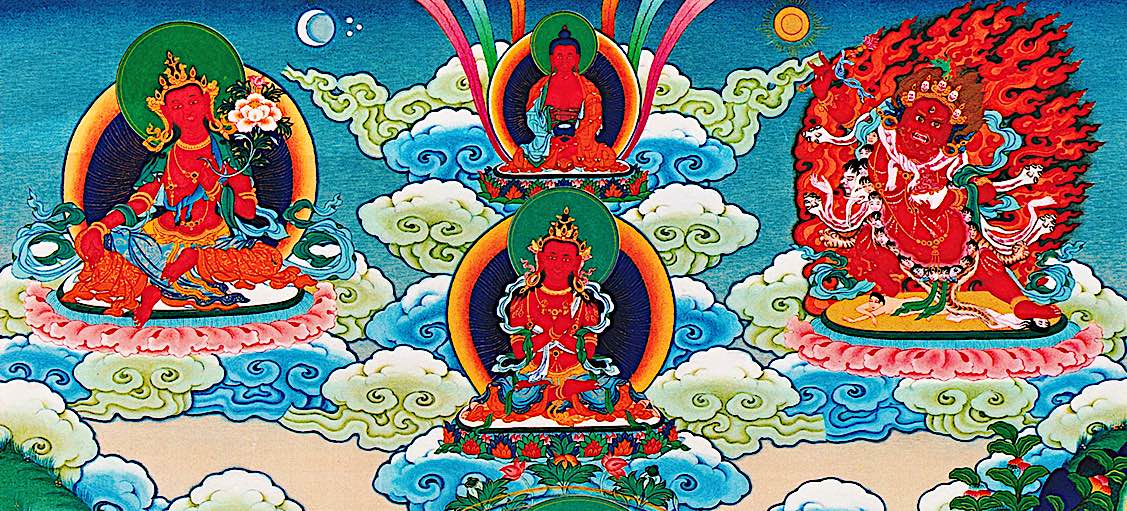
At the top of the Cloud of blessings, of course, is none other than Amitabha Buddha, the red Dharmakaya Buddha of the Padma Lotus family. All other members of his family emanate from his compassion. He appears as a peaceful Buddha, seated in contemplation.
His heart mantra is:
Om Amitabha Hrih
or
Om Ami Deva Hrih

Vajradharma, the Sambhogakaya Buddha of Dharma Speech
Below Amitabha is his Sambhogahkaya Buddha form, great Vajradharma, a special red wisdom form representing Dharma Speech, crowned and holding vajra and bell symbolic of the union of method and wisdom.
His heart mantra is:
Om Vajradharma Hrih

Padmaraja, Lotus King Padmasambhava, Nirmanakaya Buddha
Below him, in the center of the entire mandala, is the Nirmanakaya aspect, who is none other than the great Padmaraja, which means literally Lotus King an emanation of Padmasambhava Guru Rinpoche. He is also known as Guru Padma Gyalpo the Lotus King. He is the only deity in the merit field who is not red, as he is in his human form. His skin appears white in most depictions, but is actually a pinkish white-red. His heart mantra is:
Om Ah Hum Vajra Guru Padma Siddhi Hum
Two Sambhagakayas: Avalokiteshvara and Hayagriva
As we face or visualize the Lotus Family Great Cloud of Merit, we see to the Left and Right of Amitabha are his peaceful and wrathful Sambhogakaya emanations.

Red Avalokiteshvara, Samboghakaya Buddha of Compassion
To our left is Avalokiteshvara, red in colour, although he can appear in any form, as explained in the Universal Gate Sutra. His Red form signifies his Sombogakaya Buddha aspect. He is the Bodhisattva of Compasssion, and goes my many names, including Guan Yin and Chenrezig. He is the most popular of the Padma family, due to his great vows in Sutra to save any from harm who call his name, and his promise to rescue every sentient being from suffering. His heart mantra is:
Om Mani Padme Hum Hrih

Hero Hayagriva, “Overpowering” Heruka of the Padma Family
To our right as we face the Great Cloud of Merit, is glorious hero Hayagriva, the fierce Sombogakaya Heruka of the Padma family, who is both a wrathful emanation of Amitabha and Avalokiteshvara. He is so powerful that his Sutra explains:
“Whoever, including even the insects, has heard the name and mantra of Hayagriva only one time will never again fall into the lower paths.”
In the Wangdu, he is described as: “The overpowering Heruka—Formidable subjugator of all that appears and exists…”
For practice, he sometimes appears with his wisdom consort, who is a blue form of Vajravarahi, or he can appear and be visualized solitary.
If there is an activity that requires heroic power, Hayagriva is the Heruka who leaps forward. To signify his energy and power, his face is ferocious, and a green horse head crowns the top of his head signifying his windy activity. He is the Heruka of this world. The mandala of Hayagriva is still in our world, close to us. His great mantra is:
Om Hri Padman Tatro Vajra Krodha Hayagriva Hulu Hulu Hum Pet!

Guhyajnana or Vajrayogini Dakini
On the next level down, to the left of great Padmaraja, is Guhyajnana Dakini, a form of Vajrayogini, the Secret Wisdom Dakini of the Padma Family. Like all Padma Dakinis, she is also a Sambhogakaya of Amitabha, in Dakini Wisdom Prajna form. She dances on Shunyata, naked to demonstrate pure wisdom without obscurations.
Her heart mantra is:
Om Hrih bhrum dhuma ghaye nama svaha

Kurukulla, Red Tara “Closest to Our World”
In the bottom left of the cloud of Blessings is Kurukulla, the famous enchanting Enlightened form of Tara, with her bow and arrow of flowers. Like all Taras, although she is a Sambhogkaya (heavenly form) she is very close to our world. This is why all Taras are called “Swift heroines” ready to respond to our calls for help.
She is lower in the cloud to signify her closeness to our world. In this case, the activity of Red Kurukulla Tara is Magnetizing Power, as symbolized by her lotus bow drawn back with a powerful magnetizing arrow. She is also naked and dancing to signify pure wisdom without obscurations.
Her mantra three times is:
Om Kurukulle Hum Hrih Svaha
- For a one hour video mantra of Kurukulla, see>>
- For a full Buddha Weekly feature on Kurukulla Red Tara, see>>

Vajravarahi: Wisdom in Action
On the opposite side, under Hayagriva, is the Padma Dakini’s other form as Vajravarahi. Khenpo Sodargye explained, in a teaching on the Wangdu, why Vajravarahi and the other Dakinis appear naked. Since Dakinis represent wisdom in action, they are dancing. Khenpo explains:
“They are naked because they realized the bare naked nature of the mind, where all conceptual thoughts and attachments have ceased to exist.”
Mahadeva, Emanation of Chakrasamvara
The bottom right of the Cloud of Blessings is Mahadeva, who is none other than an aspect emanation of Chakrasamvara, although here he is in red aspect as a member of the Padma family. His name in this form is Ṭakkirāja or King of Desire.
Purifying Mantra
Before we start the prayer, we begin with the Padma family purifying mantra as many times as we can.
Om Ah Hum Hrih Svaha
- Om is the seed syllable that purifies our body.
- Ah is the seed syllable that purifies our speech.
- Hum is the seed syllable that purifies our mind.
- Hrih is the seed syllable of the Padma or Lotus family.
We can place a picture of the Padma Cloud of Blessings on our altar and make offerings, then recite the prayer daily to bring magnetizing blessings into our lives. Or, just visualize the Cloud of Merit and the nine deities. It is best to take Refuge in Buddha, Dharma and Sangha first.
After we set up an altar, or visualize the great magnetizing Wangdu, we recite the prayer, remaining mindful of the entire merit field to help bring the glorious power of the Padma family into your life. As suggested in the practice, visualize
“Rays of red light bursting out to fill all of saṃsāra and nirvāṇa”
Wandu English Recitation
(Other Languages below)
Oṃ āḥ hūṃ hrīḥ. In the palace of power, the blazing of great bliss, are the embodiments of the wisdom of discernment, union of bliss and emptiness.
Each on a lotus, its nature bliss free from all attachment, and the splendour of a great, illuminating vajra sun—
Dharmakaya Amitābha and Vajradharma;
Avalokiteshvara the Lord of the World, the very manifestation of compassion;
Padmaraja, all of saṃsāra and nirvāṇa beneath your control;
Hayagriva Heruka, subjugator of all that appears and exists;
‘Secret Wisdom’ Guhyajnana and Vajravarahi;
Chakrasamvara, King of Desire, ecstasy supreme, source of the wisdom of great bliss;
Kurukullā, who captivates the mind of every living being without exception;
Masters and mistresses of supreme and ordinary mudrās, dancing in bliss and emptiness;
Hosts of vajra ḍakas and ḍakinis attract and magnetize.
Remaining always within the state of great equality of appearance and emptiness;
With the dance of your vajra body, you cause the three planes of existence to tremble;
With the sound of your laughter, your unceasing enlightened speech, you draw in the three worlds;
Rays of red light burst out to fill all of saṃsāra and nirvāṇa;
And cause the vital essence of conditioned existence and ultimate peace to vibrate and be gathered in.
With your enlightened mind of great vajra passion;
You grant the supreme of all things desired—the two kinds of siddhis;
And with your great vajra hooks and lassos;
You bind the world of appearance and existence in great bliss;
Dancers in the play of the limitless net of illusion;
Who fill space to overflowing, like a vast outpouring of sesame seeds;
Vast array of the Three Roots, hosts of magnetizing deities;
In devotion we pray to you: inspire us with your blessings;
Grant us attainments, ordinary and supreme, and so the siddhi;
Of magnetizing, without obstruction, whatever we desire!
We dedicate the merit of this prayer to the benefit of all sentient beings.
Tibetan Wangdu
ཨོཾ་ཨཱཿཧཱུྂ་ཧྲཱིཿ
བདེ་ཆེན་འབར་བ་དབང་གི་ཕོ་བྲང་དུ། །
བདེ་སྟོང་སོ་སོར་རྟོག་པའི་ཡེ་ཤེས་སྐུ། །
མ་ཆགས་བདེ་ལྡན་པདྨའི་རང་བཞིན་ལས། །
རྡོ་རྗེ་ཉི་མ་སྣང་བ་ཆེན་པོའི་དཔལ། །
ཆོས་སྐུ་སྣང་བ་མཐའ་ཡས་རྡོ་རྗེ་ཆོས། །
འཇིག་རྟེན་དབང་ཕྱུག་ཐུགས་རྗེས་རྗེས་ཆགས་གཟུགས། །
པདྨ་རྒྱལ་པོས་འཁོར་འདས་མངའ་དབང་བསྒྱུར། །
སྣང་སྲིད་ཟིལ་གནོན་དབང་ཆེན་ཧེ་རུ་ཀ །
གསང་བ་ཡེ་ཤེས་བཛྲ་ཝཱ་ར་ཧི། །
བདེ་མཆོག་འདོད་པའི་རྒྱལ་པོ་བདེ་ཆེན་གཏེར། །
མ་ལུས་སྐྱེ་རྒུའི་ཡིད་འཕྲོག་རིག་བྱེད་མ། །
མཆོག་ཐུན་ཕྱག་རྒྱའི་དབང་ཕྱུག་བདེ་སྟོང་གར། །
དབང་མཛད་རྡོ་རྗེ་དཔའ་བོ་ཌཱཀྐིའི་ཚོགས། །
སྣང་སྟོང་མཉམ་པ་ཆེན་པོའི་ངང་ཉིད་དུ། །
རྡོ་རྗེ་སྐུ་ཡི་གར་གྱིས་སྲིད་གསུམ་གཡོ། །
འགག་མེད་གསུང་གི་བཞད་སྒྲས་ཁམས་གསུམ་འགུགས། །
འོད་ཟེར་དམར་པོས་འཁོར་འདས་ཡོངས་ལ་ཁྱབ། །
སྲིད་ཞིའི་དྭངས་བཅུད་གཡོ་ཞིང་སྡུད་པར་བྱེད། །
རྡོ་རྗེ་ཆགས་པ་ཆེན་པོའི་ཐུགས་ཀྱིས་ནི། །
རྣམ་གཉིས་དངོས་གྲུབ་འདོད་དགུའི་མཆོག་སྩོལ་ཞིང༌། །
རྡོ་རྗེ་ལྕགས་ཀྱུ་ཞགས་པ་ཆེན་པོ་ཡིས། །
སྣང་སྲིད་བདེ་བ་ཆེན་པོར་སྡོམ་བྱེད་པ། །
མཐའ་ཡས་སྒྱུ་འཕྲུལ་དྲྭ་བའི་རོལ་གར་ཅན། །
ཏིལ་གྱི་གོང་བུ་ཕྱེ་བ་བཞིན་བཞུགས་པའི། །
རབ་འབྱམས་རྩ་གསུམ་དབང་གི་ལྷ་ཚོགས་ལ། །
གུས་པས་གསོལ་བ་འདེབས་སོ་བྱིན་གྱིས་རློབས། །
མཆོག་ཐུན་དངོས་གྲུབ་འདོད་དགུའི་དཔལ་མཐའ་དག །
ཐོགས་མེད་དབང་དུ་བྱེད་པའི་དངོས་གྲུབ་སྩོལ། །
ཅེས་པའང་རབ་ཚེས་ས་ཡོས་ཟླ་ ༧ ཚེས་ ༡ ལ་དྷཱིཿམིང་པས་སྤེལ་བ། གསོལ་བ་བཏབ་ན་གང་ཟག་སུ་ཡང་རུང་སྟེ་དབང་གི་ལས་ཀུན་ཇི་ལྟར་བསམ་པ་བཞིན་འགྲུབ་པར་གདོན་མི་ཟའོ། །དར་དམར་ལ་བྲིས་ཏེ་ཕྱར་བའམ། མེ་རླུང་ལ་འཁོར་ལོ་བྱས་ཀྱང་འགྲུབ་བོ། །མངྒ་ལཾ། །
懷 攝顯有祈請文 名 曰加持大雲
ཨོཾ་ཨཱཿཧཱུྂ་ཧྲཱིཿ
嗡啊吽啥,
བདེ་ཆེན་འབར་བ་དབང་གི་ཕོ་བྲང་དུ། །
大樂熾然懷攝宮殿中,
བདེ་སྟོང་སོ་སོར་རྟོག་པའི་ཡེ་ཤེས་སྐུ། །
樂空妙觀察之智慧身,
མ་ཆགས་བདེ་ལྡན་པདྨའི་རང་བཞིན་ལས། །
無貪具樂蓮花自性出,
རྡོ་རྗེ་ཉི་མ་སྣང་བ་ཆེན་པོའི་དཔལ། །
金剛太陽具德大光顯,
ཆོས་སྐུ་སྣང་བ་མཐའ་ཡས་རྡོ་རྗེ་ཆོས། །
法身無量光佛金剛法,
འཇིག་རྟེན་དབང་ཕྱུག་ཐུགས་རྗེས་རྗེས་ཆགས་གཟུགས། །
世間自在悲心貪愛形,
པདྨ་རྒྱལ་པོས་འཁོར་འདས་མངའ་དབང་བསྒྱུར། །
輪涅駕馭尊主蓮花王,
སྣང་སྲིད་ཟིལ་གནོན་དབང་ཆེན་ཧེ་རུ་ཀ །
鎮伏顯有大權黑魯嘎,
གསང་བ་ཡེ་ཤེས་བཛྲ་ཝཱ་ར་ཧི། །
秘密智慧金剛亥首母,
བདེ་མཆོག་འདོད་པའི་རྒྱལ་པོ་བདེ་ཆེན་གཏེར། །
勝樂金剛欲王大樂藏,
མ་ལུས་སྐྱེ་རྒུའི་ཡིད་འཕྲོག་རིག་བྱེད་མ། །
無餘眾生所悅作明母,
མཆོག་ཐུན་ཕྱག་རྒྱའི་དབང་ཕྱུག་བདེ་སྟོང་གར། །
勝共手印自在樂空舞,
དབང་མཛད་རྡོ་རྗེ་དཔའ་བོ་ཌཱཀྐིའི་ཚོགས། །
能懷金剛勇士空行眾,
སྣང་སྟོང་མཉམ་པ་ཆེན་པོའི་ངང་ཉིད་དུ། །
於顯空大平等之境中,
རྡོ་རྗེ་སྐུ་ཡི་གར་གྱིས་སྲིད་གསུམ་གཡོ། །
金剛身之舞蹈鎮三有,
འགག་མེད་གསུང་གི་བཞད་སྒྲས་ཁམས་གསུམ་འགུགས། །
無滅語之笑聲召三界,
འོད་ཟེར་དམར་པོས་འཁོར་འདས་ཡོངས་ལ་ཁྱབ། །
紅色光遍滿輪迴涅槃,
སྲིད་ཞིའི་དྭངས་བཅུད་གཡོ་ཞིང་སྡུད་པར་བྱེད། །
有寂精粹震動攝集之,
རྡོ་རྗེ་ཆགས་པ་ཆེན་པོའི་ཐུགས་ཀྱིས་ནི། །
其以金剛大貪欲之意,
རྣམ་གཉིས་དངོས་གྲུབ་འདོད་དགུའི་མཆོག་སྩོལ་ཞིང༌། །
勝賜二種所欲之悉地,
རྡོ་རྗེ་ལྕགས་ཀྱུ་ཞགས་པ་ཆེན་པོ་ཡིས། །
以金剛鐵鉤與大羂索,
སྣང་སྲིད་བདེ་བ་ཆེན་པོར་སྡོམ་བྱེད་པ། །
顯有於大樂中作繫縛,
མཐའ་ཡས་སྒྱུ་འཕྲུལ་དྲྭ་བའི་རོལ་གར་ཅན། །
無邊幻化網之變化具,
ཏིལ་གྱི་གོང་བུ་ཕྱེ་བ་བཞིན་བཞུགས་པའི། །
如芝麻莢開啟般安住,
རབ་འབྱམས་རྩ་གསུམ་དབང་གི་ལྷ་ཚོགས་ལ། །
浩瀚三根懷攝之天眾,
གུས་པས་གསོལ་བ་འདེབས་སོ་བྱིན་གྱིས་རློབས། །
恭敬祈請祈賜予加持,
མཆོག་ཐུན་དངོས་གྲུབ་འདོད་དགུའི་དཔལ་མཐའ་དག །
勝共悉地所欲諸祥德,
ཐོགས་མེད་དབང་དུ་བྱེད་པའི་དངོས་གྲུབ་སྩོལ། །
能作無礙懷攝悉地賜。
ཅེས་པའང་རབ་ཚེས་ས་ཡོས་ཟླ་ ༧ ཚེས་ ༡ ལ་དྷཱིཿམིང་པས་སྤེལ་བ། གསོལ་བ་བཏབ་ན་གང་ཟག་སུ་ཡང་རུང་སྟེ་དབང་གི་ལས་ཀུན་ཇི་ལྟར་བསམ་པ་བཞིན་འགྲུབ་པར་གདོན་མི་ཟའོ། །དར་དམར་ལ་བྲིས་ཏེ་ཕྱར་བའམ། མེ་རླུང་ལ་འཁོར་ལོ་བྱས་ཀྱང་འགྲུབ་བོ། །མངྒ་ལཾ། །
此為具帝字之名者寫於土兔年七月初一。孰若依此祈禱,無疑如所願成辦一切懷攝事業。若於紅布旗上以風吹揚,或作風火輪轉動亦可成就。芒嘎朗。
Wang Dü: „Die große Wolke des Segens“
Das Gebet, das alles, was erscheint und existiert, in seinen Bann zieht
von Mipham Rinpoche
ཨོཾ་ཨཱཿཧཱུྂ་ཧྲཱིཿ
om ah hung hrih
Oṃ āḥ hūṃ hrīḥ!
བདེ་ཆེན་འབར་བ་དབང་གི་ཕོ་བྲང་དུ། །
dechen barwa wang gi podrang du
Im machtvollen Palast, dem Auflodern großer Glückseligkeit,
བདེ་སྟོང་སོ་སོར་རྟོག་པའི་ཡེ་ཤེས་སྐུ། །
detong sosor tokpe yeshe ku
befinden sich die Verkörperungen der unterscheidenden Weisheit, die Einheit von Leerheit und Glückseligkeit,
མ་ཆགས་བདེ་ལྡན་པདྨའི་རང་བཞིན་ལས། །
machak deden peme rangzhin le
jede auf einem Lotus, ihre Natur Glückseligkeit, frei von jeglicher Anhaftung,
རྡོ་རྗེ་ཉི་མ་སྣང་བ་ཆེན་པོའི་དཔལ། །
dorje nyima nangwa chenpö pal
mit der Pracht einer großen, leuchtenden Vajra-Sonne:
ཆོས་སྐུ་སྣང་བ་མཐའ་ཡས་རྡོ་རྗེ་ཆོས། །
chöku nangwa taye dorje chö
Dharmakāya Amitābha und Vajradharma,
འཇིག་རྟེན་དབང་ཕྱུག་ཐུགས་རྗེས་རྗེས་ཆགས་གཟུགས། །
jikten wangchuk tukje jechak zuk
Avalokiteśvara, Herr der Welt, die Verkörperung des Mitgefühls selbst,
པདྨ་རྒྱལ་པོས་འཁོར་འདས་མངའ་དབང་བསྒྱུར། །
pema gyalpö khorde ngawang gyur
Padma Gyalpo, der du das gesamte Saṃsāra und Nirvāṇa beherrschst,
སྣང་སྲིད་ཟིལ་གནོན་དབང་ཆེན་ཧེ་རུ་ཀ །
nangsi zilnön wangchen heruka
mächtiger Heruka, der alle Erscheinung und Existenz unterwirft,
གསང་བ་ཡེ་ཤེས་བཛྲ་ཝཱ་ར་ཧི། །
sangwa yeshe benza varahi
„Geheime Weisheit“ (Guhyajñāna) und Vajravārāhī,
བདེ་མཆོག་འདོད་པའི་རྒྱལ་པོ་བདེ་ཆེན་གཏེར། །
demchok döpe gyalpo dechen ter
Döpe Gyalpo, König des Verlangens, überragende Ekstase, Quelle der Weisheit großer Glückseligkeit,
མ་ལུས་སྐྱེ་རྒུའི་ཡིད་འཕྲོག་རིག་བྱེད་མ། །
malü kyegü yitrok rikjema
Kurukullā, die den Geist jedes lebenden Wesens fesselt, ausnahmslos,
མཆོག་ཐུན་ཕྱག་རྒྱའི་དབང་ཕྱུག་བདེ་སྟོང་གར། །
choktün chakgye wangchuk detong gar
Meister und Meisterinnen höchster und gewöhnlicher Mudrās, tanzend in Glückseligkeit und Leerheit,
དབང་མཛད་རྡོ་རྗེ་དཔའ་བོ་ཌཱཀྐིའི་ཚོགས། །
wangdze dorje pawo daki tsok
Scharen von Vajra-Dākas und -Ḍākinīs, die fesseln und bannen.
སྣང་སྟོང་མཉམ་པ་ཆེན་པོའི་ངང་ཉིད་དུ། །
nangtong nyampa chenpö ngang nyi du
Ununterbrochen im Zustand der großen Gleichheit von Erscheinung und Leerheit verweilend,
རྡོ་རྗེ་སྐུ་ཡི་གར་གྱིས་སྲིད་གསུམ་གཡོ། །
dorje ku yi gar gyi si sum yo
lasst ihr die drei Ebenen der Existenz durch den Tanz eurer Vajra-Körper erbeben;
འགག་མེད་གསུང་གི་བཞད་སྒྲས་ཁམས་གསུམ་འགུགས། །
gakme sung gi zhe dre kham sum guk
durch den Klang eures Lachens, eurer unaufhörlichen erleuchteten Sprache, ruft ihr die drei Welten herbei.
འོད་ཟེར་དམར་པོས་འཁོར་འདས་ཡོངས་ལ་ཁྱབ། །
özer marpö khorde yong la khyab
Strahlen roten Lichts brechen hervor, die Saṃsāra und Nirvāṇa durchfluten
སྲིད་ཞིའི་དྭངས་བཅུད་གཡོ་ཞིང་སྡུད་པར་བྱེད། །
sizhi dangchü yo zhing düparje
und die Lebensessenz der bedingten Existenz und des letztendlichen Friedens vibrieren lassen und einsammeln.
རྡོ་རྗེ་ཆགས་པ་ཆེན་པོའི་ཐུགས་ཀྱིས་ནི། །
dorje chakpa chenpö tuk kyi ni
Mit eurem erleuchteten Geist der großen Vajra-Leidenschaft
རྣམ་གཉིས་དངོས་གྲུབ་འདོད་དགུའི་མཆོག་སྩོལ་ཞིང༌། །
nam nyi ngödrub dö gü chok tsol zhing
gewährt ihr das höchste aller begehrenswerten Dinge – die zwei Arten von Siddhis,
རྡོ་རྗེ་ལྕགས་ཀྱུ་ཞགས་པ་ཆེན་པོ་ཡིས། །
dorje chakkyu zhakpa chenpo yi
und mit euren großen Vajra-Haken und -Schlingen
སྣང་སྲིད་བདེ་བ་ཆེན་པོར་སྡོམ་བྱེད་པ། །
nangsi dewa chenpor domjepa
fesselt ihr die Welt der Erscheinung und Existenz in großer Glückseligkeit.
མཐའ་ཡས་སྒྱུ་འཕྲུལ་དྲྭ་བའི་རོལ་གར་ཅན། །
taye gyutrul drawe rolgarchen
Tanzende im Spiel des endlosen Netzes der Illusion,
ཏིལ་གྱི་གོང་བུ་ཕྱེ་བ་བཞིན་བཞུགས་པའི། །
til gyi gongbu chewa zhin zhukpe
die den Raum zum Überfluss erfüllen, wie ein Hervorbersten zahlloser Sesamsamen,
རབ་འབྱམས་རྩ་གསུམ་དབང་གི་ལྷ་ཚོགས་ལ། །
rabjam tsa sum wang gi lhatsok la
unermessliche Ansammlung der drei Wurzeln, Scharen von anziehenden Gottheiten,
གུས་པས་གསོལ་བ་འདེབས་སོ་བྱིན་གྱིས་རློབས། །
güpe solwa deb so jingyi lob
in Hingabe beten wir zu euch: Inspiriert uns mit eurem Segen,
མཆོག་ཐུན་དངོས་གྲུབ་འདོད་དགུའི་དཔལ་མཐའ་དག །
choktün ngödrub dö gü pal tadak
gewährt uns gewöhnliche und überragende Errungenschaften und damit das Siddhi,
ཐོགས་མེད་དབང་དུ་བྱེད་པའི་དངོས་གྲུབ་སྩོལ། །
tokme wang du jepe ngödrub tsol
alles in unseren Bann zu ziehen, ohne Hindernisse, was immer wir ersehnen!
ཅེས་པའང་རབ་ཚེས་ས་ཡོས་ཟླ་ ༧ ཚེས་ ༡ ལ་དྷཱིཿམིང་པས་སྤེལ་བ། གསོལ་བ་བཏབ་ན་གང་ཟག་སུ་ཡང་རུང་སྟེ་དབང་གི་ལས་ཀུན་ཇི་ལྟར་བསམ་པ་བཞིན་འགྲུབ་པར་གདོན་མི་ཟའོ། །དར་དམར་ལ་བྲིས་ཏེ་ཕྱར་བའམ། མེ་རླུང་ལ་འཁོར་ལོ་བྱས་ཀྱང་འགྲུབ་བོ། །མངྒ་ལཾ། །
Dies wurde am ersten Tag des siebten Monats des Erd-Hasen-Jahres (1879) von einem namens Dhīḥ verfasst. Wer auch immer auf diese Weise betet, wird zweifellos ganz seinen Wünschen entsprechend alle anziehenden Aktivitäten verwirklichen. Dieses Gebet kann auf rote Fahnen geschrieben und in den Wind gehängt werden oder in hitze- oder windbetriebenen Gebetsmühlen verwendet werden. Mangalaṃ!
Wang Dü: «La gran nube de bendiciones»
La oración que magnetiza todas las apariencias y todo lo que existe
de Mipham Rimpoché
ཨོཾ་ཨཱཿཧཱུྂ་ཧྲཱིཿ
om ah hung hrih
¡Om ah hung hrih!
བདེ་ཆེན་འབར་བ་དབང་གི་ཕོ་བྲང་དུ། །
dechen barwa wang gi podrang du
En el palacio del poder, el resplandor de la gran dicha,
བདེ་སྟོང་སོ་སོར་རྟོག་པའི་ཡེ་ཤེས་སྐུ། །
detong sosor tokpe yeshe ku
están las encarnaciones de la sabiduría del discernimiento, unión de dicha y vacuidad:
མ་ཆགས་བདེ་ལྡན་པདྨའི་རང་བཞིན་ལས། །
machak deden peme rangzhin le
cada uno sobre un loto, cuya naturaleza es dicha libre de todo apego,
རྡོ་རྗེ་ཉི་མ་སྣང་བ་ཆེན་པོའི་དཔལ། །
dorje ñima nangwa chenpö pal
y sobre el esplendor de un sol vajra, grandioso y radiante;
ཆོས་སྐུ་སྣང་བ་མཐའ་ཡས་རྡོ་རྗེ་ཆོས། །
chöku nangwa taye dorje chö
Amitabha del Dharmakaya y Vajradharma,
འཇིག་རྟེན་དབང་ཕྱུག་ཐུགས་རྗེས་རྗེས་ཆགས་གཟུགས། །
jikten wangchuk tukje jechak zuk
Avalokiteshvara, Señor del Mundo, la manifestación misma de la compasión,
པདྨ་རྒྱལ་པོས་འཁོར་འདས་མངའ་དབང་བསྒྱུར། །
pema gyalpö khorde ngawang gyur
Pema Gyalpo, con todo el samsara y el nirvana bajo tu control,
སྣང་སྲིད་ཟིལ་གནོན་དབང་ཆེན་ཧེ་རུ་ཀ །
nangsi zilnön wangchen heruka
poderoso heruka, el que somete todo cuanto aparece y existe,
གསང་བ་ཡེ་ཤེས་བཛྲ་ཝཱ་ར་ཧི། །
sangwa yeshe benza varahi
«Sabiduría Secreta» y Vajravarahi,
བདེ་མཆོག་འདོད་པའི་རྒྱལ་པོ་བདེ་ཆེན་གཏེར། །
demchok döpe gyalpo dechen ter
Döpe Gyalpo, Rey del Deseo, éxtasis supremo, fuente de la sabiduría de la gran dicha,
མ་ལུས་སྐྱེ་རྒུའི་ཡིད་འཕྲོག་རིག་བྱེད་མ། །
malü kyegü yitrok rikjema
Kurukulla, que cautiva la mente de cada ser vivo sin excepción,
མཆོག་ཐུན་ཕྱག་རྒྱའི་དབང་ཕྱུག་བདེ་སྟོང་གར། །
choktün chakgye wangchuk detong gar
señores y señoras de los mudras supremos y comunes, danzando en la dicha y vacuidad,
དབང་མཛད་རྡོ་རྗེ་དཔའ་བོ་ཌཱཀྐིའི་ཚོགས། །
wangdze dorje pawo daki tsok
multitudes de dakas y dakinis vajra que atraen y magnetizan.
སྣང་སྟོང་མཉམ་པ་ཆེན་པོའི་ངང་ཉིད་དུ། །
nangtong ñampa chenpö ngang ñi du
Permaneciendo siempre en el estado de gran igualdad de las apariencias y la vacuidad,
རྡོ་རྗེ་སྐུ་ཡི་གར་གྱིས་སྲིད་གསུམ་གཡོ། །
dorje ku yi gar gyi si sum yo
con la danza de vuestros cuerpos vajra, hacéis que tiemblen los tres planos de la existencia;
འགག་མེད་གསུང་གི་བཞད་སྒྲས་ཁམས་གསུམ་འགུགས། །
gakme sung gi zhe dre kham sum guk
con el sonido de vuestra risa, el habla iluminada e incesante, convocáis los tres mundos.
འོད་ཟེར་དམར་པོས་འཁོར་འདས་ཡོངས་ལ་ཁྱབ། །
özer marpö khorde yong la khyab
Rayos de luz roja estallan para inundar todo el samsara y el nirvana,
སྲིད་ཞིའི་དྭངས་བཅུད་གཡོ་ཞིང་སྡུད་པར་བྱེད། །
sizhi dangchü yo zhing düparche
haciendo vibrar y recogiendo la esencia vital de la existencia condicionada y la paz última.
རྡོ་རྗེ་ཆགས་པ་ཆེན་པོའི་ཐུགས་ཀྱིས་ནི། །
dorje chakpa chenpö tuk kyi ni
Con vuestra mente iluminada de gran pasión adamantina,
རྣམ་གཉིས་དངོས་གྲུབ་འདོད་དགུའི་མཆོག་སྩོལ་ཞིང༌། །
nam ñi ngödrub dö gü chok tsol zhing
concedéis lo más supremo que se pueda desear: las dos clases de siddhis;
རྡོ་རྗེ་ལྕགས་ཀྱུ་ཞགས་པ་ཆེན་པོ་ཡིས། །
dorje chakkyu zhakpa chenpo yi
y con vuestros grandiosos ganchos y lazos vajra,
སྣང་སྲིད་བདེ་བ་ཆེན་པོར་སྡོམ་བྱེད་པ། །
nangsi dewa chenpor domchepa
atáis el mundo de la apariencia y la existencia en la gran dicha.
མཐའ་ཡས་སྒྱུ་འཕྲུལ་དྲྭ་བའི་རོལ་གར་ཅན། །
taye gyutrul drawe rolgarchen
Danzantes en el juego de la infinita red ilusoria,
ཏིལ་གྱི་གོང་བུ་ཕྱེ་བ་བཞིན་བཞུགས་པའི། །
til gyi gongbu chewa zhin zhukpe
que colmáis el espacio hasta rebosar, como una gran lluvia de semillas de sésamo,
རབ་འབྱམས་རྩ་གསུམ་དབང་གི་ལྷ་ཚོགས་ལ། །
rabjam tsa sum wang gi lhatsok la
gran despliegue de las Tres Raíces, multitudes de deidades que magnetizan,
གུས་པས་གསོལ་བ་འདེབས་སོ་བྱིན་གྱིས་རློབས། །
güpe solwa deb so chingyi lob
os rezamos con devoción: ¡inspiradnos con vuestras bendiciones,
མཆོག་ཐུན་དངོས་གྲུབ་འདོད་དགུའི་དཔལ་མཐའ་དག །
choktün ngödrub dö gü pal tadak
concedednos los logros, comunes y supremos, así como el siddhi
ཐོགས་མེད་དབང་དུ་བྱེད་པའི་དངོས་གྲུབ་སྩོལ། །
tokme wang du chepe ngödrub tsol
de magnetizar, sin impedimento, todo lo que deseemos!
ཅེས་པའང་རབ་ཚེས་ས་ཡོས་ཟླ་ ༧ ཚེས་ ༡ ལ་དྷཱིཿམིང་པས་སྤེལ་བ། གསོལ་བ་བཏབ་ན་གང་ཟག་སུ་ཡང་རུང་སྟེ་དབང་གི་ལས་ཀུན་ཇི་ལྟར་བསམ་པ་བཞིན་འགྲུབ་པར་གདོན་མི་ཟའོ། །དར་དམར་ལ་བྲིས་ཏེ་ཕྱར་བའམ། མེ་རླུང་ལ་འཁོར་ལོ་བྱས་ཀྱང་འགྲུབ་བོ། །མངྒ་ལཾ། །
Esto fue escrito el primer día del séptimo mes del año de la Liebre de Tierra (1879) por uno llamado Dhih. Todo quien rece de esta forma, sin duda logrará todas las actividades de magnetizar exactamente tal como desee. Esta oración puede escribirse sobre banderas rojas que ondeen al viento, o en molinos de oración movidos por el calor o el viento. ¡Mangalam!
Wang du : « La Vaste nuée de bénédictions »
La Prière qui magnétise tout ce qui apparaît et tout ce qui existe
par Mip’am Rinpoché
ཨོཾ་ཨཱཿཧཱུྂ་ཧྲཱིཿ
om ah houng hrih
Oṃ āḥ hūṃ hrīḥ !
བདེ་ཆེན་འབར་བ་དབང་གི་ཕོ་བྲང་དུ། །
déchen barwa wang gi p’odrang dou
Dans le palais du pouvoir, le flamboiement de la grande félicité,
བདེ་སྟོང་སོ་སོར་རྟོག་པའི་ཡེ་ཤེས་སྐུ། །
détong sosor tokpé yéshé kou
Voici les personnifications de la sagesse du discernement, l’union de la félicité et de la vacuité :
མ་ཆགས་བདེ་ལྡན་པདྨའི་རང་བཞིན་ལས། །
machak déden pémé rangzhin lé
Chacun sur un lotus, dont la nature est félicité libre de tout attachement,
རྡོ་རྗེ་ཉི་མ་སྣང་བ་ཆེན་པོའི་དཔལ། །
dorjé nyima nangwa chenpö pal
Et splendeur d’un grand et éclatant soleil de vajra –
ཆོས་སྐུ་སྣང་བ་མཐའ་ཡས་རྡོ་རྗེ་ཆོས། །
chökou nangwa t’ayé dorjé chö
Dharmakāya Amitābha et Vajradharma,
འཇིག་རྟེན་དབང་ཕྱུག་ཐུགས་རྗེས་རྗེས་ཆགས་གཟུགས། །
jikten wangchouk t’oukjé jéchak zouk
Avalokiteśvara, Seigneur du monde, manifestation même de la compassion,
པདྨ་རྒྱལ་པོས་འཁོར་འདས་མངའ་དབང་བསྒྱུར། །
péma gyalpö k’ordé ngawang gyour
Padma Gyalpo qui contrôle tout le saṃsāra et le nirvāṇa,
སྣང་སྲིད་ཟིལ་གནོན་དབང་ཆེན་ཧེ་རུ་ཀ །
nangsi zilnön wangchen héruka
Puissant heruka, qui subjugue toute apparence et toute existence,
གསང་བ་ཡེ་ཤེས་བཛྲ་ཝཱ་ར་ཧི། །
sangwa yéshé benza varahi
« Sagesse secrète » (Guhyajñāna) et Vajravārāhī,
བདེ་མཆོག་འདོད་པའི་རྒྱལ་པོ་བདེ་ཆེན་གཏེར། །
demchok döpé gyalpo déchen ter
Döpé Gyalpo, roi du désir, extase suprême, source de la sagesse de la grande félicité,
མ་ལུས་སྐྱེ་རྒུའི་ཡིད་འཕྲོག་རིག་བྱེད་མ། །
malu kyégu yit’rok rikjéma
Kurukullā, qui captive l’esprit de tous les êtres sans exception,
མཆོག་ཐུན་ཕྱག་རྒྱའི་དབང་ཕྱུག་བདེ་སྟོང་གར། །
chokt’ün chakgyé wangchouk détong gar
Maîtres et maîtresses des mudrā suprême et ordinaires qui dansez dans la félicité et la vacuité,
དབང་མཛད་རྡོ་རྗེ་དཔའ་བོ་ཌཱཀྐིའི་ཚོགས། །
wangdzé dorjé pawo daki tsok
Assemblée des ḍāka et ḍākinī, attirez et magnétisez !
སྣང་སྟོང་མཉམ་པ་ཆེན་པོའི་ངང་ཉིད་དུ། །
nangtong nyampa chenpö ngang nyi dou
Demeurant toujours au sein de l’état de grande égalité des apparences et de la vacuité,
རྡོ་རྗེ་སྐུ་ཡི་གར་གྱིས་སྲིད་གསུམ་གཡོ། །
dorjé kou yi gar gyi si soum yo
Par la danse de votre corps de vajra, vous ébranlez les trois niveaux d’existence ;
འགག་མེད་གསུང་གི་བཞད་སྒྲས་ཁམས་གསུམ་འགུགས། །
gakmé soung gi zhé dré k’am soum gouk
Par le son de votre rire, votre parole éveillée incessante, vous captivez les trois mondes ;
འོད་ཟེར་དམར་པོས་འཁོར་འདས་ཡོངས་ལ་ཁྱབ། །
özer marpö k’ordé yong la k’yab
Des rayons de lumière rouge jaillissent, inondent l’ensemble du saṃsāra et du nirvāṇa,
སྲིད་ཞིའི་དྭངས་བཅུད་གཡོ་ཞིང་སྡུད་པར་བྱེད། །
sizhi dangchu yo zhing duparjé
Font vibrer l’essence vitale de l’existence conditionnée et de la paix ultime, et la collectent.
རྡོ་རྗེ་ཆགས་པ་ཆེན་པོའི་ཐུགས་ཀྱིས་ནི། །
dorjé chakpa chenpö t’ouk kyi ni
Par votre esprit éveillé de grande passion adamantine,
རྣམ་གཉིས་དངོས་གྲུབ་འདོད་དགུའི་མཆོག་སྩོལ་ཞིང༌། །
nam nyi ngödroub dö gu chok tsol zhing
Vous dispensez les désirs suprêmes – les deux sortes de siddhi ;
རྡོ་རྗེ་ལྕགས་ཀྱུ་ཞགས་པ་ཆེན་པོ་ཡིས། །
dorjé chakkyou zhakpa chenpo yi
Et par vos grands crochets de vajra et vos grands lassos,
སྣང་སྲིད་བདེ་བ་ཆེན་པོར་སྡོམ་བྱེད་པ། །
nangsi déwa chenpor domjépa
Vous liez le monde des apparences et de l’existence au sein de la grande félicité.
མཐའ་ཡས་སྒྱུ་འཕྲུལ་དྲྭ་བའི་རོལ་གར་ཅན། །
t’ayé gyout’rul drawé rolgarchen
Danseurs qui jouez dans le filet infini de l’illusion,
ཏིལ་གྱི་གོང་བུ་ཕྱེ་བ་བཞིན་བཞུགས་པའི། །
til gyi gongbou chéwa zhin zhoukpé
Qui emplissez totalement l’espace, à la manière d’un grand débordement de graines de sésame,
རབ་འབྱམས་རྩ་གསུམ་དབང་གི་ལྷ་ཚོགས་ལ། །
rabjam tsa soum wang gi l’atsok la
Vaste assemblée des Trois Racines, foule des déités qui magnétisent,
གུས་པས་གསོལ་བ་འདེབས་སོ་བྱིན་གྱིས་རློབས། །
gupé solwa deb so jingyi lob
Nous vous prions avec dévotion : inspirez-nous de vos bénédictions,
མཆོག་ཐུན་དངོས་གྲུབ་འདོད་དགུའི་དཔལ་མཐའ་དག །
chokt’ün ngödroub dö gu pal t’adak
Accordez-nous les siddhi suprême et ordinaires ainsi que celui
ཐོགས་མེད་དབང་དུ་བྱེད་པའི་དངོས་གྲུབ་སྩོལ། །
t’okmé wang dou jépé ngödroub tsol
De magnétiser, sans obstacle, tout ce que nous désirons !
ཅེས་པའང་རབ་ཚེས་ས་ཡོས་ཟླ་ ༧ ཚེས་ ༡ ལ་དྷཱིཿམིང་པས་སྤེལ་བ། གསོལ་བ་བཏབ་ན་གང་ཟག་སུ་ཡང་རུང་སྟེ་དབང་གི་ལས་ཀུན་ཇི་ལྟར་བསམ་པ་བཞིན་འགྲུབ་པར་གདོན་མི་ཟའོ། །དར་དམར་ལ་བྲིས་ཏེ་ཕྱར་བའམ། མེ་རླུང་ལ་འཁོར་ལོ་བྱས་ཀྱང་འགྲུབ་བོ། །མངྒ་ལཾ། །
Le dénommé Dhīḥ composa ceci le premier jour du septième mois de l’année du Lièvre de terre (1879). Quiconque prie ainsi accomplira sans nul doute toutes les activités de magnétisation souhaitées. Cette prière peut être imprimée sur des bannières de prières rouges exposées au vent ; on peut aussi l’utiliser dans des moulins à prières mus par la chaleur ou le vent. Maṅgalaṃ !
More articles by this author

Search
Latest Features
Please support the "Spread the Dharma" mission as one of our heroic Dharma Supporting Members, or with a one-time donation.
Please Help Support the “Spread the Dharma” Mission!
Be a part of the noble mission as a supporting member or a patron, or a volunteer contributor of content.
The power of Dharma to help sentient beings, in part, lies in ensuring access to Buddha’s precious Dharma — the mission of Buddha Weekly. We can’t do it without you!
A non-profit association since 2007, Buddha Weekly published many feature articles, videos, and, podcasts. Please consider supporting the mission to preserve and “Spread the Dharma." Your support as either a patron or a supporting member helps defray the high costs of producing quality Dharma content. Thank you! Learn more here, or become one of our super karma heroes on Patreon.
Lee Kane
Author | Buddha Weekly
Lee Kane is the editor of Buddha Weekly, since 2007. His main focuses as a writer are mindfulness techniques, meditation, Dharma and Sutra commentaries, Buddhist practices, international perspectives and traditions, Vajrayana, Mahayana, Zen. He also covers various events.
Lee also contributes as a writer to various other online magazines and blogs.