



Dharma Calendar - Japanese Buddhism Practice Dates
Choose a calendar view by tradition by clicking buttons. Hover over any event in calendar for more detail. Click for full information. Next 3 Events in right column. Current lunar phase in footer.
Days of the Week
Time of Day
Venues
Month
Week
Day
SunSMonMTueTWedWThuTFriFSatS
30
31
1
2
3
4
5
All-day
24th Lunar: Kshitigarbha Bodhisattva Jizō Bosatsu Monthly Day
6
7
8
9
10
All-day
KSITIGARBHA BODHISATTVA's ANNUAL BIRTHDAY (30th Day of 7th Month) NOTE: in 2026, 7th month only has 29 days
11
All-day
KSITIGARBHA BODHISATTVA's ANNUAL BIRTHDAY (30th Day of 7th Month) NOTE: in 2026, 7th month only has 29 days
12
13
14
15
16
17
18
19
20
21
22
23
24
25
26
27
28
29
30
1
2
3
Lunar Current
Current Lunar Phase

Waxing Gibbous
Calculated locally by Celestial Web Development for 2026-09-24. Times use America/Toronto. Dawn/Dusk are astronomical twilight. Results may vary from other services due to calculation and horizon assumptions.

Dharma and the Tao: how Buddhism and Daoism have influenced each other; Why Zen and Taoism can be complementary
Many concepts taught by Buddha and Lao-Tzu are comparable and complementary. Especially, with the later entry of Ch’an Buddhism — Zen Buddhism in Japan — as introduced from India by Bodhidharma, the two philosophies seemed harmonious. They were certainly not identical, but they rarely seemed at odds in method and many philosophical beliefs.

Mindfulness: a Soto Zen priest discusses sensory and mental stability — and a vision absent of contamination
The relationship between the world around us and our mind has always been the source of discussion and amazement on the part of human beings. This has given rise to multiple schools of thought and doctrines about this mysterious fact and we have not yet reached the bottom of the enigma. By Ryusho Joaquin Salazar, […]

Response to the Cries of the World: Teacher Theodore Tsaousidis asks “Why do such terrible things happen?”
Excerpt from a feature by teacher Theodore Tsaousidis. Editor’s note: Theodore is a profoundly impactful meditation teacher, popular in Ontario, and always has precious insights. Although this excerpt is from 2011, we are publishing here with permission because it seems as fitting today, in these difficult times as it did back then. We ask the […]

Bodhidharma’s Breakthrough Teaching: Shastra on Eradicating Appearances
Bodhidharma[1] is one of the most venerated Buddhist masters of the far east. He was an Indian monk known for having brought the Zen[2] teachings to China, which then spread to Japan and other regions. He left behind four principle dialogues, presumably recorded by his disciples. In the Breakthrough Sermon, or Shastra on Eradicating Appearances[3], […]
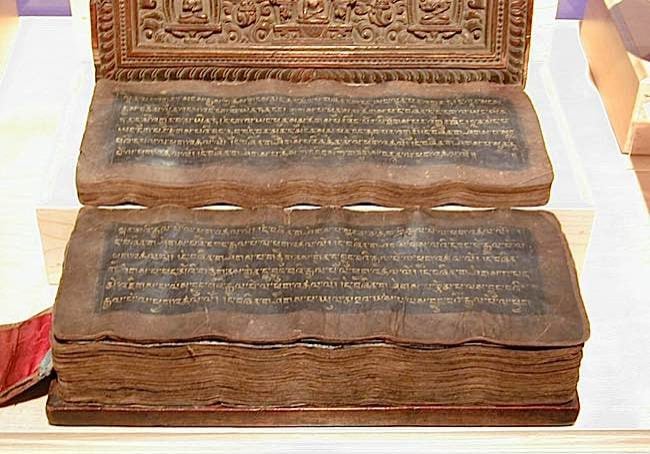
Why Reciting Buddhist Sutras Out Loud is Important; Sutras Help Us Remain Mindful of the Teachings and Disengage the “Clinging” Conscious Mind
In many Buddhist disciplines we are taught and value the practice of reciting sutras. Often this is done from memory, in a mantra-like chant, which begs the question why do we recite sutras?

Bodhidharma – Founder of Zen Buddhism: “Who stands before me?” — “I don’t know.”
When Emperor Wu of Ryo of China, who was a patron of Buddhism, heard of the legendary monk Bodhidharma, he invited him to his court, expecting to receive teachings and wisdom. When they finally met, the emperor asked: “What is the ultimate meaning of the holy truths of Buddhism?” “Vast emptiness, no holiness,” replied Bodhidharma. […]

Basho’s Zen: Matsuo Basho and the Buddhist influence on his Haiku Poetry — profound wisdom in three lines
Matsuo Basho (1644-1694) is regarded as among the greatest poets — not only in Japanese literature, but worldwide. He is the undisputed master of the now world-famous Haiku form of poetry. By Lee Clarke, Contributing Writer Haikus are short Japanese poems, traditionally composed of three lines in a 5-7-5 seventeen syllable format. Even though Haiku […]

What is Buddha?: The Koans and stories of Zen Buddhism — profound riddles that “break” the mind
A koan is a paradoxical riddle or statement used in Zen Buddhism in order to shake-up conventional thinking and to provoke an insight. Why do koans remain so intriguing and popular today? Perhaps, since koans are about insight, there are no right or wrong interpretations — which is one reason they are so effective. It […]

Zen Skateboarding: Riding Into Enlightenment
With a piece of plywood with 4 wheels underneath, I become a rolling buddha that is aware and accepts every moment for what it is – nothing more, nothing less.
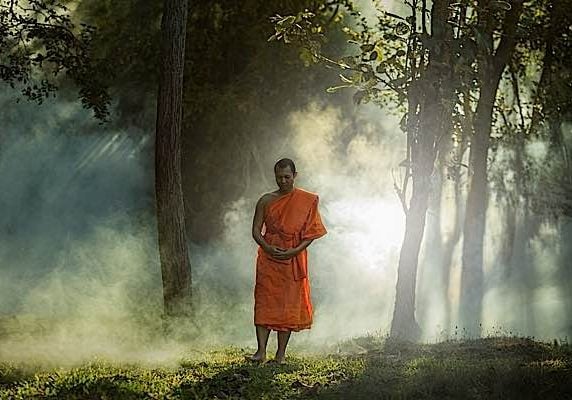
Cankama Sutta: Walking Meditation Sutra: put some mileage on your Buddhist practice with formal mindful walking
Meditation is the metaphorical transport vehicle on the journey towards Enlightenment. Mediation is a key practice within the Noble Eightfold Path, specifically: Right Concentration (samma samadhi) and Right Mindfulness (samma sati). But, no one ever said the only way to meditate was in the seated posture. Walking meditation actually teaches us to be in the present […]
- « Previous
- 1
- 2
- 3