

Eight Auspicious Symbols of Buddhism for Spiritual Transformation and Harmony at Home

Why are the eight auspicious signs of Buddhism more than just symbols or lucky objects? Why are the eight auspicious symbols found in nearly every Buddhist temple and shrine room? Why are they considered Dharma objects, inseparable from what they represent and what do they actually represent?
How important are they to practice?
In Tibetan tradition, many Buddhists chant the Verses of the Eight Noble Auspicious Ones when they wake up in the morning, or before any important activity. The prayer is a blessing for your day, just as the eight auspicious symbols are blessings in your home or on your shrine. See the Verses of the Eight Noble Auspicious Ones below.

Inviting Spiritual Transformation with the Eight Auspicious Symbols
The Eight Auspicious Signs are more than lucky Feng Shui objects. They represent the entire Buddhist path.
- The Dharma Wheel represents the Eightfold Path, the Dharma teachings.
- The Treasure Vase symbolizes the inexhaustible treasure of these teachings.
- The Lotus is for the compassion of the Bodhisattvas.
- The Endless knot beautifully illustrates the Oneness of all phenomenon, or Shunyata.
- The Golden fish is the mindful union of body and mind, and compassion and wisdom.
- The Victory Banner stands for the ultimate victory of Enlightenment.
- The Conch Shell with its triumphant trumpet-like sound symbolizes the fearlessness of Dharma.
- The Parasol represents the protection of Buddhist Refuge in the Three Jewels.

Together, they represent all the teachings, and the benefits of the teachings. It is a mistake to think of them as just symbols. They are the most precious of Dharma objects and are also considered highly auspicious and lucky.
Your Name as an Example
For example, your name is not actually you. Yet, if someone calls your name, you instantly respond. Likewise, if I see the Dharma Wheel, I bow to the Dharma teachings that it represents.

In Buddhism, symbols are both profoundly important and empty at the same time, in the same way, as described in the Heart Sutra, “Form is Emptiness, Emptiness is Form.” The essence of symbols, mantras, names, and labels is that they are inseparable from what they represent — and, at the same time, entirely empty.
When we say a person’s name, it is more than just a word. We associate that name with the person it identifies. In Buddhism, Dharma objects similarly represent vital teaching concepts.
Video on the Eight Auspicious Signs:
The emptiness of symbols
In Buddhism, symbols are both profoundly important and empty at the same time, in the same way, as described in the Heart Sutra, “Form is Emptiness, Emptiness is Form.” The essence of symbols, mantras, names and labels are that they are inseparable from what they represent — and at the same time entirely empty. Although the symbol represents something, it is “empty from its own side.”
We know, for example, a statue of the Buddha on the shrine is not actually the Buddha, yet we prostrate, make offerings, chant mantras and respect the statue with great reverence. Why? Because at the ultimate level, they are inseparable — the symbol and what it symbolizes. At the same time, all labels are ultimately empty.

When we see the Eight Auspicious Symbols, they’re aren’t just objects of decor for the home or jewelry to wear for “luck.” They are inseparable from what they represent. For this reason, the most Sacred Eight Auspicious Symbols are considered Dharma Objects. Like a Sutra, meant to be treated with great reverence. (No placing it on the floor and stepping over it on the way to the bathroom!)
What Buddhist Teachers Say about Displaying the Eight Auspicious Symbols
Respected Buddhist teachers and scholars reiterate the importance and potential benefits of practicing and displaying the Eight Auspicious Symbols, also known as Ashtamangala in Buddhism. Representing essential teachings of Buddha and paths to spiritual enlightenment and change, these symbols serve as crucial guides and reminders to practitioners.

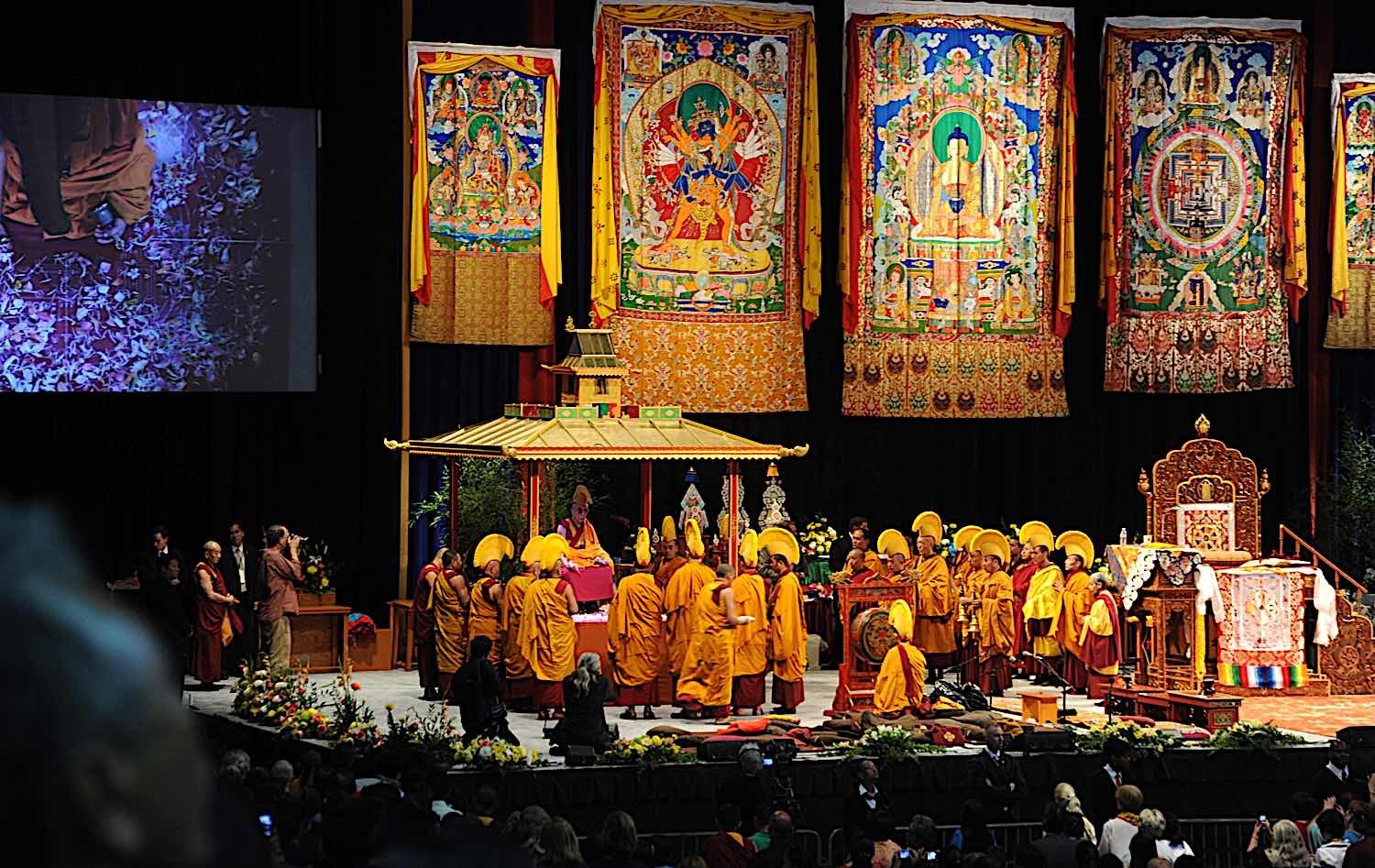
His Holiness the Dalai Lama is known for his emphasis on cultivating inner peace, clarity, and compassion by integrating Buddhist teachings in daily life. When the Dalai Lama — or any senior lama — visits another monastery, it is tradition to present the eight auspicious signs to welcome him — often these are painted on the floor or ceiling at the entrance — although they must be roped off so that no one can disrespectfully step on them. (See photo inset)
According to the Tibetan Buddhist tradition, a highly respected lama is welcomed to another monastery by Eight Auspicious Tibetan Symbols, that are painted in front of the temple. [source]
Lama Zopa Rinpoche: Teaching
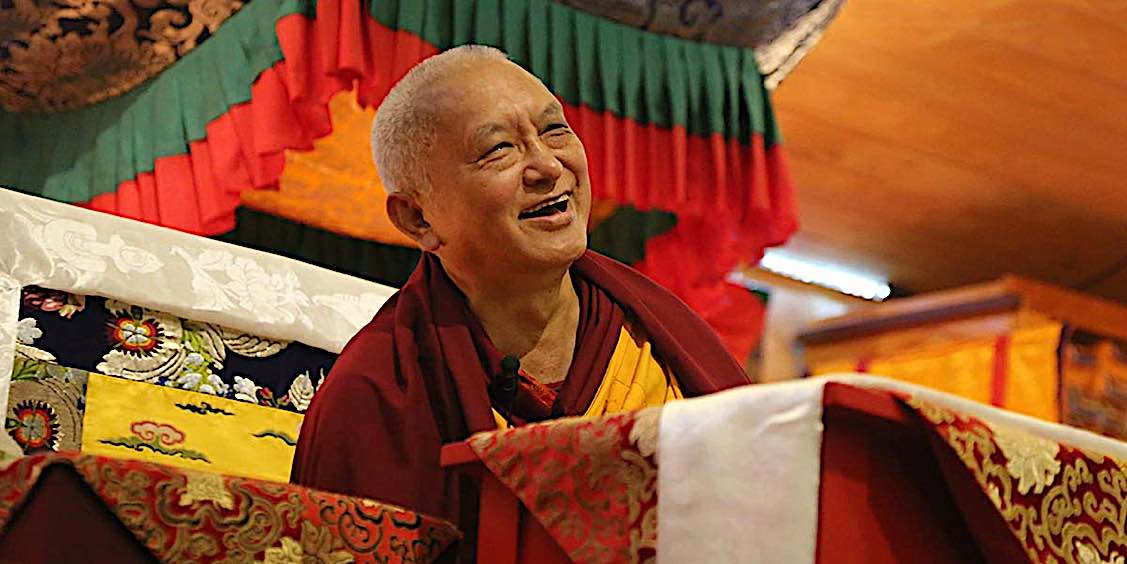
Lama Zopa Rinpoche — a Tibetan Buddhist scholar and spiritual director of the Foundation for the Preservation of the Mahayana Tradition (FPMT) — emphasizes on how each symbol can be a reminder of Buddha’s path to enlightenment. Regarding the Dharma Wheel, for example, he explains:
“The wheel represents the teachings of the Buddha. Every time we see it, we should recall the Buddha’s teachings and strive to apply them in our life.”

Other Buddhist scholars and teachers also stress the value of these symbols in creating a spiritual atmosphere, fostering mindfulness and inner transformation while also providing a harmonious Feng Shui in the home environment. By incorporating these symbols into our practice and space, we invite the auspicious energy of Buddha’s wisdom and compassion and benefit from their profound meanings.

Inviting Spiritual Transformation with the Eight Auspicious Symbols
Through the practice of incorporating the Eight Auspicious Symbols, also known as the Buddhist Ashtamangala, you can invite transformative spiritual energy into your life. Each symbol carries its own profound meaning, rooted deeply in Buddhist teachings, ushering in specific qualities meant to cultivate spiritual growth and wellbeing.
- The Eight Auspicious Signs are more than lucky Feng Shui objects. They represent the entire Buddhist path.
- The Dharma Wheel represents the Eightfold Path, the Dharma teachings.
- The Treasure Vase symbolizes the inexhaustible treasure of these teachings.
- The Lotus is for the compassion of the Bodhisattvas.
- The Endless knot beautifully illustrates the Oneness of all phenomenon, or Shunyata.
- The Golden fish is the mindful union of body and mind, and compassion and wisdom.
- The Victory Banner stands for the ultimate victory of Enlightenment.
- The Conch Shell with its triumphant trumpet-like sound symbolizes the fearlessness of Dharma.
- The Parasol represents the protection of Buddhist Refuge in the Three Jewels.

Together, they represent all the teachings, and the benefits of the teachings. They are also considered highly auspicious, lucky, and the most precious of Dharma objects.
In what way can meditating on eight auspicious symbols and signs tranformative?
Contemplation on the Eight Auspicious Symbols can prove to be deeply transformative for your spiritual journey. Each symbol, or as they’re traditionally termed in Sanskrit – Ashtamangala- holds profound significance in Buddhism, rich with teachings and qualities that can guide one’s path towards enlightenment. When you immerse yourself in the consideration of each sign, absorbing their essence, and applying their meanings in your everyday life, they can be a catalyst for profound spiritual transformation.

Symbols are visual cues that trigger resonance at a deeper level than intellectual contemplation. We can just say “Dharma Wheel” and it triggers an intellectual and meditative response.
We know, intellectually, it represents Buddha’s teachings and the path to Enlightenment. When we see the symbol, however, the visual language adds to the depth of our meditative response. While the label could be analogous to reading a good book, and the the symbol analogous to watching a good movie without sound, combining the two together is the surround sound equivalent of a theatrical movie on a giant screen with booming sound. It’s immersive.
The Eight Auspicious Symbols bring the “immersive” meditative response, adding “visual coding” to our labels. In addition to the “lucky” or Feng Shui aspects explored in later sections, the main Dharma “symbolism of each is:
- Dharma Wheel, Eightfold Path, or the Dharma teachings
- Treasure Vase, the inexhaustible treasure of the teachings
- Lotus, compassion
- Endless knot, the Oneness of all phenomenon, or Shunyata
- Golden fish, mindful union of body and mind, compassion and wisdom.
- Victory Banner, victory of Enlightenment
- Conch Shell, fearlessness of Dharma
- Parasol, protection of the Three Jewels
The Transformative Symbolism of the Eight Ashtamangala

The Dharma Wheel, for instance, is no ordinary wheel. It symbolizes Buddha’s teachings—the Dharma—that underpin the practice of Buddhism. Meditating on this symbol naturally steers your mind towards the teachings, amplifying moral discipline, inspiring change, and fostering spiritual growth.(source)

The Treasure Vase, often referred to as the “Vase of inexhaustible treasures”, personifies the idea of Dharma as the source of all spiritual and material treasures. When incorporated into your practice, this symbol can guide you towards understanding the nature of reality, attract wealth, and bring harmony to your environment, aligning perfectly with the principles of Feng Shui.

Similarly, meditating on the Lotus symbol—which stands for purity, divinity, perfection, and compassion—can inspire you to relinquish destructive habits and cultivate pure-hearted actions inspired by empathy.

The Endless Knot, another symbol, is a reminder of Buddha’s infinite wisdom and compassion as well as the intertwined reality of existence.(source)

The Golden Fishes, traditionally representing happiness, fertility, and abundance, can lead you to cherish life’s blessings.

The Victory Banner which serves as an emblem of Buddha’s victorious enlightenment, can motivate you to overcome personal and spiritual obstacles.

Reflecting on the White Conch Shell carries the power to instill courage, remind you of the truth of Dharma, and ward off negativity.

The Parasol, embodying protection and royalty, can promote feelings of safety and dignity within you.
Altogether, the Eight Auspicious Symbols represent the bounty and richness of the Buddha’s teachings; close reflection on these signs goes beyond mere intellectual understanding, encouraging a personal transformation aligned with the principles of Buddhism. Additionally, decorating your space following the Feng Shui principles using the Eight Auspicious Signs can result in a harmonious environment that fosters positive energy and spiritual growth.(source)

In essence, meditation on these symbols bridges the gap between spiritual teachings and personal transformation, and the incorporation of Feng Shui further aligns one’s physical environment with these profound spiritual connections.
How to Display or Practice the Eight Auspicious Signs
You might be wondering how these sacred symbols can be integrated into your Buddhist practice. Well, it’s actually quite simple.

First, and most importantly, they should be displayed either on a shrine, or in a prominent position in the house. There must be at least a complete set, according to Lama Zopa, but they do not have to be displayed together, as long as you have all eight in your house or temple.
For formal practice usually place in front of your main Yidam or Buddha shrine, both as an offering and as a representation of those vital eight aspects of Dharma
They can be overwhelmingly seen in places of worship, on your personal shrine, and even subtly incorporated into your home’s Feng Shui to invite positive energy. Remember, it’s not just about physical placement but also understanding and embodying the teachings each symbol represents.
They are Dharma Objects
They should be treated as Dharma objects, as they individually represent different teachings and practices. For example, the Eight Spoked Dharma Wheel represents the Dharma itself. Lama Zopa RInpoche therefore advised never to paint the symbols on the floor as a decoration if it means people will step over them — which is not auspicious regarding any Dharma text or object. From his commentary [Source>>]:
“They can be used externally to help with one’s own success as well as … to be successful in benefiting others and working for the [dissemination of the] teachings of the Buddha. Putting these eight auspicious signs around everywhere, outside and also inside the rooms, makes things very auspicious. It is not necessary to put all eight together, and they don’t all need to be in the same place. They can be placed separately at different locations, but you should have all of them.”
The Eight Auspicious Signs or objects are often featured on prayer flags, symbolically “spreading” good wishes to all beings on the winds.
Profound Meaning of the Eight Auspicious Signs: Lama Zopa
Lama Zopa Rinpoche’s transcribed teaching on the Eight Auspicious Signs, as taught to him by his Root Guru:
“Here is the meaning of these eight auspicious signs according to my root guru, His Holiness Trijang Dorje Chang’s explanation.2
1. The precious umbrella saves us from all this life’s obstacles – such as sicknesses, contagious diseases, spirit possessions, interferers and so forth – and also from the next life’s obstacles – the sufferings of the three evil-gone-ones,3 of the devas, human beings and so forth. It saves us completely from being tormented by the heat of both temporary and long-term sufferings. It has the dependent arising of giving the extended joy of a cooling shadow of peace and happiness.
2. The yellow fish. Fish swim as they like without fear in the ocean. Like that [the yellow fish] is a dependent arising for oneself and others to run and enjoy freely with no resistance from happiness to happiness without fear of drowning in the oceans of suffering.
3. The vase of great treasure is a dependent arising that brings unceasingly all desired things, the fortune of a glorious life, enjoyments and so forth in the three realms of existence (the desire, form and formless realms) and peace (liberation from samsara).
4. The lotus symbolizes dependent arising that frees us from all the stains of mistakes – the non-virtues of body, speech and mind. The abundant blossoming of a hundred petals of white virtue brings an abundance of the good essence of honey – everlasting happiness, definite goodness (liberation and the state of omniscient mind).
5. The white conch shell swirling clockwise is a dependent arising announcing the sweet melody of the profound and extensive Dharma that fits the elements, level of mind and wishes of sentient beings who are the objects to be subdued. It awakens transmigratory beings from the ignorant sleep of unknowing and persuades them to accomplish works for the benefit and happiness of themselves and others.
6. The glorious peu is a dependent arising for Dharma and politics to utilize and support each other in one continuous connection. Like that, at the time of the path, method and wisdom connect by being unified with each other; emptiness and dependent arising are connected in one without contradiction. At the time of the resultant state of buddha, omniscience and compassion are unified.
7. The banner is a dependent arising for the activities of one’s own three doors and those of others not be stepped upon by obstacles or disharmonious conditions but to be victorious and for the precious teachings of the Buddha to be victorious in the war over the black side, the types of maras.
8. The golden Dharmachakra is a dependent arising for the precious wheel of the holy Dharma, the scriptures and realizations of the Victorious One, to turn unceasingly in the whole universe. In dependence upon that, all those who are reborn and degenerating (samsaric beings who are continually being reborn and dying under the control of karma and delusion) apply themselves to the most glorious virtue, total liberation.
Wherever these eight auspicious signs exist, there will be the dependent arising of increasing the virtue of auspiciousness.”
Colophon: Dictated by Kyabje Lama Zopa Rinpoche to Ven. Sarah Thresher at Root Institute, Bodhgaya, India, February 4, 2014. Edited with the help of Losang Hursthouse. [Source>>]
The Verses of the Eight Noble Auspicious Ones
by Mipham Rinpoche
ལས་གང་ཞིག་རྩོམ་པ་ན་ཐོག་མར་འདི་ཚར་གཅིག་བརྗོད་ན་གྲུབ་པ་བདེ་བ་ཡིད་བཞིན་དུ་བྱེད་པར་འགྱུར་བས་ཅི་ནས་ཡིད་ལ་བྱའོ། །
It is very important to recite this through once before starting on any activity; whatever the project, it will work out exactly as you wish.
ཨོཾ། སྣང་སྲིད་རྣམ་དག་རང་བཞིན་ལྷུན་གྲུབ་པའི། །
om, nangsi namdak rangzhin lhündrubpé
Oṃ! Homage to the Buddha, Dharma and Noble Saṅgha—
བཀྲ་ཤིས་ཕྱོགས་བཅུའི་ཞིང་ན་བཞུགས་པ་ཡི། །
tashi chok chü zhing na zhukpa yi
All that dwell in the auspicious realms of the ten directions,
སངས་རྒྱས་ཆོས་དང་དགེ་འདུན་འཕགས་པའི་ཚོགས། །
sangye chö dang gendün pakpé tsok
Where appearance and existence is completely pure, its nature spontaneously perfect,
ཀུན་ལ་ཕྱག་འཚལ་བདག་ཅག་བཀྲ་ཤིས་ཤོག །
kün la chaktsal dakchak tashi shok
May everything be auspicious for us all!
སྒྲོན་མེའི་རྒྱལ་པོ་རྩལ་བརྟན་དོན་གྲུབ་དགོངས། །
drönmé gyalpo tsalten döndrup gong
King of Lamps, Steadfast and Powerful One Whose Vision Fulfils All Aims,
བྱམས་པའི་རྒྱན་དཔལ་དགེ་གྲགས་དཔལ་དམ་པ། །
jampé gyen pal gedrak paldampa
Glorious Ornament of Love, Sacred Splendour Renowned for Virtue,
ཀུན་ལ་དགོངས་པ་རྒྱ་ཆེར་གྲགས་པ་ཅན། །
künla gongpa gyacher drakpa chen
The One Whose Concern for All Brings Him Universal Renown,
ལྷུན་པོ་ལྟར་འཕགས་རྩལ་གྲགས་དཔལ་དང་ནི། །
lhünpo tar paktsal drakpal dang ni
Glorious One as Renowned as Mount Meru in Eminence and Might,
སེམས་ཅན་ཐམས་ཅད་ལ་དགོངས་གྲགས་པའི་དཔལ། །
semchen tamchela gong drakpé pal
Glorious One Renowned as Caring for All Sentient Beings,
ཡིད་ཚིམ་མཛད་པ་རྩལ་རབ་གྲགས་དཔལ་ཏེ། །
yitsim dzepa tsal rab drakpal té
Glorious One Renowned as Most Powerful in Satisfying Wishes—
མཚན་ཙམ་ཐོས་པས་བཀྲ་ཤིས་དཔལ་འཕེལ་བ། །
tsen tsam töpé tashi pal pelwa
Homage to you, the Eight Sugatas,
བདེ་བར་གཤེགས་པ་བརྒྱད་ལ་ཕྱག་འཚལ་ལོ། །
dewar shekpa gyé la chaktsal lo
Merely hearing your names increases auspiciousness and success!
འཇམ་དཔལ་གཞོན་ནུ་དཔལ་ལྡན་རྡོ་རྗེ་འཛིན། །
jampal zhönnu palden dorjé dzin
Youthful Mañjuśrī, glorious Vajrapāṇi,
སྤྱན་རས་གཟིགས་དབང་མགོན་པོ་བྱམས་པའི་དཔལ། །
chenrezik wang gönpo jampé pal
Lord Avalokiteśvara, protector Maitreya,
ས་ཡི་སྙིང་པོ་སྒྲིབ་པ་རྣམ་པར་སེལ། །
sa yi nyingpo dribpa nampar sel
Kṣitigarbha, Sarvanīvaraṇaviṣkambhin,
ནམ་མཁའི་སྙིང་པོ་འཕགས་མཆོག་ཀུན་ཏུ་བཟང་། །
namkhé nyingpo pakchok kuntuzang
Ākāśagarbha, and Samantabhadra noblest of all—
ཨུཏྤལ་རྡོ་རྗེ་པད་དཀར་ཀླུ་ཤིང་དང་། །
utpal dorjé pekar lushing dang
Utpala flower, vajra, white lotus, nāga-tree,
ནོར་བུ་ཟླ་བ་རལ་གྲི་ཉི་མ་ཡི། །
norbu dawa raldri nyima yi
Jewel, moon, sword and sun—
ཕྱག་མཚན་ལེགས་བསྣམས་བཀྲ་ཤིས་དཔལ་གྱི་མཆོག །
chaktsen lek nam tashi pal gyi chok
Gracefully holding your emblems, and supreme in granting auspiciousness and success,
བྱང་ཆུབ་སེམས་དཔའ་བརྒྱད་ལ་ཕྱག་འཚལ་ལོ། །
changchub sempa gyé la chaktsal lo
Homage to you, the Eight Bodhisattvas!
རིན་ཆེན་གདུགས་མཆོག་བཀྲ་ཤིས་གསེར་གྱི་ཉ། །
rinchen duk chok tashi ser gyi nya
The most precious umbrella, the auspicious golden fishes,
འདོད་འབྱུང་བུམ་བཟང་ཡིད་འོང་ཀ་མ་ལ། །
dö jung bum zang yi ong kamala
The wish-fulfilling vase of goodness, the exquisite kamala flower,
སྙན་གྲགས་དུང་དང་ཕུན་ཚོགས་དཔལ་བེའུ། །
nyendrak dung dang püntsok pal be’u
The conch of fame and glory, the glorious knot of prosperity,
མི་ནུབ་རྒྱལ་མཚན་དབང་བསྒྱུར་འཁོར་ལོ་སྟེ། །
minub gyaltsen wanggyur khorlo té
The eternal banner of victory and the all-powerful wheel:
རིན་ཆེན་རྟགས་མཆོག་བརྒྱད་ཀྱི་ཕྱག་མཚན་ཅན། །
rinchen tak chok gyé kyi chaktsen chen
Holding these eight most precious emblems
ཕྱོགས་དུས་རྒྱལ་བ་མཆོད་ཅིང་དགྱེས་བསྐྱེད་མ། །
chok dü gyalwa chö ching gyé kyema
Are the creators of delight, making offerings to the buddhas of all directions and times.
སྒེག་སོགས་ངོ་བོ་དྲན་པས་དཔལ་སྤེལ་བའི། །
gek sok ngowo drenpé pal pelwé
Homage to you, the Eight Auspicious Goddesses—Beauty, Garlands, Song, Dance, Flowers, Incense, Light and Perfume—
བཀྲ་ཤིས་ལྷ་མོ་བརྒྱད་ལ་ཕྱག་འཚལ་ལོ། །
tashi lhamo gyé la chaktsal lo
Merely thinking of you makes success grow more and more!
ཚངས་པ་ཆེན་པོ་བདེ་འབྱུང་སྲེད་མེད་བུ། །
tsangpa chenpo dejung semebu
Mighty Brahmā, Śiva1 and Viṣṇu,
མིག་སྟོང་ལྡན་དང་རྒྱལ་པོ་ཡུལ་འཁོར་སྲུང་། །
mik tong den dang gyalpo yulkhor sung
Indra the thousand-eyed, the kings Dhṛtarāṣṭra,
འཕགས་སྐྱེས་པོ་དང་ཀླུ་དབང་མིག་མི་བཟང་། །
pak kyepo dang luwang mikmizang
Virūdhaka, Virūpakṣa the lord of nāgas,
རྣམ་ཐོས་སྲས་ཏེ་ལྷ་རྫས་འཁོར་ལོ་དང་། །
namtösé té lhadzé khorlo dang
And Vaiśravaṇa—each one holding your divine emblem:
ཏྲི་ཤཱུ་ལ་དང་མདུང་ཐུང་རྡོ་རྗེ་ཅན། །
trishula dang dungtung dorjé chen
Wheel, trident, lance, vajra,
པི་ཝཾ་རལ་གྲི་མཆོད་རྟེན་རྒྱལ་མཚན་འཛིན། །
piwam raldri chöten gyaltsen dzin
Vīṇā, sword, stūpa and banner of victory—
ས་གསུམ་གནས་སུ་དགེ་ལེགས་བཀྲ་ཤིས་སྤེལ། །
sa sum né su gelek tashi pel
Homage to you, the Eight Guardians of the World,
འཇིག་རྟེན་སྐྱོང་བ་བརྒྱད་ལ་ཕྱག་འཚལ་ལོ། །
jikten kyongwa gyé la chaktsal lo
Who make auspiciousness and positivity grow in the three realms!
བདག་ཅག་དེང་འདིར་བྱ་བ་རྩོམ་པ་ལ། །
dakchak deng dir jawa tsompa la
With all obstacles and harmful influences pacified,
གེགས་དང་ཉེ་བར་འཚེ་བ་ཀུན་ཞི་ནས། །
gek dang nyewar tsewa kün zhi né
May the work we are now about to begin
འདོད་དོན་དཔལ་འཕེལ་བསམ་དོན་ཡིད་བཞིན་འགྲུབ། །
dödön pal pel samdön yizhin drub
Meet with ever-growing fulfilment and success, and
བཀྲ་ཤིས་བདེ་ལེགས་ཕུན་སུམ་ཚོགས་པར་ཤོག །
tashi delek pünsum tsokpar shok
Bring good fortune, prosperity, happiness and peace!
ལྡང་ཚེ་བརྗོད་ན་དེ་ཉིན་དོན་ཀུན་འགྲུབ། །ཉལ་ཚེ་བརྗོད་ན་རྨི་ལམ་བཟང་པོ་མཐོང༌། །གཡུལ་དུ་འཇུག་ཚེ་བརྗོད་ན་ཕྱོགས་ལས་རྒྱལ། །བྱ་བ་རྩོམ་དུས་བརྗོད་ན་འདོད་དོན་འཕེལ། །རྒྱུན་དུ་བརྗོད་ན་ཚེ་དཔལ་གྲགས་འབྱོར་ཤིས། །བདེ་ལེགས་ཕུན་ཚོགས་བསམ་དོན་ཡིད་བཞིན་འགྲུབ། །སྡིག་སྒྲིབ་ཀུན་བྱང་མངོན་མཐོ་ངེས་ལེགས་ཀྱི། །དོན་ཀུན་འགྲུབ་པ་རྒྱལ་བ་མཆོག་གིས་གསུངས། །
“Recite this prayer when you wake up, and you will accomplish all your aims for the day. Recite it when you go to sleep, and you will have good dreams. Recite it before a conflict, and you will be completely victorious. Recite it when you embark on any project, and you will be successful. If you recite this prayer every day, the length of your life, your splendour, renown, and wealth will all increase, you will find perfect happiness, you will accomplish your aims exactly as you wish, all harmful actions and obscurations will be purified and all your wishes for higher realms, liberation and omniscience will be fulfilled.” These are the words of the Buddha himself.
རབ་ཚེས་མེ་སྤྲེལ་ཟླ་བ་གསུམ་པའི་ཚེས་གསུམ་གཟའ་ཉི་མ་དང་རྒྱུ་སྐར་རྒྱལ་གྱི་དུས་བཟང་པོའི་ཆ་ལ་འཇམ་དཔལ་དགྱེས་པའི་རྡོ་རྗེའི་ཡིད་མཚོ་ལས་བྱུང་བའི་ནོར་བུའི་དོ་ཤལ་ཆེན་པོའོ། །
This prayer arose from the lake of Jampal Gyepé Dorjé’s mind on the third day of the third month of the Fire Monkey year (1896), an auspicious time according to the configuration of planets, sun and constellations.
Source: Lotsawa House>>
Sequences of symbols
Different traditions order the eight symbols differently.
Here is the sequential order of the Eight Auspicious Symbols of Nepali Buddhism:
- Endless knot
- Lotus flower
- Dhvaja
- Dharmachakra (fly-whisk in Nepali Buddhism)
- Bumpa
- Golden Fish
- Parasol
- Conch
The sequential order for Chinese Buddhism was defined in the Qing dynasty as:
- Dharmachakra
- Conch
- Dhvaja
- Parasol
- Lotus flower
- Bumpa
- Golden Fish
- Endless knot
More articles by this author
100-Syllable Yidam Samaya Mantra: Union, Bliss, Bonding, Renewal, Purification, Wish Fulfilment and Wisdom
Making LUNAR NEW YEAR 2026 Your Most Auspicious and Blessed Year: Feb 17, 2026 Chinese New Year; Feb 18,2026 LOSAR Tibetan New Year

Search
Latest Features


Please support the "Spread the Dharma" mission as one of our heroic Dharma Supporting Members, or with a one-time donation.
Please Help Support the “Spread the Dharma” Mission!
Be a part of the noble mission as a supporting member or a patron, or a volunteer contributor of content.
The power of Dharma to help sentient beings, in part, lies in ensuring access to Buddha’s precious Dharma — the mission of Buddha Weekly. We can’t do it without you!
A non-profit association since 2007, Buddha Weekly published many feature articles, videos, and, podcasts. Please consider supporting the mission to preserve and “Spread the Dharma." Your support as either a patron or a supporting member helps defray the high costs of producing quality Dharma content. Thank you! Learn more here, or become one of our super karma heroes on Patreon.
Lee Kane
Author | Buddha Weekly
Lee Kane is the editor of Buddha Weekly, since 2007. His main focuses as a writer are mindfulness techniques, meditation, Dharma and Sutra commentaries, Buddhist practices, international perspectives and traditions, Vajrayana, Mahayana, Zen. He also covers various events.
Lee also contributes as a writer to various other online magazines and blogs.