


4 Heavenly Kings Puja and Mantras: Special Practice for Protector Day (29th Lunar) or Any Day You Need Help
In Buddhism, our Refuge is always the Three Jewels, Buddha Dharma and Sangha. In times of need, or strife, suffering, war and misery, we turn to our refuge. We also ask for help from our Protectors.
Within the scope of the three Jewels, the third Jewel is the Sangha, which include the Four Heavenly Kings, who have sworn to uphold the Dharma and the Four Virtues, and to protect the practitioners. For this reason, they are called the “Four Heavenly Kings” and when we ask for their help, we also help them uphold their promise in our final dedication:
“I will not rest until every being is free of suffering.”
Audio of the Four Kings Puja and Mantras (Text for Chant-Along is below):
This is also their promise. They are the Four Gatekeepers of the Four Virtues. They have made the same promise to Buddha: “I will not rest until every being is free.” For our Full Feature on the Four Kings and the Four Virtues see>>
We do not pray to the Four Heavenly Kings as worldly deities, but as venerable protectors, who themselves bow to the Buddha — and have sworn to uphold the Dharma and Protect the Sangha (the followers.
The Four Palaces of the Four Kings
In Buddhist tradition, the Four Palaces of the Four Kings are not just in the four symbolic directions. The Kings are the protectors of the four virtues and their four palaces are the Four Immeasurables, the cornerstone of Buddhism.
Each of the Four Kings protects one of the Great Virtues, also called the Brahmavihara — which are the great expression of Mahayana Buddhism. These are:
- loving-kindness or benevolence or mettā
- compassion or karuṇā
- empathetic joy or muditā
- and equanimity, or upekkhā.
The four Immeasurables are called the Four Palaces of the Kings. The dwell not in jewelled palaces, but in loving kindness, compassion, joy and equanimity.
For this reason, the reciting of the Four Immeasurables is a must-practice whenever you honor the for kings. By upholding the Four Immeasurables you uphold the Four Palaces of the Kings — and they, in turn help you uphold your Four Virtues.
The Four Heavenly Kings
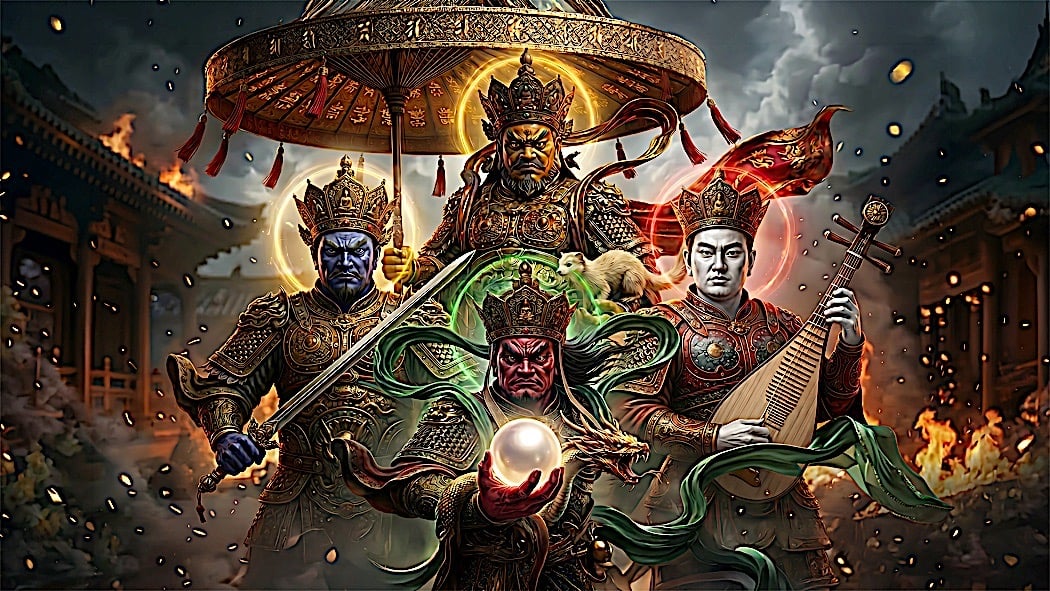
As upholders of the Virtue, as powerful protector, they appear stern and almost warrior-like in most depictions, but their nature is the four virtues. Their fierceness and warrior-stature are symbolic of their great power.
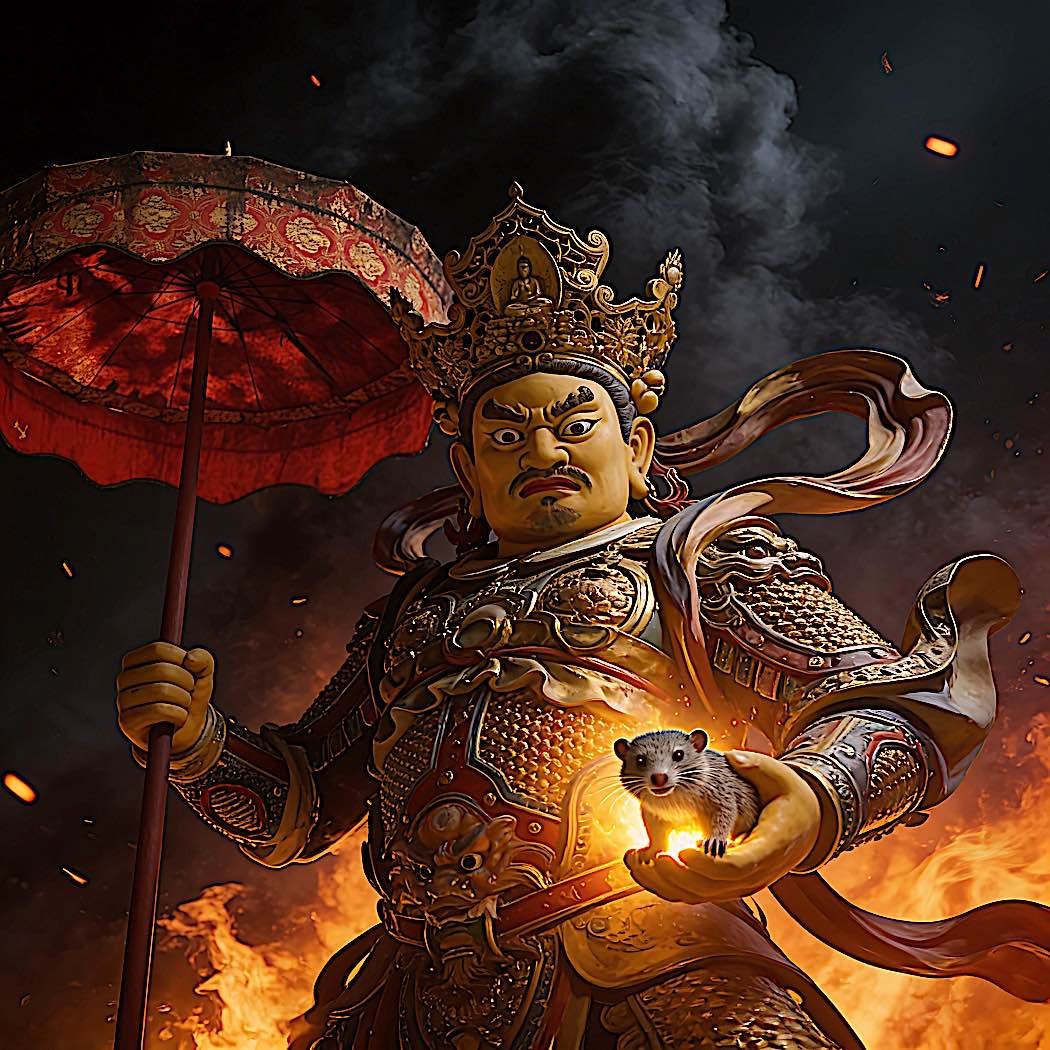
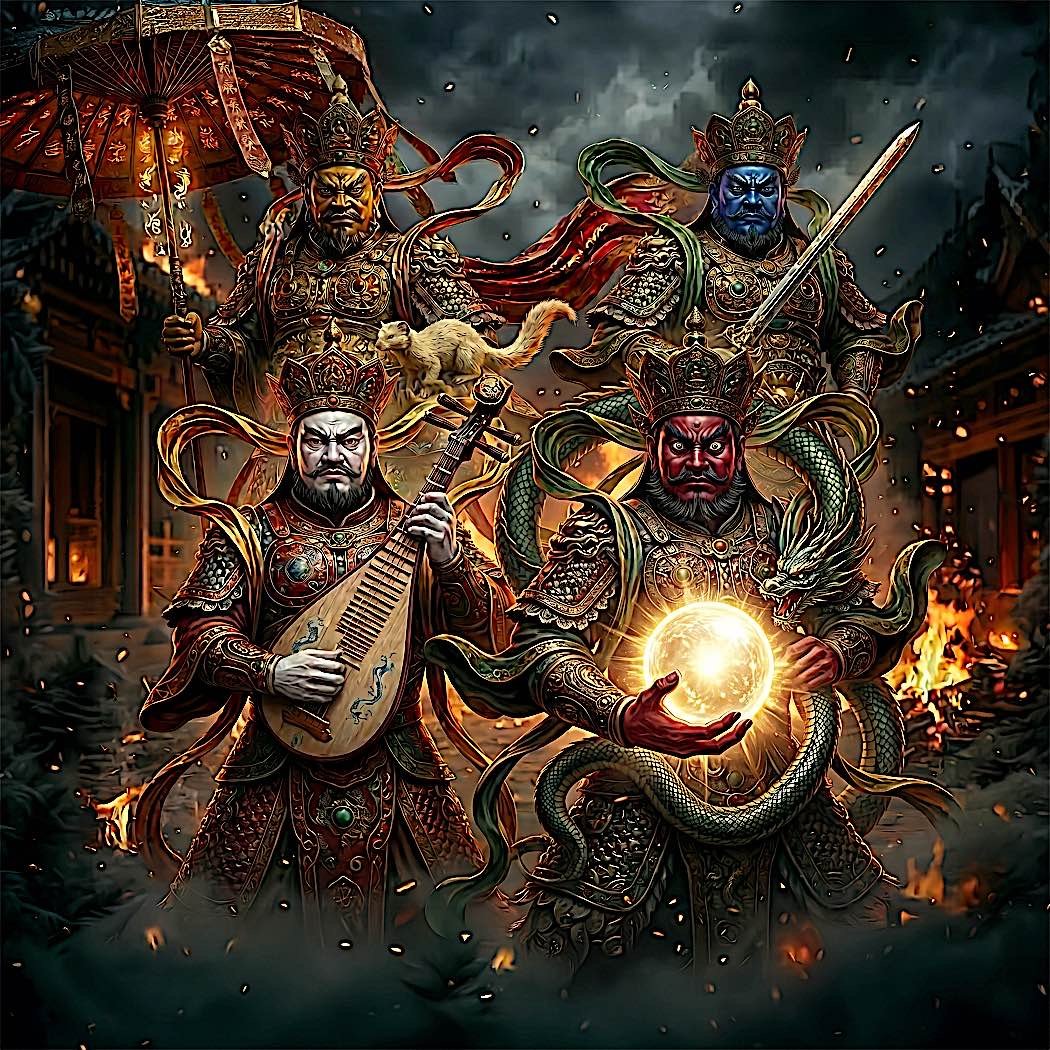
Vaiśravaṇa “He Who Hears All” King in the North and Chief of the Heavenly Kings, is in the PALACE OF COMPASSION, upholds the virtue of Karuna or Compassion through well-being and prosperity so that we can practice Dharma. He helps protect our prosperity, so that we can help ourselves and others, and practice the Dharma. He is a form of Yellow Jambhala.
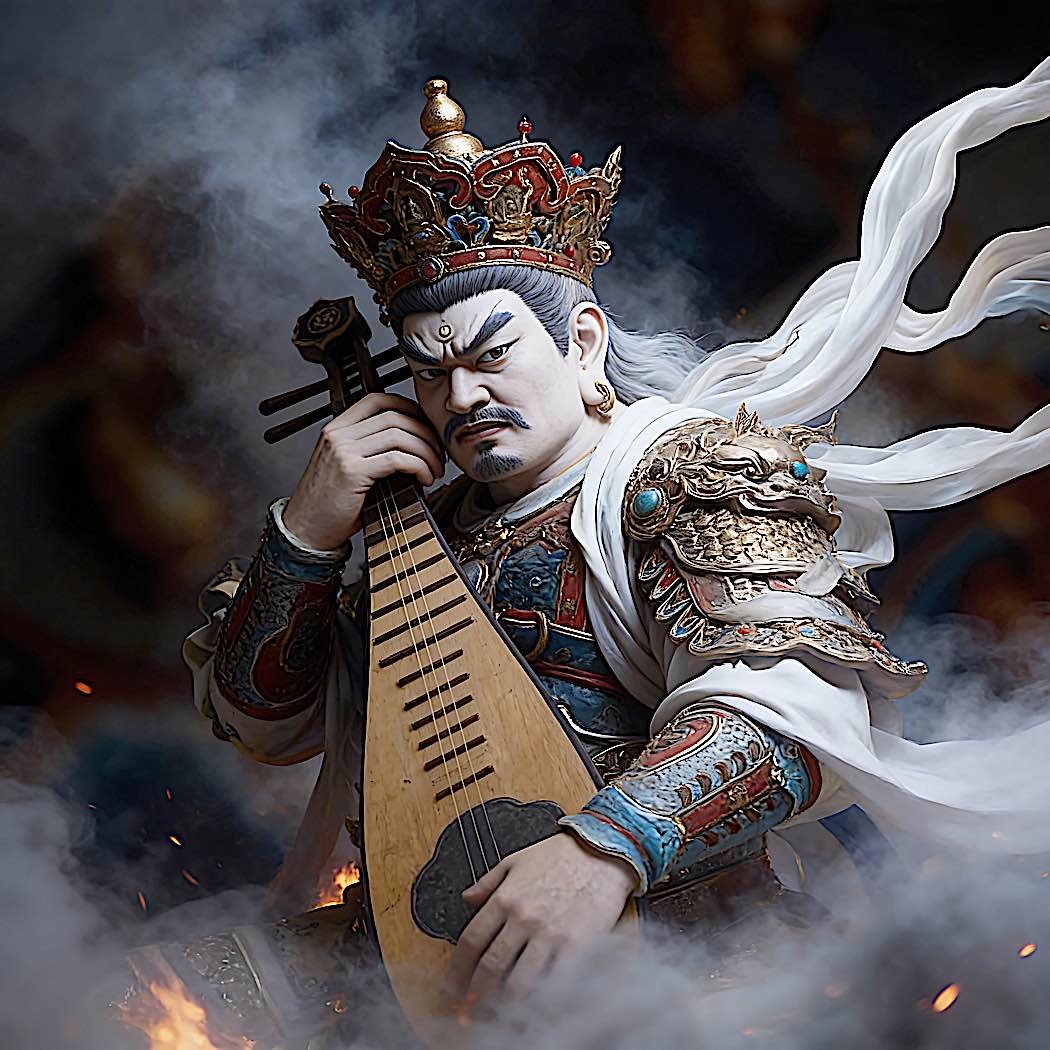
Dhṛtarāṣṭra “He Who Upholds the World” is the King in the East in the PALACE OF JOY, upholds the virtue of Empathetic Joy or muditā, ensuring the harmony of the world, through the inspiration of music and art. The King of the East, Dhrtarastra, is celebrated for maintaining the state and preventing the Dharma from deviating. He protects the beings in his realm, encouraging harmony, understanding and respect of the Dharma, while holding a lute, symbolic of the harmony he protects.
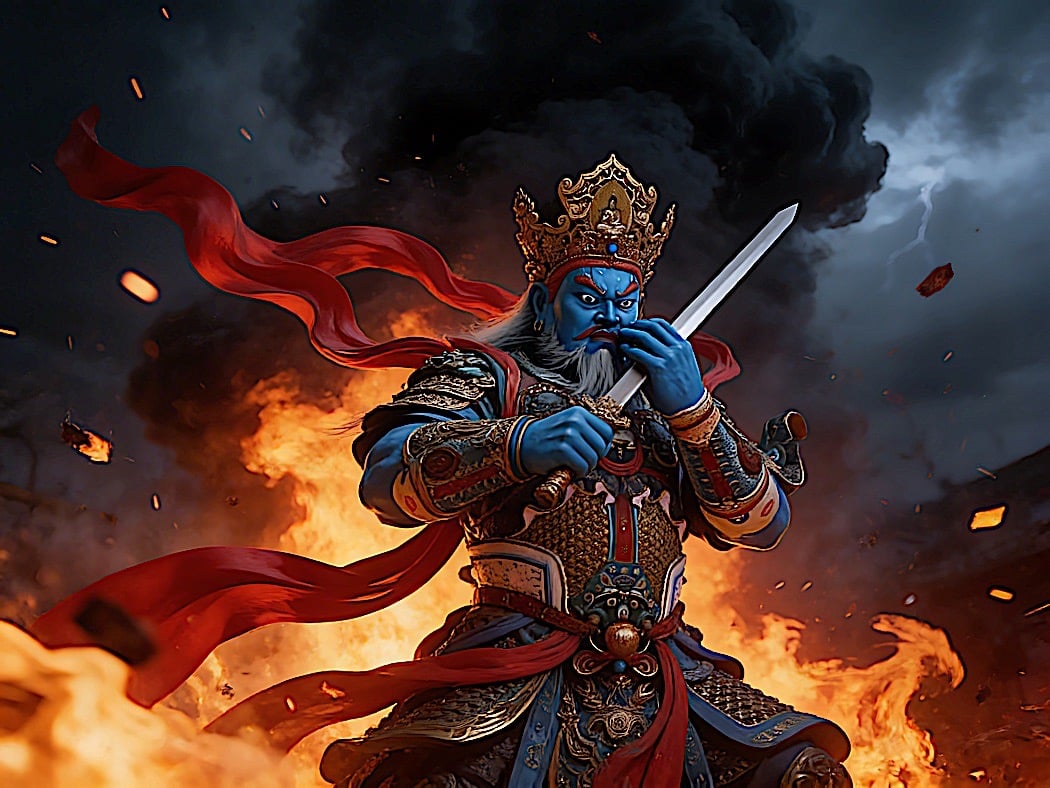
Virūḍhaka “He Who Causes to Grow” the King of the South in the PALACE OF EQUANIMITY, is the upholder of the virtue of Equanimity or upekkhā and fosters growth and wisdom. The King of the South, Virūḍhaka, is famous for increasing goodness, carries a sword – a symbol representing the wisdom which cuts through ignorance, fostering the growth and nurturing understanding for all beings to grow within the Dharma.
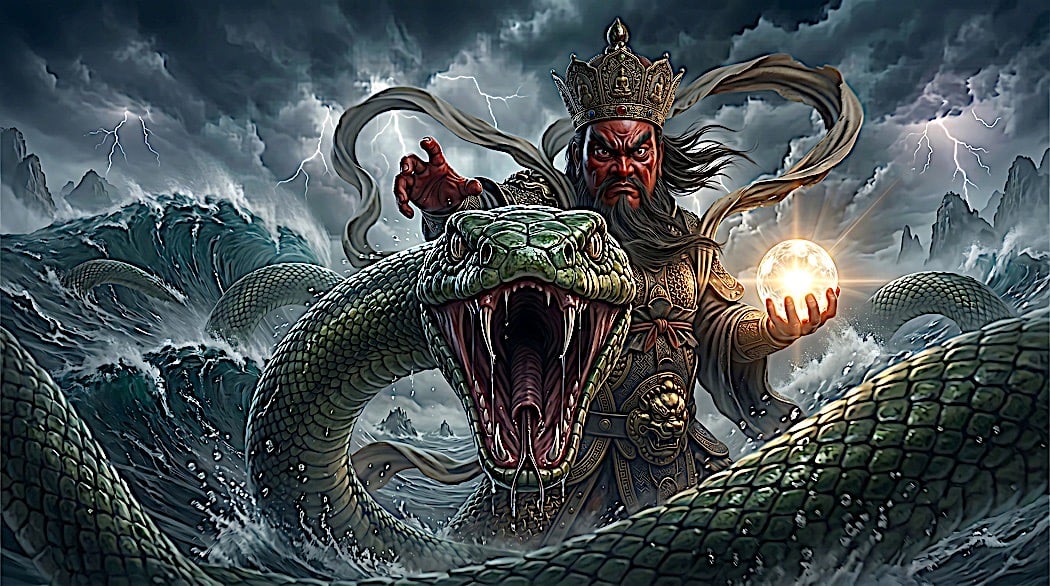
Virūpāksha “He Who Sees All” King in the West in the PALACE OF LOVING-KINDNESS, is the upholder of the loving-kindness or Metta, through the power of sacred Dharma, symbolized by his Stupa. The King of the West, Virūpākṣa, sees all that happens in the realm, spotting and warding off any threats to the Dharma. His snake and stupa are symbols of his enduring vigilance.
29th of the Month: Special Day
Especially on Protector Days, which we celebrate in the Mahayana tradition on the 29th of every lunar month — asking for protection in the coming lunar month, we offer symbolic Puja of offerings, praise, and mantras, asking for the Four Kings to help us, as Sangha members sworn to protect, and also making our own promise to help all beings.
Here we celebrate with 3 Gems beautiful new release, initially a single on music streaming titled “4 Heavenly Kings Puja and Mantras” which is an easy 8 minute practice in Sanskrit — and later as part of a mini album with longer plays on the four kings mantras. The lyrics of this Puja — which anyone may celebrate — are below in Sanskrit with English commentary.
4 Heavenly Kings Puja and Mantras
Refuge in the Three Jewels
trīṇi ratnāni śaraṇaṃ yāmi bodhāya dehinām |
buddho dharmo gaṇo yāvat saṃsāraḥ kṣīyate mama || 1 |
Offering and Aspiration
dhyātā vastūni bhautāni puṣpadhūpārpitaṃ tathā |
ghṛtadīpāṃśu gandhānnaṃ gītavādyāni sarvaśaḥ ||
buddhabodhisattvāś ca catvāro mahārājānaḥ |
gṛhṇantu kāruṇyayuktaṃ yat kiṃcid upapāditaṃ || 2 ||
Confession of our Faults: The Unbroken Stream
anādikālataḥ pāpaṃ kleśavaśyena yat kṛtaṃ |
daśākuśalavarjitaṃ sarvaṃ deṣayāmy ahaṃ || 3 ||
Rejoicing in the Merits: Removing Envy
śrāvakaiḥ pratyekabuddhaiḥ bodhisattvaiḥ pṛthagjanaiḥ |
triṣu kāleṣu yaḥ puṇyo ’numode ’ham aśeṣataḥ || 4 ||
Turning the Dharma Wheel
yathāśayādhāra sattvacittāny anekadharmāya dharmacakram |
pravartaya tvaṃ karuṇodayena sthiteṣu lokeṣu sadā vibho || 5 ||
Bodhisattva Vow: Great Compassion
yāvadākāśaniḥśeṣaṃ na nirvāṇaṃ samāviśaḥ |
duḥkhaughamagnaṃ satvaṃ taṃ paśya kāruṇyacakṣuṣā || 6 |
Dedication of Merit
yenedaṃ kupuṇyaṃ me tan bodhāyaiva saṃskṛtaṃ |
sarvasattvārtham eva astu mokṣahetuḥ samāhitaḥ || 7 ||
The Four Immeasurables (Four Palaces of the Mind)
sukhaṃ sukhāya hetuś ca bhaveyuḥ sarvadehinaḥ |
duḥkhāduḥkhāya hetuś ca na syāt kleśasamudbhavaḥ ||
yad duḥkhādyam atītaṃ sukhaṃ tat teṣu na viyujyatām |
rāgadveṣavinirmukta upekṣā samatā mahī || 8 ||
Summary of the 7 Branches or Limbs
iti vandanapūjā ca deśanānumodanā |
bodhicittadvayaṃ puṇyaṃ samudīritam āditaḥ || 9 ||
Gathering of Wisdom Activities
caturmahārājakīrtanān mayā saṃcīyate jñānaṃ dayākriyā |
dhanaṃ puṇyaṃ samāhitaṃ mantrarājair udīritaiḥ || 10 ||
Praise To Vaiśravaṇa (North)
namo vaiśravaṇāya kṣitipāla uttarasyāṃ diśi |
śṛṇvato lokakāruṇyā puṇyavṛddhi namo ’stu te ||
Mantra of Vaiśravaṇa (North)
oṃ vaiśravaṇa ye svāhā.
oṃ vaiśravaṇa ye svāhā.
oṃ vaiśravaṇa ye svāhā.
Praise To Dhṛtarāṣṭra (East)
pūrvasyāṃ dhṛtarāṣṭrāya jagaddhātre mudānvite |
kalāśilpaikagītāya namaḥ puṣṭyai namo ’stu te ||
Mantra of Dhṛtarāṣṭra
oṃ dhṛtarāṣṭra ralā pravādha na svāha
oṃ dhṛtarāṣṭra ralā pravādha na svāha
oṃ dhṛtarāṣṭra ralā pravādha na svāha
Praise To Virūḍhaka (South)
dakṣiṇasyāṃ virūḍhākṣa upekṣādharmadhāriṇe |
vṛddhikāraka mahārāja namaste ’stu namo namaḥ ||
Mantra of Virūḍhaka
oṃ virūḍhaka kuṃ bhāṃ ḍādhipata ye svāhā
oṃ virūḍhaka kuṃ bhāṃ ḍādhipata ye svāhā
oṃ virūḍhaka kuṃ bhāṃ ḍādhipata ye svāhā
Praise To Virūpākṣa (West)
paścimāyāṃ virūpākṣa maitrīdharma virājin |
sarvalokasya rakṣāya sadā jāgarti te namaḥ ||
Mantra of Virūpākṣa
oṃ virūpākṣha nāgā dhipata ye svāhā.
oṃ virūpākṣha nāgā dhipata ye svāhā.
oṃ virūpākṣha nāgā dhipata ye svāhā.
Dedication of Merit to Benefit All Beings
ratnatrayaguṇenaiva caturrājaprasādataḥ |
yatra yatra vayaṃ sarve rogadāridryakalahāḥ ||
śāmyantu duritā ghoraḥ sadā dharmodayaṃ bhavet |
maṅgalaṃ ca samṛddhaṃ syāt sarvasattvārthabodhaye || 11 ||
sarvasattvānukampārthaṃ bodhim eva prāpnuyām || 12 ||
Commentary for the Four Heavenly Kings Puja
Opening Refuge: The Three Jewels (Verse 1)
We begin, not by running to the Four Heavenly Kings, but by establishing our foundational Refuge in the Three Jewels. We take refuge in the Triratna—Buddha, Dharma, and Sangha. We do not pray to the Kings as gods of the world, but as venerable protectors who themselves bow to the Buddha. This puja is powered by the wish for enlightenment (bodhāya) for all beings who have a body (dehinām). As long as samsara exists, our refuge is unbroken.
Offering & Aspiration (Verse 2)
Here, we visualize the outer and inner offerings: flowers, incense, butter lamps, perfume, food, music. But the true offering is our meditative absorption (dhyātā). We invite not only the Four Kings but all Buddhas and Bodhisattvas. We say: “Whatever has been produced—however simple—take it with your compassion.” The Kings do not need our material gifts; they need our sincere practice. The offerings are a mirror of our commitment.
Confession: The Unbroken Stream (Verse 3)
Protector Day eve is a time of purification. Without shame, without hiding, we confess: “From beginningless time, under the power of the afflictions (kleshas), I have abandoned the ten virtuous paths.” We are not confessing to the Kings as judges, but as wise elders who see our struggle. Confession clears the air so that protection can enter.
Rejoicing: Breaking Envy (Verse 4)
To rejoice in the merit of others—hearers (śrāvakaiḥ), solitary realizers (pratyekabuddhaiḥ), bodhisattvas, and ordinary beings (pṛthagjanaiḥ)—is to cut the root of jealousy, which is a primary obstacle to protection. The Kings protect those whose minds are spacious with joy for others.
Turning the Dharma Wheel (Verse 5)
This is a direct address to the awakened mind within: “O all-pervading one (Vibho), based on the dispositions of beings, turn the Dharma wheel of many paths.” We are asking that our puja not remain a ritual, but become a living turning of the teachings. The Kings guard the ground so that the wheel can turn.
The Great Compassion Vow (Verse 6)
A fierce vow: “Until space itself is exhausted, I will not enter final nirvana.” Look with the eye of compassion (kāruṇyacakṣuṣā) at beings drowning in the flood of suffering (duḥkhaugha). The Kings are protectors because they took this vow. We recite it to align our heart with theirs.
Dedication of Merit (Verse 7)
Whatever small (ku) or seemingly incomplete merit has been gathered here, we dedicate it only to enlightenment (bodhāyaiva). And not just for ourselves: “May it be for the sake of all beings, a complete cause of liberation.” The Kings respond to merit dedicated beyond the self.
The Four Immeasurables (Verse 8)
This is the heart of the puja’s inner meaning. What do we mean by the Four Immeasurables are the Palaces of the Four Kings. It means that when mind rests in Compassion, Loving Kindness, Equanimity and Joy, we have attained the safe palace of the Four Kings. In this praise and prayer, it translates as:
- May all beings be happy and have the causes of happiness.
- May suffering and its causes not arise.
- May past suffering not separate beings from future joy.
- May all beings be Free from attachment and aversion, may equanimity (upekṣā) and impartiality (samatā) be the great earth.
The Four Kings guard the four directions, but the mind that rests in the Four Immeasurables is their own palace.
Summary of the Preliminary Practices (Verse 9)
We now summarize the 7 limbs we have accomplished in the final verse of the preliminaries. We have offered praise (vandanā), made offerings (pūjā), confessed (deśanā), rejoiced (anumodanā), and generated the two bodhicittas (relative and ultimate). This is the complete engine of the puja.
Gathering of Wisdom & Action (Verse 10)
“By this chanting of the Four Great Kings, may wisdom, compassion-action (dayākriyā), wealth, and merit be gathered.” The mantra-king utterances (mantrarājair udīritaiḥ) are not spells of coercion; they are frequencies that resonate with the Kings’ ancient oath.
The Four Kings – Directional Commentary
North – Vaiśravaṇa (God of Wealth, the Listener)
Vaiśravaṇa, whose name means “He Who Hears Everything,” is the leader of the Four Kings. He dwells on the north face of Mount Meru. He holds a victory banner (victory over pride) and a jewel-emitting mongoose (generosity that conquers poverty). When we chant “oṃ vaiśravaṇa ye svāhā,” we are not begging for money. We are asking to hear the Dharma correctly and to have the resources to practice without obstruction. “Ye” is a calling particle. “Svāhā” means “so be it – may it be offered.” His protection is: when you listen more than you speak, or contemplate rather than recklessly act, wealth arises.
East – Dhṛtarāṣṭra (Guardian of Life & Skill)
Dhṛtarāṣṭra, “He Who Maintains the Kingdom,” plays a lute. He represents the integration of Dharma with daily life – arts, skills, music, livelihood. His mantra: “oṃ dhṛtarāṣṭra ralā pravādha na svāha.” “Ralā” is a seed of elemental fire and purification. “Pravādha” means “awakening sound.” He protects those who bring mindfulness into their craft. His protection is: your work becomes your practice; no division between sacred and secular.
South – Virūḍhaka (Guardian of Ethics & Growth)
Virūḍhaka, “He Who Grows,” holds a sword. But the sword cuts not enemies – it cuts the root of unwholesome action. His name implies increase (vṛddhi), but only that which is ethical. “oṃ virūḍhaka kuṃ bhāṃ ḍādhipata ye svāhā.” “Kuṃ” is earth, stability. “Bhāṃ” is light, wisdom. He is lord (ādhipata) of the kumbhāṇḍas (dwarf spirits of obscuration). His protection is: ethical conduct is not restriction; it is the soil in which all good qualities grow.
West – Virūpākṣa (Guardian of Vision & Serpents)
Virūpākṣa, “He Who Sees All” (often depicted with a third eye or fierce gaze), holds a stupa or a snake (naga)-lasso. He sees what ordinary eyes cannot – the subtle movements of karma and nāgas (spirit beings linked to environment and mind). “oṃ virūpākṣha nāgā dhipata ye svāhā.” He is lord (ādhipata) of the nāgas. His protection is: clear seeing without distortion. When your view is correct, the chaotic energies of the mind become allies, not poison.
Closing Dedication (Verse 11–12)
By the virtue (guṇenaiva) of the Three Jewels and the blessings (prasādataḥ) of the Four Kings:
- Wherever we are (yatra yatra), may disease, poverty, and conflict subside.
- May terrible misfortunes (duritā ghoraḥ) be pacified.
- May the Dharma always arise (dharmodayaṃ bhavet).
- May all that is auspicious (maṅgalaṃ) and flourishing (samṛddhaṃ) occur – not for our fame, but for the awakening of all beings.
Final line: “sarvasattvānukampārthaṃ bodhim eva prāpnuyām”
“Out of compassion for all beings, may we attain enlightenment itself – nothing less.”
The Kings do not protect a territory. They protect a heart that has said: “I will not rest until every being is free of suffering.”
More articles by this author
6 Avalokitesvara Heroes Overcoming 6 Poisons with 6 Syllables: Om Ma Ni Pad Me Hum: Enlightened Odyssey

“Grief Attack” Quick Fix – Four Anchors to Ground Grief with Amitabha Mantra and Pureland Dharani meditation and chanting
Uposatha Observance Days Each Month are the Renewal Dedication Practice Days, Traditionally Practiced on the New, Full and Quarter moons each month
Search
Latest Features

Please support the "Spread the Dharma" mission as one of our heroic Dharma Supporting Members, or with a one-time donation.
Please Help Support the “Spread the Dharma” Mission!
Be a part of the noble mission as a supporting member or a patron, or a volunteer contributor of content.
The power of Dharma to help sentient beings, in part, lies in ensuring access to Buddha’s precious Dharma — the mission of Buddha Weekly. We can’t do it without you!
A non-profit association since 2007, Buddha Weekly published many feature articles, videos, and, podcasts. Please consider supporting the mission to preserve and “Spread the Dharma." Your support as either a patron or a supporting member helps defray the high costs of producing quality Dharma content. Thank you! Learn more here, or become one of our super karma heroes on Patreon.
Lee Kane
Author | Buddha Weekly
Lee Kane is the editor of Buddha Weekly, since 2007. His main focuses as a writer are mindfulness techniques, meditation, Dharma and Sutra commentaries, Buddhist practices, international perspectives and traditions, Vajrayana, Mahayana, Zen. He also covers various events.
Lee also contributes as a writer to various other online magazines and blogs.