



Maha-parinibbana Sutta: Whoso untiringly pursues the Dhamma and the Discipline Shall go beyond the round of births and make an end of suffering.
Ananda begs the Blessed One to stay
On this day, Shakyamuni Buddha, the Blessed One, loyal Venerable Ananda begged the Lord to remain:
“May the Blessed One remain, O Lord! May the Happy One remain, O Lord, throughout the world-period, for the welfare and happiness of the multitude, out of compassion for the world, for the benefit, well being, and happiness of gods and men!”
And the Blessed One answered, saying: “Enough, Ananda. Do not entreat the Tathagata, for the time is past, Ananda, for such an entreaty.”
But for a second and a third time, the Venerable Ananda said to the Blessed One: “May the Blessed One remain, O Lord! May the Happy One remain, O Lord, throughout the world-period, for the welfare and happiness of the multitude, out of compassion for the world, for the benefit, well being, and happiness of gods and men!”
Then the Blessed One said: “Do you have faith, Ananda, in the Enlightenment of the Tathagata?” And the Venerable Ananda replied: “Yes, O Lord, I do.”
“Then how, Ananda, can you persist against the Tathagata even up to the third time?”
Last Admonition and Teaching
Then, in his “Last Admonition” to his followers, Buddha gives his last advice:
“Thereupon the Blessed One entered the hall of audience, and taking the seat prepared for him, he exhorted the bhikkhus, saying: “Now, O bhikkhus, I say to you that these teachings of which I have direct knowledge and which I have made known to you — these you should thoroughly learn, cultivate, develop, and frequently practice, that the life of purity may be established and may long endure, for the welfare and happiness of the multitude, out of compassion for the world, for the benefit, well being, and happiness of gods and men.
“And what, bhikkhus, are these teachings? They are the four foundations of mindfulness, the four right efforts, the four constituents of psychic power, the five faculties, the five powers, the seven factors of enlightenment, and the Noble Eightfold Path. These, bhikkhus, are the teachings of which I have direct knowledge, which I have made known to you, and which you should thoroughly learn, cultivate, develop, and frequently practice, that the life of purity may be established and may long endure, for the welfare and happiness of the multitude, out of compassion for the world, for the benefit, well being, and happiness of gods and men.”
After beautiful last teaching, Buddha says, to his followers:
“My years are now full ripe, the life span left is short. Departing, I go hence from you, relying on myself alone. Be earnest, then, O bhikkhus, be mindful and of virtue pure! With firm resolve, guard your own mind! Whoso untiringly pursues the Dhamma and the Discipline Shall go beyond the round of births and make an end of suffering.”
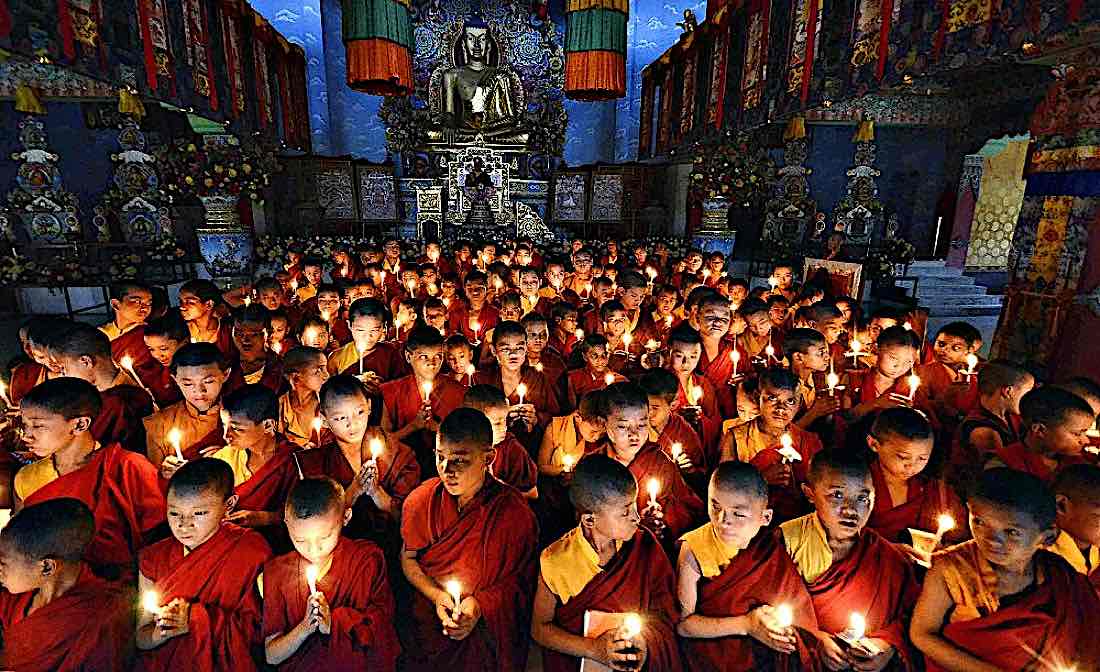
Celebrating Paranirvana Day
The celebration of Buddha’ Paranirvana, in many Mahayana traditions, falls on February 15. On this day, we celebrate but also contemplate the profundity of Buddha’ Paranirvana and what it means. In the most precious Maha-parinibbana Sutta, Buddha’s last teachings on Buddha Nature and Impermanence are beautifully expounded. Reading from the Sutta is one of the most important activities for the day — a day that teachers say has “multiplied merit” for any positive Dharma activities.
With this in mind, here is a wonderful and precious excerpt of the Maha-parinibbana Sutta — only a small excerpt, focused on Buddha’s Paranirvana. [Cited here, with permission Note 1].
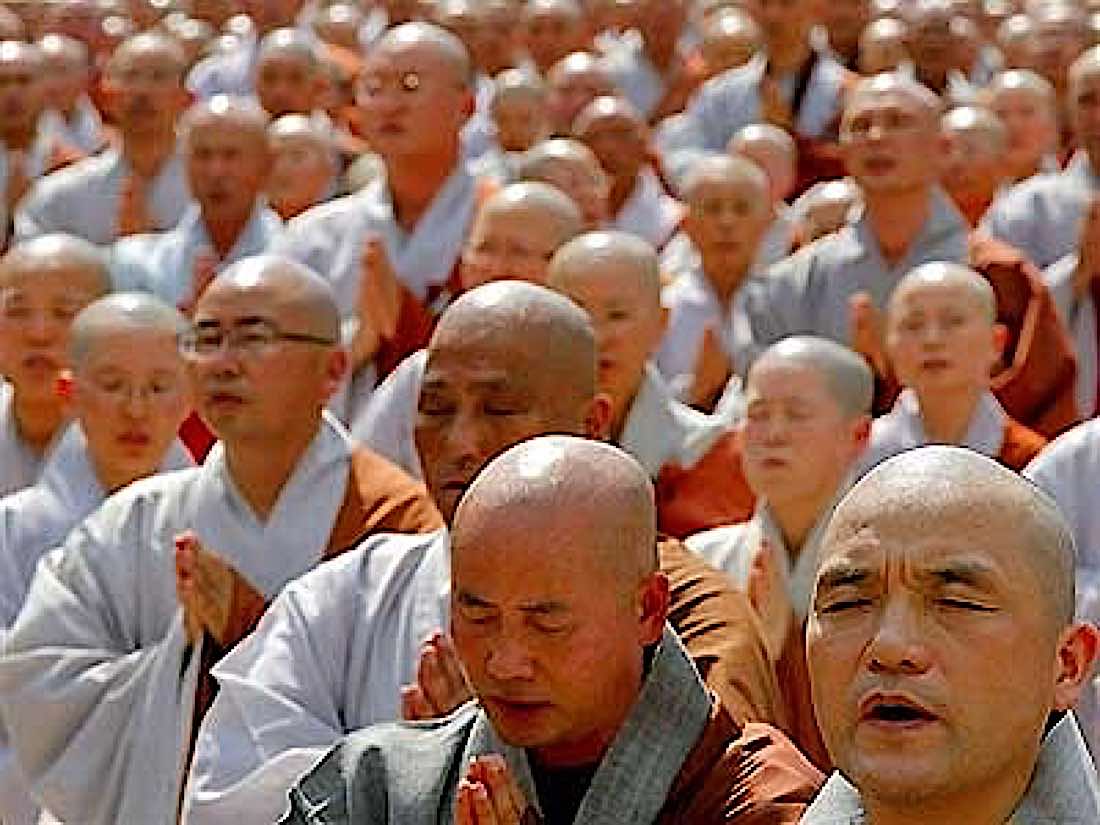
Excerpt Maha-parinibbana Sutta: Relinquishing the Will to Live
1. Then the Blessed One, getting ready in the forenoon, took bowl and robe and went into Vesali for alms. After the alms round and meal, on his return, he spoke to the Venerable Ananda, saying: “Take up a mat, Ananda, and let us spend the day at the Capala shrine.”
“So be it, Lord.” And the Venerable Ananda took up a mat and followed behind the Blessed One, step by step.
2. And the Blessed One went to the Capala shrine and sat down on the seat prepared for him. And when the Venerable Ananda had seated himself at one side after he had respectfully saluted the Blessed One, the Lord said to him: “Pleasant, Ananda, is Vesali; pleasant are the shrines of Udena, Gotamaka, Sattambaka, Bahuputta, Sarandada, and Capala.”
3. And the Blessed One said: “Whosoever, Ananda, has developed, practiced, employed, strengthened, maintained, scrutinized, and brought to perfection the four constituents of psychic power could, if he so desired, remain throughout a world-period or until the end of it. [21] The Tathagata, Ananda, has done so. Therefore the Tathagata could, if he so desired, remain throughout a world-period or until the end of it.”
4. But the Venerable Ananda was unable to grasp the plain suggestion, the significant prompting, given by the Blessed One. As though his mind was influenced by Mara, [22] he did not beseech the Blessed One: “May the Blessed One remain, O Lord!. May the Happy One remain, O Lord, throughout the world-period, for the welfare and happiness of the multitude, out of compassion for the world, for the benefit, well being, and happiness of gods and men!”
5. And when for a second and a third time the Blessed One repeated his words, the Venerable Ananda remained silent.
6. Then the Blessed One said to the Venerable Ananda: “Go now, Ananda, and do as seems fit to you.”
“Even so, O Lord.” And the Venerable Ananda, rising from his seat, respectfully saluted the Blessed One, and keeping his right side towards him, took his seat under a tree some distance away.
Mara’s Appeal
7. And when the Venerable Ananda had gone away, Mara, the Evil One, approached the Blessed One. And standing at one side he spoke to the Blessed One, saying: “Now, O Lord, let the Blessed One come to his final passing away; let the Happy One utterly pass away! The time has come for the Parinibbana of the Lord.
“For the Blessed One, O Lord, spoke these words to me: ‘I shall not come to my final passing away, Evil One, until my bhikkhus and bhikkhunis, laymen and laywomen, have come to be true disciples — wise, well disciplined, apt and learned, preservers of the Dhamma, living according to the Dhamma, abiding by the appropriate conduct, and having learned the Master’s word, are able to expound it, preach it, proclaim it, establish it, reveal it, explain it in detail, and make it clear; until, when adverse opinions arise, they shall be able to refute them thoroughly and well, and to preach this convincing and liberating Dhamma.’ [23]
8. “And now, O Lord, bhikkhus and bhikkhunis, laymen and laywomen, have become the Blessed One’s disciples in just this way. So, O Lord, let the Blessed One come to his final passing away! The time has come for the Parinibbana of the Lord.
“For the Blessed One, O Lord, spoke these words to me: ‘I shall not come to my final passing away, Evil One, until this holy life taught by me has become successful, prosperous, far-renowned, popular, and widespread, until it is well proclaimed among gods and men.’ And this too has come to pass in just this way. So, O Lord, let the Blessed One come to his final passing away, let the Happy One utterly pass away! The time has come for the Parinibbana of the Lord.”
The Blessed One Relinquishes His Will to Live
9. When this was said, the Blessed One spoke to Mara, the Evil One, saying: “Do not trouble yourself, Evil One. Before long the Parinibbana of the Tathagata will come about. Three months hence the Tathagata will utterly pass away.”
10. And at the Capala shrine the Blessed One thus mindfully and clearly comprehending renounced his will to live on. And upon the Lord’s renouncing his will to live on, there came a tremendous earthquake, dreadful and astonishing, and thunder rolled across the heavens. And the Blessed One beheld it with understanding, and made this solemn utterance:
What causes life, unbounded or confined [24] —
His process of becoming [25] — this the Sage
Renounces. With inward calm and joy he breaks,
As though a coat of mail, his own life’s cause. [26]
11. Then it came to the mind of the Venerable Ananda: “Marvellous it is indeed, and most wonderful! The earth shakes mightily, tremendously! Dreadful and astonishing it is, how the thunders roll across the heavens! What could be the reason, what the cause, that so mighty an earthquake should arise?”
Eight Causes of Earthquakes
12. And the Venerable Ananda approached the Blessed One, and respectfully greeting him, sat down at one side. Then he spoke to the Blessed One, saying: “Marvellous it is indeed, and most wonderful! The earth shakes mightily, tremendously! Dreadful and astonishing it is how the thunders roll across the heavens! What could be the reason, what the cause, that so mighty an earthquake should arise?”
13. Then the Blessed One said: “There are eight reasons, Ananda, eight causes for a mighty earthquake to arise. What are those eight?
14. “This great earth, Ananda, is established upon liquid, the liquid upon the atmosphere, and the atmosphere upon space. And when, Ananda, mighty atmospheric disturbances take place, the liquid is agitated. And with the agitation of the liquid, tremors of the earth arise. This is the first reason, the first cause for the arising of mighty earthquakes.
15. “Again, Ananda, when an ascetic or holy man of great power, one who has gained mastery of his mind, or a deity who is mighty and potent, develops intense concentration on the delimited aspect of the earth element, and to a boundless degree on the liquid element, he, too, causes the earth to tremble, quiver, and shake. This is the second reason, the second cause for the arising of mighty earthquakes.
16-21. “Again, Ananda, when the Bodhisatta departs from the Tusita realm and descends into his mother’s womb, mindfully and clearly comprehending; and when the Bodhisatta comes out from his mother’s womb, mindfully and clearly comprehending; and when the Tathagata becomes fully enlightened in unsurpassed, supreme Enlightenment; when the Tathagata sets rolling the excellent Wheel of the Dhamma; when the Tathagata renounces his will to live on; and when the Tathagata comes to pass away into the state of Nibbana in which no element of clinging remains — then, too, Ananda, this great earth trembles, quivers, and shakes.
“These, Ananda, are the eight reasons, the eight causes for a great earthquake to arise. [27]
Eight Assemblies
22. “Now there are eight kinds of assemblies, Ananda, that is to say, assemblies of nobles, brahmans, householders, ascetics, of the Four Great Kings, of the Thirty-three gods, of Maras, and of Brahmas.
23. “And I recall, Ananda, how I have attended each of these eight kinds of assemblies, amounting to hundreds. [28] And before seating myself and starting the conversation or the discussion, I made my appearance resemble theirs, my voice resemble theirs. And so I taught them the Dhamma, and roused, edified, and gladdened them. Yet while I was speaking to them thus, they did not know me, and they would enquire of one another, asking: ‘Who is he that speaks to us? Is it a man or a god?’
“Then having taught them the Dhamma, and roused, edified, and gladdened them, I would straightaway vanish. And when I had vanished, too, they did not know me, and they would enquire of one another, asking: ‘Who is he that has vanished? Is it a man or a god?’
“And such, Ananda, are the eight kinds of assemblies.
Eight Fields of Mastery
24. “Now there are eight fields of mastery, [29] Ananda. What are those eight?
25. “When one, perceiving forms subjectively, [30] sees small forms, beautiful or ugly, external to himself, [31] and mastering them, is aware that he perceives and knows them as they are — this is the first field of mastery.
26. “When one, perceiving forms subjectively, sees large forms, beautiful or ugly, external to himself, and mastering them, is aware that he perceives and knows them as they are — this is the second field of mastery.
27. “When one, not perceiving forms subjectively, [32] sees small forms, beautiful or ugly, external to himself, and mastering them, is aware that he perceives and knows them as they are — this is the third field of mastery.
28. “When one, not perceiving forms subjectively, sees large forms, beautiful or ugly, external to himself, and mastering them, is aware that he perceives and knows them as they are — this is the fourth field of mastery.
29. “When one, not perceiving forms subjectively, sees forms external to himself that are blue, blue in color, of a blue luster like the blossoms of flax, or like fine Benares muslin which, burnished on both sides, is blue, blue in color, of a blue luster — when such a one sees forms external to himself that are blue, and mastering them, is aware that he perceives and knows them as they are — this is the fifth field of mastery.
30. “When one, not perceiving forms subjectively, sees forms external to himself that are yellow, yellow in color, of a yellow luster like the Kanikara blossom, or like fine Benares muslin which, burnished on both sides, is yellow, yellow in color, of a yellow luster — when such a one sees forms external to himself that are yellow, and mastering them, is aware that he perceives and knows them as they are — this is the sixth field of mastery.
31. “When one, not perceiving forms subjectively, sees forms external to himself that are red, red in color, of a red luster like the Bandhujivaka blossom, or like fine Benares muslin which, burnished on both sides, is red, red in color, of a red luster — when such a one sees forms external to himself that are red, and mastering them, is aware that he perceives and knows them as they are — this is the seventh field of mastery.
32. “When one, not perceiving forms subjectively, sees forms external to himself that are white, white in color, of a white luster like the morning star, or like fine Benares muslin which, burnished on both sides, is white, white in color, of a white luster — when such a one sees forms external to himself that are white, and mastering them, is aware that he perceives and knows them as they are — this is the eighth field of mastery.
“These, Ananda, are the eight fields of mastery.
Eight Liberations
33. “Now there are eight liberations, Ananda. What are those eight? [33]
34. “Oneself having form, [34] one perceives forms; this is the first liberation.
35. “Being unaware of one’s own form, one perceives forms external to oneself; this is the second liberation.
36. “Experiencing loveliness, one is intent upon it; [35] this is the third liberation.
37. “By utterly transcending the perceptions of matter, by the disappearance of the perceptions of sense-reaction, and by giving no attention to diversity-perceptions, one becomes aware of, attains to, and abides in the sphere of infinite space; this is the fourth liberation.
38. “By utterly transcending the sphere of infinite space, one becomes aware of, attains to, and abides in the sphere of infinite consciousness; this is the fifth liberation.
39. “By utterly transcending the sphere of infinite consciousness, one becomes aware of, attains to, and abides in the sphere of nothingness; this is the sixth liberation.
40. “By utterly transcending the sphere of nothingness, one attains to and abides in the sphere of neither-perception-nor-non-perception; this is the seventh liberation.
41. “By utterly transcending the sphere of neither-perception-nor-non-perception, one attains to and abides in the cessation of perception and sensation; this is the eighth liberation.
“These, Ananda, are the eight liberations.
Mara’s Former Temptation
42. “There was a time, Ananda, when I dwelt at Uruvela, on the bank of the Nerañjara River, at the foot of the goatherds’ banyan-tree, soon after my supreme Enlightenment. And Mara, the Evil One, approached me, saying: ‘Now, O Lord, let the Blessed One come to his final passing away! Let the Happy One utterly pass away! The time has come for the Parinibbana of the Lord.’
43. “Then, Ananda, I answered Mara, the Evil One, saying: ‘I shall not come to my final passing away, Evil One, until my bhikkhus and bhikkhunis, laymen and laywomen, have come to be true disciples — wise, well disciplined, apt and learned, preservers of the Dhamma, living according to the Dhamma, abiding by appropriate conduct and, having learned the Master’s word, are able to expound it, preach it, proclaim it, establish it, reveal it, explain it in detail, and make it clear; until, when adverse opinions arise, they shall be able to refute them thoroughly and well, and to preach this convincing and liberating Dhamma.
44. “‘I shall not come to my final passing away, Evil One, until this holy life taught by me has become successful, prosperous, far-renowned, popular, and widespread, until it is well proclaimed among gods and men.’
45. “And again today, Ananda, at the Capala shrine, Mara, the Evil One, approached me, saying: ‘Now, O Lord, bhikkhus and bhikkhunis, laymen and laywomen, have come to be true disciples of the Blessed One — wise, well disciplined, apt and learned, preservers of the Dhamma, living according to the Dhamma, abiding in the appropriate conduct, and having learned the Master’s word, are able to expound it, preach it, proclaim it, establish it, reveal it, explain it in detail, and make it clear; and when adverse opinions arise, they are now able to refute them thoroughly and well, and to preach this convincing and liberating Dhamma.
“‘And now, O Lord, this holy life taught by the Blessed One has become successful, prosperous, far-renowned, popular and widespread, and it is well proclaimed among gods and men. Therefore, O Lord, let the Blessed One come to his final passing away! Let the Happy One utterly pass away! The time has come for the Parinibbana of the Lord.’
46. “And then, Ananda, I answered Mara, the Evil One, saying: ‘Do not trouble yourself, Evil One. Before long the Parinibbana of the Tathagata will come about. Three months hence the Tathagata will utterly pass away.’
47. “And in this way, Ananda, today at the Capala shrine the Tathagata has renounced his will to live on.”
Ananda’s Appeal
48. At these words the Venerable Ananda spoke to the Blessed One, saying: “May the Blessed One remain, O Lord! May the Happy One remain, O Lord, throughout the world-period, for the welfare and happiness of the multitude, out of compassion for the world, for the benefit, well being, and happiness of gods and men!”
49. And the Blessed One answered, saying: “Enough, Ananda. Do not entreat the Tathagata, for the time is past, Ananda, for such an entreaty.”
50-51. But for a second and a third time, the Venerable Ananda said to the Blessed One: “May the Blessed One remain, O Lord! May the Happy One remain, O Lord, throughout the world-period, for the welfare and happiness of the multitude, out of compassion for the world, for the benefit, well being, and happiness of gods and men!”
52. Then the Blessed One said: “Do you have faith, Ananda, in the Enlightenment of the Tathagata?” And the Venerable Ananda replied: “Yes, O Lord, I do.”
“Then how, Ananda, can you persist against the Tathagata even up to the third time?”
53. Then the Venerable Ananda said: “This, O Lord, I have heard and learned from the Blessed One himself when the Blessed One said to me: ‘Whosoever, Ananda, has developed, practiced, employed, strengthened, maintained, scrutinized, and brought to perfection the four constituents of psychic power could, if he so desired, remain throughout a world-period or until the end of it. The Tathagata, Ananda, has done so. Therefore the Tathagata could, if he so desired, remain throughout a world-period or until the end of it.’”
54. “And did you believe it, Ananda?”
“Yes, O Lord, I did.”
“Then, Ananda, the fault is yours. Herein have you failed, inasmuch as you were unable to grasp the plain suggestion, the significant prompting given by the Tathagata, and you did not then entreat the Tathagata to remain. For if you had done so, Ananda, twice the Tathagata might have declined, but the third time he would have consented. Therefore, Ananda, the fault is yours; herein have you failed.
55. “At Rajagaha, Ananda, when dwelling at Vultures’ Peak, I spoke to you, saying: ‘Pleasant, Ananda, is Rajagaha; pleasant is Vultures’ Peak. Whosoever, Ananda, has developed… Therefore the Tathagata could, if he so desired, remain throughout a world-period or until the end of it.’
56. “So also at the Banyan Grove, at Robbers’ Cliff, at the Sattapanni Cave on the Vebhara Mountain, at the Black Rock of Isigili, at the Serpents’ Pool in the Cool Forest, at the Tapoda Grove, at the Bamboo Grove in the Squirrels’ Feeding-ground, at Jivaka’s Mango Grove, and at Small Nook in the Deer Park I spoke to you in the same words, saying: ‘Pleasant, Ananda, is Rajagaha, pleasant are these places. Whosoever, Ananda, has developed… Therefore the Tathagata could, if he so desired, remain throughout a world-period or until the end of it.’
“But you, Ananda, were unable to grasp the plain suggestion, the significant prompting given you by the Tathagata, and you did not entreat the Tathagata to remain. For if you had done so, Ananda, twice the Tathagata might have declined, but the third time he would have consented. Therefore, Ananda, the fault is yours; herein you have failed.
57. “So also at Vesali, Ananda, at different times the Tathagata has spoken to you, saying: ‘Pleasant, Ananda, is Vesali; pleasant are the shrines of Udena, Gotamaka, Sattambaka, Bahuputta, Sarandada, and Capala. Whosoever, Ananda, has developed… Therefore the Tathagata could, if he so desired, remain throughout a world-period or until the end of it.’
“But you, Ananda, were unable to grasp the plain suggestion, the significant prompting, given you by the Tathagata, and you did not entreat the Tathagata to remain. For if you had done so, Ananda, twice the Tathagata might have declined, but the third time he would have consented. Therefore, Ananda, the fault is yours; herein you have failed.
58. “Yet, Ananda, have I not taught from the very beginning that with all that is dear and beloved there must be change, separation, and severance? Of that which is born, come into being, is compounded and subject to decay, how can one say: ‘May it not come to dissolution!’ There can be no such state of things. And of that, Ananda, which the Tathagata has finished with, that which he has relinquished, given up, abandoned, and rejected — his will to live on — the Tathagata’s word has been spoken once for all: ‘Before long the Parinibbana of the Tathagata will come about. Three months hence the Tathagata will utterly pass away.’ And that the Tathagata should withdraw his words for the sake of living on — this is an impossibility.
The Last Admonition
59. “So, then, Ananda, let us go to the hall of the Gabled House, in the Great Forest.” And the Venerable Ananda replied: “So be it, Lord.”
60. Then the Blessed One, with the Venerable Ananda, went to the hall of the Gabled House, in the Great Forest. And there he spoke to the Venerable Ananda, saying: “Go now, Ananda, and assemble in the hall of audience all the bhikkhus who dwell in the neighborhood of Vesali.”
“So be it, Lord.” And the Venerable Ananda gathered all the bhikkhus who dwelt in the neighborhood of Vesali, and assembled them in the hall of audience. And then, respectfully saluting the Blessed One, and standing at one side, he said: “The community of bhikkhus is assembled, Lord. Now let the Blessed One do as he wishes.”
61. Thereupon the Blessed One entered the hall of audience, and taking the seat prepared for him, he exhorted the bhikkhus, saying: “Now, O bhikkhus, I say to you that these teachings of which I have direct knowledge and which I have made known to you — these you should thoroughly learn, cultivate, develop, and frequently practice, that the life of purity may be established and may long endure, for the welfare and happiness of the multitude, out of compassion for the world, for the benefit, well being, and happiness of gods and men.
62. “And what, bhikkhus, are these teachings? They are the four foundations of mindfulness, the four right efforts, the four constituents of psychic power, the five faculties, the five powers, the seven factors of enlightenment, and the Noble Eightfold Path. These, bhikkhus, are the teachings of which I have direct knowledge, which I have made known to you, and which you should thoroughly learn, cultivate, develop, and frequently practice, that the life of purity may be established and may long endure, for the welfare and happiness of the multitude, out of compassion for the world, for the benefit, well being, and happiness of gods and men.”
63. Then the Blessed One said to the bhikkhus: “So, bhikkhus, I exhort you: All compounded things are subject to vanish. Strive with earnestness. The time of the Tathagata’s Parinibbana is near. Three months hence the Tathagata will utterly pass away.”
64. And having spoken these words, the Happy One, the Master, spoke again, saying:
My years are now full ripe, the life span left is short.
Departing, I go hence from you, relying on myself alone.
Be earnest, then, O bhikkhus, be mindful and of virtue pure!
With firm resolve, guard your own mind!
Whoso untiringly pursues the Dhamma and the Discipline
Shall go beyond the round of births and make an end of suffering.

NOTE
[1] “Maha-parinibbana Sutta: Last Days of the Buddha” (DN 16), translated from the Pali by Sister Vajira & Francis Story. Access to Insight (BCBS Edition), 30 November 2013, https://www.accesstoinsight.org/tipitaka/dn/dn.16.1-6.vaji.html .
More articles by this author

Uposatha Observance Days Each Month are the Renewal Dedication Practice Days, Traditionally Practiced on the New, Full and Quarter moons each month

8 Bodhisattva Heart Mantras: Wisdom, Compassion, Power, Activity and Merits of the Buddha – 3 Gems Band Gufeng Series

Tara’s 108 Namo Sanskrit Praises 8 Minute Daily Protection & Abundance Practice Sung by Hrishikesh Sonar and Buddha Weekly Band

Search
Latest Features




Please support the "Spread the Dharma" mission as one of our heroic Dharma Supporting Members, or with a one-time donation.
Please Help Support the “Spread the Dharma” Mission!
Be a part of the noble mission as a supporting member or a patron, or a volunteer contributor of content.
The power of Dharma to help sentient beings, in part, lies in ensuring access to Buddha’s precious Dharma — the mission of Buddha Weekly. We can’t do it without you!
A non-profit association since 2007, Buddha Weekly published many feature articles, videos, and, podcasts. Please consider supporting the mission to preserve and “Spread the Dharma." Your support as either a patron or a supporting member helps defray the high costs of producing quality Dharma content. Thank you! Learn more here, or become one of our super karma heroes on Patreon.
Lee Kane
Author | Buddha Weekly
Lee Kane is the editor of Buddha Weekly, since 2007. His main focuses as a writer are mindfulness techniques, meditation, Dharma and Sutra commentaries, Buddhist practices, international perspectives and traditions, Vajrayana, Mahayana, Zen. He also covers various events.
Lee also contributes as a writer to various other online magazines and blogs.