



21 Taras in the Narjuna, Atisha and Nyingma lineages: a profound, powerful, precise, pleasing daily practice
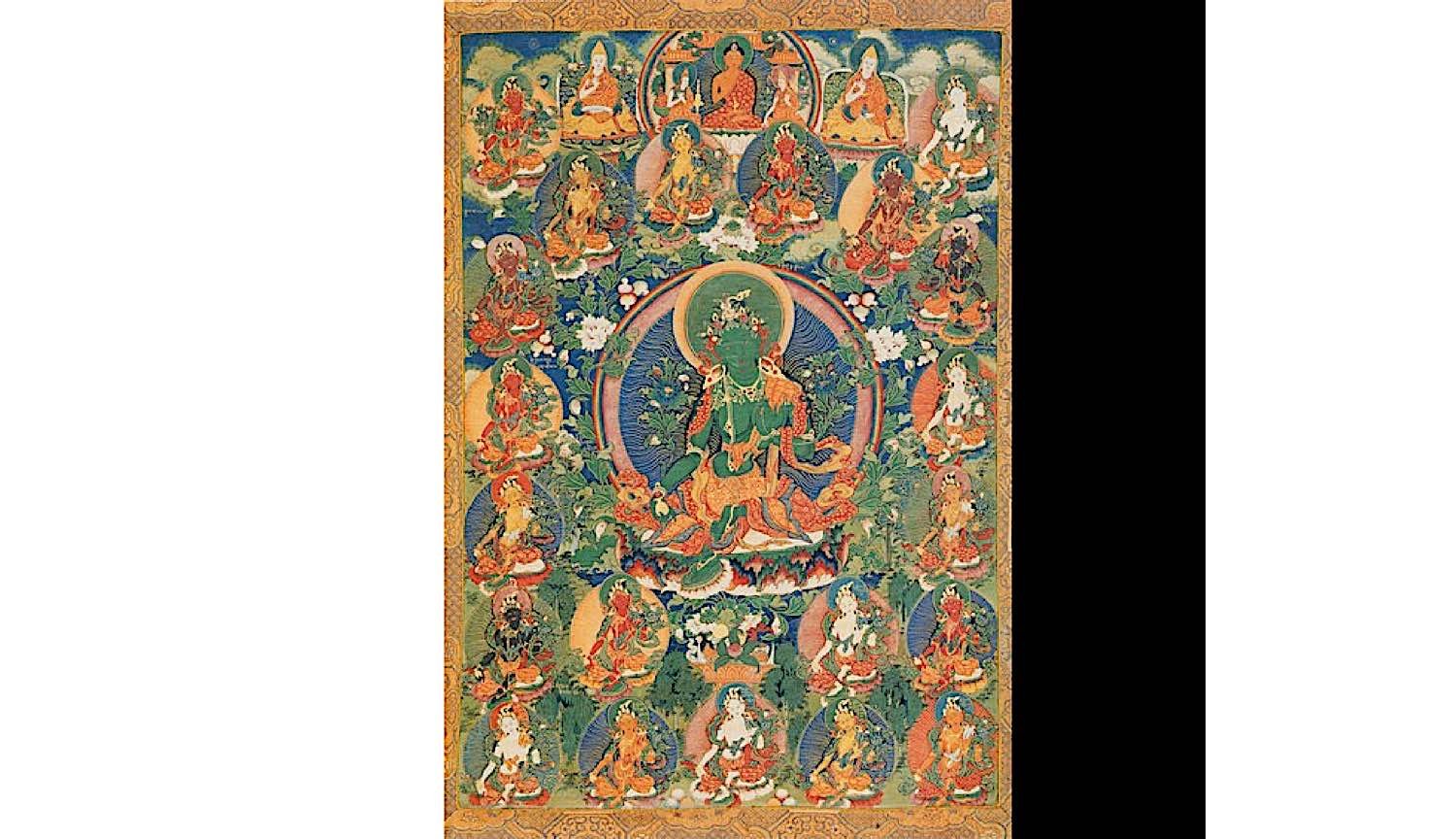
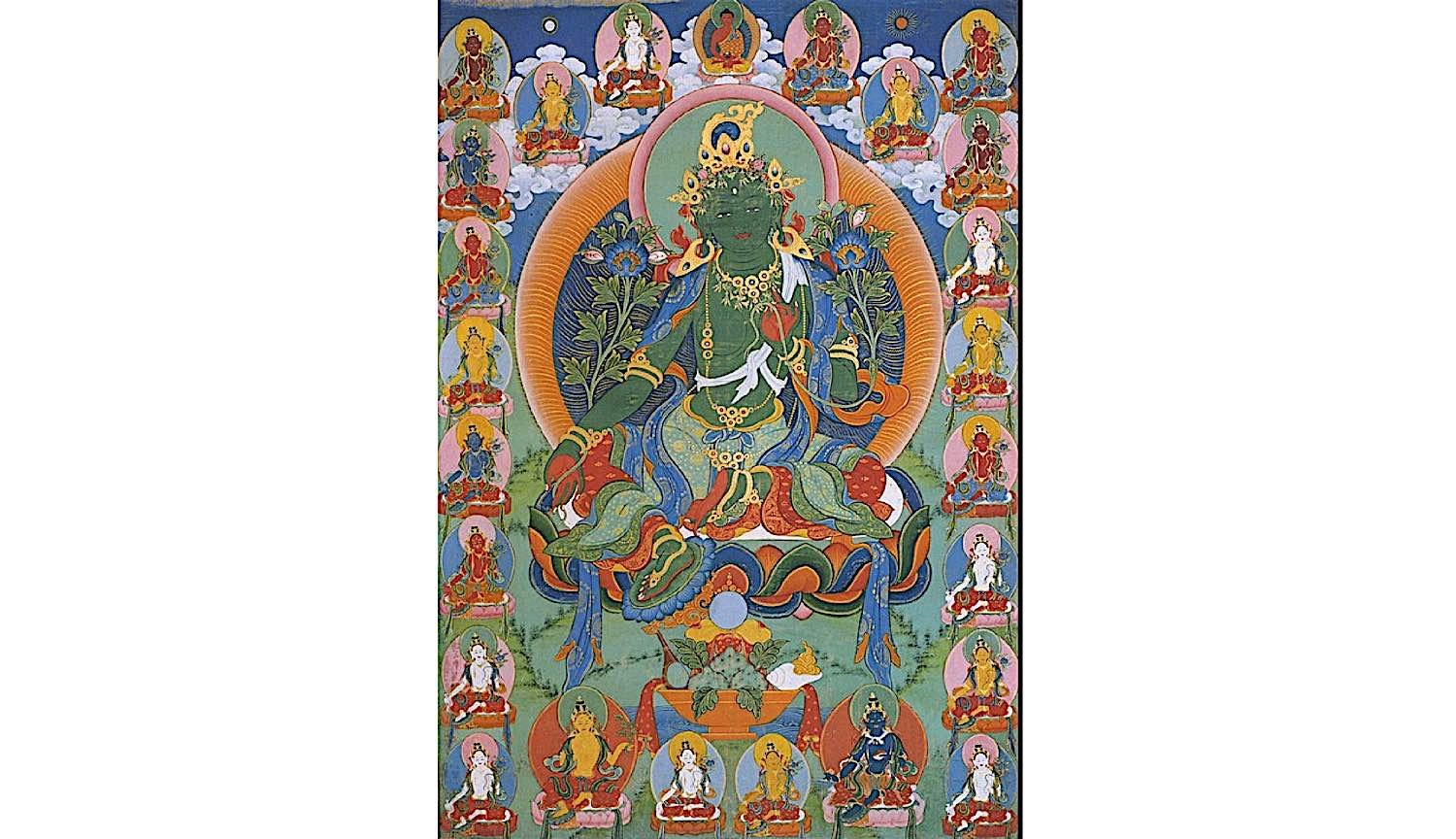
Tara practice is among the most beautiful and inspiring practices in Mahayana Buddhism, but — why are there so many Taras? In every Mahayana tradition, there are many aspects or emanations of Tara — seemingly one for every fear or danger sentient beings face. Is it because she is so beloved? Probably. Is it because she represents the activities of all the Buddhas, and therefore emanates in many helpful ways? This is certainly true.
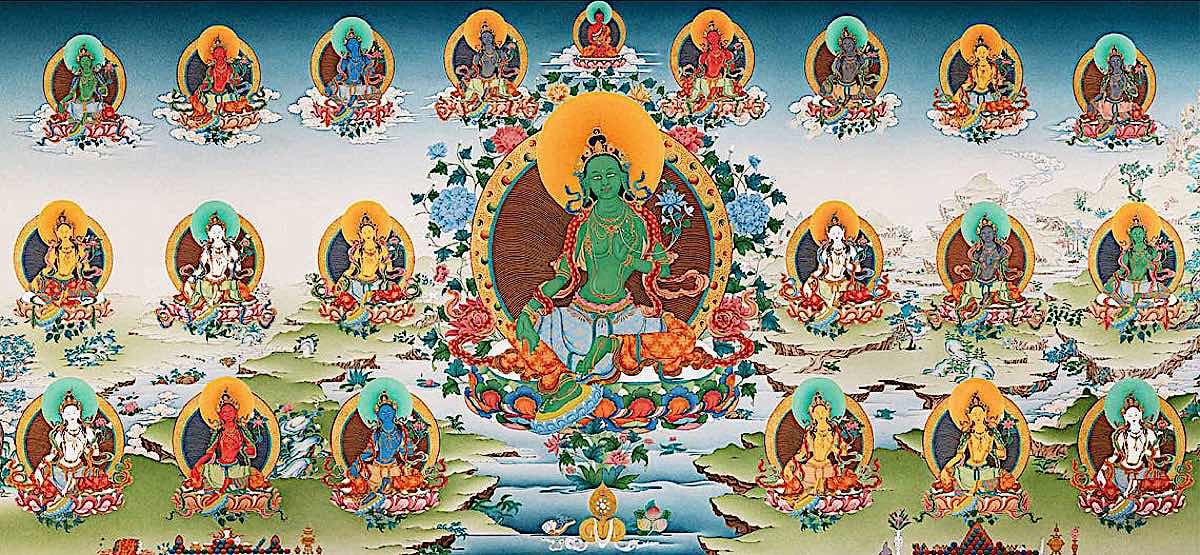
21 Taras are well known, but there are also 108 Taras, 1008 Taras, and many more. Even within the 21 Taras, there are five main lineages of practice, each visualized slightly differently — although you could group (for simplicity, as we’re doing here) several lineages under the teachings of Atisha and Jigme Lingpa (Nyingma) as they are similar and use the same names.
- For our in-depth feature on the 21 Taras according to the lineage of Lord Atisha, see this companion feature>>
- For our in-depth feature on the 21 Taras (in three parts) covering the Surya Gupta lineage of 21 Taras, see part 1 here>>
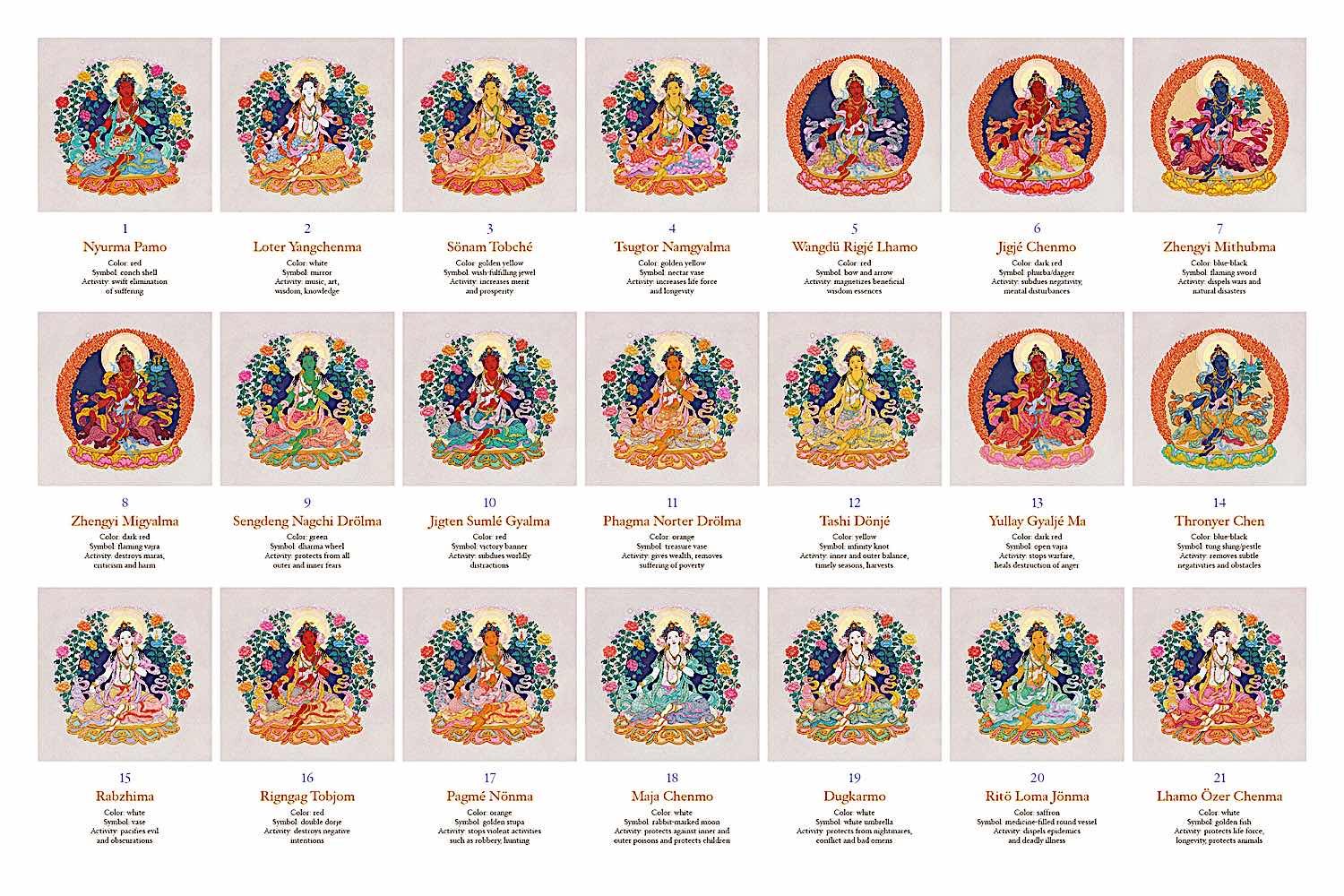
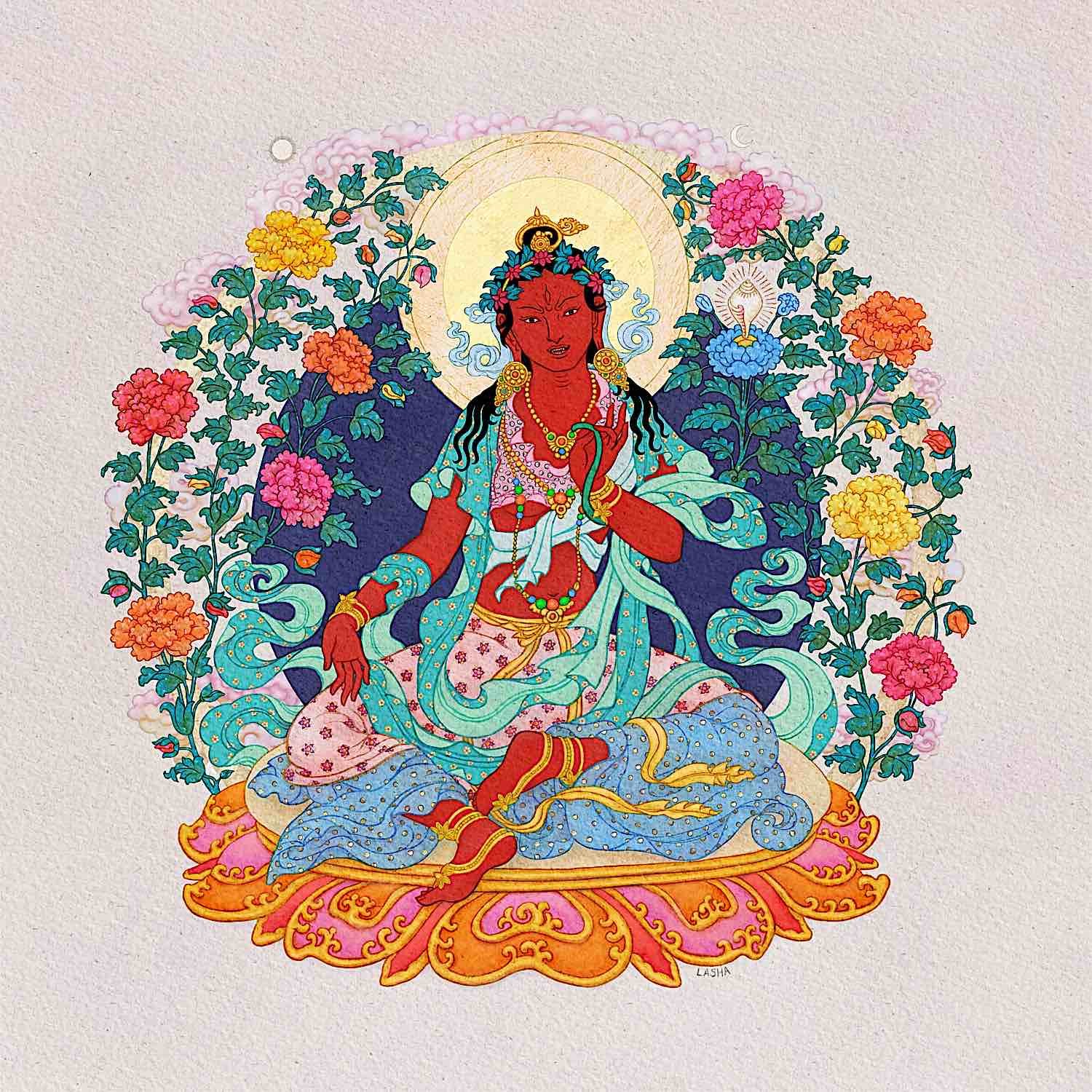
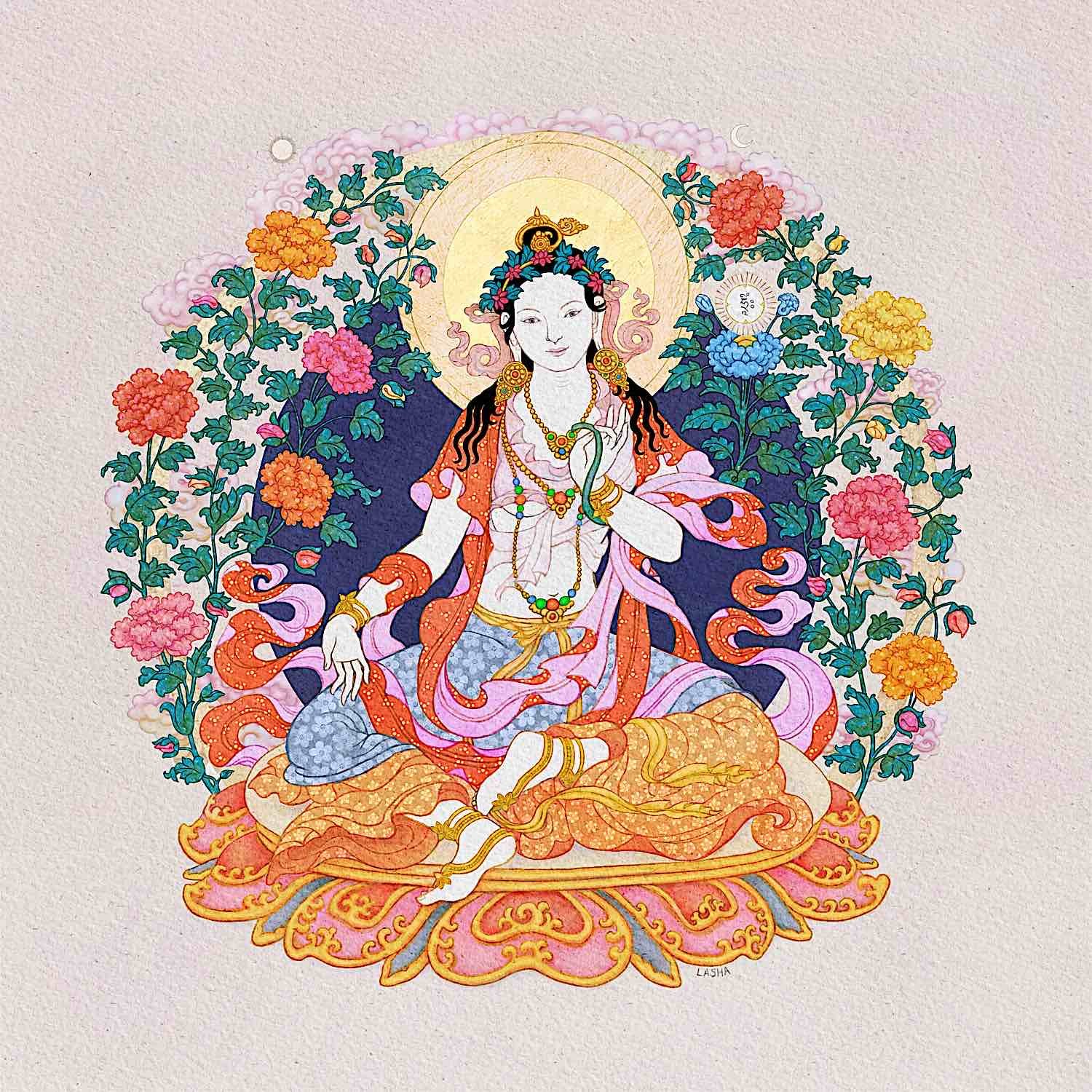
NOTE: These images are copyright Lasha Mutual. Please visit her website for information. They are available in book, poster and card form.
It may seem unnecessarily complicated, but the symbolism is quite profound. Tara emanates in these countless forms because we have countless fears and obstacles. None of our fears are unimportant: epidemics, war, poverty, the list is endless. Fortunately, Tara is heroic and tireless! From our end, all of our obstacles must be faced with heroic resolve — Tara’s resolve.
In part 1 of this series, we focus on the Praise to 21 Taras — which is consistent across all lineages — and the four language versions: Sanskrit, Tibetan, English (non-musical), and English for chanting. In part 2 we compare the differences, Tara 1-21 between Atisha lineage, Nyingma Terma lineage, and Surya Gupta lineage.
The 21 Taras praises in an English video with Atisha/Nyingma- style visualizations
Tara’s activity in our lives is why we should practice
Why should we practice? Tara, as an aspect of the Enlightened Buddhas, is the one we go to for activities. She is literally the activity of all the Buddhas. Anything to do with Karma and activity is her “Domaine” — which, let’s face it, is everything in our lives. As much as we talk about the Bodhichitta goal of Enlightenment for the benefit of all sentient beings, to get there, we need Tara’s help. And, never fear, if you don’t have time for the 21 Taras praise (which takes moments each day!) simply chanting her mantra will bring you into Tara’s loving and compassionate, motherly care.
Om Tare Tuttare Ture Svaha
Om Tare Tuttare Ture Soha (Tibetan pronunciation)
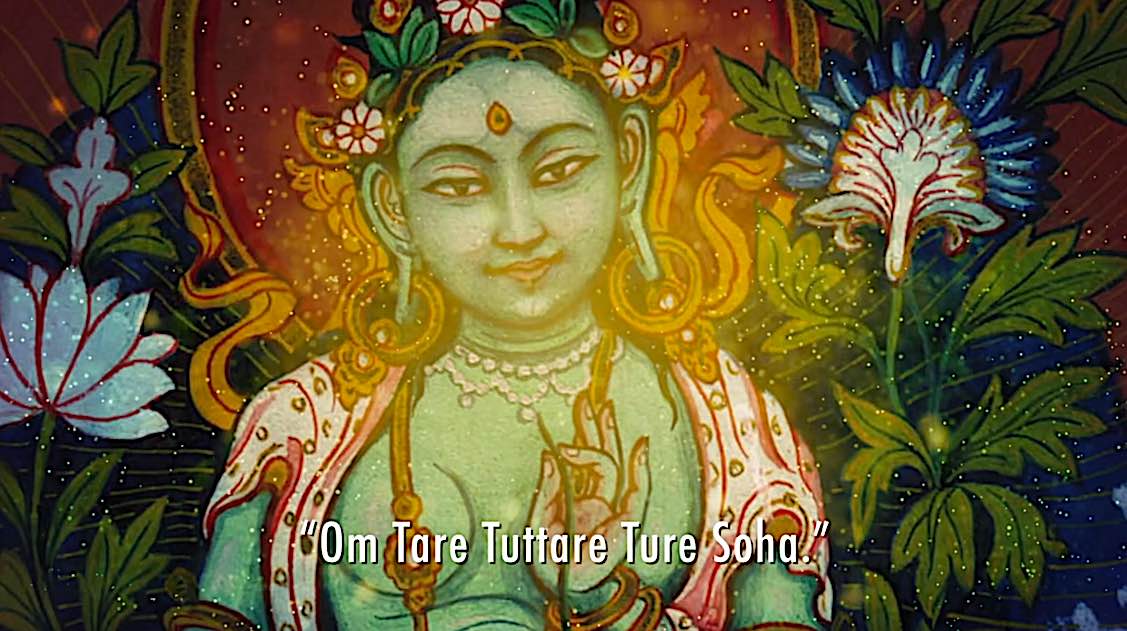
Simplified 21 Taras!
Fortunately, the 21 Taras practice — which is a daily practice to most Tibetan Buddhists of most lineages — has a simplified visualization and practice as taught by the great Mahasidda Atisha, which focuses mostly on color and minor attributes. The lovely Nyingma style is more-or-less the same Taras, names, and colors, but adds a lotus with a meaningful symbol on the blossom (such as a flaming vajra or a Dharma wheel.)
Unlike the Surya Gupta lineage, which requires 21 days for initiation (one for each Tara) due to the complexity of visualization, Atisha and Nyingma lineage 21 Taras can be practiced by anyone. The complexity is reduced to a level anyone can practice — even those limited by time constraints. This means the profound realizations, powerful activities and pleasing devotional aspects are accessible to everyone.
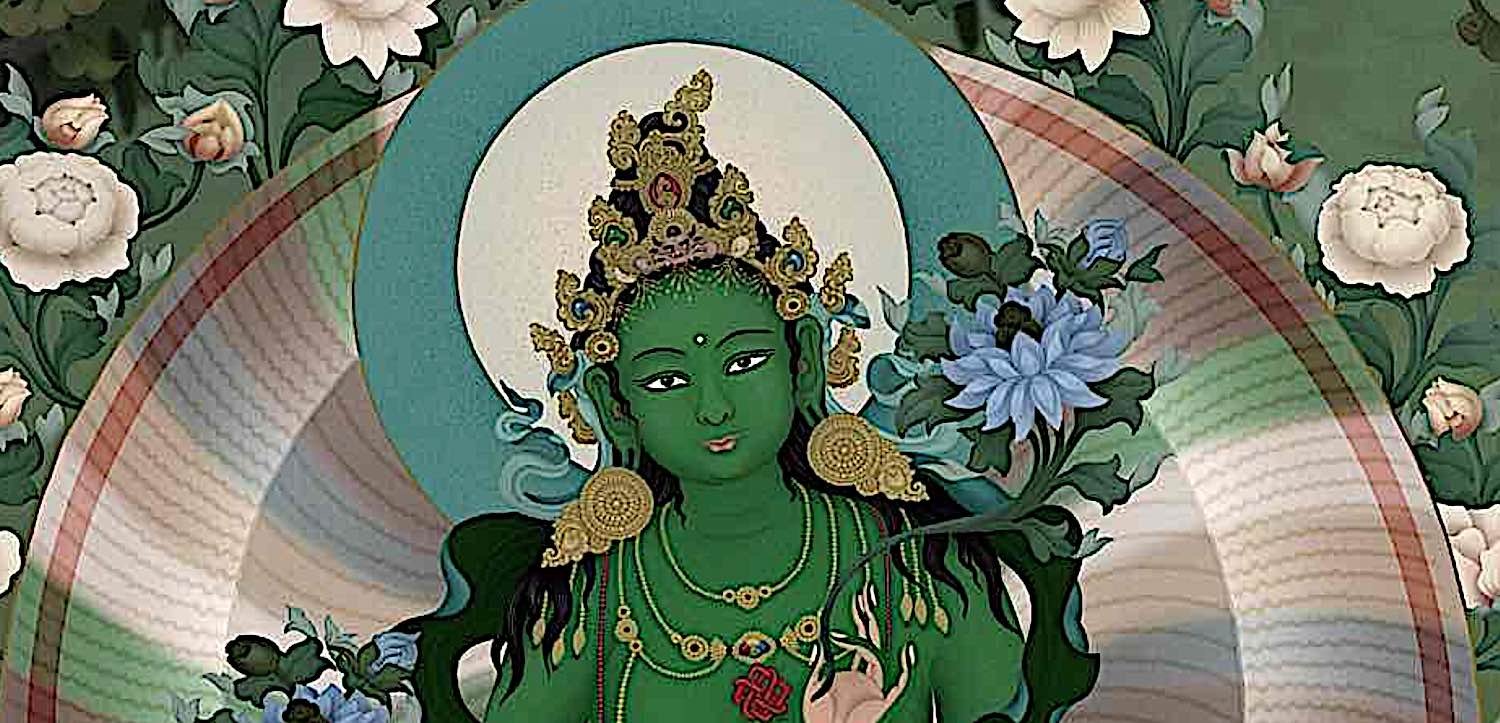
The Atisha and Nyingma (and related) lineages of 21 Taras became the most popular and important in all Tibetan Buddhism, in part, due to devotional simplicity. With the other main system, which comes down in unbroken lineage from the great Mahasiddha Surya Gupta, the 21 Taras are visualized in much more detail, with various appearances, sometimes multiple arms and different attributions. (If you are interested in this practice, please see our 3-part series on the Surya Gupta lineage, found here>>)
No matter which tradition or version of the 21 Taras you practice, the essence is the same — that each one is there to protect you from a different kind of danger or obstacle. They are all important, and each one has something valuable to teach us. At the same time, all are Tara — in other words, if you are in trouble, just call out Tara’s name!
Quick Comparison: Atisha and Nyingma
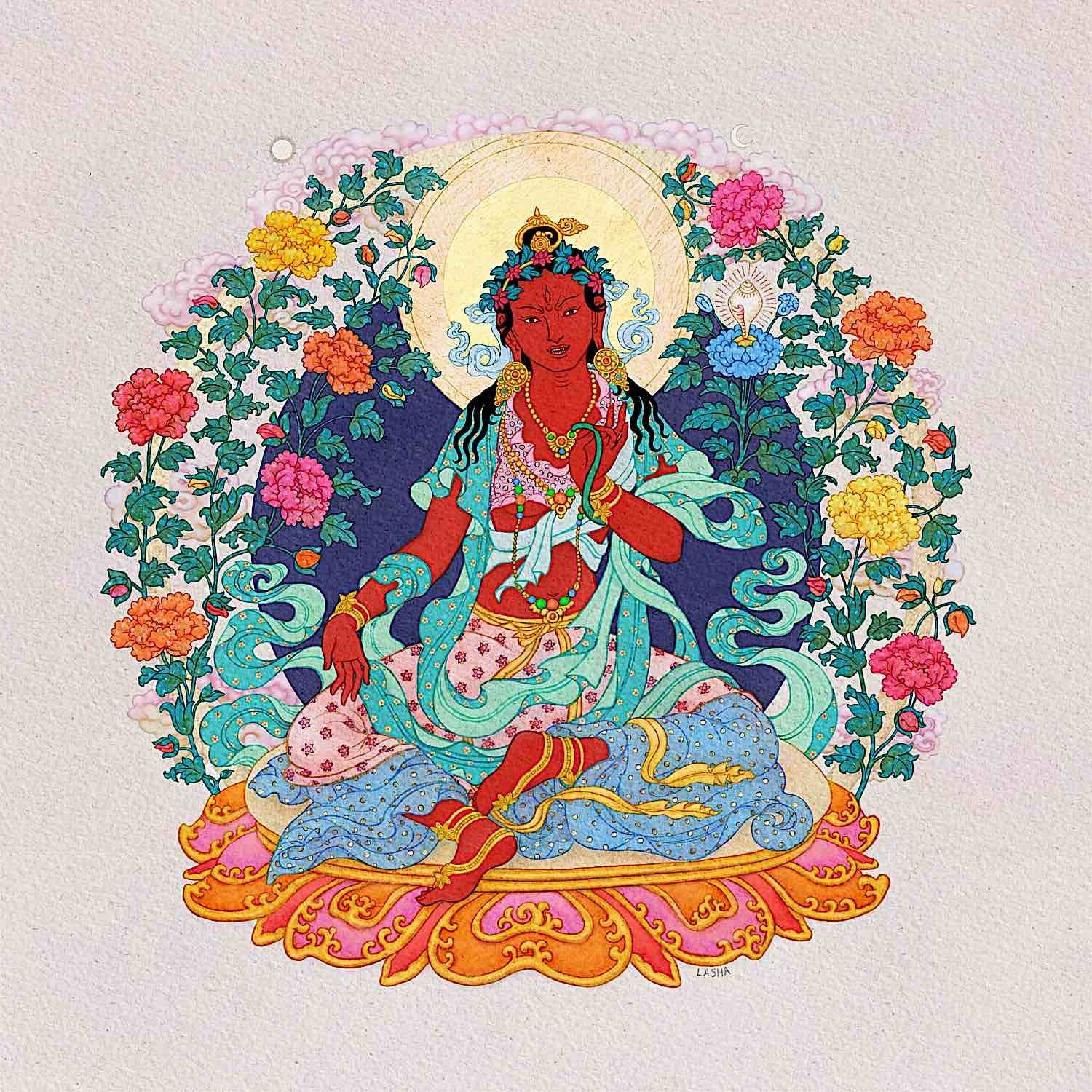
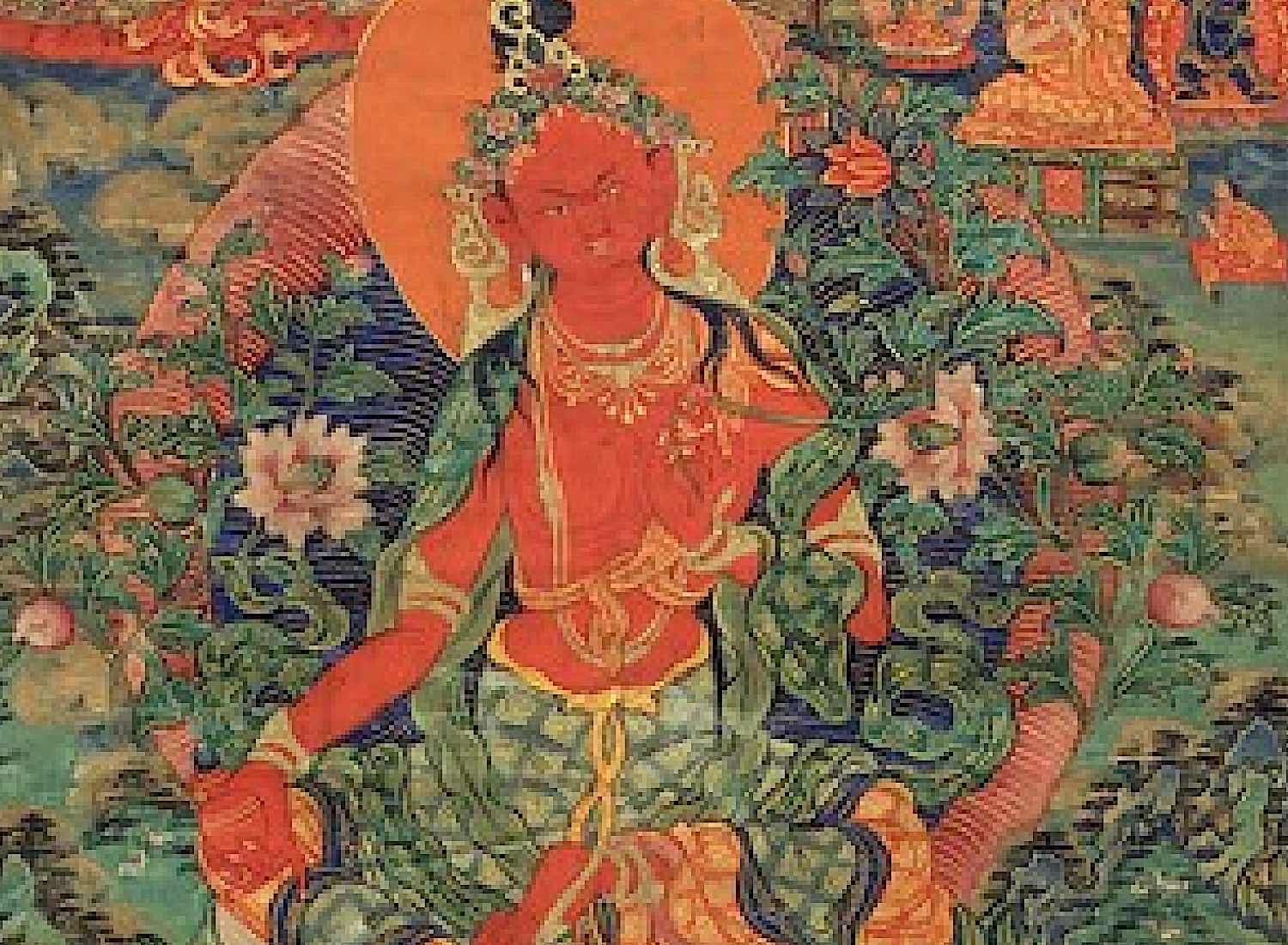
Although we’ll covering this detail-by-detail in part two of this series, it’s worth pointing out the major difference in visualization between the Nyingma (top below) and the Atisha (bottom). In
Nyingma lineage Tara is red and holds a lotus stem in her left hand on top of which is her symbol, a Conch shell:
Atisha lineage Tara is red with a vase in right hand:
A pleasing, profound, powerful, precise practice!
21 Taras Lineage practice is a profound, powerful, precise, pleasing daily practice. It is also a Mahayana found in all of the Tibetan Buddhists of most lineages. The 21 Taras practice is one of the most popular and important in all Tibetan Buddhism.
The praises to the 21 Taras contain the heart of Atisha practice, when combined with visualizations of the Taras in their different aspects. Even if Atisha’s clear and concise practice seems difficult — it is enough to remember that all Taras are Tara. The emanations symbolize her many activities and powers and compassion.
Sanskrit, Tibetan and English, plus English?
Teachers are clear that it doesn’t matter if you chant these in the original Sanskrit — although it is profoundly beautiful — in Tibetan, or in English. The main complication with English, if you wish to “chant” it musically — which, let’s face it, makes it more memorable and beautiful — is the number of beats. While Sanskrit and Tibetan both have eight beats per line, making musical offerings easier, the English translations for the most part are uneven — 16 on one line, 8 on the next. This is a language structural issue.
In this feature, we will provide the Sanskrit praise, Tibetan Praise, and TWO English versions — one of which we’re produced as a beautiful chanted version. The first English version is the commonly accepted translation with uneven beats. If you choose to practice this one, it’s best to just speak it, rather than try to chant.
We also provide an 11-beat English version, meant for English chanting (meaning is the same).
Praises to the Twenty-one Taras
The praises as chanted and practiced today usually open with a lovely introductory verse sometimes called the praise of the mantra or just simply the homage to Tara. This honors the mantra, and some teachers advocate that if you are in a hurry, you can chant this several times instead of the entire 21 verses — but clearly, this is a compromise for modern, busy lives. If you have time, it is always best to chant the original 21 verses from the texts.
Then, the question becomes do you chant in Tibetan, Sanskrit, or English? Tibetan and Sanskrit are both 8 beats per line, and lend themselves to music. It’s one of the joys of Tibetan practices — its lovely musicality. Most English translations, as discussed, are irregular. Now, with an 11-beat version, you can chant the English version as well. (There are other versions of “English chant-able” as well, although some slightly change the “meaning’ of the translation.)
The Tibetan text and the non-equal beat English translations are courtesy of “Tara in the Palm of Your Hand” — an amazing book by Venerable Zasep Rinpoche.[1] The Introductory Tibetan praise is cited from Khenchen Palden Sherab and Khenpo Tsewang Dongyal’s “Tara’s Enlightened Activity” another amazing book.[2] The Tibetan version is from FPMT’s Praises to Twenty-one Taras practice. [3]
Whether English, Tibetan or Sanskrit, all are reproduced below.
NOTE: Sanskrit and Tibetan are here transliterated in the Western alphabet for easier practice since many practitioners do not read Tibetan or Sanskrit text.
Pronunciation: If you don’t know the pronunciation of Sanskrit (and Tibetan) there are no silent vowels. An “h” following a consonant is normally aspirated, like “B-ha” rather than a silent h. “Thay” is never like “they” in English but rather “Tuh-Hey” For instance “Tare” is not pronounced “Tear” but rather “Tahreh.” Most vowels on short “e” is “eh” not “ee.” “A” is “ah” not “eh.” “I” is not “eye” but “ee”. Think “soft or short” — not long for vowels.
Praise to the Mantra
Before the main 21 Taras Praises, early commentaries added the praise to the mantra at the beginning. Think of this as an introductory, or a stand-alone practice, as many teachers say it is a powerful practice in its own right.
Sanskrit praise to the mantra
In Sanskrit (CAPS are on the actual words from the mantra, Om Tare Tuttare Ture Svaha.)
OM! Namas TARE Ture vire
TUTTARE bhaya na shane
TURE sarvart ha da TARE
SVAHA kare namo stute
(So, as an example, pronouncing the first line in the above verse would more or less be: Aum! Nah-Mahs Tah-ray Two-ray Vee-ray)
Tibetan praise to the mantra
CHAG TSHAL TA RE NYUR MA PA MO
TU TA RA YI JIG PA SEL MA
TU RE DON KUN JIN PE DROL MA
SO HE YI GE CHO LA DU DO
Normal English (nonchantable)
Homage to Tara, quick one, heroine. (9 beats)
With TUTTARA, you are the one who banishes all fear. (14 beats)
With TURE, the liberator who bestows all benefits. (15 beats)
With SOHA, I pay homage to you. (9 beats)
Chantable English (used in the video)
Approved by Venerable Zasep Rinpoche
Homage to Tara the Swift and Courageous, (11 beats)
You drive away all our fears with TUTTARE, (11 beats)
Saviouress fulfilling all aims with TURE, (11 beats)
With syllables SVAHA, we offer homage. (11 beats)
21 Praises in English – Chantable version
Since many are probably reading this feature for the 11-beats sung version featured in the video, we’re starting with this one. Try the music developed in 11 beats by Hrishikesh Sonar, or, if you’re developing your own chant, structure it for 11 syllables per line.
We’re just labeling Tara 1-21, since the names of the Taras vary between lineages:
Tara 1
Homage to You, the Swift One, the Heroine,
Your gaze is as quick as flashes of lightning
Who arose from the majestic carolla
From the Lotus face of the Lord of Three Worlds.
Tara 2
Homage to You with a face that resembles
The gathering of one hundred autumn full moons
And who with the brightness of stars by the thousands
Shines in a vast perfect light of resplendence.
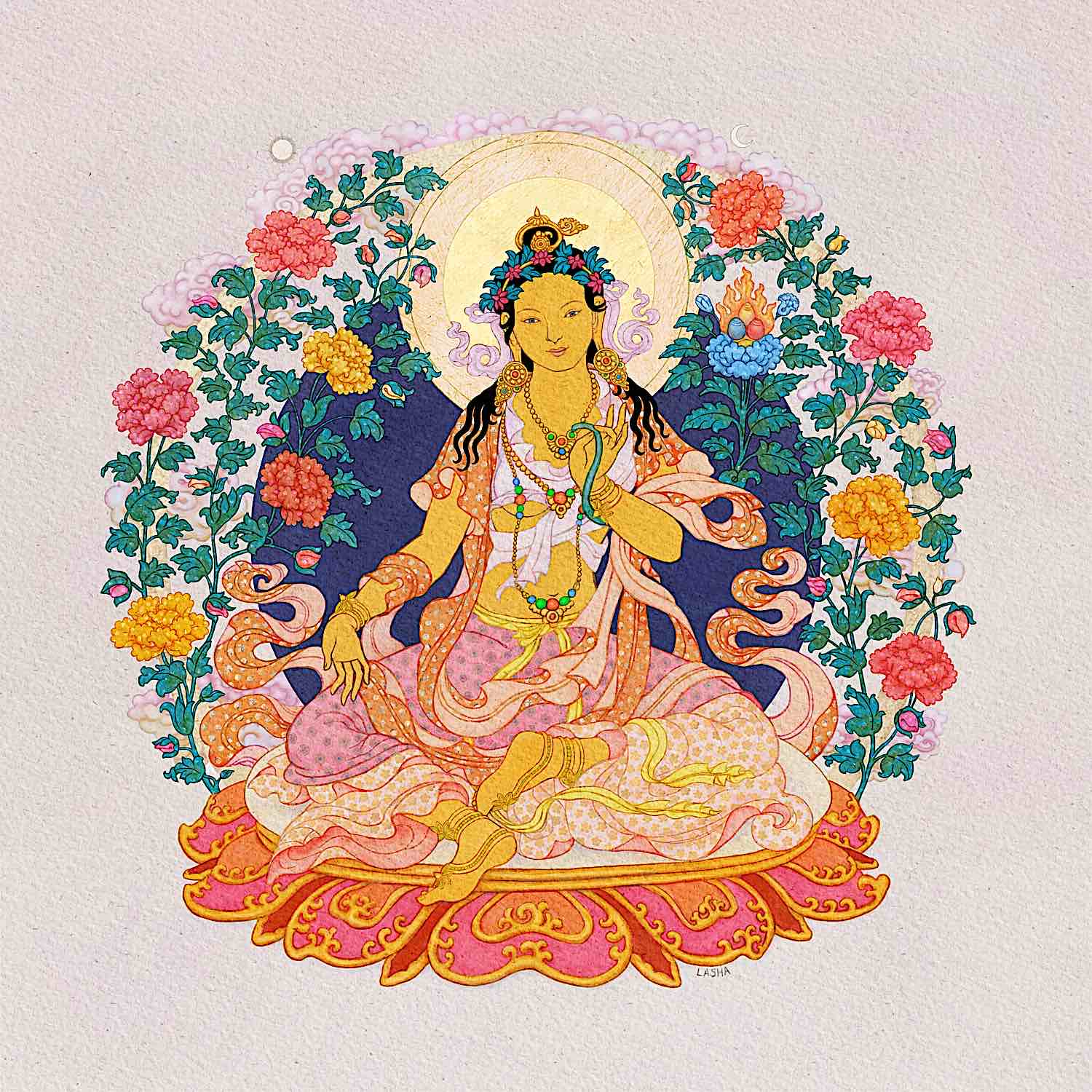
Tara 3
Homage to You divine golden-blue Goddess
Whose hands are adorned by water-born lotus.
Embody Six Perfections: Giving, Patience
Ethics, Concentration, Vigor, and Wisdom

Tara 4
Homage to You who crowns Buddha’s ushnishas,
Whose victorious actions have no limit.
Who has attained ev’ry transcendent wisdom,
On whom the Bodhisattvas themselves rely.
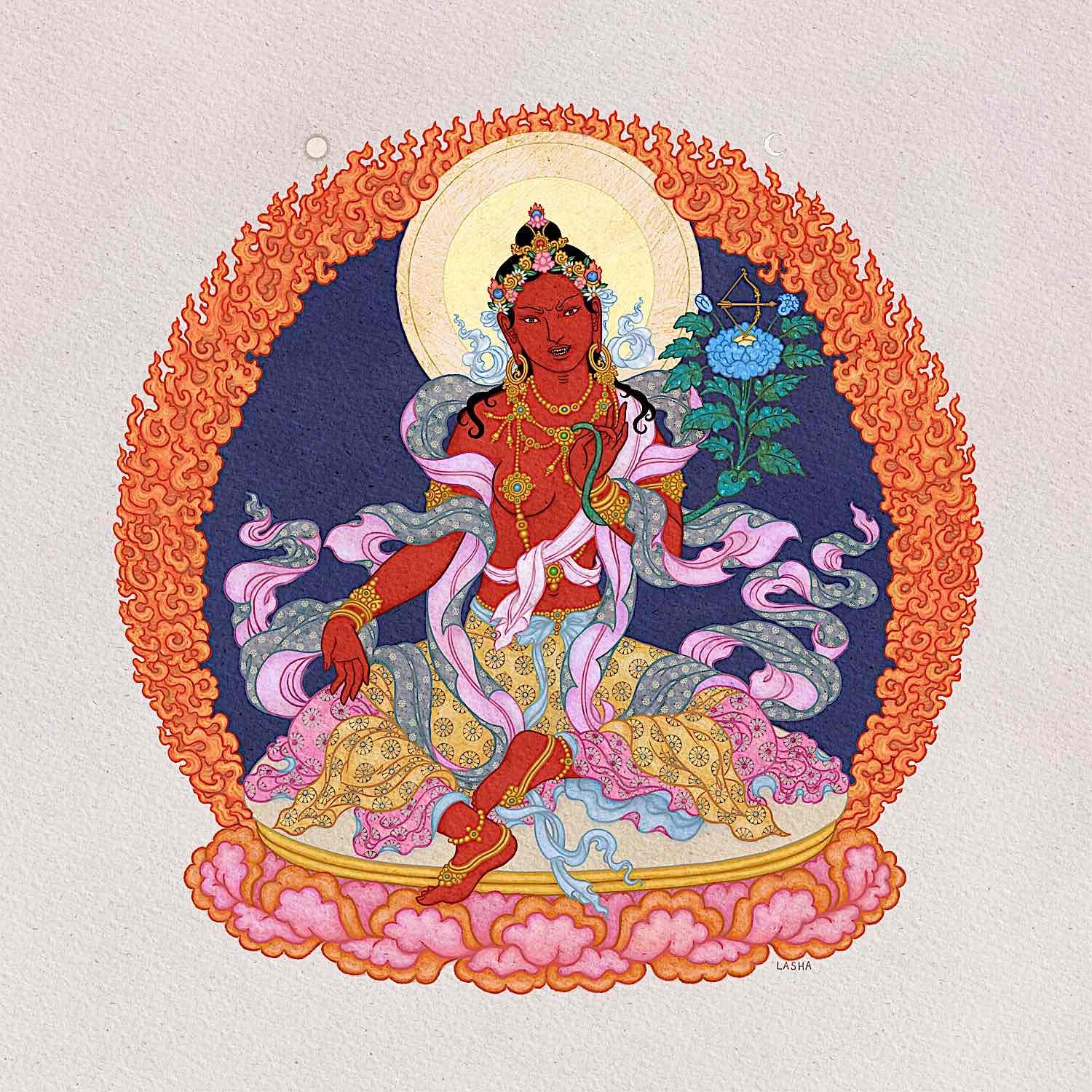
Tara 5
Homage to You who with HUM and TUTTARA,
Fill all worlds of desire, direction, space.
Who with your feet press down on the Seven Worlds;
You subdue all beings under your power.

Tara 6
Homage to You praised by Indra and Agni,
Brahma, Vayu, Ishvara and all the gods
All the spirits, zombies, and the smell-eaters,
Even the Yakshas give praise in Your presence.
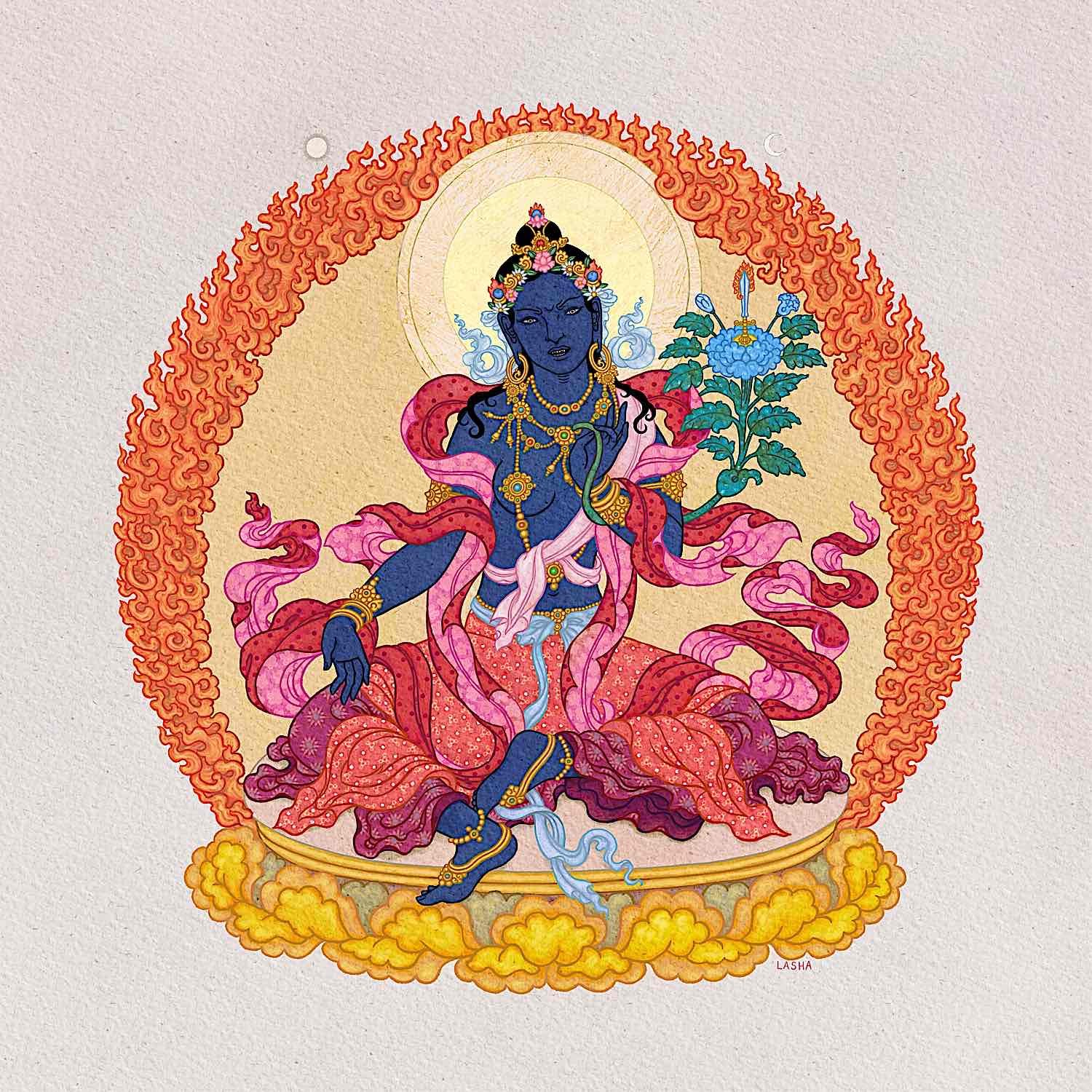
Tara 7
Homage to You who with the TRAY and PEY sounds,
Crush every magical wheel, evil forces,
Right leg extended and left bent, you trample,
You burn them completely in Your whirling fire.

Tara 8
Homage to You, TURE, the Boundless Fierce One,
Who totally destroys leaders of maras.
Whose lotus-like face forms furious wrinkles,
You annihilate foes without exception.
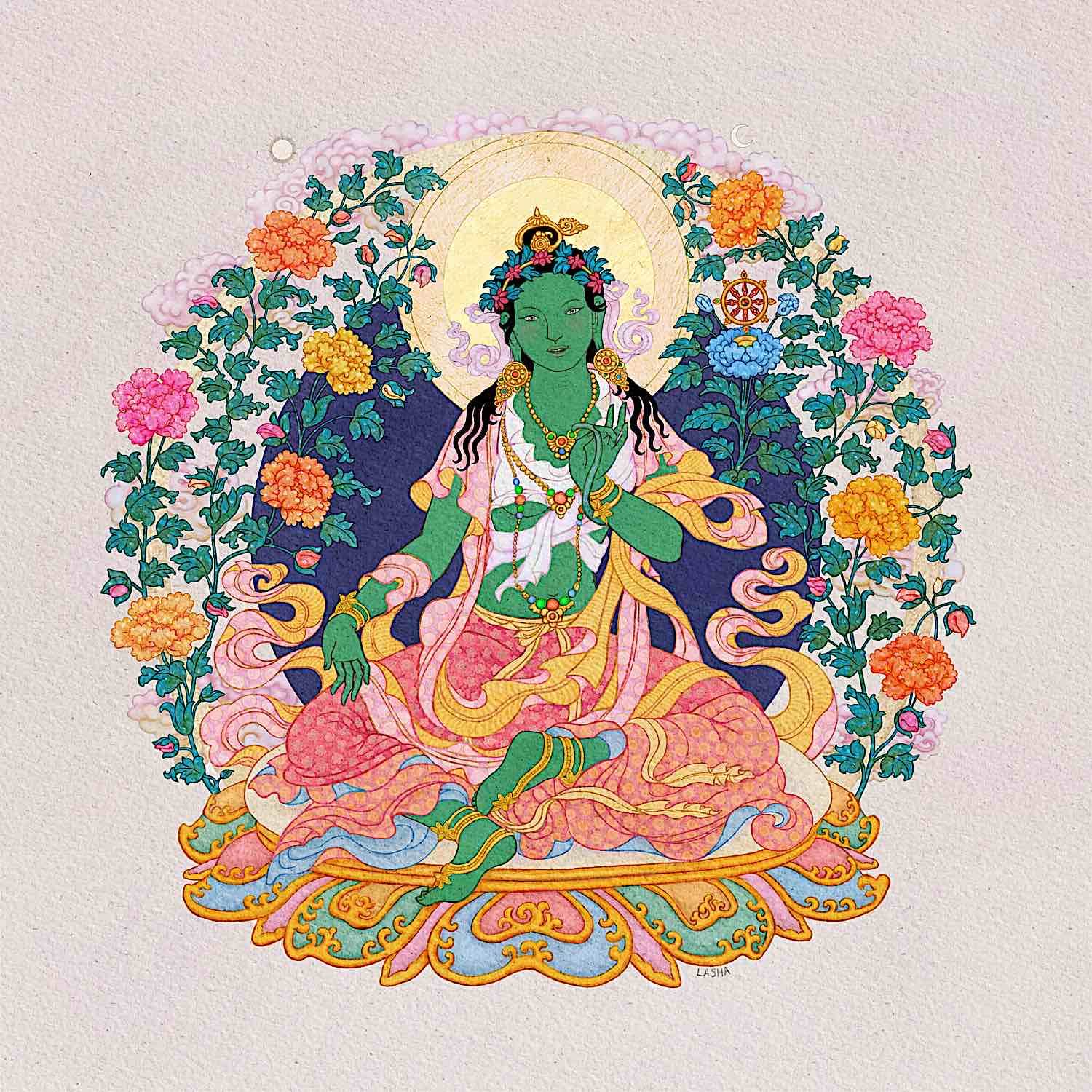
Tara 9
Homage to You whose fingers held at Your chest,
Displaying the mudra of the Three Jewels;
Beautiful swirling light in your precious hands
Dharma wheels connect every direction.
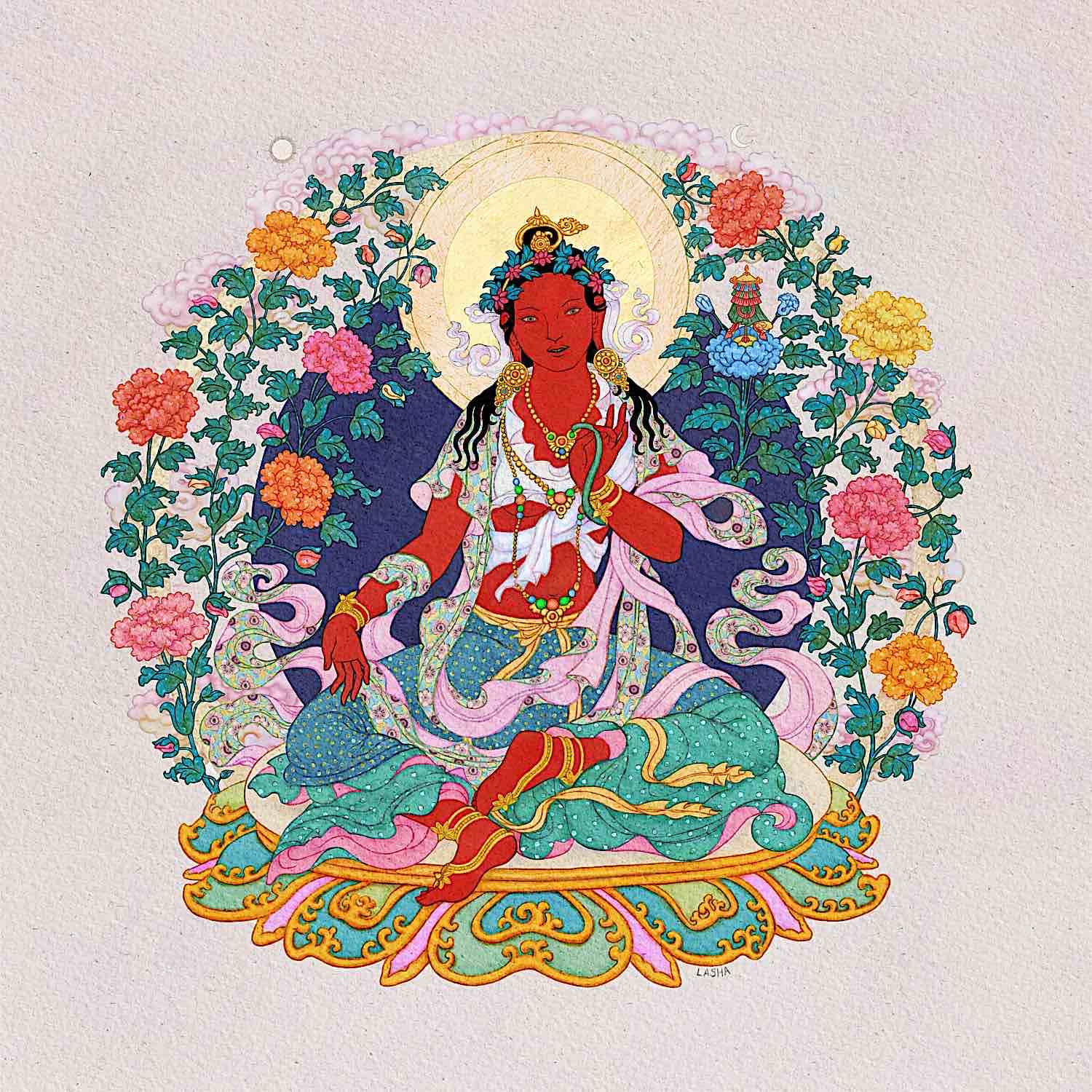
Tara 10
Homage to You, the majestic and joyful
With brilliant garlands of light around your crown
With the great clangor of laughter TUTTARA
Over power all the worlds and the maras.
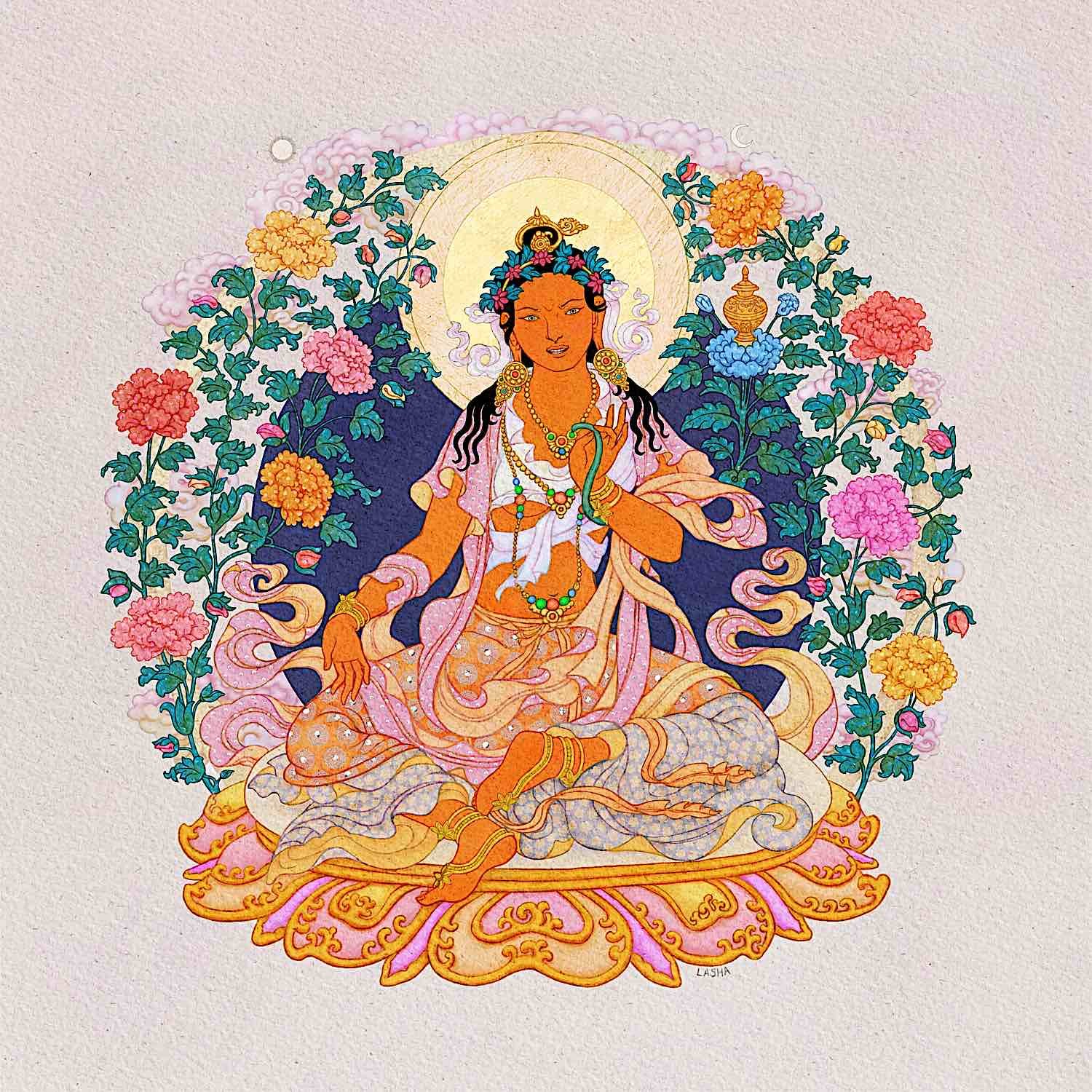
Tara 11
Homage to You, endowed with the great power,
To draw assembly of worldly guardians.
The One who with the HUM of wrathful wrinkles
You rescue completely from all poverty.

Tara 12
Homage to You, who is crowned with crescent moon,
And whose ornaments so brilliantly sparkle.
Amitabha in front of your ushnisha,
Eternally radiating beams of light.

Tara 13
Homage to You, who dwell in garlands of flames
Engulfed in fire like the end of the aeon.
Right leg outstretched and left bent with blissful joy
Who with your power destroy all enemies.

Tara 14
Homage to You, striking the ground with your hand
And crushing the earth with your majestic foot.
With wrathful, wrinkled face and the sound of HUM
You fully subdue seven levels of worlds.
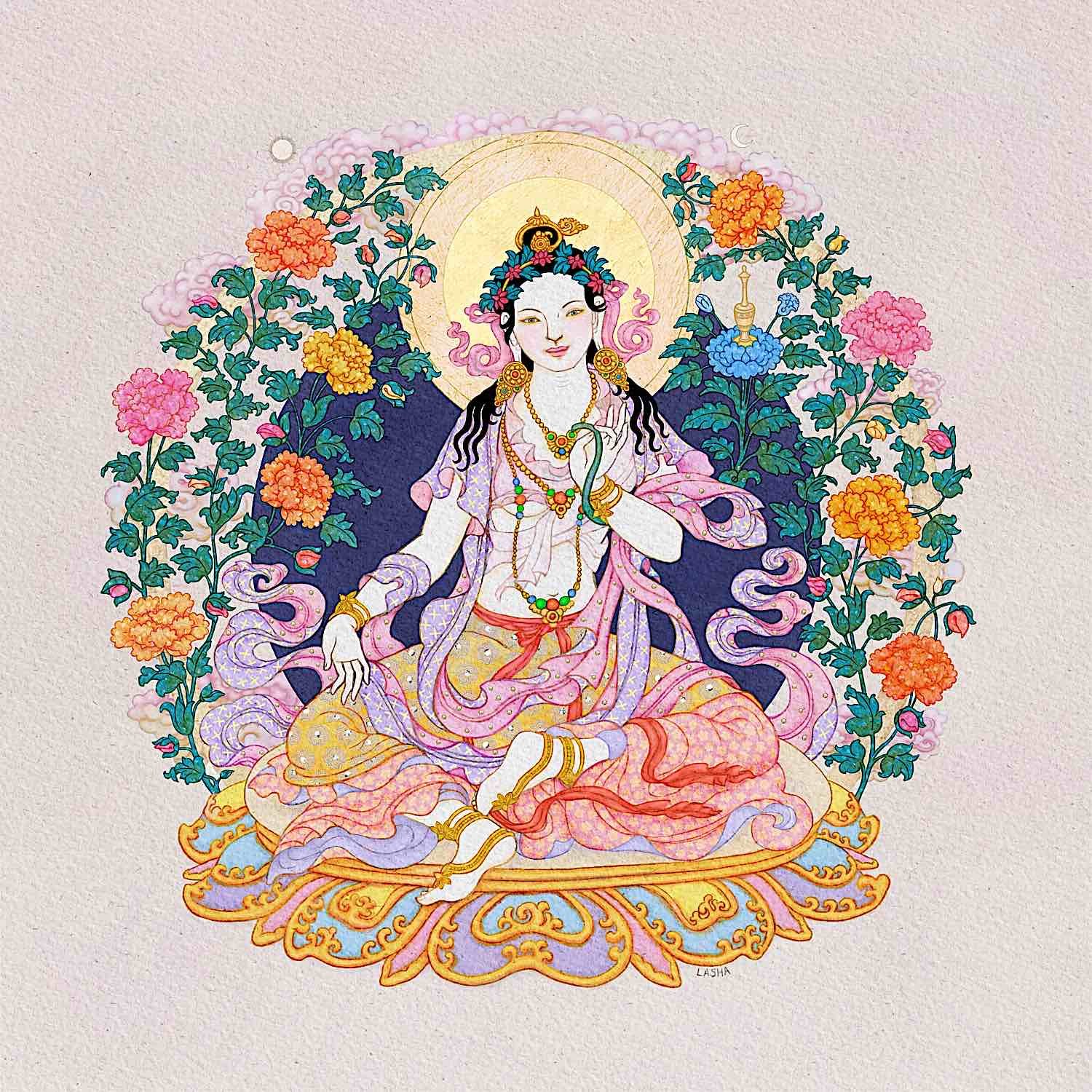
Tara 15
Homage to You, happy, virtuous and peaceful,
Who acts from eternal bliss of Nirvana.
And who with the pure sounds of OM and SVAHA,
Eliminates the most unwholesome Karmas!

Tara 16
Homage to You, who turns the Wheel of Dharma
For truly devoted, who love the teachings
Crushing enemies — all types of obstacles
with the Hum and the ten-syllable mantra.

Tara 17
Homage to You with feet stamping and Ture
Whose essence is the sacred syllable Hum.
You cause Mount Meru, Mandhara and Vindhya
Making all three worlds to tremble and shake!
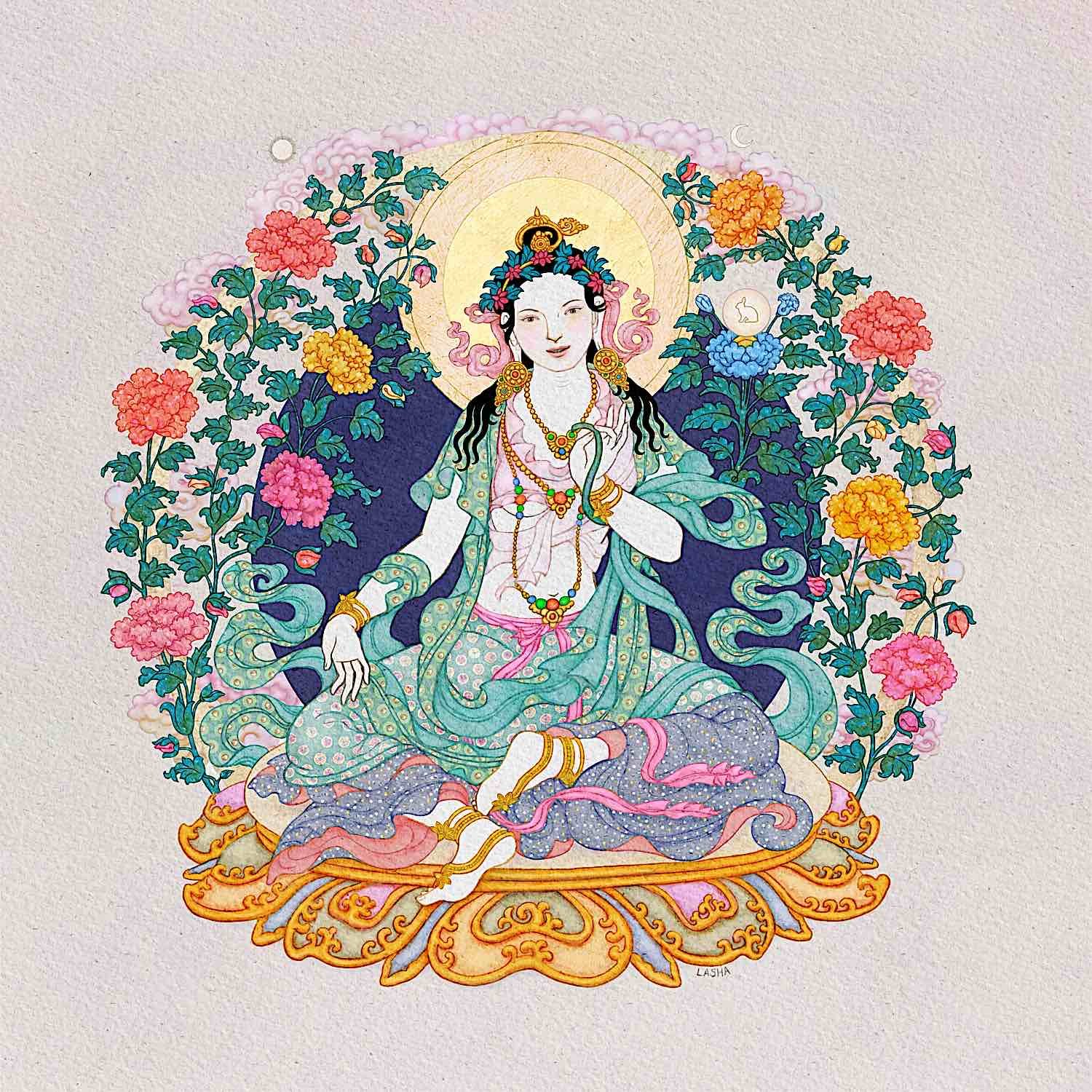
Tara 18
Homage to You, holding the moon in Your hand
Like a celestial ocean of nectar.
Sound of the PEY and the twice uttered TARA
You completely dispel every poison.
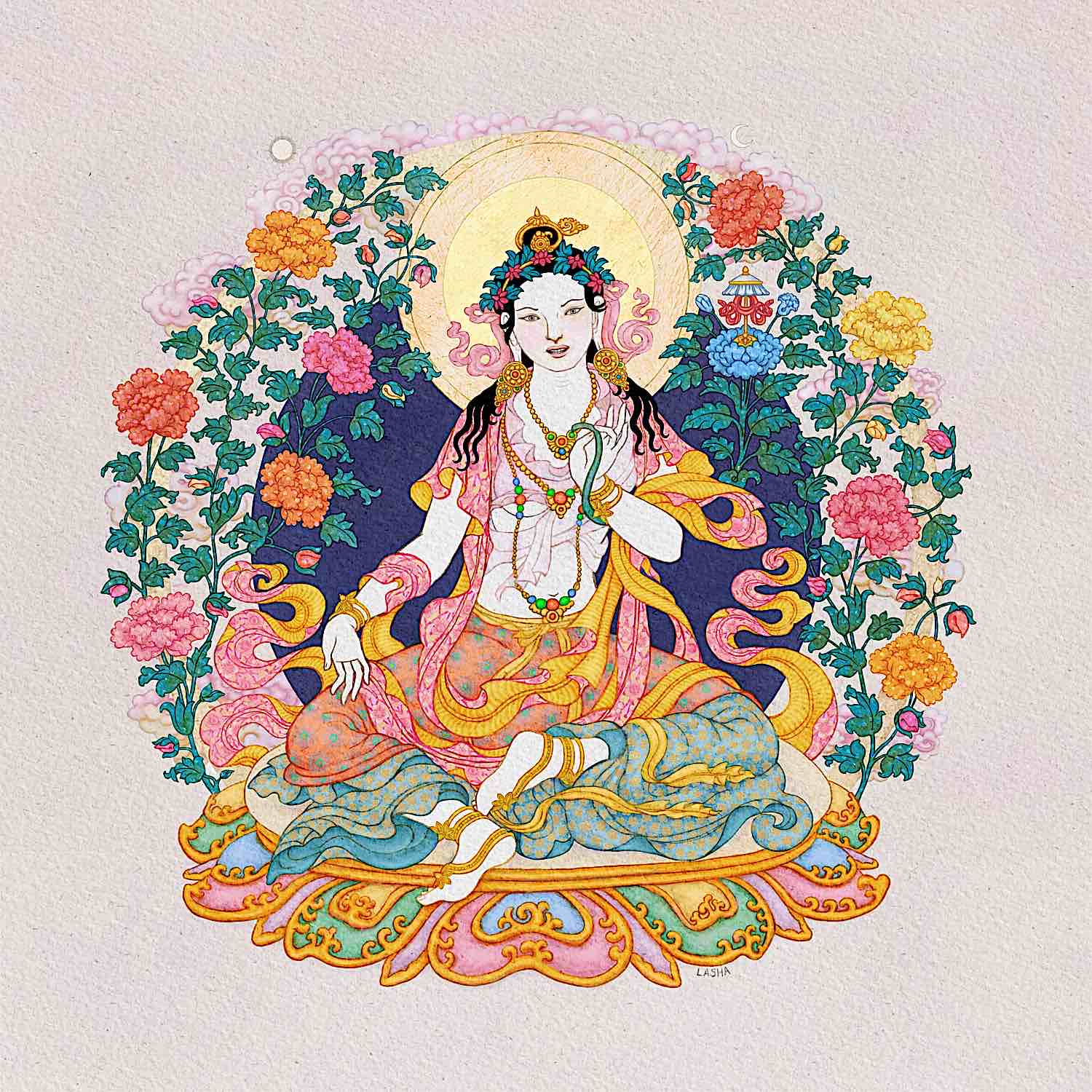
Tara 19
Homage to You on whom the devas rely
And also the lords of all the Gandharvas.
Your armor of joy, a radiant brightness,
You eliminate arguments and nightmares.

Tara 20
Homage to You, whose two eyes are shining bright,
Brilliant with light like the sun and the full moon.
Saying HARA twice and TUTTARE again
You clear and eliminate epidemics.

Tara 21
Homage to You whose pure Body, Speech and Mind
Are perfect with the strength and power of peace.
Suppressing Maras, Dons, Zombies and Yakshas
With the most exalted syllable TURE.
English without the 11 beats
Traditional translation (not meant for singing due to irregular beats per line.
Tara 1
Homage to you, the Swift One, the Heroine,
Whose eyes are like an instant flash of lightning,
Who arose from the open corolla
Of the lotus face of the Lord of the Three Worlds.
Tara 2
Homage to you whose face is like one hundred autumn moons
Completely full, and gathered into one,
Radiating a great and distinguished light,
Superior to the gathering of a thousand stars.
Tara 3
Homage to you who are golden blue,
Whose hands are beautifully decorated with a water-born lotus;
Who embody the Six Perfections of giving, moral discipline,
Patience, perseverance, concentration, and wisdom.
Tara 4
Homage to you, who crown the Buddhas’ ushnishas,
Whose victorious actions are without limit,
Who have attained all transcendental wisdoms without exception,
And on whom the Bodhisattvas themselves rely.
Tara 5
Homage to you, who, uttering TUTTARE and HUM,
Fill the worlds of desire, direction and space,
Who with your feet press down the seven worlds,
And who by your power draw all beings without exception.
Tara 6
Homage to you to whom Indra, Agni,
Brahma, Vayu, Ishvara and the other gods offer prayers,
And who are praised by spirits, zombies,
Smell-eaters and Yakshas.
Tara 7
Homage to you who with the mantras TRA and PHAT
Completely destroy all the magic wheels,
Crushing them with your right leg bent and your left stretched out,
Burning them completely in a blazing whirl of fire.
Tara 8
Homage to you, TURE, the Great Fierce One,
Who totally destroy the leaders of the maras,
Whose lotus face forms wrathful wrinkles,
And who annihilate all enemies without exception.
Tara 9
Homage to you whose fingers, held at your chest,
Are in the mudra of the Three Jewels;
The gathered light from your hands,
Decorated with wheels, extends in all directions.
Tara 10
Homage to you who are so joyful,
With a garland of light around your crown,
And whose great laughter of TUTTARA
Overpowers all the worlds and maras.
Tara 11
Homage to you, endowed with the power
To draw the assembly of worldly guardians,
The One who with the HUM of wrathful wrinkles
Rescues completely from all poverty.
Tara 12
Homage to you who are crowned with a crescent moon,
And whose ornaments shine brightly,
With Amitabha Buddha seated in front of your ushnisha
Eternally sending forth beams of light.
Tara 13
Homage to you who dwell within a garland of flames
Like the fire at the end of the aeon;
With your right leg outstretched and your left bent with joy,
You destroy all enemies.
Tara 14
Homage to you who strike the ground with the palm of your hand
And trample it with your foot;
With a wrathful, wrinkled face and the sound of HUM,
You subdue all seven levels of the world.
Tara 15
Homage to you, the happy, virtuous, peaceful one,
Who act from the eternal bliss of Nirvana,
And who with the pure sounds of SOHA and OM
Eliminate even the strongest unwholesome Karmas.
Tara 16
Homage to you who turn the sharp Wheel of Dharma
For those who love the teachings,
And who crush all inner and outer enemies,
With the ten-syllable mantra and the seed syllable HUM.
Tara 17
Homage to you who stamp your feet while reciting the sound of TURE,
Whose essence syllable is HUM;
You cause Mount Meru, Mandhara and Vindhya
And all three worlds to tremble and shake.
Tara 18
Homage to you who hold in your hand
A beautiful moon resembling a celestial lake;
Saying TARA twice, and the letter PHAT
You dispel poisons completely and forever.
Tara 19
Homage to you on whom the lords of the hosts of devas rely,
And also the lords of the Gandharvas;
By the splendor of your joyful armour,
You eliminate arguments and nightmares as well.
Tara 20
Homage to you whose two eyes
Are so beautiful and bright, like the sun or moon;
Saying HARA twice, and TUTTARE again
You quell and eliminate the most fearful epidemics.
Tara 21
Homage to you who by embodying the three Ultimates
Are perfect with the strength of peace,
Able to eliminate maras, Dons, zombies, and Yakshas;
TURE is the most exalted syllable of the Supreme.
21 Tara Praise in Sanskrit
Om namah spukasam namah Taraye mi Tara
1 Namas Tare Ture vire
kshanair dyuti nibhekshane
trailokya nat ha vaktrabja
vikasat kesharobhave
2 Namah shata sharac chandra
sampurna patalanane
Tara sahasra nikara
prahasat kira noj jvale
3
Namah kanaka nilabja
pani padma vibhu shite
dana virya tapah shanti
titik sha dhyana gochare
4
Namas tat hagatosh nisha
vijayananta charini
ashesha paramita prapta
jina putra nishevite
5
Namas Tuttara Hum kara
puritasha dig antare
sapta loka kramakranti
asheshak arshanak shame
6
Namah shakranala Brahma
marud vishvesh varachite
bhuta vetala gand harva
gana yaksha puras krte
7
Namas trad iti phat kara
para yantra pramardani
praty alid ha pada nyase
shik hi jvalakulek shane
8
Namas Ture maha ghore
mara vira vinashani
bhrku ti krta vaktrabja
sarva shatrum nishudani
9
Namas tri ratna mudranka
hrdyanguli vibhushite
bhu shitashesha dik chakra
nikara sva Karakule
10
Namah pramudita topa
muku ta kshipta malini
hasat prahasat Tuttare
mara loka vashamkari
11
Namah samanta bhu pala
patalakarshana kshame
chalat bhrku ti hum kara
sarvapada vimoch ani
12
Namah shikhanda kandendu
muku tabha ranojjvale
Amitabha jata bhara
bhasvare kirana dhruve
13
Namah kalpanta hutabhug
jvala malan Tara sthite
alidha muditabandha
ripu chakra vinashani
14
Namah kara talaghata
charana hata bhu tale
bhrkuti krta Hum kara
sapta patala bhedini
15
Namah shive shubhe shante
shanta nirvana gochare
svaha pranava samyukte
maha papaka na shani
16
Namah pramudi tabandha
ripu gatra vabhedini
dashakshara pada nyashe
vidya Hum kara dipite
17
Namas Ture pada ghata
Hum karakara bijite
meru mandara kailasa
bhuvana traya chalini
18
Namah sura sarakara
harinika karast hite
Tara dvir ukta Phat kara
ashesha visha nashani
19
Namah sura ganadh yaksha
sura kimnara sevite
abandha mudita bhoga
kali duhs vapna nashani
20
Namah chandrarka sampurna
nayana dyuti bhas vare
hara dvir ukta Tuttare
vishama jvara nashani
21
Namas tri tattva vinyasa
shiva shakti saman vite
graha vetala yakshaugha
nashani pravare Ture
21 Praises to Tara in Tibetan
ཨོཾ་རྗེ་བཙུན་མ་འཕགས་མ་སྒྲོལ་མ་ལ་ཕྱག་འཚལ་ལོ། །
om jetsünma pakma drolma la chaktsal lo
Oṃ. Homage to the noble lady Tārā!
ཕྱག་འཚལ་ཏཱ་རེ་མྱུར་མ་དཔའ་མོ། །
chaktsal taré nyurma pamo
Homage to Tārā, swift and gallant,
ཏུཏྟཱ་ར་ཡིས་འཇིགས་པ་སེལ་མ། །
tuttara yi jikpa selma
Homage to Tuttārā, who banishes fear,
ཏུ་རེས་དོན་ཀུན་སྦྱིན་པས་སྒྲོལ་མ། །
turé dön kün jinpé drolma
Homage to Turā, who fulfils every need,
སྭཱ་ཧཱའི་ཡི་གེ་ཁྱོད་ལ་འདུད་དོ། །
sa hé yigé khyö la dü do
With svāhā we offer you honor and praise!
1 Rabtupa We Drolma
ཕྱག་འཚལ་སྒྲོལ་མ་མྱུར་མ་དཔའ་མོ། །
chaktsal drolma nyurma pamo
Homage to Tārā, swift and gallant,
སྤྱན་ནི་སྐད་ཅིག་གློག་དང་འདྲ་མ། །
chen ni kechik lok dang dra ma
Whose glance flashes like flares of lightning;
འཇིག་རྟེན་གསུམ་མགོན་ཆུ་སྐྱེས་ཞལ་གྱི། །
jikten sum gön chukyé zhal gyi
Born on the heart of a blossoming lotus
གེ་སར་བྱེ་བ་ལས་ནི་བྱུང་མ། །
gesar jewa lé ni jung ma
That rose from the tears of the Triple-World’s Lord.
2 Karmo a Dang Ge Drolma
ཕྱག་འཚལ་སྟོན་ཀའི་ཟླ་བ་ཀུན་ཏུ། །
chaktsal tönké dawa küntu
Homage to you whose countenance is
གང་བ་བརྒྱ་ནི་བརྩེགས་པའི་ཞལ་མ། །
gangwa gya ni tsekpé zhal ma
A hundred full moons gathered in autumn,
སྐར་མ་སྟོང་ཕྲག་ཚོགས་པ་རྣམས་ཀྱི། །
karma tongtrak tsokpa nam kyi
Smiling and glowing with brilliant radiance,
རབ་ཏུ་ཕྱེ་བའི་འོད་རབ་འབར་མ། །
rabtu chewé ö rab bar ma
Like a thousand stars clustered, ablaze.
3 Ser Mo Serdok Chen Ge Drolma
ཕྱག་འཚལ་སེར་སྔོ་ཆུ་ནས་སྐྱེས་ཀྱི། །
chaktsal ser ngo chu né kyé kyi
Homage, golden lady, your lotus-hand
པདྨས་ཕྱག་ནི་རྣམ་པར་བརྒྱན་མ། །
pemé chak ni nampar gyen ma
Is graced with a blue water-born flower.
སྦྱིན་པ་བརྩོན་འགྲུས་དཀའ་ཐུབ་ཞི་བ། །
jinpa tsöndrü katub zhiwa
You embody generosity, diligence, endurance,
བཟོད་པ་བསམ་གཏན་སྤྱོད་ཡུལ་ཉིད་མ། །
zöpa samten chöyul nyi ma
Serenity, patience and meditation.
4 Tsug Tor Nam Pal Gyal We Drolma
ཕྱག་འཚལ་དེ་བཞིན་གཤེགས་པའི་གཙུག་ཏོར། །
chaktsal dezhin shekpé tsuktor
Homage to you, whose victories are endless,
མཐའ་ཡས་རྣམ་པར་རྒྱལ་བ་སྤྱོད་མ། །
tayé nampar gyalwa chö ma
Jewel on the great Tathāgata’s crown.
མ་ལུས་ཕ་རོལ་ཕྱིན་པ་ཐོབ་པའི། །
malü parol chinpa tobpé
You are well served by the heirs of the Victors,
རྒྱལ་བའི་སྲས་ཀྱིས་ཤིན་ཏུ་བསྟེན་མ། །
gyalwé sé kyi shintu ten ma
Those who’ve accomplished all the perfections.
5 HUM Dra Dolpi Drolma
ཕྱག་འཚལ་ཏུཏྟཱ་ར་ཧཱུྂ་ཡི་གེ །
chaktsal tuttara hung yigé
Homage to you, who with tuttāra and hūṃ
འདོད་དང་ཕྱོགས་དང་ནམ་མཁའ་གང་མ། །
dö dang chok dang namkha gang ma
Fill desire realms unto the ends of space.
འཇིག་རྟེན་བདུན་པོ་ཞབས་ཀྱིས་མནན་ཏེ། །
jikten dünpo zhab kyi nen té
You trample underfoot the seven worlds,
ལུས་པ་མེད་པར་འགུགས་པར་ནུས་མ། །
lüpa mepar gukpar nü ma
And have the strength to summon all.
6 Jig Ten Sum Lay Nam Par Gyal We Drolma
ཕྱག་འཚལ་བརྒྱ་བྱིན་མེ་ལྷ་ཚངས་པ། །
chaktsal gyajin melha tsangpa
Homage to you, praised by Indra,
རླུང་ལྷ་སྣ་ཚོགས་དབང་ཕྱུག་མཆོད་མ། །
lunglha natsok wangchuk chö ma
Agni, Brahmā, Maruts,2 and Śiva.
འབྱུང་པོ་རོ་ལངས་དྲི་ཟ་རྣམས་དང་། །
jungpo rolang driza nam dang
All the hosts of bhūtas, vetālas,
གནོད་སྦྱིན་ཚོགས་ཀྱིས་མདུན་ནས་བསྟོད་མ། །
nöjin tsok kyi dün né tö ma
Gandharvas and yakṣas pay tribute to you.
7 Golwa Jompi Drolma
ཕྱག་འཚལ་ཏྲཊ་ཅེས་བྱ་དང་ཕཊ་ཀྱིས། །
chaktsal tré cheja dang pé kyi
Homage to you, who with traṭ and phaṭ
ཕ་རོལ་འཕྲུལ་འཁོར་རབ་ཏུ་འཇོམས་མ། །
parol trulkhor rabtu jom ma
Crush the enemies’ yantras3 to dust.
གཡས་བསྐུམ་གཡོན་བརྐྱང་ཞབས་ཀྱིས་མནན་ཏེ། །
yé kum yön kyang zhab kyi nen té
With right leg bent in and left leg extended,
མེ་འབར་འཁྲུག་པ་ཤིན་ཏུ་འབར་མ། །
mebar trukpa shintu bar ma
Shining you tread amidst flames wildly blazing.
8 Wang Chug Terwe Drolma
ཕྱག་འཚལ་ཏུ་རེ་འཇིགས་པ་ཆེན་པོས། །
chaktsal turé jikpa chenpö
Homage to Ture, the fearsome lady,
བདུད་ཀྱི་དཔའ་བོ་རྣམ་པར་འཇོམས་མ། །
dü kyi pawo nampar jom ma
Destroyer of the most powerful demons.
ཆུ་སྐྱེས་ཞལ་ནི་ཁྲོ་གཉེར་ལྡན་མཛད། །
chukyé zhal ni tronyer den dzé
With a lotus-face and a deep-furrowed brow,
དགྲ་བོ་ཐམས་ཅད་མ་ལུས་གསོད་མ། །
drawo tamché malü sö ma
You are the slayer of each and every foe.
9 Seng Ding Nag Che Drolma
ཕྱག་འཚལ་དཀོན་མཆོག་གསུམ་མཚོན་ཕྱག་རྒྱའི། །
chaktsal könchok sum tsön chakgyé
སོར་མོས་ཐུགས་ཀར་རྣམ་པར་བརྒྱན་མ། །
sormö tukkar nampar gyen ma
མ་ལུས་ཕྱོགས་ཀྱི་འཁོར་ལོས་བརྒྱན་པའི། །
malü chok kyi khorlö gyenpé
རང་གི་འོད་ཀྱི་ཚོགས་རྣམས་འཁྲུག་མ། །
rang gi ö kyi tsok nam truk ma
10 Na Nyen Me Pi Drolma
ཕྱག་འཚལ་རབ་ཏུ་དགའ་བ་བརྗིད་པའི། །
chaktsal rabtu gawa jipé
Homage to you, supremely joyous,
དབུ་རྒྱན་འོད་ཀྱི་ཕྲེང་བ་སྤེལ་མ། །
ugyen ö kyi trengwa pelma
Your splendorous crown spreading garlands of light.
བཞད་པ་རབ་བཞད་ཏུཏྟཱ་ར་ཡིས། །
zhepa rab zhé tuttara yi
Smiling and laughing, with tuttāre
བདུད་དང་འཇིག་རྟེན་དབང་དུ་མཛད་མ། །
dü dang jikten wang du dzé ma
You bring demons and worlds under control.
11 Dro Wa Gug Pa Am Pungpa Sel We Drolma
ཕྱག་འཚལ་ས་གཞི་སྐྱོང་བའི་ཚོགས་རྣམས། །
chaktsal sa zhi kyongwé tsok nam
Homage to you, who can summon
ཐམས་ཅད་འགུགས་པར་ནུས་པ་ཉིད་མ། །
tamché gukpar nüpa nyi ma
The hosts of earthly guardians.
ཁྲོ་གཉེར་གཡོ་བའི་ཡི་གེ་ཧཱུྂ་གིས། །
tronyer yowé yigé hung gi
Your frown it quivers, and the syllable hūṃ
ཕོངས་པ་ཐམས་ཅད་རྣམ་པར་སྒྲོལ་མ། །
pongpa tamché nampar drolma
Delivers us all from every misfortune.
12 Tashi Nang We Drolma
ཕྱག་འཚལ་ཟླ་བའི་དུམ་བུའི་དབུ་རྒྱན། །
chaktsal dawé dumbü ugyen
Homage to you, so brightly adorned,
བརྒྱན་པ་ཐམས་ཅད་ཤིན་ཏུ་འབར་མ། །
gyenpa tamché shintu bar ma
With a sliver of moon as your crown,5
རལ་པའི་ཁྲོད་ན་འོད་དཔག་མེད་ལས། །
ralpé trö na öpakmé lé
Your locks are graced by Amitābha,
རྟག་པར་ཤིན་ཏུ་འོད་རབ་མཛད་མ། །
takpar shintu ö rab dzé ma
Whose gleaming rays stream forever forth.
13 Young Su Min Par Zed Pi Drolma
ཕྱག་འཚལ་བསྐལ་པ་ཐ་མའི་མེ་ལྟར། །
chaktsal kalpa tamé mé tar
འབར་བའི་ཕྲེང་བའི་དབུས་ན་གནས་མ། །
barwé trengwé ü na né ma
གཡས་བརྐྱང་གཡོན་བསྐུམ་ཀུན་ནས་བསྐོར་དགའི། །
yé kyang yön kum künné kor gé
དགྲ་ཡི་དཔུང་ནི་རྣམ་པར་འཇོམས་མ། །
dra yi pung ni nampar jom ma
14 Tro Nyer Yo We Drolma
ཕྱག་འཚལ་ས་གཞིའི་ངོས་ལ་ཕྱག་གི །
chaktsal sa zhi ngö la chak gi
མཐིལ་གྱིས་བསྣུན་ཅིང་ཞབས་ཀྱིས་བརྡུང་མ། །
til gyi nün ching zhab kyi dung ma
ཁྲོ་གཉེར་ཅན་མཛད་ཡི་གེ་ཧཱུྂ་གིས། །
tronyer chen dzé yigé hung gi
རིམ་པ་བདུན་པོ་རྣམས་ནི་འགེམས་མ། །
rimpa dünpo nam ni gem ma
15 She Wa Chen Mo Am Gelek Ter Wi Drolma
ཕྱག་འཚལ་བདེ་མ་དགེ་མ་ཞི་མ། །
chaktsal dé ma gé ma zhi ma
མྱ་ངན་འདས་ཞི་སྤྱོད་ཡུལ་ཉིད་མ། །
nya ngen dé zhi chöyul nyi ma
སྭཱ་ཧཱ་ཨོཾ་དང་ཡང་དག་ལྡན་པས། །
soha om dang yangdak denpé
སྡིག་པ་ཆེན་པོ་འཇོམས་པ་ཉིད་མ། །
dikpa chenpo jompa nyi ma
16 Chagpa Jom Pi Drolma
ཕྱག་འཚལ་ཀུན་ནས་བསྐོར་རབ་དགའ་བའི། །
chaktsal künné kor rabga bé
དགྲ་ཡི་ལུས་ནི་རབ་ཏུ་འགེམས་མ། །
dra yi lü ni rabtu gem ma
ཡི་གེ་བཅུ་པའི་ངག་ནི་བཀོད་པའི། །
yigé chupé ngak ni köpé
རིག་པ་ཧཱུྂ་ལས་སྒྲོལ་མ་ཉིད་མ། །
rigpa hung lé drölma nyi ma
17 Dewa Drub Pe Drolma
ཕྱག་འཚལ་ཏུ་རེའི་ཞབས་ནི་བརྡབས་པས། །
chaktsal turé zhab ni dabpé
Homage to Ture, your feet stomping boldly,
ཧཱུྂ་གི་རྣམ་པའི་ས་བོན་ཉིད་མ། །
hung gi nampé sabön nyi ma
Formed from the seed of the syllable hūṃ.
རི་རབ་མནྡ་ར་དང་འབིགས་བྱེད། །
rirab mendara dang bikjé
The mountains of Meru, Mandara and Vindhya,
འཇིག་རྟེན་གསུམ་རྣམས་གཡོ་བ་ཉིད་མ། །
jikten sum nam yowa nyi ma
And all the three worlds, you cause them to quake.
18 Rab Tu Gye Pi Drolma
ཕྱག་འཚལ་ལྷ་ཡི་མཚོ་ཡི་རྣམ་པའི། །
chaktsal lha yi tso yi nampé
རི་དྭགས་རྟགས་ཅན་ཕྱག་ན་བསྣམས་མ། །
ridak takchen chak na nam ma
ཏཱ་ར་གཉིས་བརྗོད་ཕཊ་ཀྱི་ཡི་གེས། །
tara nyi jö pé kyi yigé
དུག་རྣམས་མ་ལུས་པར་ནི་སེལ་མ། །
duk nam malüpar ni selma
19 Duk Ngal Sek Pi Drolma
ཕྱག་འཚལ་ལྷ་ཡི་ཚོགས་རྣམས་རྒྱལ་པོ། །
chaktsal lha yi tsok nam gyalpo
ལྷ་དང་མིའམ་ཅི་ཡིས་བསྟེན་མ། །
lha dang mi’amchi yi ten ma
ཀུན་ནས་གོ་ཆ་དགའ་བ་བརྗིད་ཀྱིས། །
künné gocha gawa ji kyi
རྩོད་དང་རྨི་ལམ་ངན་པ་སེལ་མ། །
tsö dang milam ngenpa selma
20 Ngyu Drob Jung Pi Drolma
ཕྱག་འཚལ་ཉི་མ་ཟླ་བ་རྒྱས་པའི། །
chaktsal nyima dawa gyepé
སྤྱན་གཉིས་པོ་ལ་འོད་རབ་གསལ་མ། །
chen nyipo la ö rabsal ma
ཧ་ར་གཉིས་བརྗོད་ཏུཏྟཱ་ར་ཡིས། །
hara nyi jö tuttara yi
ཤིན་ཏུ་དྲག་པོའི་རིམས་ནད་སེལ་མ། །
shintu drakpö rimné selma
21 Yong Zog Jed Pi Drolma
ཕྱག་འཚལ་དེ་ཉིད་གསུམ་རྣམས་བཀོད་པས། །
chaktsal denyi sum nam köpé
ཞི་བའི་མཐུ་དང་ཡང་དག་ལྡན་མ། །
zhiwé tu dang yangdak den ma
གདོན་དང་རོ་ལངས་གནོད་སྦྱིན་ཚོགས་རྣམས། །
dön dang rolang nöjin tsok nam
འཇོམས་པ་ཏུ་རེ་རབ་མཆོག་ཉིད་མ། །
jompa turé rab chok nyi ma
Benefits of Reciting
At the end of your session, usually recite the Benefits of Praise:
རྩ་བའི་སྔགས་ཀྱི་བསྟོད་པ་འདི་དང་། །
tsawé ngak kyi töpa di dang
This Praise with the twenty-one verses of homage
ཕྱག་འཚལ་བ་ནི་ཉི་ཤུ་རྩ་གཅིག །
chaktsalwa ni nyishu tsa chik
Is itself the root mantra.
The Excellent Benefits of the Praise
ལྷ་མོ་ལ་གུས་ཡང་དག་ལྡན་པའི། །
lhamo la gü yangdak denpé
The wise who recite these words in earnest,
བློ་ལྡན་གང་གིས་རབ་དང་བརྗོད་དེ། །
loden gang gi rab dang jö dé
Filled with genuine devotion for this goddess, (22)
སྲོད་དང་ཐོ་རངས་ལངས་པར་བྱས་ནས། །
sö dang torang langpar jé né
At dusk, and also having risen at dawn,
དྲན་པས་མི་འཇིགས་ཐམས་ཅད་རབ་སྟེར། །
drenpé mi jik tamché rab ter
With recollection, will be granted fearlessness;
སྡིག་པ་ཐམས་ཅད་རབ་ཏུ་ཞི་བྱེད། །
dikpa tamché rabtu zhijé
They will utterly eliminate all misdeeds,
ངན་འགྲོ་ཐམས་ཅད་འཇོམས་པ་ཉིད་དོ། །
ngendro tamché jompa nyi do
And surmount all evil destinies. (23)
རྒྱལ་བ་བྱེ་བ་ཕྲག་བདུན་རྣམས་ཀྱིས། །
gyalwa jewa trak dün nam kyi
Seventy million victorious buddhas
མྱུར་དུ་དབང་ནི་བསྐུར་བར་འགྱུར་ལ། །
nyurdu wang ni kurwar gyur la
Will swiftly confer empowerment upon them,
འདི་ལས་ཆེ་བ་ཉིད་ནི་ཐོབ་ཅིང༌། །
di lé chewa nyi ni tob ching
And they will attain greatness in this world,
སངས་རྒྱས་གོ་འཕང་མཐར་ཐུག་དེར་འགྲོ། །
sangye gopang tartuk der dro
And reach the ultimate state of buddhahood. (24)
དེ་ཡི་དུག་ནི་དྲག་པོ་ཆེན་པོ། །
dé yi duk ni drakpo chenpo
Even the most powerful and toxic poisons,
བརྟན་གནས་པའམ་གཞན་ཡང་འགྲོ་བ། །
ten nepa am zhenyang drowa
Which derive from plants or living beings,
ཟོས་པ་དང་ནི་འཐུངས་པ་ཉིད་ཀྱང༌། །
zöpa dang ni tungpa nyi kyang
Whether eaten or taken as a draught,
དྲན་པས་རབ་ཏུ་སེལ་བ་ཉིད་ཐོབ། །
drenpé rabtu selwa nyi tob
Will be purged entirely by recalling this praise. (25)
གདོན་དང་རིམས་དང་དུག་གིས་གཟིར་བའི། །
dön dang rim dang duk gi zirwé
Reciting this two or three or seven times11
སྡུག་བསྔལ་ཚོགས་ནི་རྣམ་པར་སྤངས་ཏེ། །
dukngal tsok ni nampar pang té
Will eliminate multitudes of suffering
སེམས་ཅན་གཞན་པ་རྣམས་ལ་ཡང་ངོ༌། །
semchen zhenpa nam la yang ngo
Brought about by spirits, pestilence, and poison—
གཉིས་གསུམ་བདུན་དུ་མངོན་པར་བརྗོད་ན། །
nyi sum dün du ngönpar jö na
And this applies even to other beings as well. (26)
བུ་འདོད་པས་ནི་བུ་ཐོབ་འགྱུར་ཞིང༌། །
bu döpé ni bu tob gyur zhing
Those who wish for progeny will bear them;
ནོར་འདོད་པས་ནི་ནོར་རྣམས་ཉིད་ཐོབ། །
nor döpé ni nor nam nyi tob
Those who wish for riches will acquire them;
འདོད་པ་ཐམས་ཅད་ཐོབ་པར་འགྱུར་ལ། །
döpa tamché tobpar gyur la
Each and every wish will hereby be fulfilled,
བགེགས་རྣམས་མེད་ཅིང་སོ་སོར་འཇོམས་འགྱུར། །
gek nam mé ching sosor jom gyur
And obstacles, entirely vanquished, will be no more.
- In part 2 of this series, we compare the visualizations and attributes of the various lineages.

About Lasha Mutual, the artist
Please visit Lasha Mutual website for a full online gallery.
Or, join thousands of fans and follow Lasha’s art on Facebook and Instagram:
www.facebook.com/lashamutualart/
www.instagram.com/lashamutual/
SOURCES
[1] Tara in the Palm of Your Hand, Venerable Zasep Rinpoche, Windhorse Press.
[2] Khenchen Palden Sherab;Khenpo Tsewang Dongyal. Tara’s Enlightened Activity: An Oral Commentary On The Twenty-One Praises To Tara (Kindle Location 409). Kindle Edition.
[3] Praises to the 21 Taras, FPMT (this link downloads a PDF>>)
Amazon links may be affiliate links.
More articles by this author
MUSIC VIDEO and PRACTICE: Śaraṇaṃ Gacchāmi Sanskrit Refuge and Offering Chanted Beautifully for Daily Practice
HEALING VIDEO: Black Manjushri “most powerful healing” (Ven. Zasep Rinpoche) 1 Hour chanting Mantra in Sanskrit
Why Do We See Dramatic and Gruesome Imagery in Sacred Buddhist Imagery? Palden Lhamo “Case Study”: the Symbolism of Wrath

Search
Latest Features



Please support the "Spread the Dharma" mission as one of our heroic Dharma Supporting Members, or with a one-time donation.
Please Help Support the “Spread the Dharma” Mission!
Be a part of the noble mission as a supporting member or a patron, or a volunteer contributor of content.
The power of Dharma to help sentient beings, in part, lies in ensuring access to Buddha’s precious Dharma — the mission of Buddha Weekly. We can’t do it without you!
A non-profit association since 2007, Buddha Weekly published many feature articles, videos, and, podcasts. Please consider supporting the mission to preserve and “Spread the Dharma." Your support as either a patron or a supporting member helps defray the high costs of producing quality Dharma content. Thank you! Learn more here, or become one of our super karma heroes on Patreon.
Lee Kane
Author | Buddha Weekly
Lee Kane is the editor of Buddha Weekly, since 2007. His main focuses as a writer are mindfulness techniques, meditation, Dharma and Sutra commentaries, Buddhist practices, international perspectives and traditions, Vajrayana, Mahayana, Zen. He also covers various events.
Lee also contributes as a writer to various other online magazines and blogs.