



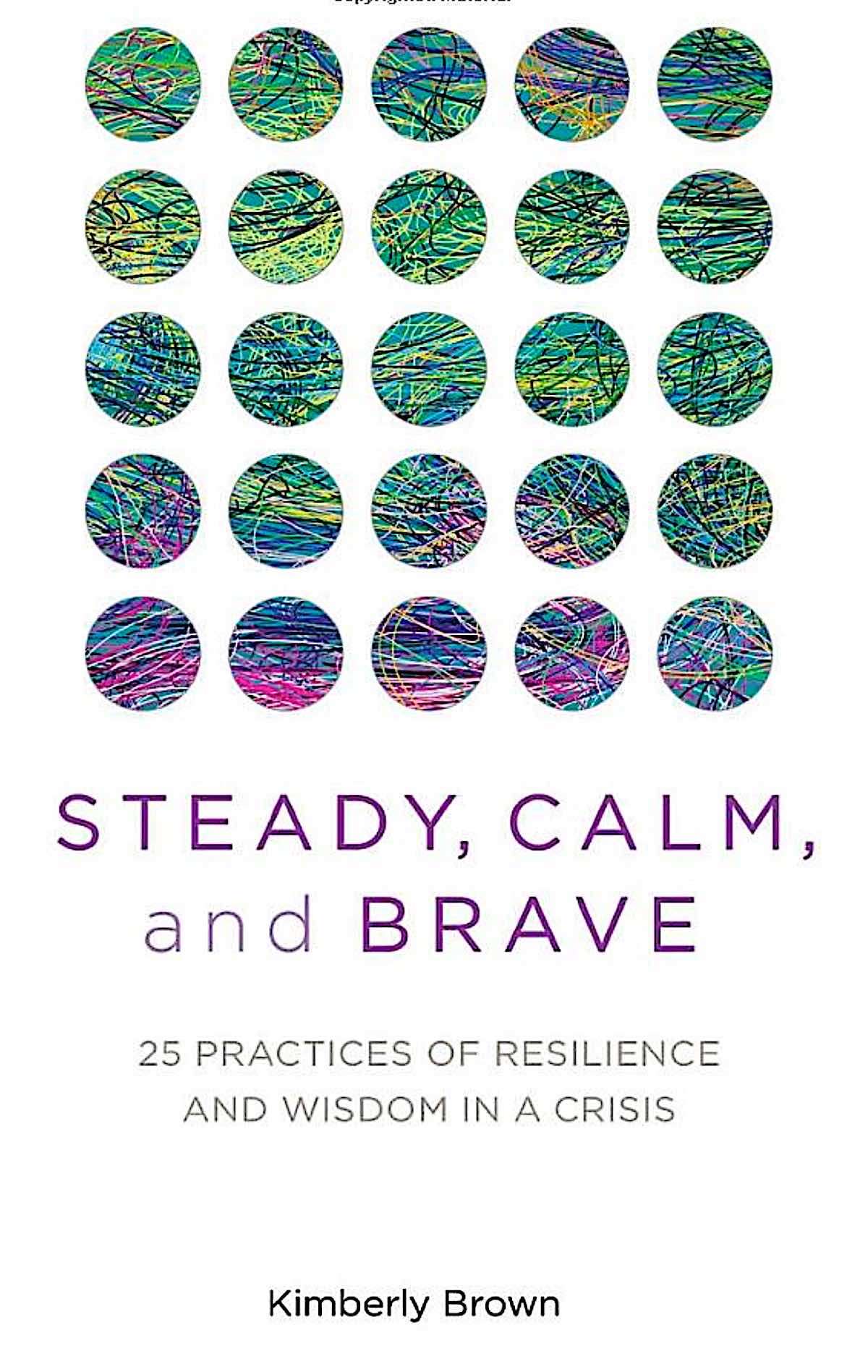
Interview with meditation teacher Kimberly Brown, author of Steady, Calm, and Brave: 25 Practices of Resilience and Wisdom in a Crisis
In our interview with author Kimberly Brown, the popular meditation teacher describes “Practices of Resilience and Wisdom in a Crisis” — all the more important in these times of COVID-19.
Buddha Weekly is also pleased to publish an excerpt chapter “Not Harming is Helping” from her popular book Steady, Calm, and Brave: 25 Practices of Resilience and Wisdom in a Crisis.
Interview — author Kimberly Brown
BW: Thank you for joining us today. For readers who may be new to you and your work as a meditation teacher, please briefly introduce yourself.
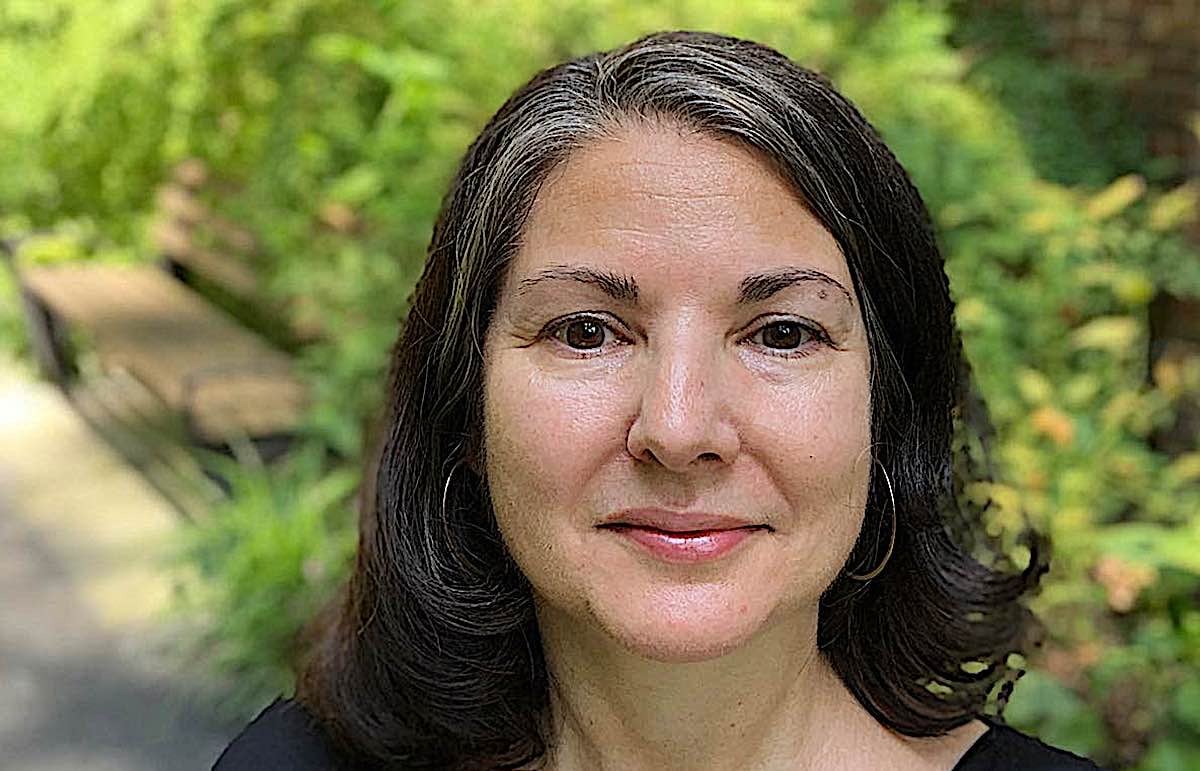
Kimberly Brown: I’m a longtime Buddhist student, who began teaching meditation in 2011. My work emphasizes the power of compassion, by helping students develop lovingkindness for self and others through Metta meditation and mindfulness of body techniques.
BW: What sparked your interest in Buddhism and meditation?
Kimberly Brown: I came to Buddhism for the reason so many others do—personal suffering. I’d been experiencing panic attacks and didn’t know how to manage them. Through psychotherapy, I understood the causes and conditions that created them, but I didn’t have tools to help manage or work with the overwhelming fear and anxiety that accompanied them. Buddhist teachings enabled me to recognize that the dread and worry that preceded the panic attacks was making them much worse than they needed to be. By practicing mindfulness and Metta, I was able to transform the way I related to them, and although they didn’t—and still haven’t—disappeared, they’re much less frightening. Over time I’ve learned to meet them with patience and kindness and they’re much less unsettling and painful.
BW: You study in both the Tibetan and Insight traditions. What drew you to each of these paths?
Kimberly Brown: In the Tibetan tradition, the emphasis on the great aspiration of the bodhisattva, and the understanding that each of us has the nature of a Buddha, really attracted me. I grew up believing that humans, including myself, are limited in our ability to grow and develop, so when I started learning from Tibetan teachers, it challenged my view of myself. Thanks to their encouragement and confidence, I began to develop my capacity to cultivate clear-seeing and compassion for myself and others. This led me to also study Metta meditation in the Insight tradition with Sharon Salzberg.
BW: You recently released STEADY, CALM, AND BRAVE. Please share a bit about the book, and your inspiration for writing it.
Kimberly Brown: In March, I was in the middle of finishing a proposal for a meditation book I’d been working on for nearly two years. When the pandemic hit, it didn’t feel like a priority anymore, and I set it aside. About a month later, I mentioned to my editor that I’d like to write something that could support people during this difficult moment. She encouraged me to share the challenges I was experiencing and the practices and meditations I used to work with them, and this became my book, Steady, Calm, and Brave: 25 Practices for Resilience and Wisdom in a Crisis, which was published in July.
BW: Is there a specific practice in the book that stands apart as a personal favorite? If so, why is that practice a favorite?
Kimberly Brown: My personal favorite from the book is the practice, “Letting Your Heart Break,” which is simply taking a moment to reconnect with yourself and your struggles, and then recognizing that many others share the same struggles as you do. Sometimes I get so angry at the greed and hatred manifesting in the world, that I overlook how upset and sad I feel about it, and the “Letting Your Heart Break” practice allows me to remember the deep and poignant interdependence I have with all humans through our shared stress and suffering.
BW: With everything going on in the world, from COVID-19, to the economic unease, to the racial distress, what do you want readers to take away with them after finishing STEADY, CALM, AND BRAVE?
Kimberly Brown: My aspiration for the book is that it will encourage and remind everyone—Buddhists and non-Buddhists—that it is possible to develop our qualities of love, wisdom, and compassion for ourselves and each other. Like any other skill, it just takes a little effort and time.
BW: What advice would you give to someone who is cautiously interested in exploring meditation? What about advice for practitioners who may find themselves struggling to stay focused on their practice during this pandemic?
Kimberly Brown: For the cautiously interested, I suggest you simply shut off your phone and computer, find a quiet spot where you won’t be disturbed, and just sit down, close your eyes, and pay attention to your breath for ten minutes. You don’t have to “meditate,” just allow yourself rest in the present moment, doing nothing but letting yourself breathe. For experienced meditators during this troubled time, I want you know that no matter how often or how briefly you’re practicing—you’re doing just fine. Don’t make your practice another task on your “To Do List” that you use to make yourself feel badly about yourself if you don’t get it done. Be gentle and easy on yourself, and let your practice be a place of refuge and rest.
An Excerpt from Steady, Calm, and Brave by Kimberly Brown
Not Harming Is Helping
In the Buddhist tradition, it’s said that there are basically two types of actions: those that don’t cause harm and those that help. If you follow the pandemic rules and stay home as much as possible, wear a mask in public, practice social distancing, wash your hands, and keep yourself and your family healthy by not mingling with others, you’re practicing not harming. Even though it may feel like you’re not doing anything or that you’re not helping anyone, mindfully taking precautions to not get sick means you’re taking care of yourself and you won’t endanger anyone else. In fact, you’re making it less likely that those in high-risk groups and essential workers and healthcare professionals will catch the virus, and by staying well you won’t put more stress on the medical system. The more of us who remain healthy, the quicker we’ll be able to control the spread of the disease and prevent even more suffering from occurring.
Experts know that not harming is helping because in places where social distancing and mask-wearing has been strictly enforced, the cases of illness and number of deaths by Covid-19 has declined, but you might still feel powerless and impotent. Your naturally compassionate heart feels the pain and grief of so many others who are struggling. You might yearn to attend a protest, visit an elderly relative, invite a lonely friend to visit, or volunteer your time at a local food pantry. If the weather is nice and you can visit, help, or protest outdoors, you can attend, but if you’ll be inside with others, why take unnecessary risks? The wisest action for you may be to continue to practice not-harming, for yourself and others until the current situation changes. There will undoubtably continue to be a great need for able-bodied healthy people who have the means and time to provide whatever assistance is necessary for those struggling economically, physically, and mentally.
The next time you catch yourself feeling helpless, or chastising yourself for not doing more, try this Safety Practice.
Safety Practice
- Find a quiet place where you won’t be disturbed.
- Give yourself a moment to get still and take a few deep breaths.
- Put your hand on your heart.
- Close your eyes and silently repeat, “By my actions may we all be safe from inner and outer dangers.”
- Continue to offer this phrase, breathing fully and consciously for ten minutes.
Excerpted from Steady, Calm, and Brave: 25 Practices of Resilience and Wisdom in a Crisis Copyright © 2020 by Kimberly Brown. Reprinted with permission. All rights reserved.
Book Details
-
Steady, Calm, and Brave: 25 Practices of Resilience and Wisdom in a Crisis
-
Paperback: 132 pages
- ISBN-10: 1735254819
- ISBN-13: 978-173525481
- Publisher: Publishing with Heart (July 15, 2020)
- Language: English
About Kimberly Brown
For over a decade, Kimberly Brown has offered classes and retreats that emphasize the power of compassion and kindness meditation to reconnect us to ourselves and others. Her teachings provide an approachable pathway to personal and collective well-being through effective and modern techniques based on traditional practices. She studies in both the Tibetan and Insight schools of Buddhism and is a certified mindfulness instructor. Visit her on the web at MeditationWithHeart.com.

More articles by this author

Chintachakra White Wish-Granting Wheel Tara: The All-in-One Mother of Buddhas in Vajrayana Buddhism – Her Significance, Mantra and Why Her Practice is Essential

The First Doctor: Medicine Buddha Bhaisajyaguru Lapis Lazuli Light — Empowering You to Heal; the Buddha of Healing and Medicine and Doctors


Search
Latest Features





Please support the "Spread the Dharma" mission as one of our heroic Dharma Supporting Members, or with a one-time donation.
Please Help Support the “Spread the Dharma” Mission!

Be a part of the noble mission as a supporting member or a patron, or a volunteer contributor of content.
The power of Dharma to help sentient beings, in part, lies in ensuring access to Buddha’s precious Dharma — the mission of Buddha Weekly. We can’t do it without you!
A non-profit association since 2007, Buddha Weekly published many feature articles, videos, and, podcasts. Please consider supporting the mission to preserve and “Spread the Dharma." Your support as either a patron or a supporting member helps defray the high costs of producing quality Dharma content. Thank you! Learn more here, or become one of our super karma heroes on Patreon.
Lee Kane
Author | Buddha Weekly
Lee Kane is the editor of Buddha Weekly, since 2007. His main focuses as a writer are mindfulness techniques, meditation, Dharma and Sutra commentaries, Buddhist practices, international perspectives and traditions, Vajrayana, Mahayana, Zen. He also covers various events.
Lee also contributes as a writer to various other online magazines and blogs.