

Amitabha: Buddha of the Western Pureland Sukhavati: the 48 Vows, his Sadhana, Mantras, Dharani and Sutra

Why is the magnetizing or attracting power of Amitabha Buddha and the Lotus family so alluring? Why is Amitabha so popular in all lineages and schools of Mahayana Buddhism? Why is Amitabha’s Western Pureland of Sukhavati called the Happy Realm and how easy is it to attain this paradise? Why is Amitabha called both Infinite Light and Infinite Life?
We answer these questions, and more, in this in-depth presentation, and end with his Dharani, Mantras and Sadhana to help you connect directly to this compassionate and powerful Buddha of the 48 vows. We tell the story of these 48 vows later in this presentation, the story of Amitabha as Bodhisattva Dharmakara from Sutra.

Amitabha: Quick Snapshot
- Buddha of the Western Padma (Lotus) Family
- Amitabha translates as “Infinite Light”
- Amitayus, his other main form, translates as “Infinite Life”
- Wisdom Mother or Consort: Pāṇḍaravāsinī or Pandara
- Bodhisattva: Avalokiteshvara (Guanyin, Chenrezig, Kannon)
- Heruka: His wrathful heroic emanation is Hayagriva Heruka
- Mudra: Samadhi Mudra or Dhyana Mudra is the most significant, but Amitabha may also be seed with nine other mudras, such as Abhaya, Varuda, teaching and others.
- Poison: of Attachment and Desire
- Wisdom: Discernment
- Power: Magnetizing, Enchanting, Attracting powers
- Skanda or Aggregate: Perception
- Pureland Sukhavati, Western Paradise or “the Happy Realm”
- Padma Family Mandala: Pandaravasini, Avalokiteshvara, Hayagriva Heruka, Vajravarahi Dakini, Red Tara, Kurukulla, Vajradharma, Red Ganesha (12-armed), and many other red deities.
- Element: Fire
- Symbol: Lotus
- Seed Syllable: Hrih
- Heart Mantra: Om Amitabha Hrih or Om Ami Deva Hrih
- Sacred Animal: Peacock
- Color: Red the color of the setting sun and in some lineages gold (also signifying setting sun and west)

Amitabha Buddha: Overcoming Attachments
Amitabha is the magnetic, savior Buddha. He helps with his charismatic bliss and joy, and his wisdom of discernment to overcome the poisons of attachment and desire.
It is our constant attachment to things, and objects, and money, and ownership and ego that causes suffering in Samsara. With discernment wisdom, the wisdom of Amitabha’s Lotus family, we overcome our out-of-control clinging to things and ego.

Red Magnetizing Power
His practice is the magnetizing power of the Buddhas, signified by his body made of red glowing light — like a beautiful, glowing sunset. Red is the color of magnetizing, the colour of fire and the setting sun of the west, all of which are symbols of Amitabha.
Orgyen Topgyal Rinpoche explained in a teaching on Red Amitabha’s Lotus family:
“The manifestations of the wisdom of discernment are the deities of the lotus family of magnetizing. The magnetizing deities have the power to bring circumstances under control.”

Magnetizing power is the power of charisma, of attracting, of cooperation and compassion, of loving kindness. Amitabha’s magnetizing power attracts auspicious circumstances, knowledge, good fortune, helpful people, students, business, and prosperity — as long as we are motivated by the cause for Enlightenment for the benefit of all sentient beings. Khenpo Namdro explains:
Magnetizing of Amitabha’s Lotus family is “that which brings within one’s power all that appears and all that exists. It goes by such a name because if you make this prayer fervently, you will be able to magnetize or bring within your power the phenomena of the entire universe.”
The magnetizing lotus family of Amitabha brings us fortunate circumstances so that we may help others in this lifetime. Ultimately, when our current life karma ends, we carry on in Sukhavati, where the conditions for practicing Dharma are perfect.

Before he was Buddha, he was Bodhisattva Dharmakara
Amitabha Buddha’s popularity arises from his 48 great vows, made when he was the Bodhisattva Dharmakara. Before he made his vow, Dharmakara was a kind and noble king who, dissatisfied with his ability to help sentient beings as a simple king, attended the teachings of the Buddha of that ancient time, named Lokeshvararaja.

From the Longer Sutra of Amitabha, his story is told:
“Having superior intelligence, courage, and wisdom, Bhikshu Dharmakara distinguished himself as a seeker of the Dharma. He went to see Lokeshvararaja Tathagata and reverently praised him. He resolved to become a Buddha who was different from all other Buddhas, as his vows would be so great that they would surpass those made by all previous Buddhas.”
Abandoning his kingdom and throne, he chose the life of a sramana monk and took the name Dharmakara. His deeds as a Bodhisattva known for compassion surpassed all others. He was a monk of perfect virtue and kindness.

Expressing his compassion for all sentient beings, he made 48 vows in front of Buddha Lokesvaraja that were so profound and perfect that he ultimately became the Buddha Amitabha. From the great Sutra, it is recorded that he vowed:
I resolve to become a Buddha,
Equal in attainment to you, O holy king of the Dharma,
To save living beings from birth-and-death,
And to lead them all to liberation.I vow that, when I have become a Buddha,
I shall carry out this promise everywhere;
And to all fear-ridden beings
Shall I give great peace.

His Vow as a Bodhisattva
After his shining Enlightenment, he manifested his Pureland as the place of great peace he promised. It is the most accessible of all of the Purelands. Shakyamuni Buddha explains how easy this is, in the Sukhavati-vyuha Sutra:
Shariputra, if there is a good man or good woman who hears the Name ‘Amitabha’ and holds to it, whether for one day, two days, three days, four days, five days, six days, or seven days, single-hearted without confusion. At the time of near death, Amitabha Buddha and all the Sages will appear before this person. When the person is at the time of death, if his heart (mind) is not deluded, then he will be reborn in Amitabha Buddha’s Land of Ultimate Bliss. Sariputra, I see these benefits, therefore, I speak of these words. If living beings hear this, they should make the vow to be born in that Land.

Amitabha Infinite Light Buddha
Amitabha’s name helps us know him. His name literally means infinite light. In the same way we think of the sun as the center of our solar system, we think of Amitabha’s virtuous light as the undying source of life. Through his great vow, any being can be reborn in his Happy Pureland of Sukhavati.
His other name, Amitayus translates as Infinite Life. Infinite Life here refers to our eternal and infinite Buddha Nature. Even sentient being in Samsara, from insect to human to deities have Buddha Nature — the eternal light of our potential to become Enlightened Buddhas ourselves. Amitabha’s vow is to help us realize our own Buddha Nature through rebirth in his perfect pureland of Sukhavati.

In the Amitabha Sutra, the shorter Sukyavati Sutra, the great teacher Shakymuni explains Amitabha’s great name this way to Shariputra and the other disciples:
Shariputra, what do you think? Why is that Buddha named Amitabha? Shariputra, the light of that Buddha is infinite, illumining all worlds in the ten directions without obstacles, therefore, He is named Amitabha. Moreover, Shariputra, the life of that Buddha and His people extend for infinite limitless asamkhyeya kalpas, thus, He is named Amitayus.

Amitabha’s Name and Symbolism
Amitabha Buddha’s name literally means “Infinite Light” Buddha. His appearance, like his name, similarly helps us relate to him. We visualize the great Lord of light and life as peaceful and kind and glowing with vivid red light, like the setting sun of the West. He is, in fact, the Buddha of the West, of the setting sun — all symbols of infinite light and life.

In some traditions where symbolic color is not visualized, he may appear golden, but in most Pureland Dhyani Buddha and Vajrayana traditions he is traditionally red, made of glowing, brilliant light like the most beautiful sunset. As the Buddha of Infinite Life and Light, his spectacular sunset symbolizes the peak of Enlightenment and is, therefore, a sunset that never fades. There is no night after Amitabha’s light. The sunset is eternal happiness and bliss.
Poses and Mudras
He can appear in different poses, seated or standing, but most depictions are of a seated Buddha in monk’s garments with his two hands, commonly in meditation mudrā, with thumbs touching and fingers together. He is seen in Dharma art with 9 different mudras, depending on the focus of meditation. For instance, he can hold his hands in the teaching or exposition mudra. He can be seen holding a lotus with the meditative mudra, or the no-fear mudra. The only mudra we do not see with Amitabha is Shakyamuni’s earth-touching mudra.
He can also appear crowned, in his Amitayus aspect as the Buddha of Infinite Life.

Peacock Power
Peacocks symbolize his charismatic power. Like the stunningly beautiful peacock, he attracts people to the Dharma. Peacocks support his throne. They can also be his mount when he is described in mounted form.
The magical peacock companions of Amitabha are the mortal enemies of nagas and snakes, able to safely kill even cobras. In legend, they can transmute the poison of snakes into amtrita or nectar, symbolizing Amitabha’s power to transform the poison of attachment into the nectar of the wisdom of discernment.

Peacock feathers are sacred to Amitabha, and often peacock feathers are used as the sprinkler for the consecrated water or amrita in the bumpa blessing vase at ceremonies.
Seeing or hearing a peacock is considered an auspicious sign.
Dragon Power
Less commonly, Amitabha may be depicted on a throne of red dragons or with a dragon as a mount.
Padma Lotus Family
His entire Padma or lotus family are energetic and magnetic. His glorious wisdom mother partner or consort is Pandaravashini, sometimes simply called Pandara. She balances Amitabha’s boundless compassion with wisdom.

Avalokiteshvara, also known as Guan Yin or Chenrezig, is the most famous member of the family and can appear in countless forms. The Bodhisattva of the Padma family can appear as male, female, wrathful, two-armed, thousand-armed, and in many other forms of compassion.
His wrathful Heruka form is glorious Hayagriva, a ferocious Sambhogakaya form who, like Amitabha, rescues all beings who call his name. His power is the same but manifests more energetically, symbolized by his fierce appearance and the horses emerging from the top of his wrathful head.
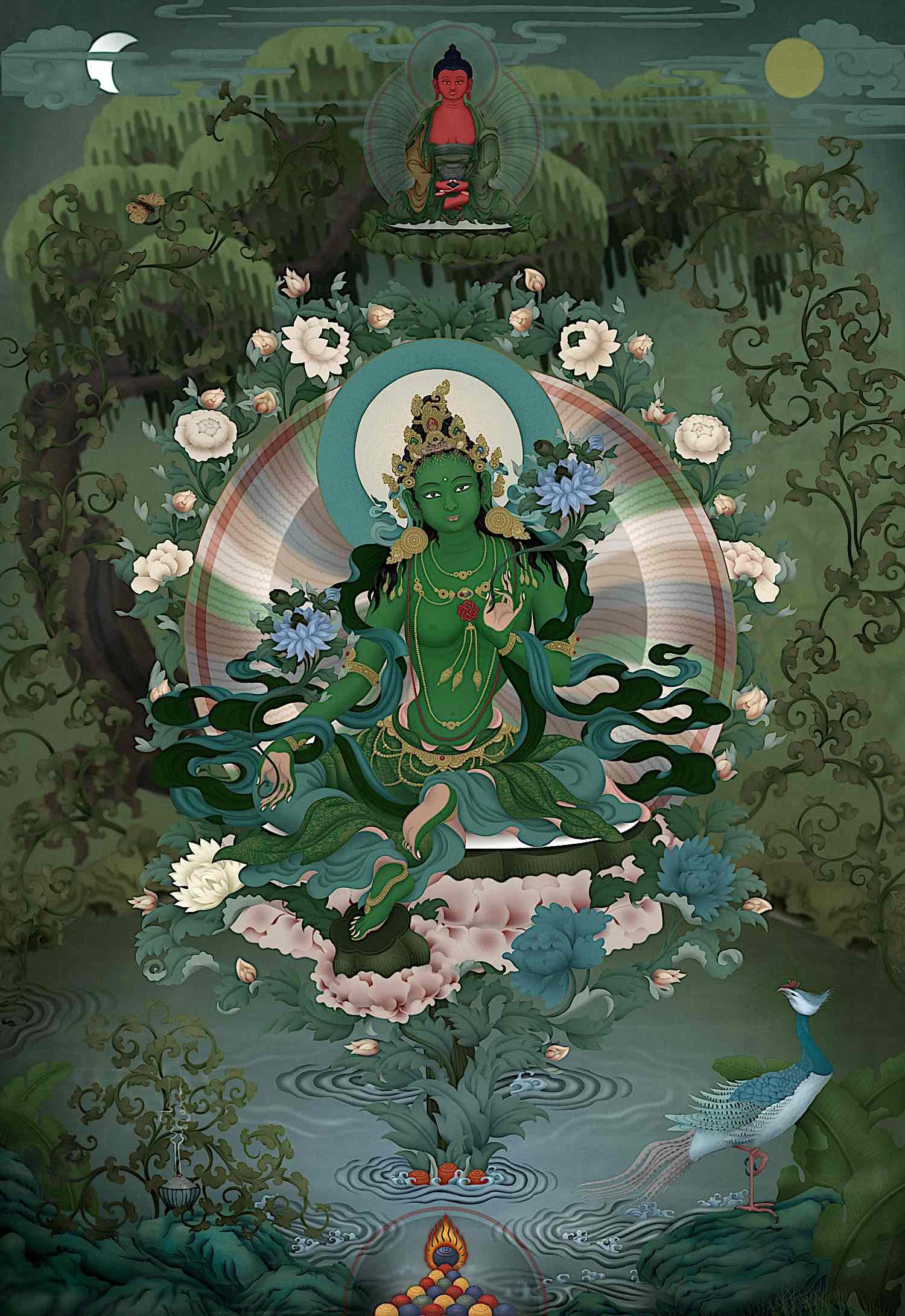
Tara is Amitabha’s most famous daughter or disciple. Tara, whose activity spans all of the Buddha Families, always has Amitabha appearing over her head in art to symbolize he is her Guru or teacher or spiritual father. It is usually Tara who carries out the activities of compassion in all six worlds on behalf of Amitabha. Even in her main role as Wisdom consort of the Karma activity, Amitabha is still her Spiritual Father or Guru.
Kurukulla is one of Red Taras forms, and one of the most popular practices in magnetizing.
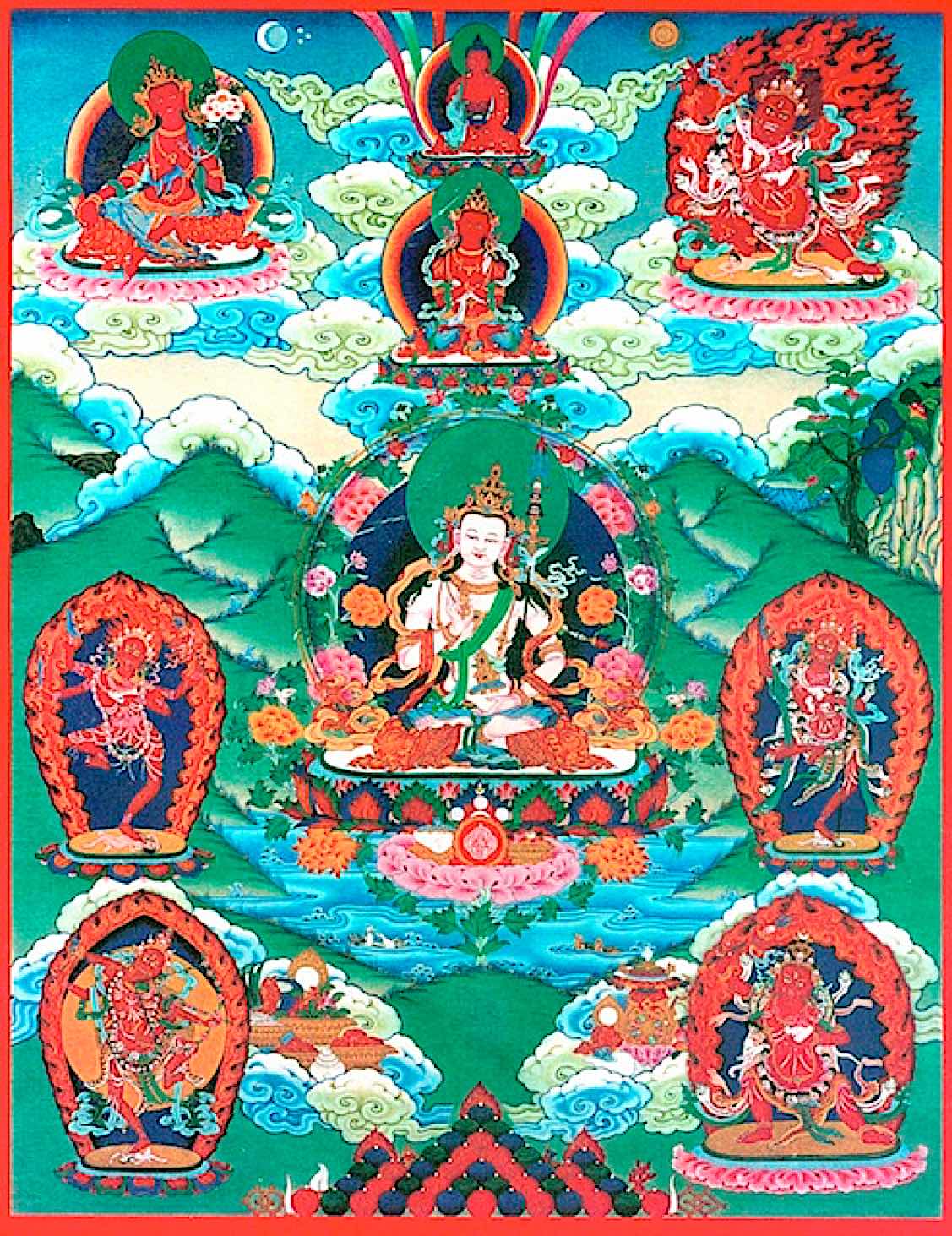
Vajravarahi and Vajrayogini are Highest Yoga Dakini forms in the family. For more on the Magnetizing family of Amitabha, including the 9 principle members, see our video or feature on the Wangdu Magnetizing practice, linked above.
Eternal Buddha Nature
Amitabha’s mission is to nurture that eternal life, our Buddha Nature. He does this through his activities of magnetizing auspicious activities in our current life, and after this life, through his perfect Pureland, a place where we can continue to practice the Dharma in peace. He has many practices in many lineages, but his most famous is the Pureland Practice, which can be as simple as repeatedly calling his name praise, Namo Amitabha Buddhaya.
Any being who takes Refuge in Amitabha and calls his name, can potentially be reborn there. (This is explained more fully in the Larger Sukhāvatī-vyūha Sūtra or the Sūtra on Immeasurable Life or the Shorter version we present in full below, the smaller Sukhāvatī-vyūha Sūtra, or the Amitābha Sūtra.)

The Happy Place: Sukyavati
In this special place, the Western Happy Land called Sukhavati, we no longer suffer in Samsara. We dwell in the Dharma and teachings, the happy realm, until full Enlightenment. It is also called the Land of Ultimate Bliss.
For all of these reasons, Amitabha is the most accessible and popular of the Five Dhyani Buddhas. While all Buddhas can help us on our Dharma journey towards Enlightenment, it is Amitabha’s magnetizing power that draws auspicious circumstances into our current lives, giving us the opportunity to be reborn in the Happy Realm. Shakyamuni Buddha explains why it is called the Happy Realm in the Sukhavati Vyuha Sutra:
Shariputra, for what reason is that Land called Ultimate Bliss? All living beings in that Land have no suffering, but enjoy all bliss, therefore, it is called Ultimate Bliss.
The description continues, elaborating on a spectacular paradise of perfection. Later in Buddha’s description he explains that even the soft wind gives rise to mindfulness:
Shariputra, in that Buddha Land, when the soft wind blows the rows of jewelled trees and jewelled nets give rise to delicate and wonderful sounds, like a hundred thousand kinds of music playing at the same time. Those who hear these sounds will naturally give rise to the heart of being mindful of the Buddha, the Dharma, and the Sangha. Shariputra, the realization of the Buddha Land is thus meritoriously adorned.
Amitabha’s Dharani
There is a longer and shorter version of Amitabha’s Amrita or Pureland Dharani. The shorter one appears in the short version of the Sukhavati Sutra, while the longer one usually appears in the longer Sutra. We have a beautiful video with the longer Dharani, with our Buddha Weekly band singing the Amitabha Dharani, linked above. The longer Dharani is:
Namo ratnatrayaya Nama aryamitabhaya tathagatayarhate samyaksam buddhāya Tadyatha: om amrite amitodbhave amritasambhave amritagarbhe amrita siddhe amrita teje amrta vikrante amrita vikrantagamini amrita gagana kirti kari amritadun dubhisvare sarvarthasa dhani sarva karma kleshak shayamkari svaha. Aum, brum, hum.
Which translates in English as:
Homage to the Three Jewels. Homage to the noble Amitabha, to the Tathagata, the Arhat, the completely and perfectly awakened one.
Thus: Om O immortality, O maker of immortality! O born of immortality! O essence of immortality! O immortality perfecting one! O the brilliance of immortality! O He who goes beyond immortality! O He who goes beyond immortality and whose glory is infinite as the sky. O sound of the drum of immortality realizing benefit for all. O, He who destroys all karmic afflictions. Homage!
Amitabha’s great mantra is a complete practice. Chant daily for merit and magnetizing benefits:
Heart Mantra
When you don’t have time for the longer mantra, there is a shorter mantra, which is also a daily practice for most people who practice Amitabha or any Padma deity.
The heart mantra is
Om Ami Deva Hrih
A Variant on the heart mantra is:
Om Amitabha Hrih
Great Dharani of Amitabha, chanted beautifully:
Namo Amitabha
The Sutra also recommends the Namo Mantra. This is:
Namo Amitabha Buddhaya
Which literally translates as Homage to Amitabha Buddha.
Sadhanas or Pujas
There are more practices and Sadhanas for Amitabha than most other Enlightened Deities, due to the extensive body of practices focused on Sukhavati, including complex sleep yogas and sadhanas to behold Amitabha in dreams, practices for the newly deceased, phowas or transference of consciousness, and many specific magnetizing practices. For this short Sadhana, presented here, it is a short daily practice to draw you closer to the great, compassionate Buddha, and to develop the common and uncommon siddhis.
For the short daily Sadhana, presented here, you can either visualize Amitabha in front of you if you do not have empowerment, or as a self-generation if you do have initiation. You can visualize Amitabha in his golden form, or Red form, although the Sadahana is presented as Red.
Ten Protections of Amitabha Practice (video):
A Sadhana, including this one, should include taking refuge in the Three Jewels, the Seven Limbs of Practice and a frontal or self generation, and mantra recitation with an acitivity such as purification or healing or magnetizing fortunate circumstances visualized. The seven limbs of practice are:
- Paying Homage to the Buddha
- Presenting Offerings
- Confessing our downfalls and negative deeds, and promising to refrain in future.
- Requesting Dharma Teachings.
- Asking the Buddha to remain with us until we attain Enlightenment.
- Dedicating the virtue for the benefit of all beings.
- Always dedicate the merit of the practice to the cause for enlightenment for the benefit of all sentient beings.
One very beautiful and unique practice presented here, is called, as it was designed for purification prior to sleeping in hopes of having auspicious dreams and blessings through the night of glorious Amitabha — but it is considered a complete practice any time. It is short enough that we can meditate on this practice each night before sleep — which according to the teaching brings auspicious dreams and purifies negative karma.
It can be done at any time of day, but it certainly is wonderful as a way of relaxing and purifying before sleep.
༄༅། །འོད་དཔག་མེད་ཀྱི་ཉལ་བསྒོམ་མདོར་བསྡུས་བཞུགས།
Brief Amitābha “Sleeping” Practice
by Jamyang Khyentse Chökyi Lodrö
སངས་རྒྱས་ཆོས་ཚོགས་ཀྱི་སྐྱབས་སེམས་ལན་གསུམ། །
Take refuge and generate bodhicitta by reciting ‘Sangye chötsok… etc.’ three times:
སངས་རྒྱས་ཆོས་དང་ཚོགས་ཀྱི་མཆོག་རྣམས་ལ། །
sangye chö dang tsok kyi chok nam la
In the Buddha, the Dharma and the Supreme Assembly
བྱང་ཆུབ་བར་དུ་བདག་ནི་སྐྱབས་སུ་མཆི། །
changchub bardu dak ni kyab su chi
I take refuge until I attain enlightenment.
བདག་གི་སྦྱིན་སོགས་བགྱིས་པའི་བསོད་ནམས་ཀྱིས། །
dak gi jin sok gyipé sönam kyi
Through the merit of practising generosity and so on,
འགྲོ་ལ་ཕན་ཕྱིར་སངས་རྒྱས་འགྲུབ་པར་ཤོག
dro la pen chir sangye drubpar shok
May I attain buddhahood for the benefit of all beings.
མ་ལུས་སེམས་ཅན་སོགས་ཤྭ་ལོ་ཀ་གཅིག་གི་མཐར།
Then recite the single verse beginning ‘Malü semchen…’:
མ་ལུས་སེམས་ཅན་ཀུན་གྱི་མགོན་གྱུར་ཅིང༌། །
malü semchen kun gyi gön gyur ching
You are the protectors of all beings, every single one.
བདུད་སྡེ་དཔུང་བཅས་མི་བཟད་འཇོམས་མཛད་ལྷ། །
dü dé pung ché mizé jomdzé lha
You are the deities who remorselessly destroy the māras and their forces.
དངོས་རྣམས་མ་ལུས་ཇི་བཞིན་མཁྱེན་གྱུར་པའི། །
ngönam malü jizhin khyen gyurpé
You who know all things just as they are, in their true nature,
བཅོམ་ལྡན་འཁོར་བཅས་གནས་འདིར་གཤེགས་སུ་གསོལ། །
chomden khor ché né dir shek su sol
Enlightened ones, with your retinues, come now to this place!
ཨོཾ་ཨ་མི་ཏ་བྷ་ཧྲཱིཿས་པ་རི་ཝཱ་ར་ཨེ་ཧྱེ་ཧི་བཛྲ་ས་མཱ་ཛཿ པདྨ་ཀ་མ་ལཱ་ཡ་སྟྭཾ།
om amitabha hrih sapariwara é hyé hi benza samadza | pema kama laya tom
Oṃ amitābha hrīḥ saparivāra ehy ehi vajra samājaḥ | padma kamālaya stvam ||
གྱིས་གདན་ཕུལ་བར་མོས།
Thus offer a seat.
ཇི་སྙེད་སུ་དག་སོགས་ཡན་ལག་བདུན་པ་བྱ།
Then perform the seven branches with ‘Jinyé su dak…etc.’:
1. Prostration
ཇི་སྙེད་སུ་དག་ཕྱོགས་བཅུའི་འཇིག་རྟེན་ན། །
jinyé su dak chok chü jikten na
To all the buddhas, the lions of the human race,
དུས་གསུམ་གཤེགས་པ་མི་ཡི་སེང་གེ་ཀུན། །
dü sum shekpa mi yi sengé kün
In all directions of the universe, through past and present and future:
བདག་གིས་མ་ལུས་དེ་དག་ཐམས་ཅད་ལ། །
dak gi malü dedak tamché la
To every single one of you, I bow in homage;
ལུས་དང་ངག་ཡིད་དང་བས་ཕྱག་བགྱིའོ། །
lü dang ngak yi dangwé chak gyi o
Devotion fills my body, speech and mind.
བཟང་པོ་སྤྱོད་པའི་སྨོན་ལམ་སྟོབས་དག་གིས། །
zangpo chöpé mönlam tob dak gi
Through the power of this prayer, aspiring to Good Action,
རྒྱལ་བ་ཐམས་ཅད་ཡིད་ཀྱིས་མངོན་སུམ་དུ། །
gyalwa tamché yi kyi ngönsum du
All the victorious ones appear, vivid here before my mind
ཞིང་གི་རྡུལ་སྙེད་ལུས་རབ་བཏུད་པ་ཡིས། །
zhing gi dul nyé lü rab tüpa yi
And I multiply my body as many times as atoms in the universe,
རྒྱལ་བ་ཀུན་ལ་རབ་ཏུ་ཕྱག་འཚལ་ལོ། །
gyalwa kün la rabtu chaktsal lo
Each one bowing in prostration to all the buddhas.
2. Offering
རྡུལ་གཅིག་སྟེང་ན་རྡུལ་སྙེད་སངས་རྒྱས་རྣམས། །
dul chik teng na dul nyé sangye nam
In every atom preside as many buddhas as there are atoms,
སངས་རྒྱས་སྲས་ཀྱི་དབུས་ན་བཞུགས་པ་དག །
sangye sé kyi ü na zhukpa dak
And around them, all their bodhisattva heirs:
དེ་ལྟར་ཆོས་ཀྱི་དབྱིངས་རྣམས་མ་ལུས་པ། །
detar chö kyi ying nam malüpa
And so I imagine them filling
ཐམས་ཅད་རྒྱལ་བ་དག་གིས་གང་བར་མོས། །
tamché gyalwa dak gi gangwar mö
Completely the entire space of reality.
དེ་དག་བསྔགས་པ་མི་ཟད་རྒྱ་མཚོ་རྣམས། །
dedak ngakpa mizé gyatso nam
Saluting them with an endless ocean of praise,
དབྱངས་ཀྱི་ཡན་ལག་རྒྱ་མཚོའི་སྒྲ་ཀུན་གྱིས། །
yang kyi yenlak gyatsö dra kün gyi
With the sounds of an ocean of different melodies
རྒྱལ་བ་ཀུན་གྱི་ཡོན་ཏན་རབ་བརྗོད་ཅིང་། །
gyalwa kün gyi yönten rab jö ching
I sing of the buddhas’ noble qualities,
བདེ་བར་གཤེགས་པ་ཐམས་ཅད་བདག་གིས་བསྟོད། །
dewar shekpa tamché dak gi tö
And praise all those who have gone to perfect bliss.
མེ་ཏོག་དམ་པ་ཕྲེང་བ་དམ་པ་དང་། །
metok dampa trengwa dampa dang
To every buddha, I make offerings:
སིལ་སྙན་རྣམས་དང་བྱུག་པ་གདུགས་མཆོག་དང་། །
silnyen nam dang jukpa duk chok dang
Of the loveliest flowers, of beautiful garlands,
མར་མེ་མཆོག་དང་བདུག་སྤོས་དམ་པ་ཡིས། །
marmé chok dang dukpö dampa yi
Of music and perfumed ointments, the best of parasols,
རྒྱལ་བ་དེ་དག་ལ་ནི་མཆོད་པར་བགྱི། །
gyalwa dedak la ni chöpar gyi
The brightest lamps and finest incense.
ན་བཟའ་དམ་པ་རྣམས་དང་དྲི་མཆོག་དང་། །
naza dampa nam dang dri chok dang
To every buddha, I make offerings:
ཕྱེ་མ་ཕུར་མ་རི་རབ་མཉམ་པ་དང་། །
chema purma rirab nyampa dang
Exquisite garments and the most fragrant scents,
བཀོད་པ་ཁྱད་པར་འཕགས་པའི་མཆོག་ཀུན་གྱིས། །
köpa khyepar pakpé chok kün gyi
Powdered incense, heaped as high as Mount Meru,
རྒྱལ་བ་དེ་དག་ལ་ནི་མཆོད་པར་བགྱི། །
gyalwa dedak la ni chöpar gyi
Arranged in perfect symmetry.
མཆོད་པ་གང་རྣམས་བླ་མེད་རྒྱ་ཆེ་བ། །
chöpa gang nam lamé gya chewa
Then the vast and unsurpassable offerings—
དེ་དག་རྒྱལ་བ་ཐམས་ཅད་ལ་ཡང་མོས། །
dedak gyalwa tamché la yang mö
Inspired by my devotion to all the buddhas, and
བཟང་པོ་སྤྱོད་ལ་དད་པའི་སྟོབས་དག་གིས། །
zangpo chö la depé tob dak gi
Moved by the power of my faith in Good Actions—
རྒྱལ་བ་ཀུན་ལ་ཕྱག་འཚལ་མཆོད་པར་བགྱི། །
gyalwa kün la chaktsal chöpar gyi
I prostrate and offer to all you victorious ones.
3. Confession
འདོད་ཆགས་ཞེ་སྡང་གཏི་མུག་དབང་གིས་ནི། །
döchak zhedang timuk wang gi ni
Whatever negative acts I have committed,
ལུས་དང་ངག་དང་དེ་བཞིན་ཡིད་ཀྱིས་ཀྱང་། །
lü dang ngak dang dezhin yi kyi kyang
While driven by desire, hatred and ignorance,
སྡིག་པ་བདག་གིས་བགྱིས་པ་ཅི་མཆིས་པ། །
dikpa dak gi gyipa chi chipa
With my body, my speech and also with my mind,
དེ་དག་ཐམས་ཅད་བདག་གིས་སོ་སོར་བཤགས། །
dedak tamché dak gi sosor shak
Before you, I confess and purify each and every one.
4. Rejoicing
ཕྱོགས་བཅུའི་རྒྱལ་བ་ཀུན་དང་སངས་རྒྱས་སྲས། །
chok chü gyalwa kün dang sangye sé
With a heart full of delight, I rejoice at all the merits
རང་རྒྱལ་རྣམས་དང་སློབ་དང་མི་སློབ་དང་། །
ranggyal nam dang lob dang mi lob dang
Of buddhas and bodhisattvas,
འགྲོ་བ་ཀུན་གྱི་བསོད་ནམས་གང་ལ་ཡང་། །
drowa kün gyi sönam gangla yang
Pratyekabuddhas, those in training and the arhats beyond training,
དེ་དག་ཀུན་གྱི་རྗེས་སུ་བདག་ཡི་རང་། །
dedak kün gyi jesu dak yi rang
And every living being, throughout the entire universe.
5. Imploring the Buddhas to Turn the Wheel of Dharma
གང་རྣམས་ཕྱོགས་བཅུའི་འཇིག་རྟེན་སྒྲོན་མ་རྣམས། །
gang nam chok chü jikten drönma nam
You who are like beacons of light shining through the worlds,
བྱང་ཆུབ་རིམ་པར་སངས་རྒྱས་མ་ཆགས་བརྙེས། །
changchub rimpar sangye machak nyé
Who passed through the stages of enlightenment, to attain buddhahood, freedom from all attachment,
མགོན་པོ་དེ་དག་བདག་གིས་ཐམས་ཅད་ལ། །
gönpo dedak dak gi tamché la
I exhort you: all of you protectors,
འཁོར་ལོ་བླ་ན་མེད་པར་བསྐོར་བར་བསྐུལ། །
khorlo lanamepar korwar kul
Turn the unsurpassable wheel of Dharma.
6. Requesting the Buddhas not to Enter Nirvāṇa
མྱ་ངན་འདའ་སྟོན་གང་བཞེད་དེ་དག་ལ། །
nya ngen da tön gang zhé dedak la
Joining my palms together, I pray
འགྲོ་བ་ཀུན་ལ་ཕན་ཞིང་བདེ་བའི་ཕྱིར། །
drowa kün la pen zhing dewé chir
To you who intend to pass into nirvāṇa,
བསྐལ་པ་ཞིང་གི་རྡུལ་སྙེད་བཞུགས་པར་ཡང་། །
kalpa zhing gi dul nyé zhukpar yang
Remain, for aeons as many as the atoms in this world,
བདག་གིས་ཐལ་མོ་རབ་སྦྱར་གསོལ་བར་བགྱི། །
dak gi talmo rab jar solwar gyi
And bring well-being and happiness to all living beings.
7. Dedication
ཕྱག་འཚལ་བ་དང་མཆོད་ཅིང་བཤགས་པ་དང་། །
chaktsalwa dang chö ching shakpa dang
What little virtue I have gathered through my homage,
རྗེས་སུ་ཡི་རང་བསྐུལ་ཞིང་གསོལ་བ་ཡི། །
jesu yi rang kul zhing solwa yi
Through offering, confession, and rejoicing,
དགེ་བ་ཅུང་ཟད་བདག་གིས་ཅི་བསགས་པ། །
gewa chungzé dak gi chi sakpa
Through exhortation and prayer—all of it
ཐམས་ཅད་བདག་གིས་བྱང་ཆུབ་ཕྱིར་བསྔོའོ། །
tamché dak gi changchub chir ngo’o
I dedicate to the enlightenment of all beings!
བཅོམ་ལྡན་འདས་དེ་བཞིན་གཤེགས་པ་དགྲ་བཅོམ་པ་ཡང་དག་པར་རྫོགས་པའི་སངས་རྒྱས་འོད་དཔག་མེད་ལ་ཕྱག་འཚལ་ལོ། སྐྱབས་སུ་མཆིའོ།
chomdendé dezhin shekpa drachompa yangdakpar dzokpé sangye öpakmé la chaktsal lo kyab su chi o
Bhagavān, tathāgata, arhat, complete and perfect buddha, Amitābha, to you I pay homage! In you I take refuge!
མཚན་ལན་གསུམ་བརྗོད།
Recite his name like this three times.
མོས་གུས་དྲག་ཏུ་བསྐྱེད་ལ།
Then generate fervent devotion and continue with:
མདུན་གྱི་སྣང་བ་མཐའ་ཡས་ཀྱི༔
dün gyi nangwa tayé kyi
The Buddha Amitābha, ‘Limitless Light’ is before me.
ཐུགས་ཀའི་ཧྲཱིཿ་ལས་གཉིས་པ་བྱུང་༔
tukké hrih lé nyipa jung
From the syllable Hrīḥ at his heart a second syllable emerges,
ཤངས་བུག་གཡས་ནས་རང་ཉིད་ཀྱི༔
shang buk yé né rangnyi kyi
Passes through his right nostril and enters my left nostril,
སྣ་བུག་གཡོན་ཞུགས་སྙིང་གའི་དབུས༔
nabuk yön zhuk nyinggé ü
From where it descends to the centre of my heart.
འོད་ཟེར་སྣང་བ་རབ་འཕྲོས་པས༔
özer nangwa rab tröpé
It radiates light and rays of light,
སྡིག་སྒྲིབ་བག་ཆགས་བཅས་པ་སྦྱངས༔
dikdrib bakchak chepa jang
Which purify my misdeeds, obscurations and habitual patterns.
རླུང་ཕྱིར་སོང་དང་ལྷན་ཅིག་ཏུ༔
lung chir song dang lhenchik tu
Then, together with my exhalation of breath,
སྣ་བུག་གཡས་ནས་བཅོམ་ལྡན་གྱི༔
nabuk yé né chomden gyi
It passes through my right nostril to enter
ཤངས་བུག་གཡོན་ཞུགས་ཧྲཱིཿལ་ཐིམ༔
shang buk yön zhuk hrih la tim
The conqueror’s left nostril and dissolve back into the Hrīḥ.
རྒྱལ་བའི་ཐུགས་དང་རང་གི་སེམས༔
gyalwé tuk dang rang gi sem
My own mind and the victorious one’s wisdom mind
དབྱེར་མེད་བློ་འདས་ངང་དུ་བཞག༔
yermé lodé ngang du zhak
Merge indivisibly and I rest in a state beyond the ordinary mind.
ཅེས་བརྗོད་ཅིང་མོས་ལ་དབུགས་ཀྱི་འགྲོ་འོང་དང་བསྟུན་པའི་དམིགས་པ་ཡང་ཡང་བསྒོམ་པའི་མཐར་ཐུགས་ཡིད་བསྲེ་ཞིང་། ཉལ་བའི་དུས་སུ་ དེའི་ངང་ལ་གཉིད་ལོག་པའམ། ཐུན་ལས་ལྡང་ན་འོད་དཔག་མེད་རང་ལ་བསྟིམ་པའམ། མི་དམིགས་པར་བཞག་ལ། སྨོན་ལམ་རྒྱས་བསྡུས་ཅི་རིགས་བྱའོ། །
Recite this, practising the visualization again and again in coordination with your breathing, and merging your mind with the wisdom mind at the end. When sleeping, you can fall asleep in this state. Alternatively, it is fine if, when rising from the session, Amitābha dissolves into you, or you remain in the non-referential state, and then you recite prayers of aspiration, as elaborately or briefly as you prefer.
ཞེས་ནུབ་བླ་མ་ཀུན་བཟང་ཆོས་འཕེལ་ནས་གསུང་བསྐུལ་ངོར་ཆོས་ཀྱི་བློ་གྲོས་པས་བྲིས་པའོ། །དགེའོ། །བཀྲ་ཤིས།
Thus, Chökyi Lodrö (Born 1893) wrote this in response to a request from Nub Lama Kunzang Chöpel. May there be virtue and auspiciousness.
| Translated by Adam Pearcey with the generous support of the Khyentse Foundation and Tertön Sogyal Trust, 2020, as published by Lotsawa House>>

The 48 Vows of Dharma
From the Three Pure Land Sutras, Volume II: The Larger Sutra, pg. 20-29
From the Three Pure Land Sutras, Volume II: The Larger Sutra, pg. 20-29
- ‘If, when I attain Buddhahood, there should be hell, the realm of hungry spirits, or the realm of animals in my land, may I not attain the perfect enlightenment.
- If, when I attain Buddhahood, the humans and devas in my land, should, after their death, return once more to the three evil realms, may I not attain the perfect enlightenment.
- If, when I attain Buddhahood, the humans and devas in my land should not all be the color of genuine gold, may I not attain the perfect enlightenment.
- If, when I attain Buddhahood, the humans and devas in my land should not all be of the same appearance and should be either beautiful or ugly, may I not attain the perfect enlightenment.
- If, when I attain Buddhahood, the humans and devas in my land should not remember all their former lives, and thus be unable to know at least the events of the previous hundred thousand kotis of nayutas of kalpas, may I not attain the perfect enlightenment.
- If, when I attain Buddhahood, the humans and devas in my land should not possess divine eyes, and thus be unable to see at least a hundred thousand kotis of nayutas of Buddha‐lands, may I not attain the perfect enlightenment.
- If, when I attain Buddhahood, the humans and devas in my land should not possess divine ears, and thus be unable to hear the teachings being expounded by at least a hundred thousand kotis of nayutas of Buddhas or remember them all, may I not attain the perfect enlightenment.
- If, when I attain Buddhahood, the humans and devas in my land should not possess the wisdom to see into the minds of others, and thus be unable to know the thoughts of the sentient beings of at least a hundred thousand kotis of nayutas of Buddha‐lands, may I not attain the perfect enlightenment.
- If, when I attain Buddhahood, the humans and devas in my land should not possess divine feet, and thus be unable to go beyond at least a hundred thousand kotis of nayutas of Buddha‐lands in a thought‐moment, may I not attain the perfect enlightenment.
- If, when I attain Buddhahood, the humans and devas in my land should give rise to any thought of attachment to their body, may I not attain the perfect enlightenment.
- If, when I attain Buddhahood, the humans and devas in my land should not dwell in the stage of the truly settled and necessarily attain nirvana, may I not attain the perfect enlightenment.
- If, when I attain Buddhahood, my light should be finite, not illuminating even a hundred thousand kotis of nayutas of Buddha‐lands, may I not attain the perfect enlightenment.
- If, when I attain Buddhahood, my life should be finite, limited even to a hundred thousand kotis of nayutas of kalpas, may I not attain the perfect enlightenment.
- If, when I attain Buddhahood, the number of sravakas in my land could be counted and known, even if all the sravakas and pratyekabuddhas in the triple‐thousand great thousand worlds should spend at least a hundred thousand kalpas counting them, may I not attain the perfect enlightenment.
- When I attain Buddhahood, the humans and devas in my land will not have a limited life span, except when they wish to shorten it freely according to their original vows. Should this not be so, may I not attain the perfect enlightenment.
- If, when I attain Buddhahood, the humans and devas in my land should even hear that there are names of evil acts, may I not attain the perfect enlightenment.
- If, when I attain Buddhahood, the countless Buddhas throughout the worlds in the ten quarters should not all glorify and praise my name, may I not attain the perfect enlightenment.
- If, when I attain Buddhahood, the sentient beings of the ten quarters who, with sincere and *entrusting heart, aspire to be born in my land and say my name even ten times, should not be born there, may I not attain the perfect enlightenment. Excluded are those who commit the five grave offenses and those who slander the right Dharma.
- If, when I attain Buddhahood, the sentient beings of the ten quarters, while awakening the mind aspiring for enlightenment and performing meritorious acts, should desire to be born in my land with sincere aspiration, and yet should I not appear before them at the moment of death surrounded by a host of sages, may I not attain the perfect enlightenment.
- If, when I attain Buddhahood, the sentient beings of the ten quarters, upon hearing my name, should place their thoughts on my land, cultivate the roots of virtue, and direct their merit with sincere mind desiring to be born in my land, and yet not ultimately attain birth, may I not attain the perfect enlightenment.
- If, when I attain Buddhahood, the humans and devas in my land should not all have the thirty‐two major physical characteristics of a great person, may I not attain the perfect enlightenment.
- When I attain Buddhahood, the bodhisattvas of other Buddha‐lands who come and are born in my land will ultimately and unfailingly attain the stage of succession to Buddhahood after one lifetime. Excepted are those who, in accordance with their original vows to guide others freely to enlightenment, don the armor of universal vows for the sake of sentient beings, accumulate roots of virtue, emancipate all beings, travel to Buddha‐lands to perform bodhisattva practices, make offerings to all the Buddha‐tathagatas throughout the ten quarters, awaken sentient beings countless as the sands of the Ganges, and bring them to abide firmly in supreme, true enlightenment. Such bodhi‐ sattvas surpass those in the ordinary bodhisattva stages in carrying out practices; in reality, they cultivate the virtue of Samantabhadra. Should it not be so, may I not attain the perfect enlightenment.
- If, when I attain Buddhahood, the bodhisattvas in my land who, upon receiving my transcendental power and making offerings to Buddhas, should not be able to reach all the innumerable and countless nayutas of Buddha‐lands in the brief period of a single meal, may I not attain the perfect enlightenment.
- If, when I attain Buddhahood, the bodhisattvas in my land, in accumulating roots of virtue in the presence of Buddhas, should not be able to obtain whatever they wish in order to make offerings to these Buddhas, may I not attain the perfect enlightenment.
- If, when I attain Buddhahood, the bodhisattvas in my land should not be able to expound the Dharma with all‐knowing wisdom, may I not attain the perfect enlightenment.
- If, when I attain Buddhahood, the bodhisattvas in my land should not possess the diamond‐like body of Nåråyaˆa, may I not attain the perfect enlightenment.
- When I attain Buddhahood, all the myriad features enjoyed by the humans and devas in my land will be glorious and resplendent with superb, wonderful, and exquisite forms and colors that are beyond description. If, even with the divine eye that they acquire, they should be able to clearly distinguish and enumerate these features, may I not attain the perfect enlightenment.
- If, when I attain Buddhahood, the bodhisattvas in my land, even those of little virtue, are unable to perceive the bodhi‐tree of immeasurable light and countless colors, which is four million li in height, may I not attain the perfect enlightenment.
- If, when I attain Buddhahood, the bodhisattvas in my land should not possess wisdom and eloquence when comprehending, reciting, and expounding sutras, may I not attain the perfect enlightenment.
- If, when I attain Buddhahood, the bodhisattvas in my land should possess limited wisdom and eloquence, may I not attain the perfect enlightenment.
- When I attain Buddhahood, my land will be pure and brilliant, completely illuminating and reflecting all the countless, innumerable, and inconceivable Buddha‐worlds in the ten quarters, as if one were looking at one’s own face in a clear mirror. Should it not be so, may I not attain the perfect enlightenment.
- When I attain Buddhahood, all the myriad features in my land, from the ground to the sky, such as palaces, pavilions, ponds, streams, flowers, and trees, will comprise countless precious substances and a hundred thousand kinds of fragrance, which splendidly adorn the land, surpassing anything in the realms of humans and devas. Those fragrances will pervade the worlds in the ten quarters, bringing bodhisattvas who sense them to perform the practices of the Buddha‐way. Should it not be so, may I not attain the perfect enlightenment.
- When I attain Buddhahood, the sentient beings throughout the countless and inconceivable Buddha‐worlds in the ten quarters, having received my light and having been touched by it, will become soft and gentle in body and mind, surpassing humans and devas in those qualities. Should it not be so, may I not attain the perfect enlightenment.
- If, when I attain Buddhahood, the sentient beings throughout the countless and inconceivable Buddha‐worlds in the ten quarters, having heard my name, should not attain the bodhisattva’s insight into the nonorigination of all existence and all the profound dharanis, may I not attain the perfect enlightenment.
- When I attain Buddhahood, the women throughout the countless and inconceivable Buddha‐worlds in the ten quarters, having heard my name, will rejoice in entrusting heart, awaken the mind aspiring for enlightenment, and wish to renounce the state of being women. If, after the end of their lives, they should be reborn as women, may I not attain the perfect enlightenment.
- When I attain Buddhahood, the bodhisattvas throughout the countless and inconceivable Buddha‐worlds in the ten quarters, having heard my name, will, after the end of their lives, always perform the sacred practices and fulfill the Buddha‐way. Should it not be so, may I not attain the perfect enlightenment.
- When I attain Buddhahood, the devas and humans throughout the countless and inconceivable Buddha‐worlds in the ten quarters who, having heard my name, prostrate themselves on the ground and bow to me in reverence, rejoice in entrusting heart, and perform the bodhisattva practices, will be revered by devas and people of the world. Should it not be so, may I not attain the perfect enlightenment.
- When I attain Buddhahood, the humans and devas in my land will acquire garments as soon as such a desire arises in their minds, and they will naturally be clothed in fine robes as commended and prescribed by the Buddhas. If they should need sewing, bleaching, dyeing or washing, may I not attain the perfect enlightenment.
- If, when I attain Buddhahood, the humans and devas in my land should not attain happiness and delight comparable to those of a bhiksu whose blind passions have all been exhausted, may I not attain the perfect enlightenment.
- When I attain Buddhahood, the bodhisattvas in my land who wish to see innumerable glorious Buddha‐lands in the ten quarters, whenever they please, will be able to see them all reflected in the jeweled trees as if one were looking at one’s own face in a clear mirror. Should it not be so, may I not attain the perfect enlightenment.
- If, when I attain Buddhahood, the bodhisattvas in other lands, having heard my name, should have any disabilities in their physical faculties until they become Buddhas, may I not attain the perfect enlightenment.
- When I attain Buddhahood, the bodhisattvas in other lands, having heard my name, will all attain the samadhi of pure emancipation. While dwelling in that samadhi, they will make offerings in an instant of thought to the countless and inconceivable number of Buddhas, World‐honored Ones, without losing their concentration of mind. Should it not be so, may I not attain the perfect enlightenment.
- When I attain Buddhahood, the bodhisattvas in other lands, having heard my name, will be reborn into noble families after the end of their lives. Should it not be so, may I not attain the perfect enlightenment.
- When I attain Buddhahood, the bodhisattvas in other lands, having heard my name, will leap and dance with joy and perform the bodhisattva practices, thereby acquiring the roots of virtue. Should it not be so, may I not attain the perfect enlightenment.
- When I attain Buddhahood, the bodhisattvas in other lands, having heard my name, will all attain the samadhi of universal sameness. While dwelling in that samadhi, they will continually behold all the countless and inconceivable numbers of Buddhas until they become Buddhas themselves. Should it not be so, may I not attain the perfect enlightenment.
- When I attain Buddhahood, the bodhisattvas in my land will spontaneously be able to hear, as they wish, the Dharma that they desire to hear. Should it not be so, may I not attain the perfect enlightenment.
- If, when I attain Buddhahood, the bodhisattvas in other lands, upon hearing my name, should not be able to reach the stage of nonretrogression, may I not attain the perfect enlightenment.
- If, when I attain Buddhahood, the bodhisattvas in other lands, upon hearing my name, should not be able to attain the first, second, and third *dharma‐insights and should they fall back from the pursuit of the teachings of the Buddhas, may I not attain the perfect enlightenment.’
Sukhāvatī-vyūha Sūtra
Namo Amitabha Buddha!
Namo Amituofo! 南无阿弥陀佛!
佛说阿弥陀经
The Buddha Speaks of Amitabha Sutra
or simply
The Amitabha Sutra
(The Shorter Sukhāvatīvyūha Sūtra)
Namo Fundamental Teacher
Shakyamuni Buddha (three times)
Namo Amitabha Buddha (three times)
Namo Lotus Pond Ocean-Wide Assembly of
Buddhas & Bodhisattvas
(three times)
Sutra Opening Verse
The unsurpassed, profound, subtle, and wondrous Dharma
is difficult to encounter in hundreds of millions of kalpas.
I now see and hear it, receive and uphold it,
May we understand the true meaning of the Tathagata.
佛说阿弥陀经
The Buddha Speaks of Amitabha Sutra
(The Shorter Sukhāvatīvyūha Sūtra)
姚秦三藏法师鸠摩罗什译
Based on the Chinese text translated by
Tripitaka Master Kumārajīva of the Yao Qin Dynasty
如是我闻。一时佛在舍卫国,祇树给孤独园。与大比丘僧,千二百五十人俱,皆是大阿罗汉,众所知识:长老舍利弗、摩诃目犍连、摩诃迦叶、摩诃迦旃延、摩诃俱絺罗、离婆多、周利槃陀伽、难陀、阿难陀、罗侯罗、憍梵波提、宾头卢颇罗堕、迦留陀夷、摩诃劫宾那、薄拘罗、阿那楼驮,如是等诸大弟子。并诸菩萨摩诃萨:文殊师利法王子、阿逸多菩萨、乾陀诃提菩萨、常精进菩萨,与如是等诸大菩萨。及释提桓因等,无量诸天大众俱。
Thus have I heard. At one time, the Buddha dwelt at the Jetavana Monastery in Shravasti, together with a gathering of twelve-hundred-fifty great Bhikshus, all great Arhats whom were known by all: Elders Sariputra, Mahamaudgalyayana, Mahakashyapa, Mahakatyayana, Mahakaushthila, Revata, Shuddhipanthaka, Nanda, Ananda, Rahula, Gavampati, Pindola Bharadvaja, Kalodayin, Mahakapphina, Vakkula, Aniruddha, and other great disciples such as these. Together with all the Bodhisattvas Mahasattvas: Dharma Prince Manjushri, Ajita Bodhisattva, Gandhahastin Bodhisattva, Constant Endeavour Bodhisattva, and other great Bodhisattvas such as these. Together with Sakra, and countless heavenly beings.
尔时,佛告长老舍利弗:‘从是西方,过十万亿佛土,有世界名曰极乐,其土有佛,号阿弥陀,今现在说法。’
At that time the Buddha told the Elder Sariputra,“To the West over a hundred billion Buddha Lands away, there is a world called Ultimate Bliss. In that Land, there is a Buddha named Amitabha, who is right now teaching the Dharma.
‘舍利弗,彼土何故名为极乐?其国众生,无有众苦,但受诸乐,故名极乐。又舍利弗。极乐国土,七重栏楯,七重罗网,七重行树,皆是四宝周匝围绕,是故彼国名为极乐。’
Sariputra, for what reason is that Land called Ultimate Bliss? All living beings in that Land have no suffering, but enjoy all bliss, therefore, it is called Ultimate Bliss. Moreover, Sariputra, the Land of Ultimate Bliss has seven tiers of railings, seven layers of netting, seven rows of trees, all surrounded by the four treasures, thus, it is named the Ultimate Bliss.
‘又舍利弗。极乐国土,有七宝池,八功德水,充满其中,池底纯以金沙布地。四边阶道,金、银、琉璃、玻璃合成。上有楼阁,亦以金、银、琉璃、玻璃、砗磲、赤珠、玛瑙而严饰之。池中莲花大如车轮,青色青光、黄色黄光、赤色赤光、白色白光,微妙香洁。舍利弗。极乐国土,成就如是功德庄严。’
Moreover, Sariputra, the Land of Ultimate Bliss has seven-jeweled ponds, filled with eight-merit water. The bottoms of the ponds are covered with golden sands. On the four sides of the streets are stairs made of gold, silver, lapis lazuli, and glass. Above are pavilions adorned with gold, silver, lapis lazuli, glasses, Tridacna stones, crimson pearls and agates. The lotuses in the ponds are as large as carriage wheels, green colour of green light, yellow colour of yellow light, red colour of red light, white colour of white light, delicate, fragrant and pure. Sariputra, the realization of the Land of Ultimate Bliss is thus meritoriously adorned.
‘又舍利弗。彼佛国土,常作天乐。黄金为地。昼夜六时,雨天曼陀罗华。其土众生,常以清旦,各以衣祴盛众妙华,供养他方十万亿佛,即以食时,还到本国,饭食经行。舍利弗。极乐国土,成就如是功德庄严。’
Moreover, Sariputra, in that Buddha Land, there is heavenly music playing constantly, the ground is made with gold. In the six periods of the day and night, Mandarava flowers fall from the sky. In the early mornings, the beings of the Land, each with garments filled with wonderful flowers, makes offerings to a hundred billion Buddhas in the other worlds. At mealtime, they return to their own Land, after eating, they walk about in meditation. Sariputra, the realization of the Land of Ultimate Bliss is thus meritoriously adorned.
复次舍利弗:‘彼国常有种种奇妙杂色之鸟:白鹤、孔雀、鹦鹉、舍利、迦陵频伽、共命之鸟。是诸众鸟,昼夜六时,出和雅音。其音演畅五根、五力、七菩提分、八圣道分,如是等法。其土众生,闻是音已,皆悉念佛、念法、念僧。’
Moreover, Sariputra, in that Land there are various wonderful variegated birds: white cranes, peacocks, parrots, saris, kalavinkas, and birds of common destiny. In the six periods of the day and night, all the birds sing forth harmonious and elegant sounds which proclaim the five roots, the five powers, the seven factors of Bodhi (enlightenment), the Noble Eightfold Path, Dharmas such as these. When living beings of that Land hear these sounds, they are altogether mindful of the Buddha, the Dharma and the Sangha.
‘舍利弗。汝勿谓此鸟,实是罪报所生,所以者何?彼佛国土,无三恶道。’舍利弗。其佛国土,尚无恶道之名,何况有实。是诸众鸟,皆是阿弥陀佛,欲令法音宣流,变化所作。’
Sariputra, do not think that these birds were born as retribution for their karmic offences. For what reason? In that Buddha Land there are no three evil paths. Sariputra, in that Buddha Land, the names of the three evil paths do not even exist, what does it say about their existence. All these birds were transformed by Amitabha Buddha for the Dharma sound to spread widely.
‘舍利弗。彼佛国土,微风吹动诸宝行树,及宝罗网,出微妙音,譬如百千种乐,同时俱作。闻是音者,自然皆生念佛、念法、念僧之心。舍利弗。其佛国土,成就如是功德庄严。’
Sariputra, in that Buddha Land, when the soft wind blows the rows of jewelled trees and jewelled nets give rise to delicate and wonderful sounds, like a hundred thousand kinds of music playing at the same time. Those who hear these sounds will naturally give rise to the heart of being mindful of the Buddha, the Dharma, and the Sangha. Sariputra, the realization of the Buddha Land is thus meritoriously adorned.
‘舍利弗。于汝意云何?彼佛何故号阿弥陀?舍利弗。彼佛光明无量,照十方国,无所障碍,是故号为阿弥陀。又舍利弗。彼佛寿命,及其人民,无量无边阿僧祇劫,故名阿弥陀。舍利弗。阿弥陀佛成佛已来,于今十劫。又舍利弗。彼佛有无量无边声闻弟子,皆阿罗汉,非是算数之所能知。诸菩萨众,亦复如是。舍利弗。彼佛国土,成就如是功德庄严。’
Sariputra, what do you think? Why is that Buddha named Amitabha? Sariputra, the light of that Buddha is infinite, illumining all worlds in the ten directions without obstacles, therefore, He is named Amitabha. Moreover, Sariputra, the life of that Buddha and His people extend for infinite limitless asamkhyeya kalpas, thus, He is named Amitayus. Sariputra, since Amitabha realized Buddhahood, ten kalpas have passed.
Moreover, Sariputra, that Buddha has immeasurable boundless Sravakas, all Arhats, their numbers cannot be known through calculation. The same is true for all the Bodhisattvas. Sariputra, the realization of that Buddha Land is thus meritoriously adorned.
‘又舍利弗。极乐国土,众生生者,皆是阿鞞跋致,其中多有一生补处,其数甚多,非是算数所能知之,但可以无量无边阿僧祇说。舍利弗。众生闻者,应当发愿,愿生彼国,所以者何?得与如是诸上善人俱会一处。’
Moreover, Sariputra, those living beings born in the Land of the Ultimate Bliss are all Avaivartika. Many among them are in the Position of One Lifetime Replacement. Their number is extremely many, cannot be known by calculation, but can only be spoken in countless limitless asamkhya kalpas. Sariputra, living beings who hear this, should make the vow – I vow to be born in that Land. And why? So they can gather together with all the superior and good people in one place.
‘舍利弗。不可以少善根福德因缘,得生彼国。舍利弗。若有善男子善女人,闻说阿弥陀佛,执持名号,若一日、若二日,若三日,若四日,若五日,若六日,若七日,一心不乱,其人临命终时,阿弥陀佛,与诸圣众,现在其前。是人终时,心不颠倒,即得往生阿弥陀佛极乐国土。舍利弗。我见是利,故说此言。若有众生,闻是说者,应当发愿,生彼国土。’
Sariputra, one cannot have few good roots, blessings, merit and karma to attain birth in that Land. Sariputra, if there is a good man or good woman who hears the Name ‘Amitabha’ and holds to it, whether for one day, two days, three days, four days, five days, six days, or seven days, single-hearted without confusion. At the time of near death, Amitabha Buddha and all the Sages will appear before this person. When the person is at the time of death, if his heart (mind) is not deluded, then he will be reborn in Amitabha Buddha’s Land of Ultimate Bliss. Sariputra, I see these benefits, therefore, I speak of these words. If living beings hear this, they should make the vow to be born in that Land.
[在这里值得注意的是玄奘法师翻译的版本:“又舍利子,若有净信诸善男子或善女人,得闻如是无量寿佛无量无边不可思议功德名号、极乐世界功德庄严,闻已思惟,若一日夜,或二、或三、或四、或五、或六、或七,系念不乱(心一直系在阿弥陀佛名号上,不故意胡思乱想)。是善男子或善女人临命终时,无量寿佛与其无量声闻弟子菩萨众俱,前后围绕来住其前,慈悲加祐令心不乱,既舍命已随佛众会,生无量寿极乐世界清净佛土。
“Also, Shariputra, if there are good men or women with pure faith who hear the name of Amitayus (Infinite life) Buddha, the immeasurable inconceivable merit of His name, and the majestic merit of the World of Ultimate Bliss, and have thought about it for one day and night, or two, or three, or four, or five, or six, or seven, continously recite without distractions. When that good man or woman is about to die, Amitayus (Infinite life) Buddha and his countless disciples of sravakas and bodhisattvas will surround him and stay in front of him. They will be compassionate and bless him so that his mind will not be disturbed. Having given up his life and joined the assembly of the Buddha, he will be reborn in Amitayus’ Pure Buddha-land of Ultimate Bliss.]
‘舍利弗。如我今者,赞叹阿弥陀佛,不可思议功德之利。东方亦有阿鞞佛、须弥相佛、大须弥佛、须弥光佛、妙音佛,如是等恒河沙数诸佛,各于其国,出广长舌相,遍覆三千大千世界,说诚实言:“汝等众生,当信是称赞不可思议功德一切诸佛所护念经。”’
Sariputra, as I now praise the inconceivable merit of Amitabha Buddha. In the East, there are also Akshobhya Buddha, Sumeru Appearance Buddha, Great Sumeru Buddha, Sumeru Light Buddha, Wonderful Sound Buddha, all Buddhas such as these, countless as Ganges sands. Each in His own Land brings forth the appearance of a vast and long tongue, covering the Three Thousand Great Thousand Worlds, speaking these honest words: ‘All you living beings should believe and praise the inconceivable merit of the Sutra which all Buddhas protect and are mindful of.’
‘舍利弗。南方世界,有日月灯佛、名闻光佛、大焰肩佛、须弥灯佛、无量精进佛,如是等恒河沙数诸佛,各于其国,出广长舌相,遍覆三千大千世界,说诚实言:“汝等众生,当信是称赞不可思议功德一切诸佛所护念经。”’
Sariputra, in the Southern worlds, there are Sun Moon Light Buddha, Famous Light Buddha, Great Flame Shoulder Buddha, Sumeru Light Buddha, Limitless Diligence Buddha, all Buddhas such as these, countless as Ganges sands. Each in His own Land brings forth the appearance of a vast and long tongue, covering the Three Thousand Great Thousand Worlds, speaking these honest words: ‘All you living beings should believe and praise the inconceivable merit of the Sutra which all Buddhas protect and are mindful of.’
‘舍利弗。西方世界,有无量寿佛、无量相佛、无量幢佛、大光佛、大明佛、宝相佛、净光佛,如是等恒河沙数诸佛,各于其国,出广长舌相,遍覆三千大千世界,说诚实言:“汝等众生,当信是称赞不可思议功德一切诸佛所护念经。”’
Sariputra, in the Western worlds are Amitayus Buddha, Infinite Appearance Buddha, Infinite Banners Buddha, Great Light Buddha, Great Brightness Buddha, Jewelled Appearance Buddha, Pure Light Buddha, all Buddhas such as these, countless as Ganges sands. Each in His own Land brings forth the appearance of a vast and long tongue, covering the Three Thousand Great Thousand Worlds, speaking these honest words: ‘All you living beings should believe and praise the inconceivable merit of the Sutra which all Buddhas protect and are mindful of.’
‘舍利弗。北方世界,有焰肩佛、最胜音佛、难沮佛、日生佛、网明佛,如是等恒河沙数诸佛,各于其国,出广长舌相,遍覆三千大千世界,说诚实言:“汝等众生,当信是称赞不可思议功德一切诸佛所护念经。”’
Sariputra, in the Northern worlds, there are Flaming Shoulder Buddha, Most Victorious Sound Buddha, Hard to Upset Buddha, Sun Birth Buddha, Net Brightness Buddha, all Buddhas such as these, countless as Ganges sands. Each in His own Land brings forth the appearance of a vast and long tongue, covering the Three Thousand Great Thousand Worlds, speaking these honest words: ‘All you living beings should believe and praise the inconceivable merit of the Sutra which all Buddhas protect and are mindful of.’
‘舍利弗。下方世界,有师子佛、名闻佛、名光佛、达摩佛、法幢佛、持法佛,如是等恒河沙数诸佛,各于其国,出广长舌相,遍覆三千大千世界,说诚实言:“汝等众生,当信是称赞不可思议功德一切诸佛所护念经。”’
Sariputra, in the worlds below are Lion Buddha, Famous Name Buddha, Famous Light Buddha, Dharma Buddha, Dharma Banner Buddha, Holding Dharma Buddha, all Buddhas such as these, countless as Ganges sands. Each in His own Land brings forth the appearance of a vast and long tongue, covering the Three Thousand Great Thousand Worlds, speaking these honest words: ‘All you living beings should believe and praise the inconceivable merit of the Sutra which all Buddhas protect and are mindful of.’
‘舍利弗。上方世界,有梵音佛、宿王佛、香上佛、香光佛、大焰肩佛、杂色宝华严身佛、娑罗树王佛、宝华德佛、见一切义佛、如须弥山佛,如是等恒河沙数诸佛,各于其国,出广长舌相,遍覆三千大千世界,说诚实言:“汝等众生,当信是称赞不可思议功德一切诸佛所护念经。”’
“Sariputra, in the worlds above are Brahma Sound Buddha, King of Stars Buddha, Superior Fragrance Buddha, Fragrant Light Buddha, Great Flame Shoulder Buddha, Variegated Jewel Flower Adornment Body Buddha, Sala Tree King Buddha, Jewelled Flower Merit Buddha, Seeing All Meanings Buddha, Sumeru-like Buddha, all Buddhas such as these, countless as Ganges sands. Each in His own Land brings forth the appearance of a vast and long tongue, covering the Three Thousand Great Thousand Worlds, speaking these honest words: ‘All you living beings should believe and praise the inconceivable merit of the Sutra which all Buddhas protect and are mindful of.’
‘舍利弗。于汝意云何?何故名为一切诸佛所护念经?舍利弗。若有善男子、善女人,闻是经受持者,及闻诸佛名者,是诸善男子、善女人,皆为一切诸佛之所护念,皆得不退转于阿耨多罗三藐三菩提。是故舍利弗,汝等皆当信受我语,及诸佛所说。’
Sariputra, what do you think? Why is it called ‘the Sutra which all Buddhas Protect and are Mindful of?’ Sariputra, if a good man or good woman hears this sutra and holds to it, and hears the names of all these Buddhas, this good man or good woman will be the one which all Buddhas protect and are mindful of and will irreversibly attain anuttara-samyak-sambodhi. Therefore, Sariputra, all of you should believe and accept my words and those which all Buddhas speak.
‘舍利弗。若有人已发愿、今发愿、当发愿,欲生阿弥陀佛国者,是诸人等,皆得不退转于阿耨多罗三藐三菩提,于彼国土,若已生、若今生、若当生。是故舍利弗,诸善男子、善女人,若有信者,应当发愿,生彼国土。
Sariputra, if there are people who have already made the vow, who now make the vow, or who will make the vow, ‘I vow to be born in Amitabha Buddha’s Land,’ these people, whether born in the past, present or future, will all irreversibly attain anuttara-samyak-sambodhi. Therefore, Sariputra, all the good men and good women, if they are among those who believe, should make the vow to be born in that Land.
舍利弗,如我今者,称赞诸佛不可思议功德,彼诸佛等,亦称赞我不可思议功德,而作是言:“释迦牟尼佛能为甚难希有之事,能于娑婆国土,五浊恶世,劫浊、见浊、烦恼浊、众生浊、命浊中,得阿耨多罗三藐三菩提。为诸众生,说是一切世间难信之法。舍利弗。当知我于五浊恶世,行此难事,得阿耨多罗三藐三菩提,为一切世间说此难信之法,是为甚难。’
Sariputra, as I now praise the inconceivable merit of all Buddhas, all those Buddhas also praise my inconceivable merit and speak of these words, ‘Shakyamuni Buddha can do extremely difficult and rare deeds. In the Saha World, the evil world of Five Turbidities – the Kalpa Turbidity, the Perception Turbidity, the Affliction Turbidity, the Living Beings Turbidity, and the Life Turbidity, he can attain anuttara-samyak-sambodhi and for the sake of all living beings, speak this Dharma which is difficult for the whole world to believe.’Sariputra, you should know that I, in the evil world of Five Turbidities, practice these difficult deeds, attain anuttara-samyak-sambodhi, and speak this difficult to believe Dharma for the whole world, which is extremely difficult indeed!
佛说此经已,舍利弗,及诸比丘,一切世间天人阿修罗等,闻佛所说,欢喜信受,作礼而去。
After the Buddha spoke this sutra, Sariputra and all the Bhikshus, heavenly beings from all worlds, asuras and others, upon hearing what the Buddha had said, joyously accepted and faithfully upheld, bowed and withdrew.
往生咒 (拔一切业障根本得生净土陀罗尼)
Rebirth Mantra
(The Dharani of Removing all karmic obstacles and attaining birth to the Pure Land)
南无阿弥多婆夜 哆他伽多夜 哆地夜他 阿弥利都婆毗
阿弥利哆 悉耽婆毗
阿弥唎哆 毗迦兰帝
阿弥唎哆 毗迦兰多
伽弥腻 伽伽那 枳多迦利 娑婆诃
Sanskrit:
namo amitābhāya tathāgatāya
tadyathā amṛtod-bhave
amṛta-siddhaṃ bhave
amṛta-vikrānte
amṛta-vikrānta
gāmine gagana kīrta-kare svāhā
English:
Adoration to the Exalted one of Infinite Light
namely: Oh! Nectar-producing one!
Nectar-creation-perfecting one!
Nectar-miracle one!
(he) performs miracle with nectar,
he makes (nectar) glory in sky,
All Hail!
普贤菩萨十大愿
Ten Great Practices and Vows of Bodhisattva Samantabhadra
一者礼敬诸佛。二者称赞如来。三者广修供养。四者忏悔业障。五者随喜功德。六者请转法轮。七者请佛住世。八者常随佛学。九者恒顺众生。十者普皆回向。
First, to pay homage to all Buddhas;
Second, to praise the Tathagathas;
Third, to extensively cultivate making offerings
Fourth, to repent of karmic obstacles;
Fifth, to rejoice in merit;
Sixth, to invite the Buddhas to turn the Dharma Wheel;
Seventh, to invite the Buddhas to live in the world;
Eighth, to constantly learn from the Buddhas;
Nineth, to constantly accord with living beings;
Tenth, to universally transfer all merit.
赞佛偈
In Praise of Amitabha
阿弥陀佛身金色,相好光明无等伦。
白毫宛转五须弥,绀目澄清四大海。
光中化佛无数亿,化菩萨众亦无边。
四十八愿度众生,九品咸令登彼岸。
Amitabha Buddha’s body is the colour of gold,
With incomparable good appearance and brightness.
White urna curls around five Sumeru
His eyes as pure as four great seas
In His light transforms immeasurable millions of Buddhas,
also boundless transformed Bodhisattvas.
Forty-Eight Great Vows save all living beings,
Nine Grades to enable all to arrive on the other shore.
三皈依
Three Refuges
自皈依佛,当愿众生,体解大道,发无上心。
自皈依法,当愿众生,深入经藏,智慧如海。
自皈依僧,当愿众生,统理大众,一切无碍,和南圣众。
南无西方极乐世界大慈大悲阿弥陀佛(三称三拜)
南无观世音菩萨(三称三拜)
南无大势至菩萨(三称三拜)
南无莲池海会佛菩萨(三称三拜)
I take refuge in the Buddha, may all living beings understand the great path and generate the unsurpassed Bodhicitta.
I take refuge in the Dharma, may all living beings enter deeply in the treasure of the sutras, with wisdom as profound as the sea.
I take refuge in the Sangha, may all living beings be guided without obstacles, to pay homage to the assembly of sages.
Namo Great Compassionate Amitabha Buddha of the Western Pure Land of Ultimate Bliss (three chants with three bows)
Namo Bodhisattva Guanyin/Namo Guanshiyin Pusa (three chants with three bows)
Namo Bodhisattva Great Strength/Namo Dashizhi Pusa
(three chants with three bows)
Namo Lotus Pond Ocean-Wide Assembly of Buddhas and Bodhisattvas
[1]
NOTES:
[1] Source https://www.pure-land-buddhism.com/pure-land-sutras/the-buddha-speaks-of-amitabha-sutra
–
More articles by this author
MUSIC VIDEO and PRACTICE: Śaraṇaṃ Gacchāmi Sanskrit Refuge and Offering Chanted Beautifully for Daily Practice
DOCUMENTARY VIDEO: Music is Medicine: The Science of Healing Frequencies – 3 acoustic meditation secrets, 5 Studies
6 Gates Dharani Chanted Sanskrit: Purifies 6 Types of Suffering, Fulfils all True Aims Ṣaṇmukhīdhāraṇī
Search
Latest Features



Please support the "Spread the Dharma" mission as one of our heroic Dharma Supporting Members, or with a one-time donation.
Please Help Support the “Spread the Dharma” Mission!
Be a part of the noble mission as a supporting member or a patron, or a volunteer contributor of content.
The power of Dharma to help sentient beings, in part, lies in ensuring access to Buddha’s precious Dharma — the mission of Buddha Weekly. We can’t do it without you!
A non-profit association since 2007, Buddha Weekly published many feature articles, videos, and, podcasts. Please consider supporting the mission to preserve and “Spread the Dharma." Your support as either a patron or a supporting member helps defray the high costs of producing quality Dharma content. Thank you! Learn more here, or become one of our super karma heroes on Patreon.
Lee Kane
Author | Buddha Weekly
Lee Kane is the editor of Buddha Weekly, since 2007. His main focuses as a writer are mindfulness techniques, meditation, Dharma and Sutra commentaries, Buddhist practices, international perspectives and traditions, Vajrayana, Mahayana, Zen. He also covers various events.
Lee also contributes as a writer to various other online magazines and blogs.