

38 Blessings of the Maṅgala Sutta Paritta – The Supreme Blessings Sutra Official MV
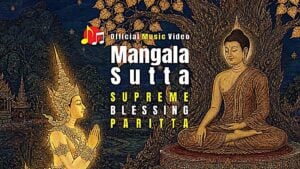
Among the most profound of the Parittas is the Mangala Sutta Paritta, where Buddha taught the 38 Supreme Blessings. 🙏 🙏 🙏 Chant along or listen to bring these auspicious and protective blessings into your life. May all beings be blessed. @3GemsBand
🙏 To Chant along, Lyrics are below (with Translations) or turn on CC in the video to your language.
Video: (Turn on captions or subtitles to chant along or for translation)
🎵 🎵 🎵 Music available for streaming on your favorite music streaming service, song title “Mangala Sutta Supreme Blessing Paritta” by 3Gems Band. 🎵 🎵 🎵
🎵 Lyrics (Sutta)
Namo tassa bhagavato arahato sammā-sambuddhassa (Homage to the Blessed One, the Worthy One, the Rightly Self-Awakened One)
Namo tassa bhagavato arahato sammā-sambuddhassa (Homage to the Blessed One, the Worthy One, the Rightly Self-Awakened One)
Namo tassa bhagavato arahato sammā-sambuddhassa (Homage to the Blessed One, the Worthy One, the Rightly Self-Awakened One)
(Sutta Begins)
Evam-me sutaṁ.
(Thus have I heard.)
Ekaṁ samayaṁ Bhagavā,
(On one occasion the Blessed One)
Sāvatthiyaṁ viharati,
(was residing at Sāvatthī,)
Jetavane Anāthapiṇḍikassa, ārāme.
(in Jeta’s Grove, Anāthapiṇḍika’s monastery.)
Atha kho aññatarā devatā,
(Then, a certain deity,)
abhikkantāya rattiyā abhikkanta-vaṇṇā
(in the far extreme of the night, of radiant beauty,)
kevala-kappaṁ Jetavanaṁ obhāsetvā,
(illuminating the entire Jeta’s Grove,)
yena Bhagavā ten’upasaṅkami.
(approached the Blessed One.)
Upasaṅkamitvā Bhagavantaṁ
(Having approached and paid homage)
abhivādetvā ekam-antaṁ aṭṭhāsi.
(to the Blessed One, she stood to one side.)
Ekam-antaṁ ṭhitā kho sā devatā
(Standing to one side, that deity)
Bhagavantaṁ gāthāya ajjhabhāsi.
(addressed the Blessed One in verse:)
“Bahū devā manussā ca
(“Many deities and human beings)
Maṅgalāni acintayuṁ
(have thought about blessings,)
Ākaṅkhamānā sotthānaṁ
(longing for safety and well-being.)
Brūhi maṅgalam-uttamaṁ.
(Tell us, what is the highest blessing?”)
Asevanā ca bālānaṁ
(Not associating with fools,)
Paṇḍitānañ-ca sevanā
(associating with the wise,)
Pūjā ca pūjanīyānaṁ
(and honoring those worthy of honor—)
Etam-maṅgalam-uttamaṁ.
(this is the highest blessing.)
Bāhu-saccañ-ca sippañ-ca
(Vast learning and craftsmanship,)
Vinayo ca susikkhito
(highly trained discipline,)
Subhāsitā ca yā vācā
(and words that are well-spoken—)
Etam-maṅgalam-uttamaṁ.
(this is the highest blessing.)
Mātā-pitu-upaṭṭhānaṁ
(Supporting one’s mother and father,)
Putta-dārassa saṅgaho
(cherishing one’s spouse and children,)
Anākulā ca kammantā
(and untangled, peaceful occupations—)
Etam-maṅgalam-uttamaṁ.
(this is the highest blessing.)
Dānañ-ca dhamma-cariyā ca
(Generosity and living righteously by Dhamma,)
Ñātakānañ-ca saṅgaho
(rendering assistance to relatives,)
Anavajjāni kammāni
(and blameless, wholesome actions—)
Etam-maṅgalam-uttamaṁ.
(this is the highest blessing.)
Āratī viratī pāpā
(Avoiding and abstaining from evil,)
Majja-pānā ca saññamo
(refraining from intoxicating drinks,)
Appamādo ca dhammesu
(and steadfast heedfulness in the Dhamma—)
Etam-maṅgalam-uttamaṁ.
(this is the highest blessing.)
Gāravo ca nivāto ca
(Reverence, humility,)
Santuṭṭhī ca kataññutā
(contentment, and gratitude,)
Kālena dhammassavanaṁ
(listening to the Dhamma at the proper time—)
Etam-maṅgalam-uttamaṁ.
(this is the highest blessing.)
Khantī ca sovacassatā
(Patience, open-mindedness to correction,)
Samaṇānañ-ca dassanaṁ
(seeing noble contemplatives,)
Kālena dhamma-sākacchā
(and discussing the Dhamma at the proper time—)
Etam-maṅgalam-uttamaṁ.
(this is the highest blessing.)
Tapo ca brahma-cariyañ-ca
(Self-restraint, holy life,)
Ariya-saccāna-dassanaṁ
(realization of the Noble Truths,)
Nibbāna-sacchi-kiriyā ca
(and the attainment of Nibbāna—)
Etam-maṅgalam-uttamaṁ.
(this is the highest blessing.)
Phuṭṭhassa loka-dhammehi
(Though touched by the ways of the world,)
Cittaṁ yassa na kampati
(one’s mind remains unshaken,)
Asokaṁ virajaṁ khemaṁ
(sorrowless, stainless, and secure—)
Etam-maṅgalam-uttamaṁ.
(this is the highest blessing.)
Etādisāni katvāna
(Having accomplished these things,)
Sabbattham-aparājitā
(invincible everywhere,)
Sabbattha sotthiṁ gacchanti
(they go in safety and well-being everywhere—)
Tan-tesaṁ maṅgalam-uttamanti.”
(this is their highest blessing.”)
Etena saccena suvatthi hotu!
(By the virtue of this truth, may there be well-being!)
Etena saccena suvatthi hotu!
(By the virtue of this truth, may there be well-being!)
Etena saccena suvatthi hotu!
(By the virtue of this truth, may there be well-being!)
🔔 Don’t forget to LIKE, SUBSCRIBE, and hit the BELL icon for more episodes!
🙏 Support our work:
Become a Patron: https://Patreon.com/BuddhaWeekly
Become a Member or Donate: https://BuddhaWeekly.com/support
More articles by this author

“Grief Attack” Quick Fix – Four Anchors to Ground Grief with Amitabha Mantra and Pureland Dharani meditation and chanting
Uposatha Observance Days Each Month are the Renewal Dedication Practice Days, Traditionally Practiced on the New, Full and Quarter moons each month
Search
Latest Features


Please support the "Spread the Dharma" mission as one of our heroic Dharma Supporting Members, or with a one-time donation.
Please Help Support the “Spread the Dharma” Mission!
Be a part of the noble mission as a supporting member or a patron, or a volunteer contributor of content.
The power of Dharma to help sentient beings, in part, lies in ensuring access to Buddha’s precious Dharma — the mission of Buddha Weekly. We can’t do it without you!
A non-profit association since 2007, Buddha Weekly published many feature articles, videos, and, podcasts. Please consider supporting the mission to preserve and “Spread the Dharma." Your support as either a patron or a supporting member helps defray the high costs of producing quality Dharma content. Thank you! Learn more here, or become one of our super karma heroes on Patreon.
Lee Kane
Author | Buddha Weekly
Lee Kane is the editor of Buddha Weekly, since 2007. His main focuses as a writer are mindfulness techniques, meditation, Dharma and Sutra commentaries, Buddhist practices, international perspectives and traditions, Vajrayana, Mahayana, Zen. He also covers various events.
Lee also contributes as a writer to various other online magazines and blogs.