



Daśacakra Kiṣitigarbha Dhāraṇī: Rescuing All Beings: The Sanskrit Dharani that Saves Beings on Hearing or Seeing or Chanting
Among the 8 Great Bodhisattvas in Mahayana Buddhism, who is the one closest to us in Samsara? Which Bodhisattva remains in our world between the time of Shakyamuni Buddha and the Future Buddha to come Maitreya? Why is his Dharani so powerful and treasured not only for overcoming natural disasters, but for rescuing beings in all six realms. How do we properly pronounce the Sanskrit syllables of the great Dharani? Who is the hero who rescues children and suffering beings from the hell realms?
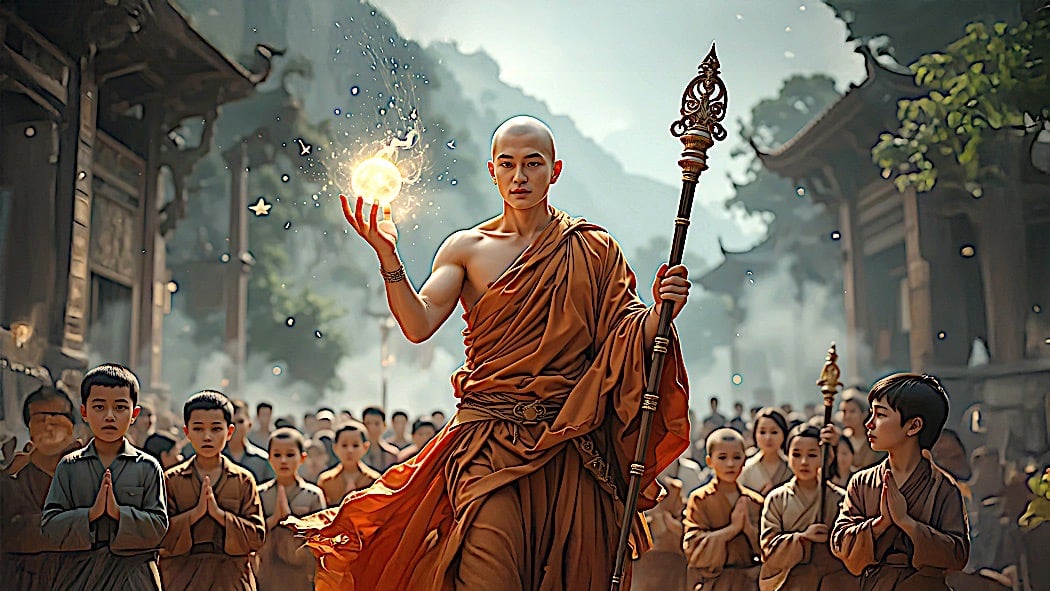
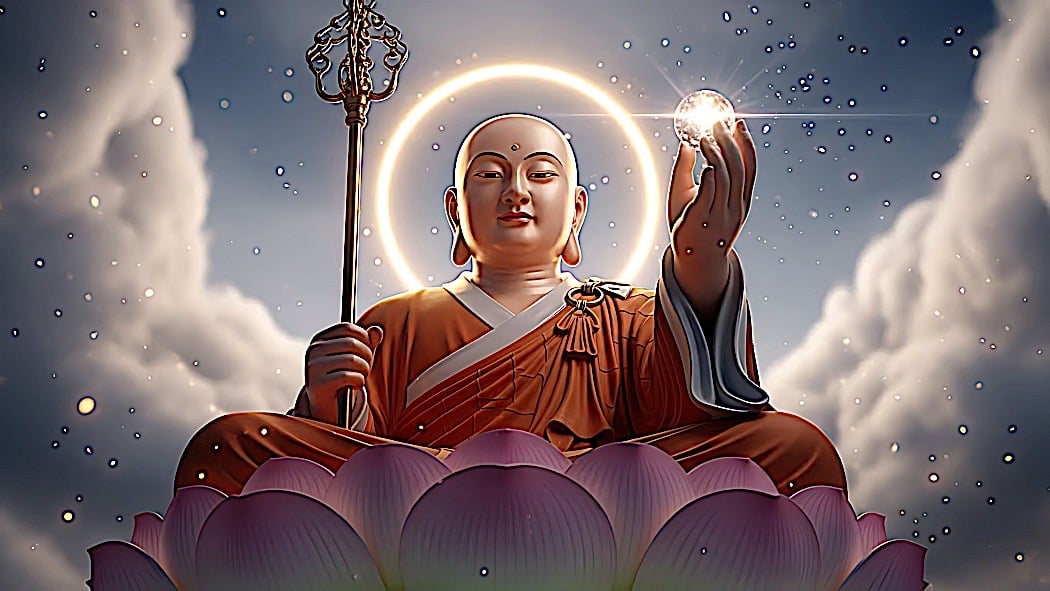
Famous and adored in the six realms of desire is Earth Treasury Bodhisattva, Kṣitigarbha Bodhisattva, revered also as Dìzàng Púsà, Jizō Bosatsu and Jijang Bosal. He is called Earth Essence Bodhisattva because he remains in our earthly realm, and travels all six realms of desire, heroically rescuing the suffering beings who call to him for help. He is called Treasury because of the wealth of Dharma Wisdom and the blessing of the earth. He was predicted by Shakyamuni to be the Bodhisattva who safeguarded the earth until the future coming of Maitreya Buddha. Until then, our closest, dearest and most helpful Bodhisattva is Kṣitigarbha.
DHARANI and MANTRAS chanted by @3GemsBand: (Lyrics below in feature!)
Benefits of the Dharani According to Buddha
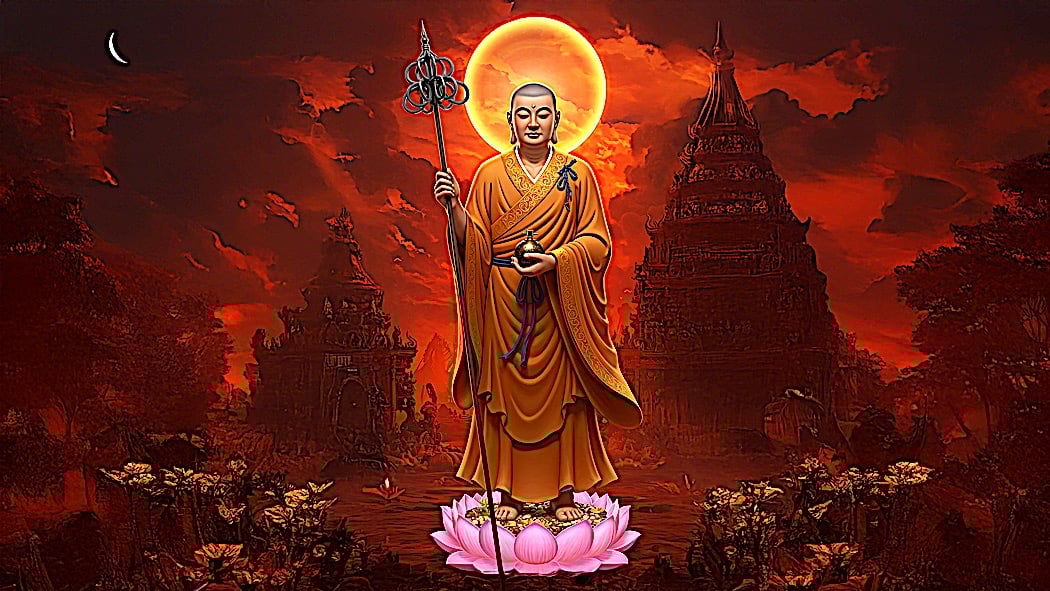
The most precious method of practicing is to recite the Dharani daily, ideally three times. Hearing and seeing or reading is equally effective. Shakyamuni Buddha, in Chapter 8 of the Kṣitigarbha Ten Wheels Mahāyāna Sūtra explained the benefits:
“Those beings who read it, recite it, contemplate it, teach it widely to others, or practice it purely, Kṣitigarbha protects in ten ways, working for their happiness, and guiding them for a long time.
“What are these ten? It is like this. Protect their wealth and their ways of obtaining it and do not let it diminish. Guard them from all harm and make them free from harm. Guard them from wrong views and wrong ways, and see that they eradicate the path of the ten non-virtues. Guard their bodies and speech from all harm, and make such harm nonexistent. Protect them from, and eradicate all criticism and slander. Protect them from weakening their ethics and practice. Eradicate completely all harm from spirits, all disturbance of the elements, all untimely illness, and old age. Guard them from untimely events, improper behaviour, wrong views, and epidemics. Even if they should die, protect them so that they behold the buddhas, that they are reborn in the higher realms, and that they find happiness and well-being.”
These were the unmistaken words of the Buddha.
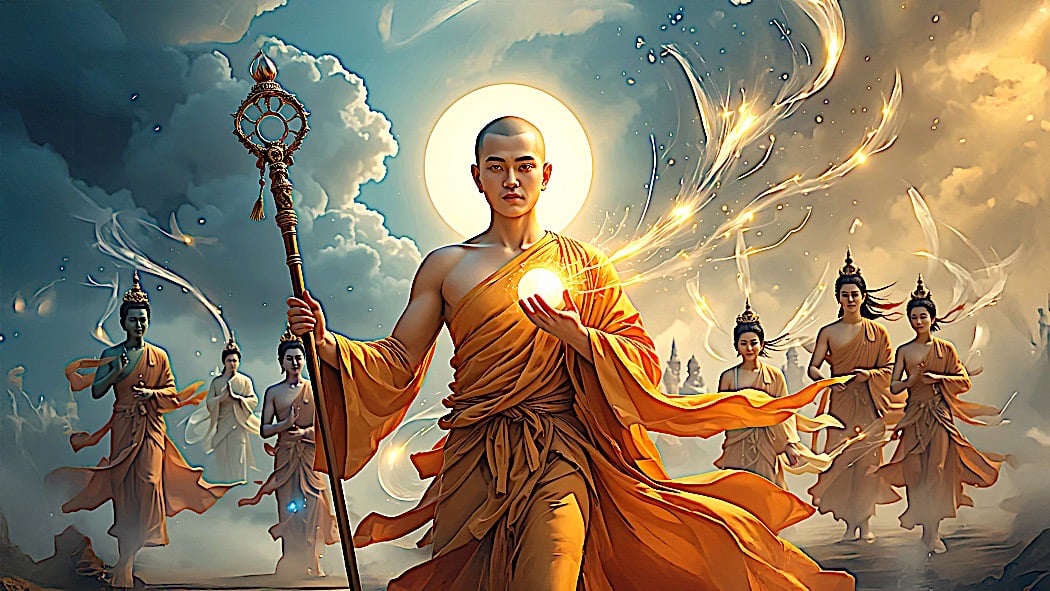
Kṣitigarbha is always considered one of the four Principle Bodhisattvas, together with Samantabhadra, Manjuṣri, and Avalokiteśvara. He is also one of the 8 Maha Bodhisattvas, the Great Ones. Due to his closeness to our realm, and the earth, he is considered the Bodhisattva of the Ratnasambhava family, the Jewel Family, who help us overcome the poison of greed with the wisdom of Equality, or Samatajnana in Sanskrit.
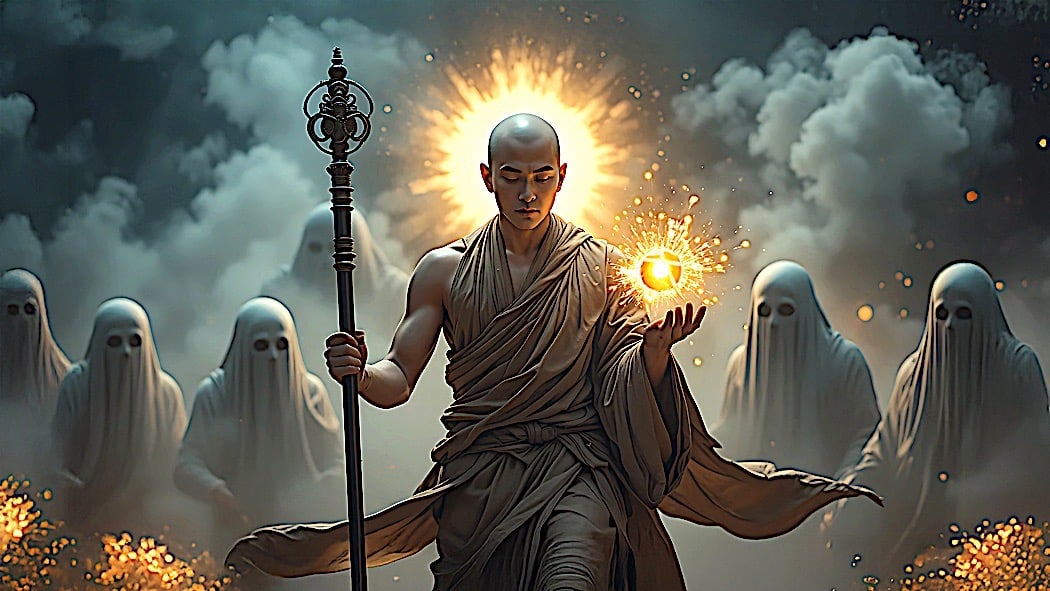
Rescuer of Every Being in 6 Realms
He is adored by all as the Bodhisattva of the Great Vow. He vowed he would never cross over, to become a Buddha, until he had rescued every single being in Samsara, and especially he included the hell realms. In a previous life, as a young woman, he had rescued her mother from hell through faith and devotion. After his great vow, he has remained in Samsara rescuing beings. His famous jewel, allows him to travel freely between the six worlds or dimensions of the desire: hell, pretas or hungry ghost, animals, asuras, human, and deva.
Mahayana Buddhist universal adore the Bodhisattva of the Great Vow, heroic Earth Treasury Bodhisattva.
What gives devotees the most trouble, however, in their devoted praises and practices is pronouncing his name and Dharani in Sanskrit. There are versions of his name in other languages. In English, we say Earth Store or Earth Treasury or even Earth Matrix Bodhisattva, although it loses some of its essence in translation. Yet, his Sanskrit name is sometimes difficult to pronounce.
His Dharani, likewise, is very difficult to properly pronounce in Sanskrit — even though the benefits are profound. His Sutras and Dharanis were translated to other languages and back to Sanskrit, and very few Siddham original text remains as reference. As a result, his Dharani suffers from multiple joyful verbal expressions.
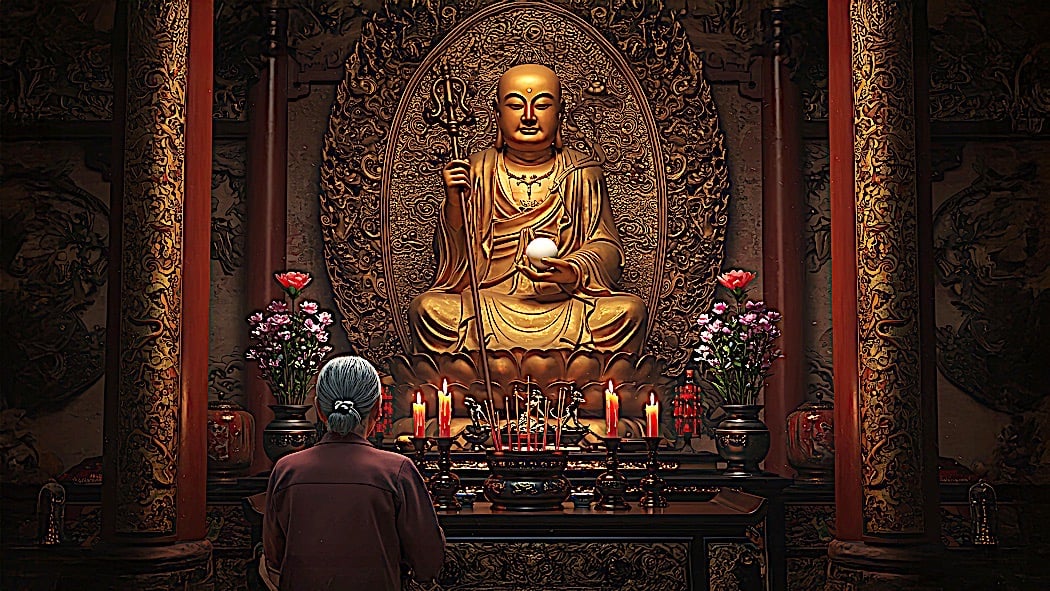
Seed Syllable kṣim
The kṣim (キシン/キム in Japanese) is the “seed syllable” (bīja) for Kṣitigarbha, used in many of his mantras, including oṃ kṣitigarbha kṣim svāhā. It is also the cause of several somewhat misleading transliterations leading to mispronunciations.
The Sanskrit term “kṣim” (क्षिम्, kṣiṃ) is the accusative singular form of the feminine noun kṣi, which refers to the element of the earth or a dwelling place. In the translations between Sankrit and Chinese, then to English or Japanese, the essence of the kṣim was somewhat altered.
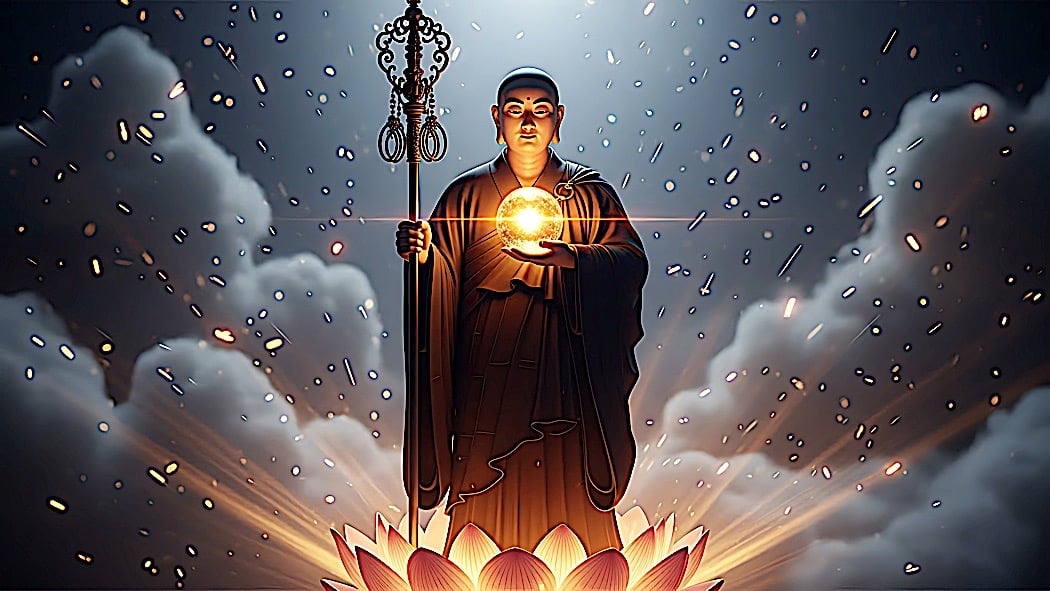
Mispronunciation of the kṣi
The kṣi relates to his name (Kṣiti-garbha), and the -m is a common bīja ending. In various versions this is often pronounced slightly incorrectly as Chim, and in a few versions as kṣam. Some even say “Shim.”
Due to final -m nasal (anusvāra) might have been pronounced as a half-“m,” half-“b” sound which resulted in a b sound. Often, this resulted in the interpretation of “kṣimbho” with bho meaning the declaration “Oh” as in “Oh Kṣim.” If the Dharani is pronounced with kṣimbho it is important to not use bhyo, as is often seen in transliterations. “Bhyo” tends to translate as “fear or “trembling.”
It is likely the “Chim bhyo” and “Chimbo” version arose due to regional transliterations. Chim is incorrect, and bho is not likely part of the original Sanskrit Dharani, although it is fine to include if you pronounce as Bho rather than Bhyo. (Bhyo means “fear” “Bo is more an honorary “oh”).
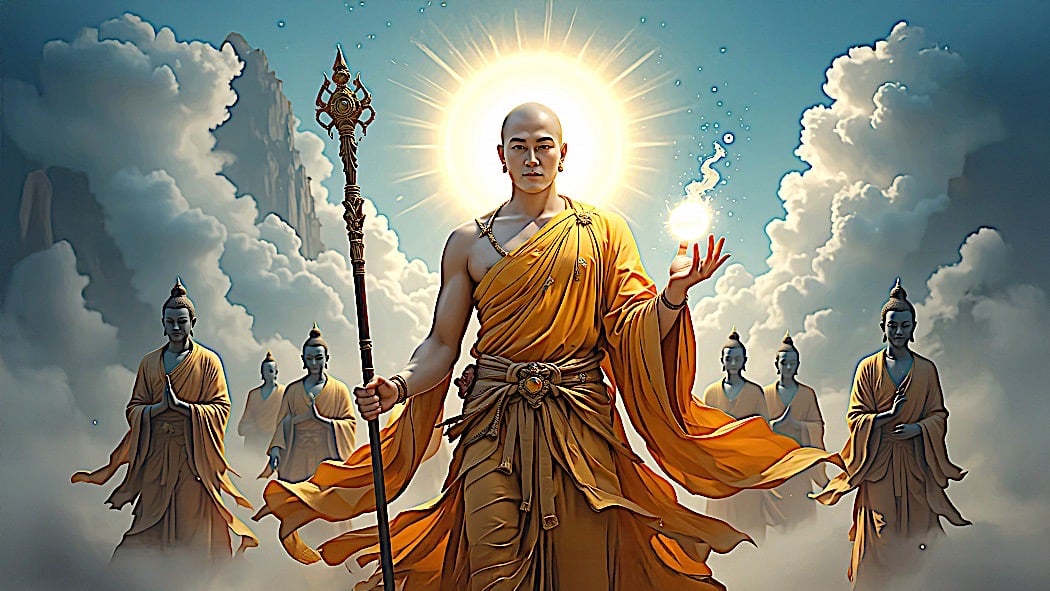
Daśacakra Kṣitigarbha Dhāraṇī
(Sanskrit Pronunciation with English translation in brackets)
Namo ratna-trayāya.
Namaḥ ārya-kṣitigarbhāya bodhisattvāya mahāsattvāya.
(Adoration to the Triple Jewel. Adoration to the Noble Kṣitigarbha Bodhisattva, the Great Being.)
Tadyathā:
(It is thus:)
PART 1 – PRAISING
Oṃ kṣiṃ kṣiṃ kṣiṃ kṣiṃ kṣiṃ.
(The primordial seed syllable (meaning “earth store” or “earth womb” or “earth Matrix”, repeated as the essence of Kṣitigarbha. (In other words kṣiṃ is the essence of Kṣitigarbha) )
Ākāśa-kṣiṃ, vāraka-kṣiṃ, ambu-kṣiṃ, vaira-kṣiṃ.
(Space-purifying Kṣiṃ, obstacle-removing Kṣiṃ, water-purifying Kṣiṃ, hostility-destroying Kṣiṃ.)
Vajra-kṣiṃ, aloka-kṣiṃ, dama-kṣiṃ.
(Vajra-like Kṣiṃ, light-manifesting Kṣiṃ, taming Kṣiṃ.)
Satyama-kṣiṃ, satya-nirhara-kṣiṃ, vyavalokana-kṣapa-kṣiṃ.
(Truth-establishing Kṣiṃ, truth-extracting Kṣiṃ, he who observes the destruction of time, Kṣiṃ.)
Upaśama-kṣiṃ, nayana-kṣiṃ, prajñā-sambhū-tiraṇa-kṣiṃ.
(Pacifying Kṣiṃ, leading-forth Kṣiṃ, he who crosses over through the arising of wisdom, Kṣiṃ.)
Kṣaṇa-kṣiṃ, viśvarīya-kṣiṃ, śastra-lāva-kṣiṃ.
(Instantaneous Kṣiṃ, all-pervading Kṣiṃ, gathering of teachings/weapons Kṣiṃ.)
PART 2 – SUPPLICATION and REQUESTS
Vyāḍa-sujya-maheśvarāya dama-samaye cakreśa-cakra-maheśvarāya.
(To the great lord who conquers the wicked, at the time of subduing, to the great lord of the wheel, the wheel-holder.)
Kṣīṇa-bhaya-hṛdagrāha-saṃvara-vratāya śrī-prabhe pracara-vartanāya.
(To the vow-holder who restrains the seizure of the heart of those with diminished fear, to the glorious light who sets the course in motion.)
Ratna-pāle cala cala śrī-mile ekārthāya ṭhakku-ṭhakkura-dhare dhare.
(O Guardian of Jewels, move, move! For the sake of unification with glory! O steadfast lord, uphold, uphold!)
Mile bandhe tathāgata-kule mili-aṅga-citte avi-alakīrṇe pragharṣaya.
(Unite, bind! In the Tathagata family, with unified body and mind, without scattering, rub away [defilements].)
Kuṭṭa-samaye jaṅge jaṅge jaṅgule huru huru huru kuruṣu.
(At the time of pounding, stir, stir, O sprout! Hurry, hurry, hurry, act!)
Mile mi-milidhe mile taraye bhagavan hara hara he he huru huru.
(Unite, be united! Unite, cross over! O Blessed One, remove, remove! O! O! Hurry, hurry!)
PART 3 – PURIFICATION and SEALS (Svaha)
Hava-rāja-viśodhane svāhā, kaliyuga-viśodhane svāhā!
(Svāhā! Purifier of the king of offerings! Svāhā! Purifier of the Kali Yuga!)
Kaluṣa-mana-viśodhane svāhā, kaluṣa-mahābhūta-viśodhane svāhā!
(Svāhā! Purifier of the stained mind! Svāhā! Purifier of the stained great elements!)
Kaluṣa-rasa-viśodhane svāhā, kaluṣauja-viśodhane svāhā!
(Svāhā! Purifier of stained tastes! Svāhā! Purifier of stained vitality!)
Sarva-āśā-paripūraṇi svāhā, sarva-sasya-sampādane svāhā!
(Svāhā! Fulfiller of all hopes! Svāhā! Bestower of all fruits!)
Sarva-tathāgatādhishṭhite svāhā!
(Svāhā! By the empowerment of all Tathagatas!)
Sarva-bodhisattvādhishṭhita-anumodite svāhā!
(Svāhā! To the rejoicing empowered by all Bodhisattvas!)
3 Gems Sanskrit Dharani is a beautiful Sanskrit version of this great Dharani that rescues all beings in the six realms. Those with faith, who call on Kṣitigarbha Bodhisattva with faith, are rescued from the 8 dangers of the 6 Desire Realms.
Mantras
As a chorus in the Dharani chant between parts 1, 2 and 3 are three very special mantras of Kṣitigarbha Bodhisattva from Sutra:
oṃ kṣitigarbha kṣim svāhā is the main seed syllable name mantra of the great Earth Treasury Bodhisattva.
Oṃ pramardane svāhā is his most famous and most often recited mantra, famous for rescuing us from negative rebirths by purifying our fixed negative karma. It is called the Purifying Fixed Karma Mantra.
Oṃ ha ha ha vismaye svāhā is his mantra arising from the Maha Vairochana Sutra, popular in East Asian Buddhism, and includes his seed syllable in the Maha Vairochana Sutra, which is ha.
In the Tibetan traditional lineages, we also have the mantra:
oṃ ah kṣitigarbha thaleng hum
These sacred syllables distil the essence of the great Dharani Chant, known as the Daśacakra Kṣitigarbha Dhāraṇī from the Sutra known in English as the Ten Wheels Kṣitigarbha Sutra.
Bookmark and chant along with 3 Gems Band, the Sanskrit Daśacakra Kṣitigarbha Dhāraṇī to bring the ten benefits into your life. May all beings benefit.
VIDEO: EXORCISM according to kṣitigarbha (Many of the scenes above are from this video):
1 thought on “Daśacakra Kiṣitigarbha Dhāraṇī: Rescuing All Beings: The Sanskrit Dharani that Saves Beings on Hearing or Seeing or Chanting”
Leave a Comment
More articles by this author


Video: Under Attack? Instantly Banish Black Magic, External Obstacles & Curses | Black Tara Protection Mantra

“Grief Attack” Quick Fix – Four Anchors to Ground Grief with Amitabha Mantra and Pureland Dharani meditation and chanting

Search
Latest Features




Please support the "Spread the Dharma" mission as one of our heroic Dharma Supporting Members, or with a one-time donation.
Please Help Support the “Spread the Dharma” Mission!
Be a part of the noble mission as a supporting member or a patron, or a volunteer contributor of content.
The power of Dharma to help sentient beings, in part, lies in ensuring access to Buddha’s precious Dharma — the mission of Buddha Weekly. We can’t do it without you!
A non-profit association since 2007, Buddha Weekly published many feature articles, videos, and, podcasts. Please consider supporting the mission to preserve and “Spread the Dharma." Your support as either a patron or a supporting member helps defray the high costs of producing quality Dharma content. Thank you! Learn more here, or become one of our super karma heroes on Patreon.
Lee Kane
Author | Buddha Weekly
Lee Kane is the editor of Buddha Weekly, since 2007. His main focuses as a writer are mindfulness techniques, meditation, Dharma and Sutra commentaries, Buddhist practices, international perspectives and traditions, Vajrayana, Mahayana, Zen. He also covers various events.
Lee also contributes as a writer to various other online magazines and blogs.

Thank you for this powerful and deeply inspiring presentation of the Daśacakra Kṣitigarbha Dhāraṇī. The way you explain the meaning, benefits, and practice of this sacred chant brings both clarity and devotion to the reader.
I especially appreciate the emphasis on Kṣitigarbha Bodhisattva’s great vow to remain in samsara until all beings are liberated. This compassionate commitment to help those in suffering, especially in the most difficult realms, is profoundly moving and reminds us of the boundless nature of bodhisattva compassion.
The explanation of the dhāraṇī itself, along with its structure, meaning, and pronunciation, is very helpful. It makes the practice feel more accessible and encourages a deeper connection with the sacred syllables. The teaching that even hearing, reading, or reciting the dhāraṇī can bring protection, purification, and benefit is especially uplifting and inspiring.
Thank you for sharing such meaningful and detailed guidance. Reflections like this encourage both devotion and understanding, and support a sincere and compassionate engagement with the path.
Regards,
Antique Buddhas
https://www.buddha-images.net