
Video: Lama Tsongkhapa Migtsema Mantra Praise: Compassion, Wisdom, Power
Lama Tsongkhapa’s Migtsema wonderfully chanted for one full hour by the amazing Yoko Dharma. Benefits: “unconditional love and compassion” — which is the meaning of Migtsema, as well as healing, compassion, metta, wisdom, power. Lama Tsongkhapa is considered the embodiment of the Compassion of Avaokiteshvara, the Wisdom of Manjushri, and the Power of Vajrapani.
Video:
His powerful praise mantra is:
MIG.ME TZE.WAI TER.CHEN CHEN.RE.ZIG DRI.ME KYEN.PAI WANG.PO JAM.PEL.YANG DÜ.PUNG MA.LÜ JOM.DZE SANG.WAI DAG GANG.CHEN KAY.PAI TZUG.GYAN TSONG.KHAPA LO.ZANG DRAG.PAI ZHAB.LA SOL.WA DEB.
In English this translates as:
“You are Avalokitesvara, great treasure of unimaginable compassion,And Manjushri, master of flawless wisdom,And Vajrapani, Lord of the Secret and destroyer of hordes of maras without exception. Tsong Khapa, crown jewel of the sages of the land of snows, Lozang Dragpa, I make requests at your lotus feet.”
MUSIC AVAILABLE FOR DOWNLOAD from YOKO DHARMA’s MUSIC SITE: https://yokodharma.com/music
Kyabje Lama Zopa Rinpoche advised: “If one keeps even a drop of the nectar of the name of this holy being Lama Tsongkhapa in a devotional heart, it plants the seed of liberation and one receives the fortune to practice and enjoy happiness from this life up to enlightenment.”
NOTE: Migtsema is the correct spelling in English letters. This is often incorrectly labeled Migstema (inverting the ts to st). Mig-tse-ma”, meaning “unconditional love and compassion” His shorter mantra (not in this video) is:
OM AH GURU VAJRADHARA SUMATI KIRTI SIDDHI HUM
DON’T MISS THIS In-Depth Buddha Weekly Video on the Life, Visualization and Practice of Lama Tsongkhapa: https://www.youtube.com/watch?v=Q7TjK…
Lama Tsongkhapa (Je Tsong-kha-pa Blo-bzang grags-pa) (1357-1419) is considered, by millions, to be a great sage. Shakyamuni, the historical Buddha, is the great Sage of our times, the Enlightened Buddha. Padmasambhava (Guru Rinpoche), another enlightened sage, foretold Tsongkhapa’s coming.
The benefits of the powerful Migtsema prayer or mantra is well-documented by many great teachers of the Gelug lineage. Its beauty and simplicity and benefits are near-legendary. For busy people, Lama Tsongkhapa’s practice is particularly efficacious, as it combines three major practices and three Buddhist methods — compassion, wisdom and power — in one meditation.
“After I pass away and my pure doctrine is absent, You will appear as an ordinary being, Performing the deeds of a Buddha And establishing the Joyful Land, the great Protector, In the Land of the Snows.” -Buddha Shakyamuni in the Root Tantra of Manjushri
Of course, this Great Protector in the Land of Snows was Lama Tsongkhapa. Virtually all Tibetan Gelugpa teachers teach this very powerful, yet accessible praise and mantra. The Migtsema does not require initiation or empowerment—although the guidance of a teacher and initiation are beneficial. As the embodiment of three Buddhas — Avalokiteshvara, Manjushri, and Vajrapani — Lama Tsongkhapa’s practice and mantra is particularly effective for Buddhist practitioners. Simply chanting the Migtsema, (chant along with the magnificent voice of Yoko Dharma in the video below!) can have many benefits, from healing to increasing your love and compassion, to insights and wisdom.
More articles by this author
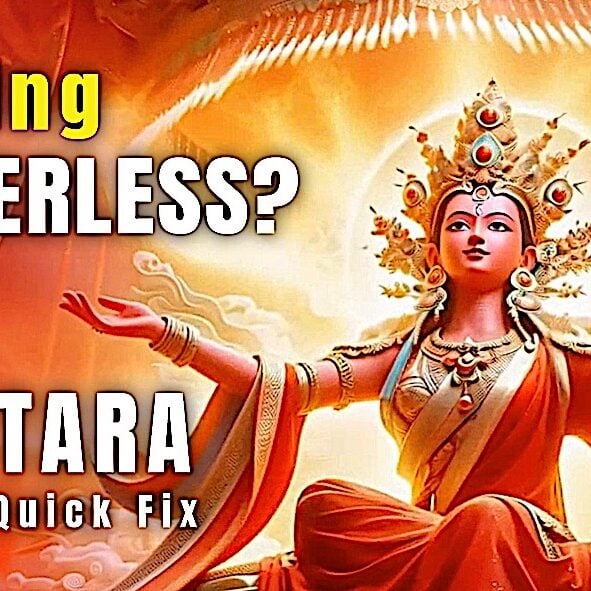
SUPPORTING MEMBERS VIDEO: Quick Mantra Fix: 10th Red Tara When You Feel Powerless or Helpless Emergency Time Out
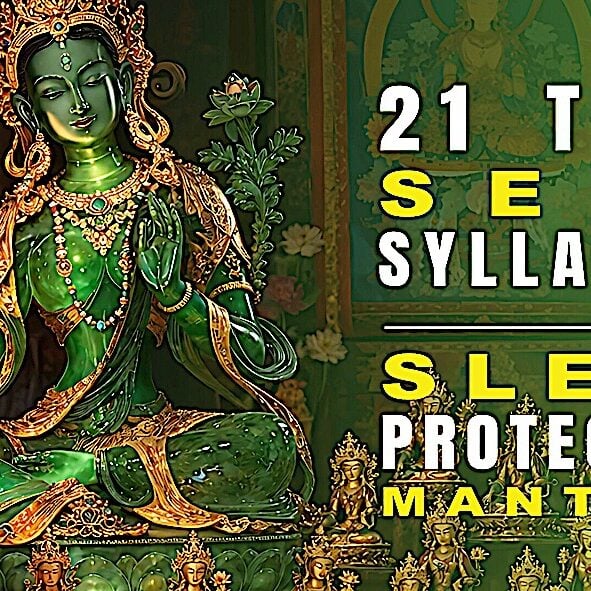
SUPPORTING MEMBERS: 21 Tara Seed Syllables – Buddhist Sleep Protection Mantra and Meditation: Play as you Sleep 2 hour version Sanskrit
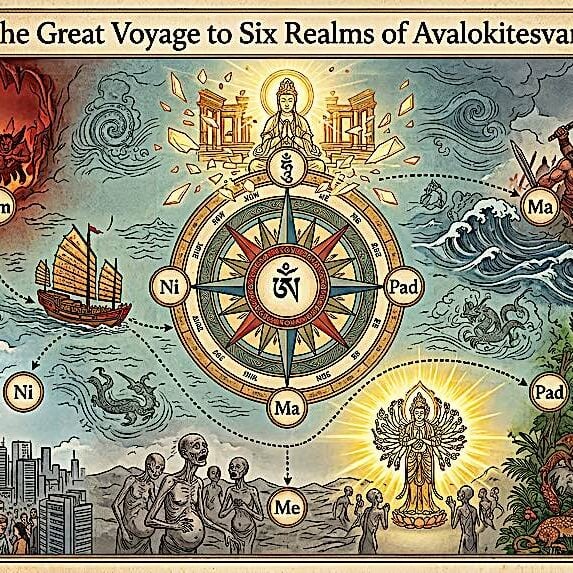
6 Avalokitesvara Heroes Overcoming 6 Poisons with 6 Syllables: Om Ma Ni Pad Me Hum: Enlightened Odyssey
Search
Latest Features
Please support the "Spread the Dharma" mission as one of our heroic Dharma Supporting Members, or with a one-time donation.
Please Help Support the “Spread the Dharma” Mission!
Be a part of the noble mission as a supporting member or a patron, or a volunteer contributor of content.
The power of Dharma to help sentient beings, in part, lies in ensuring access to Buddha’s precious Dharma — the mission of Buddha Weekly. We can’t do it without you!
A non-profit association since 2007, Buddha Weekly published many feature articles, videos, and, podcasts. Please consider supporting the mission to preserve and “Spread the Dharma." Your support as either a patron or a supporting member helps defray the high costs of producing quality Dharma content. Thank you! Learn more here, or become one of our super karma heroes on Patreon.
Lee Kane
Author | Buddha Weekly
Lee Kane is the editor of Buddha Weekly, since 2007. His main focuses as a writer are mindfulness techniques, meditation, Dharma and Sutra commentaries, Buddhist practices, international perspectives and traditions, Vajrayana, Mahayana, Zen. He also covers various events.
Lee also contributes as a writer to various other online magazines and blogs.