



Special Merit Opportunity: Avalokiteshvara Guanyin’s “Money Borrowing Day” — Need a Loan on your “merit”? March 14, 2026 is the Day
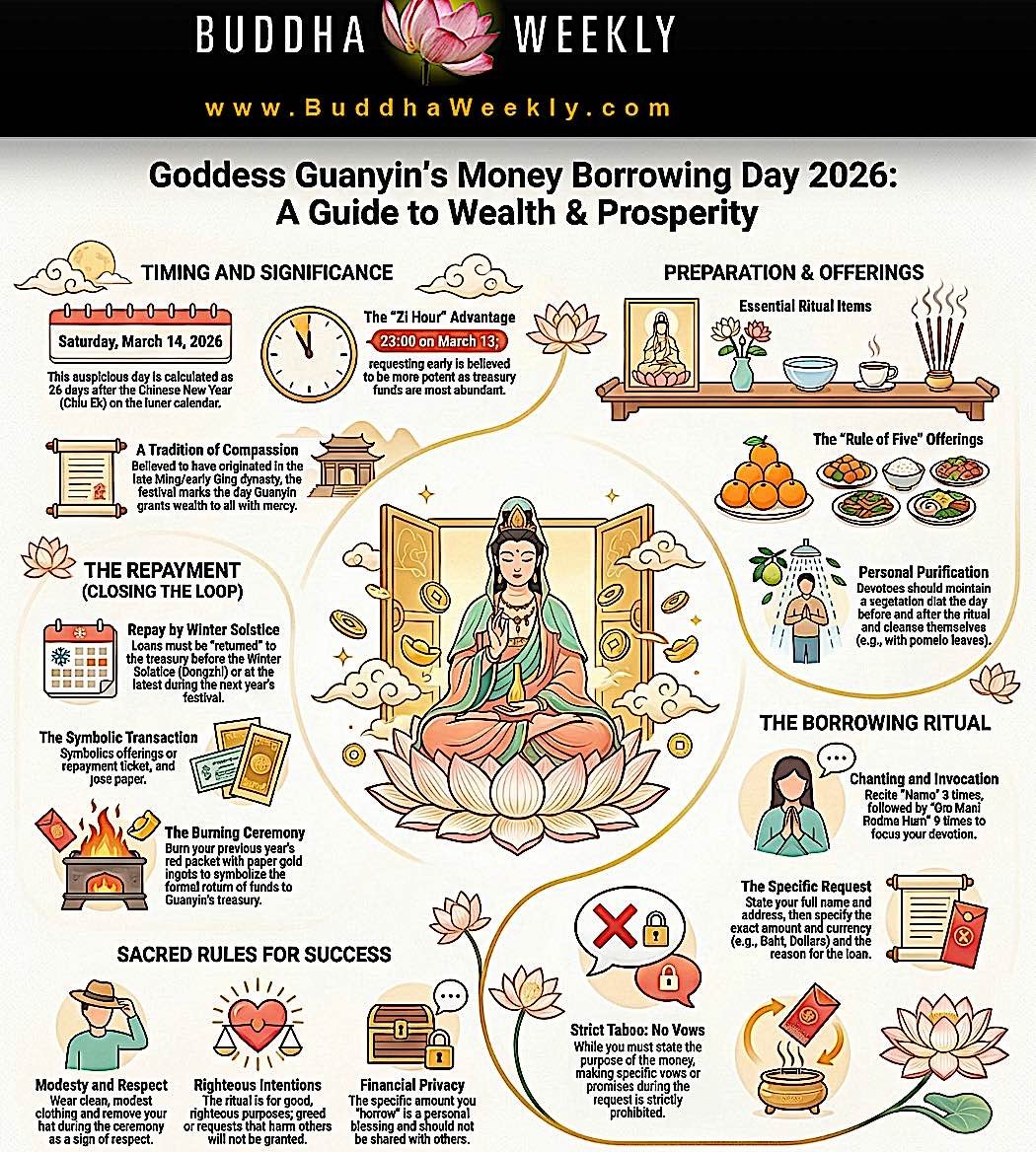
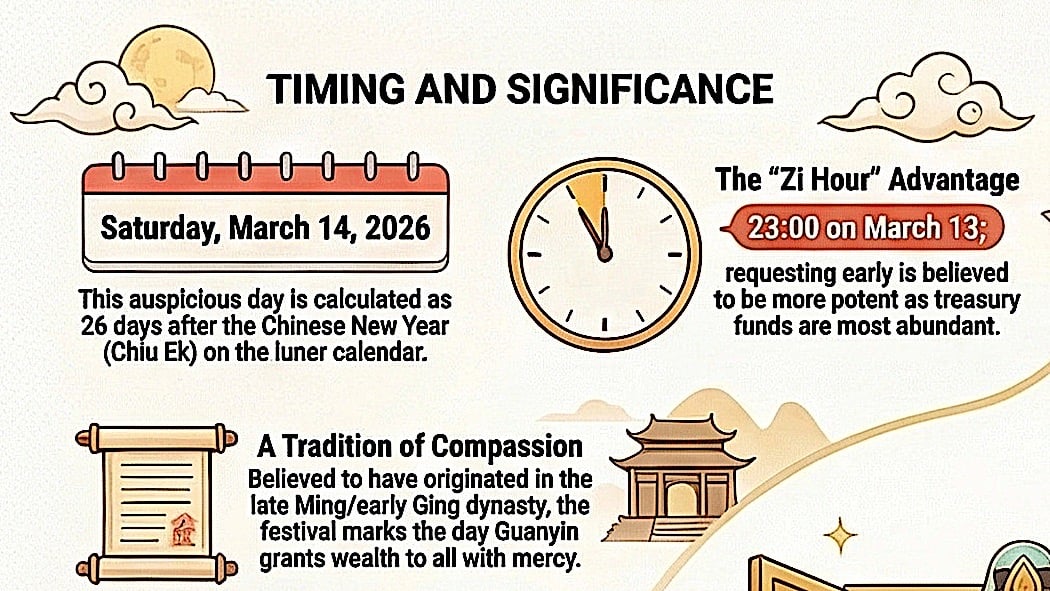
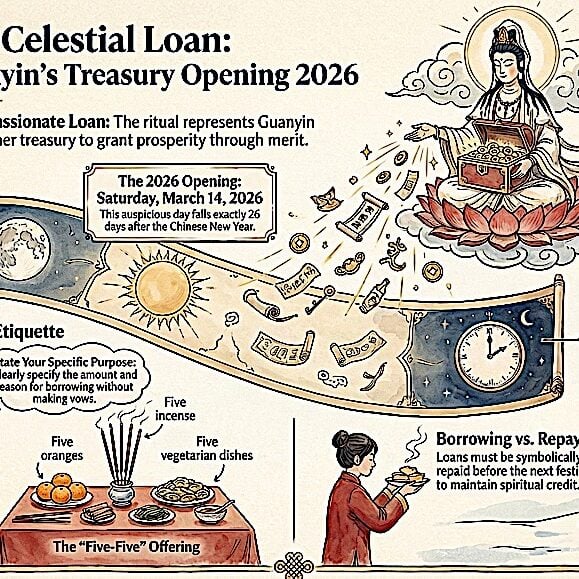
Mark your calendars! This year, the highly anticipated “Goddess Guanyin’s Money Borrowing Day” (also traditionally known as Guan Yin Opens Treasury) falls on Saturday, March 14, 2026. Occurring just once a year on the 26th day of the first lunar month, this auspicious festival is a cherished time to request blessings, financial fortune, and smooth success directly from the compassionate Bodhisattva.
This symbolic tradition holds that Bodhisattva Goddess Guanyin opens her heavenly treasury on this day to lend spiritual and material wealth to her devotees for the year ahead. “Only those with merit need apply.”
Merit Accumulation and Wealth Practices
In Buddhist tradition, the remedy for the poison of Greed is Generosity. For those of us, who are, through the year, acting with merit and good intentions and generosity throughout the year — or, if we resolve to act with merit and generosity going forward — we can ask Guanyin to help us on this symbolic day, when the “treasury opens.”
The event is symbolic, of course, but grounded in solid tradition. Sutra tells us that the root of our own wealth — both spiritual and mundane — accumulates only from merit and generosity and good karma. Negative karma creates obstacles to wealth.
This event reminds us that Guanyin Avalokiteshvara Chenrezig embodies compassion for all beings. She helps us. What does she expect of us? That we, in turn, pass it on and help others.
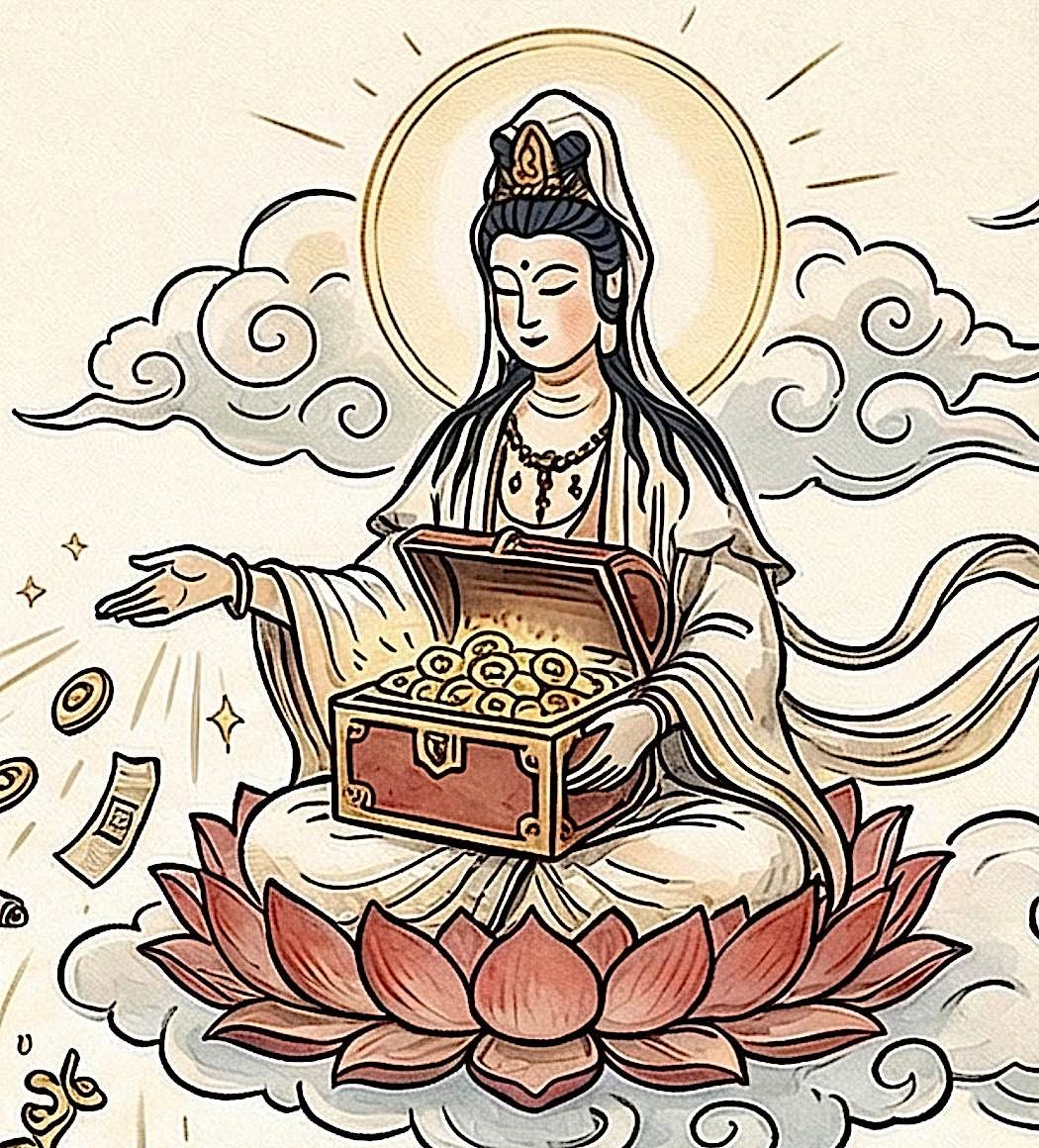
The Merit Loan at Home
Don’t worry if you can’t travel to historic locations like the Hong Hom temple in Hong Kong. You’ll miss out on the crowds and the hype, but most of us perform this sacred ritual right at home. Here is your complete, step-by-step guide to practicing this beautiful tradition.
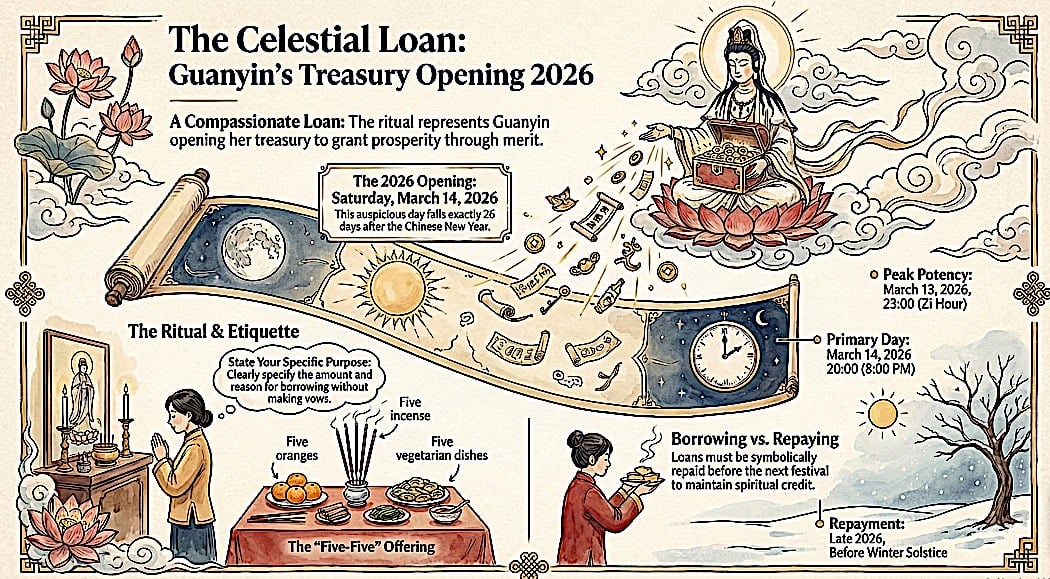
⏰ Auspicious Times for 2026
To maximize the positive energy, tradition dictates that earlier requests have an advantage while the treasury funds remain most abundant.
- The Ideal Time: March 13 at 23:00. This is the “Zi hour” (11:00 PM to 1:00 AM) on the night before the main day, which is when the treasury is said to officially open.
- Alternative Time: March 14 at 20:00. This is an excellent, highly energetic time for those observing later in the day.
🪷 Step 1: Preparation and Offerings
Before the ritual, it is important to cleanse yourself (using pomelo leaves is traditional), wear clean and modest clothing, and ensure you do not wear a hat out of respect. It is also highly recommended to maintain a vegetarian diet the day before and after the ritual, and to avoid harming any living beings.
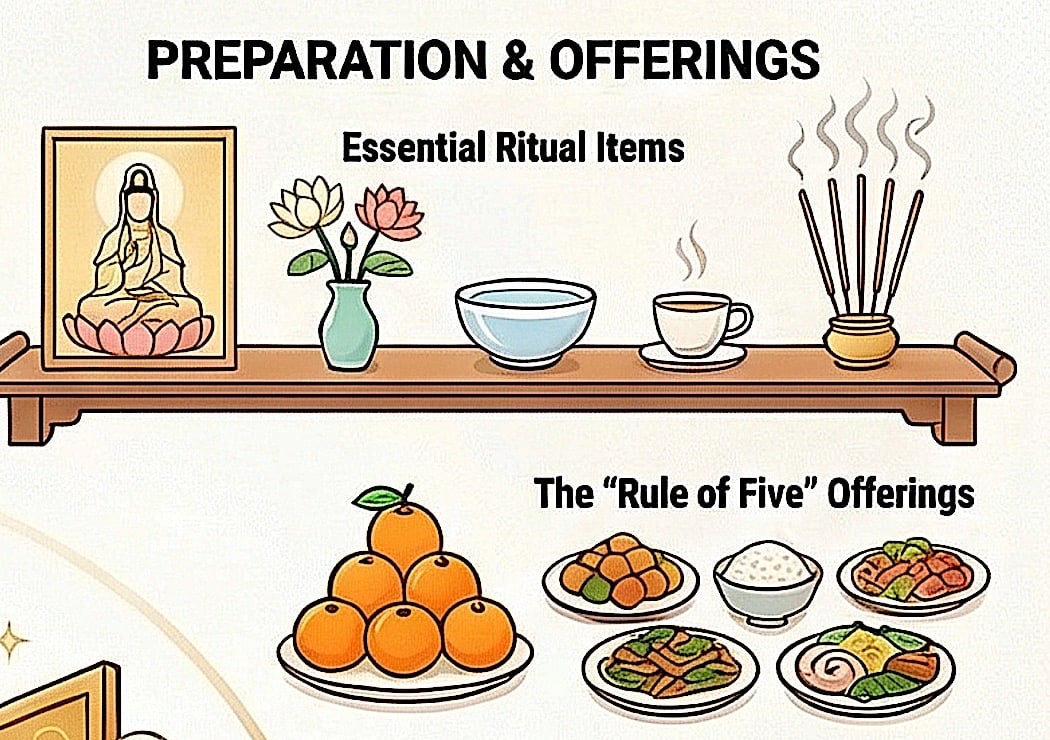
Set up
Set up your home altar with a statue or image of Goddess Guanyin and prepare the following vegetarian offerings:
- White or pink lotus flowers (real, or artificial if real are not available — or even a picture.)
- Clean water and tea.
- Five incense sticks.
- Five oranges (symbolizing good luck).
- Five vegetarian dishes (never offer meat to Guanyin, the Bodhisattva of Compassion.
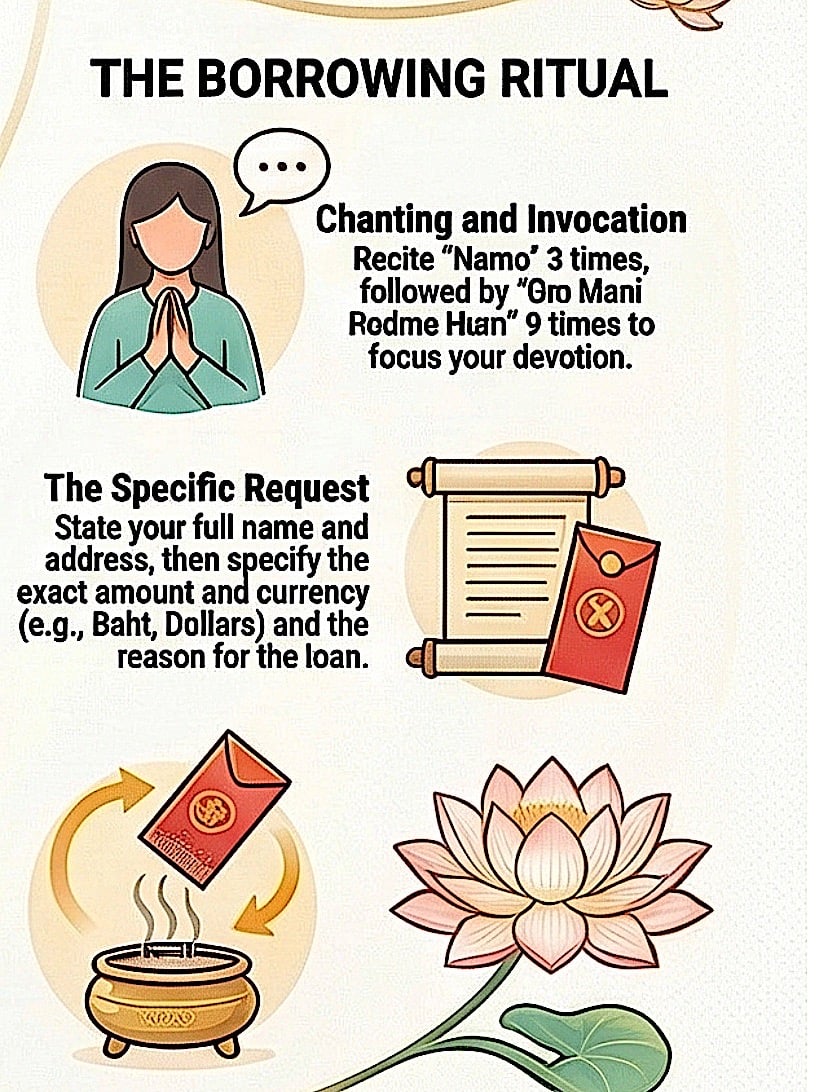
The red packet
If you are doing this as a home ritual, you can prepare a red packet in advance. Fill it with paper money or replica gold bars or other symbols of prosperity. Do not use real money. This is “spirit money” which is purely symbolic. (In Feng Shiu and temple shops they sell these, or use your home printer.) You can also write out a heart felt note asking for a specific amount for a specific purpose — but DO NOT STATE IT AS A VOW or a promise.
Fill the packet while reciting Om Mani Padme Hum or Namo Guanshiyin Pusa or Namo Avalokiteshvaraya Bodhisattvaya. Place it on the altar with your offerings.
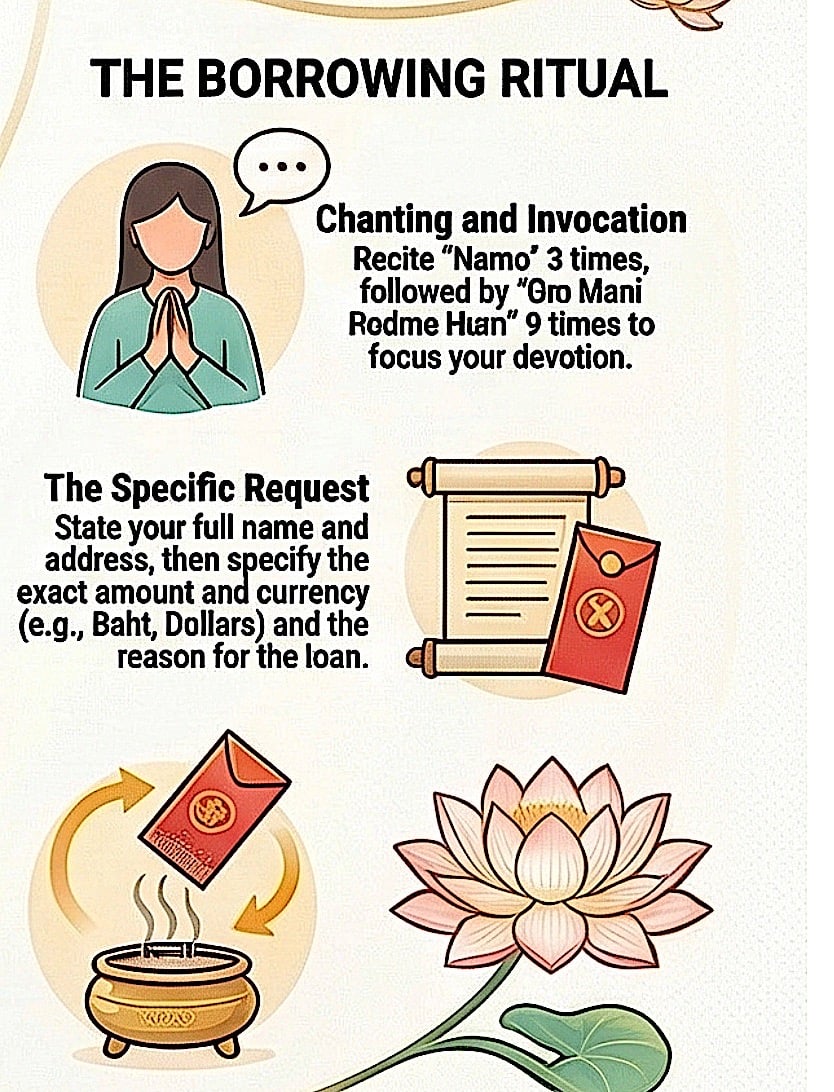
🙏 Step 2: The Prayer and Invocation
Light your five incense sticks and approach the altar with a pure, righteous intention—prayers should always be for good purposes, never for greed or things that could harm others.
- Chant: Recite Namo Guanshiyin Pusa or Namo Avalokiteshvaraya Bodhisattvaya at least three times, followed by Om Mani Padme Hum at least nine times. For extra merit chant the Great Compassion Mantra or the Great Dharani of 1000-Armed Guanyin (see videos below.)
- Invocation: Recite the traditional prayer: “Heaven hears, Earth listens, Heaven acknowledges, Heaven protects, Earth guards, Deities grant blessings.”
- State Your Request: Clearly state your full name and ask Goddess Guanyin to open her treasury of merit. Specify the exact amount of money you wish to borrow, the specific currency, and your righteous purpose for the funds. (Be sure to state this out loud.) NOTE: Even though you state the righteous purpose, such as “supporting the Dharma or Sangha in the coming year, or practicing virtue all year, and so on) do not state this as a vow (see rule 4.)
- Important Rule: Do not make any vows or promises. Simply ask for love, kindness, compassion for yourself and others and all sentient beings, without stating it as a promise.
Chanting of Namo Guanshiyin Pusa (chant at least 3 times, more is best):
Chanting of Om Mani Padme Hum (at least 9 times):
Audio only Om Mani Padme Hum by @3GemsBand:
If possible, also chant the Great Compassion Dharani:
🧧 Step 3: Receiving the “Loan”
If you are at a temple, you will typically receive a red envelope with incense ash or a symbolic slip of paper. If you are at home, you will use the red packet you prepared above in step 1. After your ceremony, you will keep your “loan” deeply private—the amount you borrow is considered a personal blessing and should not be shared with others. Store your red envelope carefully at home, or in your wallet or leave on your personal altar for the rest of the year.
Once your incense has nearly finished burning, take the five oranges from your altar and eat them to absorb the good luck.
🔄 Step 4: The Crucial Repayment
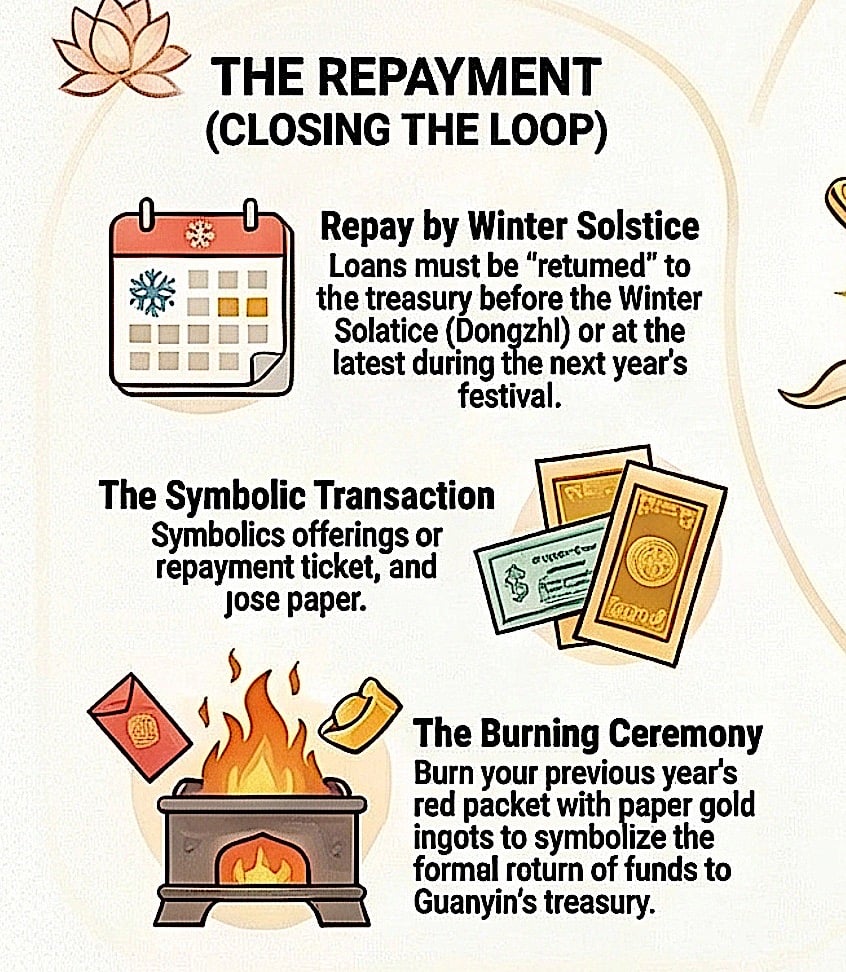
As the proverb states, “Timely return of a loan makes it easier to borrow a second time”. You must perform a symbolic repayment ritual to maintain good “credit” with the Goddess and show your gratitude. This is all symbolism. You are “trading” in merit, and merit is expected of any good Buddhist. But in the symbolism of ritual, we formally repay:
- When to repay: Return the loan before the Winter Solstice (see the Buddha Weekly Calendar) of the same year, or wait to return it during the next year’s Guan Yin Opens Treasury festival.
- How to repay: Prepare offerings and joss paper money. The formal repayment involves burning your previous year’s red packet (or repayment ticket) along with paper gold ingots. This act of cremation symbolizes that the funds have been duly returned to Guanyin’s treasury.
- NOTE: Unlike a bank repayment, failure to repay is not punished with interest, but the price we pay is in our loss of merit accumulation. If we didn’t return Guanyin’s compassionate help with help to other beings, if we didn’t observe the tradition, we will have created the obstacle of greed in our lives.
May Goddess Guanyin bless you with boundless compassion, wisdom, and prosperity this year!
More articles by this author
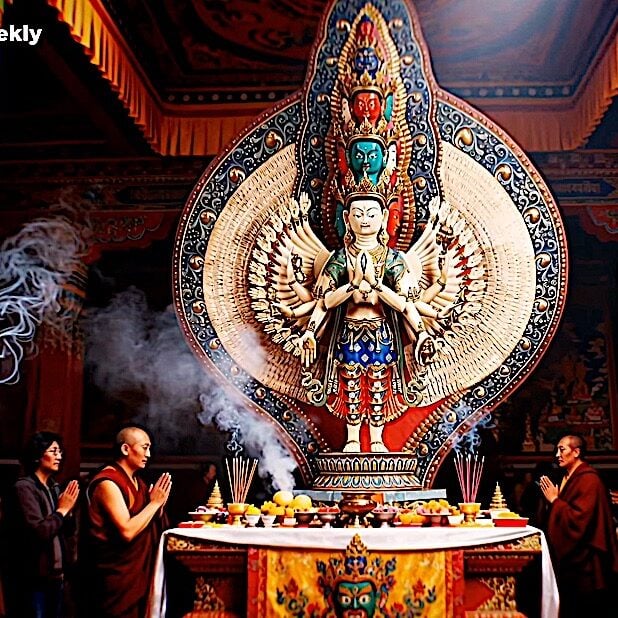
Special Merit Opportunity: Avalokiteshvara Guanyin’s “Money Borrowing Day” — Need a Loan on your “merit”? March 14, 2026 is the Day
Celebrating Loving Kindness on Maitreya Day: Significance and Traditional Practices to Start the Lunar New Year Celebrating the Buddha-to-Come
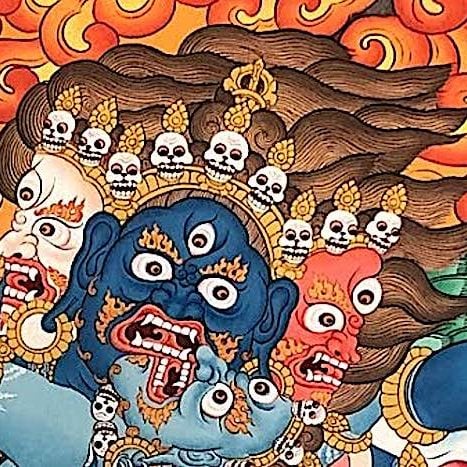
Vajrakilaya: put a peg in it ! — Cutting the three poisons with the sharpest weapon: destroying ignorance, greed, and hostility with profound Vajrakumara


Search
Latest Features





Please support the "Spread the Dharma" mission as one of our heroic Dharma Supporting Members, or with a one-time donation.
Please Help Support the “Spread the Dharma” Mission!
Be a part of the noble mission as a supporting member or a patron, or a volunteer contributor of content.
The power of Dharma to help sentient beings, in part, lies in ensuring access to Buddha’s precious Dharma — the mission of Buddha Weekly. We can’t do it without you!
A non-profit association since 2007, Buddha Weekly published many feature articles, videos, and, podcasts. Please consider supporting the mission to preserve and “Spread the Dharma." Your support as either a patron or a supporting member helps defray the high costs of producing quality Dharma content. Thank you! Learn more here, or become one of our super karma heroes on Patreon.
Lee Kane
Author | Buddha Weekly
Lee Kane is the editor of Buddha Weekly, since 2007. His main focuses as a writer are mindfulness techniques, meditation, Dharma and Sutra commentaries, Buddhist practices, international perspectives and traditions, Vajrayana, Mahayana, Zen. He also covers various events.
Lee also contributes as a writer to various other online magazines and blogs.