



6 Gates Dharani Chanted Sanskrit: Purifies 6 Types of Suffering, Fulfils all True Aims Ṣaṇmukhīdhāraṇī
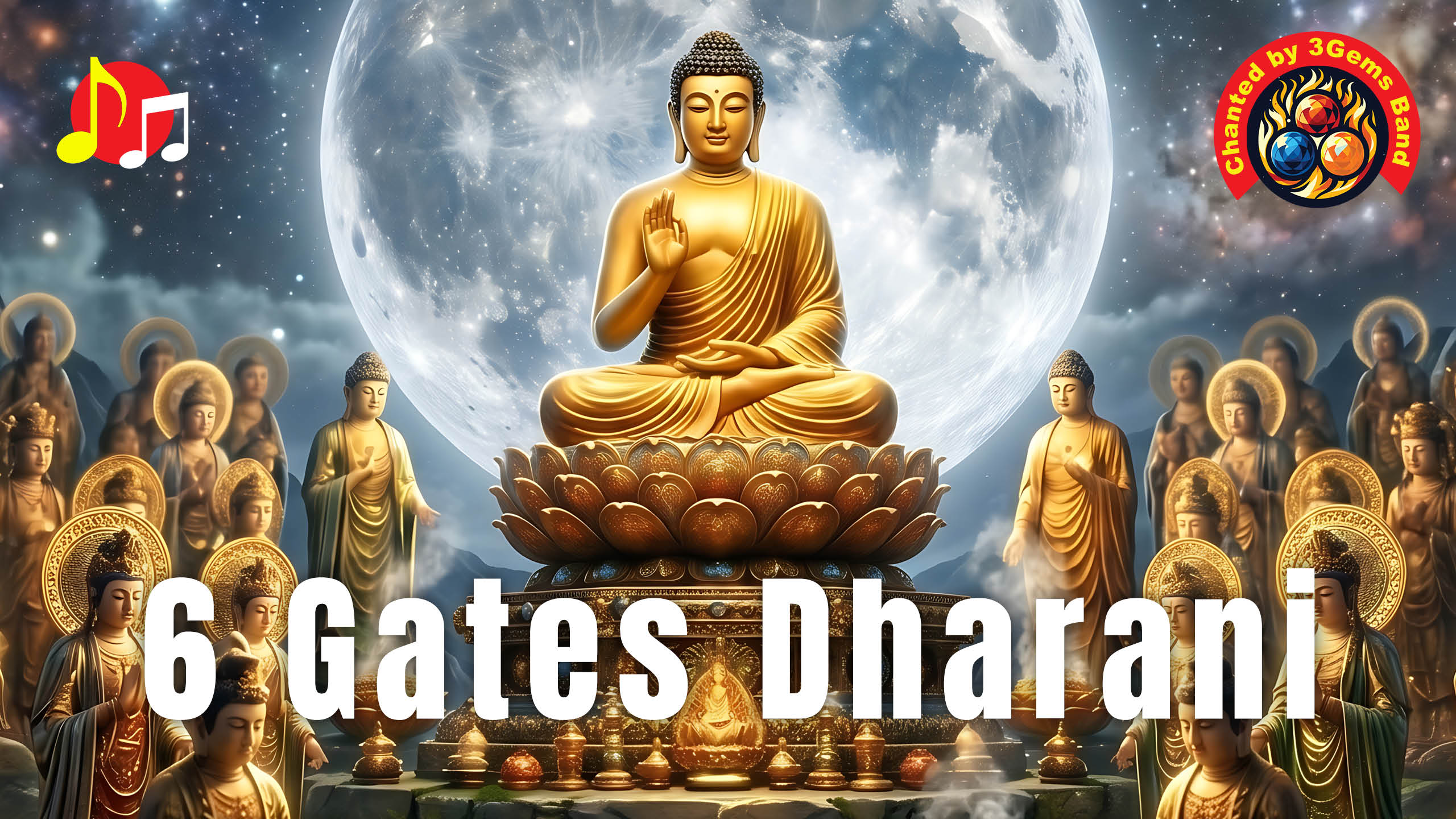
More formally known as The Sutra of the Six Gates Dharani is one of the treasure practices of Mahayana Sutra, and is especially chanted as often as possible on Holy Buddha Days, or the month of Saga Dawa (This year the Month of Merits is May 17-June 15) with the Holiest day on May 31 (Saga Dawa Duchen)
🎵🎵🎵 MUSIC and PERFORMANCE by 💎💎💎 @3GemsBand / @3gemsband
SONG TITLE ON MUSIC STREAMING, song title: “6 Gates Dharani in Sanskrit” Available on most streaming platforms, such as Spotify, Apple Music, Itunes, Youtube Music, and many others.
🙏 🙏 🙏This Sutra Dharani benefits: purifies every poison, obstacle, demonic harm, and downfall, with the ultimate goal of liberation from suffering
📍 About this Sutra with full recitation of full Sutra and Dharani: https://www.youtube.com/watch?v=hu0R6JuSW74 )
📍 The English “gist” translation of the Dharani in short is:
“From patience to purity,
From the moon’s cool light to the fire of wisdom,
This mantra cleanses every layer of being
And fulfills all true aims —
Body, speech, and mind completely purified.
So be it.”
LYRICS for SING-ALONG
🙏 Opening Refuge
Jinabuddhaṁ śaraṇaṁ yāmi
🙏🙏🙏 Actual Dharani (3 times)
oṃ kṣame kṣame kṣānte kṣānte dame dame dānte dānte bhadre bhadre subhadre subhadre candre candre sucandre sucandre candrakiraṇe candravati tejovati yaśovati dharmavati brahmavati sarva-kleśa-viśodhani sarvārtha-sādhani sarvānartha-praśamani paramārtha-sādhani kāya-viśodhani vāg-viśodhani manaḥ-saṃśodhani svāhā
Chorus between each recitation:
🙏 Jina ratnaṁ, jayati jayati
Candra-dhārā, viśodhayatu
🙏🙏🙏 Dependent Arising Mantra (at the end of the 3 recitations) per Sutra:
śubham astu sarvajagatām ye dharmā hetuprabhavā hetuṃ teṣāṃ tathāgato hy avadat teṣāṃ cha yo nirodha evaṃvādī mahāśramaṇaḥ maṅgalaṃ bhavatu
🙏 Ends with Dedication of Merit:
Puṇyam idaṁ sarvajagat-prabodhaye,
Sarva-sattvāḥ sukhino bhavantu.
Śubham astu sarvajagatām.
Maṅgalaṁ bhavatu.
TRANSLATION line by Line (we only chant in Sanskrit; translation is for commentary only):
oṃ
Sacred syllable of body, speech, and mind
kṣame kṣame
Patience, patience / Forbearance, forbearance
kṣānte kṣānte
In patience, in patience
dame dame
Self-control, self-control / Taming, taming
dānte dānte
Well-tamed, well-tamed
bhadre bhadre
Auspicious one, auspicious one
subhadre subhadre
Very auspicious, very auspicious
candre candre
Moon, moon (cool clarity)
sucandre sucandre
Excellent moon, excellent moon
candrakiraṇe
Moon-ray (lunar radiance)
candravati
Possessing the moon (luminous mind)
tejovati
Possessing fiery energy / brilliance
yaśovati
Possessing glory / renown
dharmavati
Possessing the Dharma
brahmavati
Possessing Brahma’s sublime nature
sarva-kleśa-viśodhani
Purifier of all emotional afflictions (kleśas)
sarvārtha-sādhani
Accomplisher of all meaningful goals
sarvānartha-praśamani
Appeaser of all meaninglessness / harm
paramārtha-sādhani
Accomplisher of the ultimate goal
kāya-viśodhani
Purifier of body
vāg-viśodhani
Purifier of speech
manaḥ-saṃśodhani
Complete purifier of mind
svāhā
So be it — an offering / hail
Translation of entire song:
ENGLISH and PRONUNCIATION
Jinabuddhaṁ śaraṇaṁ yāmi
Jinadharmaṁ śaraṇaṁ yāmi
Jinasaṅghaṁ śaraṇaṁ yāmi
REFUGE
I take Refuge in Conqueror Buddha
I take Refuge in Conqueror Dharma
I take Refuge in Conquering Sangha
CHORUS:
Jina ratnaṁ, jayati jayati
Candra-dhārā, viśodhayatu
Meaning:
The Victor’s Gem (Buddha/Dharma/Sangha), conquers, conquers,
May the stream of the moon purify (me/us).
Full Dedication (chantable):
Puṇyam idaṁ sarvajagat-prabodhaye,
Sarva-sattvāḥ sukhino bhavantu.
Śubham astu sarvajagatām.
Maṅgalaṁ bhavatu.
Meaning:
May this merit awaken the entire world.
May all beings be happy.
May there be goodness for all the world.
May there be great blessing.
🙏🙏🙏 This short but profound sutra presents six “gates”—six aspirational prayers—that transform how we relate to suffering, happiness, our own mistakes, and even the actions of others. The Buddha teaches these to an assembly of bodhisattvas, urging them to uphold the dharani for the benefit of the entire world.
The Six Gates (six essential practices)
🙏 Gate of Suffering – May I recognize that every pain I experience is no different from the pain of all beings. No separation.
🙏 Gate of Worldly Happiness – May any success or joy I find be shared equally with others.
🙏 Gate of Misdeeds – Whatever non-virtuous actions I have done, may I confess each one completely.
🙏 Gate of Demonic Actions – Whatever harm has come to me, may I see it clearly without fear or confusion.
🙏 Gate of Virtue – May all my roots of virtue become the wisdom that benefits every being.
🙏 Gate of Liberation – May I liberate all sentient beings, without clinging to saṃsāra or nirvāṇa.
More articles by this author

VIDEO EMERGENCY MANTRA TIMEOUT! Danger & Fear: Emergency Protection Time Out! Instant Safety with Green Tara

Video: Under Attack? Instantly Banish Black Magic, External Obstacles & Curses | Black Tara Protection Mantra

Search
Latest Features



Please support the "Spread the Dharma" mission as one of our heroic Dharma Supporting Members, or with a one-time donation.
Please Help Support the “Spread the Dharma” Mission!
Be a part of the noble mission as a supporting member or a patron, or a volunteer contributor of content.
The power of Dharma to help sentient beings, in part, lies in ensuring access to Buddha’s precious Dharma — the mission of Buddha Weekly. We can’t do it without you!
A non-profit association since 2007, Buddha Weekly published many feature articles, videos, and, podcasts. Please consider supporting the mission to preserve and “Spread the Dharma." Your support as either a patron or a supporting member helps defray the high costs of producing quality Dharma content. Thank you! Learn more here, or become one of our super karma heroes on Patreon.
Lee Kane
Author | Buddha Weekly
Lee Kane is the editor of Buddha Weekly, since 2007. His main focuses as a writer are mindfulness techniques, meditation, Dharma and Sutra commentaries, Buddhist practices, international perspectives and traditions, Vajrayana, Mahayana, Zen. He also covers various events.
Lee also contributes as a writer to various other online magazines and blogs.